



6 Most Profitable Gold Trading Strategies in 2026
Discover the 6 most profitable gold trading strategy options in 2026 to maximize returns and stay ahead in a volatile market.
.jpg)
When gold shifts overnight, many traders scan charts for the same Trading Patterns and still end the day unsure why a setup worked or failed. Want a proven gold trading strategy that turns those patterns into consistent profit? Read on for clear rules on entries and exits, position sizing, stop loss and take profit, risk management, technical analysis, price action, trend and momentum, backtesting, and trading psychology that help you trade with confidence in 2026’s market.
To help with that, Aquafutures offers funded accounts for futures trading that let you practice a strategy, demonstrate consistency, and scale real capital without risking your own savings as you refine money management and discipline.
Summary
- Liquidity is real in gold markets, with average daily trading volume around $145 billion, which means institutional-sized orders generally clear without extreme price dislocation and allows methodical scaling if traders respect time-of-day liquidity.
- Momentum has been a dominant force, with gold up about 25% over the past year, so entry filters should tighten stops and reduce position size as directional conviction increases.
- Execution friction and notional exposure change the edge, as volume is expected to rise 15% in 2026 and the average gold price is projected at near $2,100 per ounce, meaning higher volume can reduce slippage but higher per-contract risk requires adjusted sizing.
- Signals that work well in small samples often fail at scale. For example, a setup that works well on 2 contracts may fail on 50 contracts due to market impact and information leakage. Therefore, define the capital breakpoint in stress tests.
Structural, physical flows matter for intraday behavior. Central banks hold about 34,000 metric tons of gold, and roughly 50% of demand comes from jewelry, which can anchor price and create regime-dependent moves that technicals alone will miss. - Process and automation improve consistency, with automation and AI cited to increase profitability by up to 30%, and benchmark strategies averaging about 15% returns in 2026. Automate sizing, stop math, and slippage modeling to reduce execution friction.
- Aquafutures's funded accounts for futures trading address this by providing up to $450K in capital with preset evaluation and drawdown rules, allowing traders to test size-dependent risk management and execution under real constraints.
What is Gold Trading, and How Does It Work?
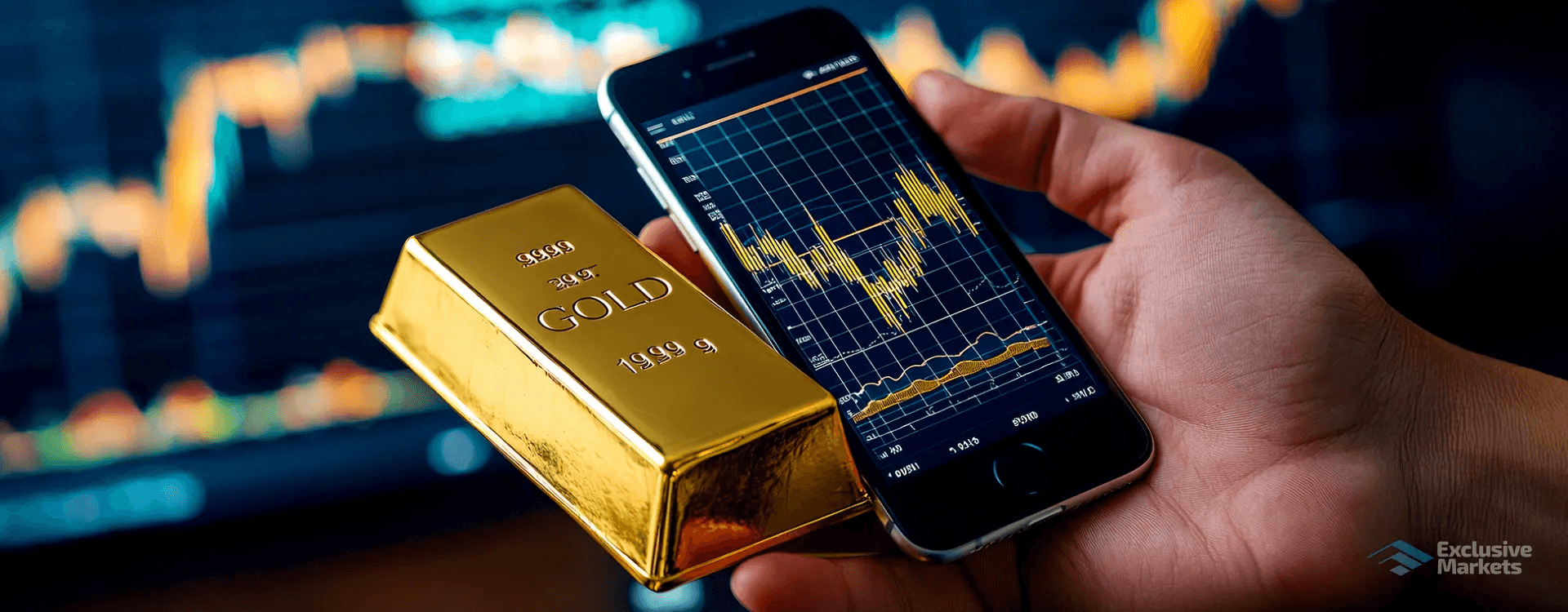
In practice, gold trading works like this: you take directional exposure to the metal through spot trades, futures, options, or ETFs, then manage that exposure with margin, stops, and position-sizing rules that align with your risk limits. Execution occurs electronically across time zones, so disciplined entries, small, consistent profit targets, and strict drawdown controls are more likely to win than bold, high-leverage bets.
How do traders actually open a position and control risk?
You open a gold position by choosing an instrument, posting margin, and sizing the trade to a predetermined risk budget. Use limit orders to control entry prices, place stop orders to cap losses, and measure position size as a percentage of available capital rather than a fixed contract count. When traders treat targets as repeatable micro-wins and cap daily drawdown, they avoid the exhaustion that comes with one-off, emotional trades.
Why can you enter and exit large positions without getting stuck?
Liquidity is real, which matters for funded traders who need reliable fills. The average daily trading volume for gold is $145 billion, according to Capital.com, indicating that most institutional-sized orders clear without significant price dislocation. That depth allows you to scale position size methodically, provided you remain mindful of time-of-day liquidity and macro events that temporarily compress order books.
What patterns lead traders to poor exits?
After coaching funded traders through evaluation cycles, the pattern became clear: when a swing hits hard, traders using wide leverage tend to hit margin limits quickly, then close positions under pressure and lock in losses. The emotional toll is real; it erodes discipline and destroys the compounding effect you need to demonstrate consistent performance over an evaluation period.
What common market change should you respect when designing strategies?
Momentum shifts matter. Gold prices increased by 25% over the past year — Capital.com, which, in context, shows that trend signals frequently dominate short-term noise and that entry filters should adapt when volatility and directional conviction rise. In practice, that means tightening stop placement when trends strengthen, and reducing trade size when directional conviction is low.
Most traders conduct evaluations in the familiar way, which makes sense.
The familiar approach is to treat funded evaluations as an amplified retail account, leveraging capital that feels “free.” That works early on, but as drawdowns accumulate and rules tighten, inconsistent sizing and reactive stops compound into failed audits. Solutions like funded accounts for futures trading provide instant capital and preset evaluation rules, allowing traders to practice scaled risk habits with large pools while preserving profitability and enabling faster payouts, so performance under real constraints becomes the training ground rather than an afterthought.
Which vehicles suit a disciplined, repeatable approach?
Futures contracts and tight options strategies are best suited to funded accounts because they offer standardized margins and transparent settlement, making risk math predictable. For short-term, profitable gold trading, favor setups targeting small R multiples per trade, keep daily loss limits conservative, and use native exchange liquidity windows to avoid costly overnight gaps. Trading gold with borrowed capital is like steering a fast boat through fog; you need a steady hand, small adjustments, and respect for momentum, or you run onto a reef. That simple truth explains why consistent execution matters more than clever indicators, and why the next section will uncover the one set of factors that actually determines whether those executions stay profitable or get wiped out.
Related Reading
- What Is a Funded Trading Account
- What Is SMT in Trading
- Price Action Trading
- Intraday Trading Tips for Today
- Can Day Trading Be Profitable
- Trading Indicators
- Forex Trading Candlestick Patterns
- Intraday Algorithmic Trading
- Trading Candlestick Patterns
- Volatility Trading
What Factors Influence the Profitability of Gold Trading Strategies in 2026?

Profitability in 2026 comes down to three things: how market structure changes your execution costs, how macro flows change the size and persistence of moves, and how your risk program scales as capital grows. Get any one of those wrong and winning trades disappear under fees, slippage, or a single bad news swing.
Geopolitical Instability
Persistent international disputes, including the ongoing conflict between Russia and Ukraine, along with tensions in the Middle East, remain major drivers of market volatility this year. These issues create unpredictable environments that increase demand for gold as a protective asset, while also heightening the risk of sharp losses. In daily sessions, price shifts have widened to $30-$50 per ounce, a notable increase from earlier typical ranges of $10-$20, reflecting heightened sensitivity to news developments.
For traders, this means closely monitoring conflict updates and diplomatic progress, as escalations can trigger rapid buying sprees while resolutions may ease pressure. Such dynamics make gold a go-to hedge, but require robust risk controls to manage the amplified swings. By incorporating real-time alerts and scenario planning, participants can better position themselves to capitalize on these events without incurring excessive capital exposure.
Economic Instability
Amid lingering global trade frictions, concerns about a possible US economic downturn persist into 2026, weighing on broader assets while elevating gold's role as a safeguard. These fears have driven impressive returns, with the metal gaining around 19% in the first quarter alone last year, a trend that could extend if slowdown signals intensify. Traders benefit from this by viewing gold as a counterbalance to declining equities and commodities.
Delving deeper, factors such as tariff implementation and supply chain disruptions amplify uncertainty, prompting shifts toward safer holdings. Monitoring indicators such as GDP reports and employment data becomes essential for anticipating moves. This environment encourages diversified portfolios in which gold acts as a stabilizer, helping mitigate overall volatility and preserve value during turbulent periods.
Inflation Pressures
Linked to trade-related challenges, concerns about rising costs in the US could further erode the dollar's strength, fostering a negative outlook that favors gold investments. Early 2026 data show substantial inflows into related funds, exceeding $21 billion in the prior quarter, with U.S.-based options accounting for over half, according to industry analyses. This influx underscores gold's perceived reliability against currency weakening.
In response, traders should monitor consumer price indices and policy announcements to forecast demand surges. When inflation expectations climb, positioning in gold can yield advantages, but it demands vigilance against overreactions. Building strategies around these trends, such as pairing with dollar indices, enhances predictive accuracy and supports more informed entry and exit decisions.
Comparative Stability in Volatility
Even with wider price variations in 2026, gold exhibits more consistent responses to triggers than many volatile currency markets, making it somewhat easier to analyze technically. This relative steadiness stems from its ties to specific catalysts, such as economic data or global events, enabling more reliable pattern recognition than erratic pairs.
Traders can leverage this by applying chart-based tools and historical analysis to identify recurring patterns, reducing guesswork. While daily ranges have widened, predictability helps set precise entry and exit points. Embracing this aspect helps craft resilient plans that withstand noise, ultimately improving outcomes in a landscape where other assets face greater unpredictability.
How should you stress-test a 2026 strategy?
Run scenarios that combine higher volume with larger headline spikes and a higher notional price, then stress slippage by session, include realistic roll costs, and push the capital scale until the impact is visible. Think of it as building a playbook: two breakpoints matter, first the slippage breakpoint where average trade cost flips your expectancy, second the capital breakpoint where market impact starts to shift your edge. Use Monte Carlo sequence testing to check drawdown path dependency, not just peak-to-trough numbers, so evaluation rules and live constraints are respected in advance. Consider the strategy as a delivery truck. More customers, meaning more volume, makes roads busier but smoother in places; a heavier load, meaning a higher price per contract, increases stopping distance and the risk of damage if you brake suddenly. Managing profitability is about lightening the load, choosing better routes, and knowing when to slow down.
What to prioritize right now
Prioritize friction modeling, multi-regime backtests, and rule sets that force low-emotional-bandwidth decisions under stress. That means clear size caps tied to dollar risk, automatic scaling by time of day, and preset responses to sudden volatility spikes. When these controls are in place, funded capital becomes a tool to scale disciplined performance rather than a signal to speculate. There is one uncomfortable truth traders avoid: most profitable strategies die not from a lack of ideas, but from failing to convert those ideas into repeatable, stress-tested processes that survive larger size and louder news. That reality is frustrating, and the next section will show why a few seemingly small tactical changes can flip a struggling strategy into a durable winner.
6 Most Profitable Gold Trading Strategies in 2026

These six setups work because each turns a clear market signal into repeatable action, with rules that survive scale and headline noise. I’ll walk through the practical triggers, sizing templates, and failure modes you must guard against so these strategies behave predictably inside a funded evaluation and a live account.
1. Macro Trading Strategy
This method involves assessing broad economic and geopolitical factors to guide gold investments, leveraging gold's status as a protective asset in uncertain times. In 2026, amid ongoing global challenges such as trade disputes and inflation, traders buy gold when negative developments emerge, anticipating price surges as investors seek stability. This approach has been effective, as gold has climbed to around $4,580 per ounce, driven by persistent demand amid economic shifts.
How to Use It
- Monitor global news feeds and economic calendars for events such as geopolitical escalations, major policy changes, or economic data releases that could impact market sentiment.
- Evaluate the potential effects on gold, focusing on how these factors might increase its appeal as a hedge against risk.
- Enter buy positions in gold instruments like futures or ETFs when adverse headlines dominate, scaling in based on the severity of the news.
- Hold the position over weeks or months, adjusting based on evolving macro trends rather than short-term fluctuations.
- Exit when positive developments stabilize markets or when predefined profit targets are met, while using loose stop-losses to allow for volatility.
2. Real Yield Monitoring Strategy
By tracking inflation-adjusted bond returns, traders can predict gold price movements, as lower real yields often increase gold's attractiveness relative to yield-bearing assets. In the current landscape, with the 10-year real yield at about 1.90%, declines in this figure have strongly correlated with gold rallies, explaining much of the metal's price action in 2026.
How to Use It
- Access real-time data on 10-year Treasury yields adjusted for inflation from reliable financial sources.
- Calculate or observe changes in real yields, noting any downward shifts that signal reduced opportunity costs for holding gold.
- Determine position size proportional to the yield drop, entering buys when yields fall significantly.
- Combine with other indicators, such as inflation expectations, to confirm the signal.
- Monitor for yield reversals to exit positions, securing gains from the inverse relationship.
3. Central Bank Activity Surveillance
This strategy leverages insights from official-sector gold acquisitions, as major banks' buying patterns indicate sustained price support. With net purchases reaching 45 tonnes in November and year-to-date purchases at 297 tonnes, continued accumulation in 2026 is expected to push prices higher, making this a key indicator for anticipating trends.
How to Use It
- Subscribe to reports from organizations like the World Gold Council for monthly central bank reserve updates.
- Analyze purchase volumes and trends to identify consistent buyers, such as emerging-market banks.
- Enter long positions in gold when reports show increased net buying, timing entries post-announcement.
- Scale positions based on the magnitude of purchases relative to historical averages.
- Review subsequent reports to decide whether to hold or exit, adjusting for any slowdown in activity.
4. Technical Breakout Strategy
This approach centers on identifying strong upward momentum when gold prices surpass key resistance levels on charts, often leading to extended rallies in trending markets. In 2026, amid record highs and volatility from geopolitical and policy events, breakouts on daily or four-hour timeframes have driven significant continuation moves, especially when supported by increased trading activity at major session opens. Traders benefit from this method by entering positions aligned with the prevailing bull trend, using confirmation tools to filter out weaker signals, and targeting substantial gains from momentum-driven price extensions.
How to Use It
- Analyze higher timeframes, such as daily or four-hour charts, to identify recent highs or consolidation ranges that act as resistance.
- Wait for a decisive close above the resistance level, ideally with a strong candlestick pattern indicating upward conviction.
- Confirm the breakout with volume data—look for spikes exceeding the recent average by at least 50%—and time entries during high-liquidity periods, such as the first 90 minutes of the New York session.
- Enter a long position once confirmation occurs, placing a stop-loss below the breakout level or recent swing low to protect against false moves.
- Set profit targets at measured extensions (e.g., the height of the prior range projected upward), or trail stops using moving averages to lock in gains as the trend continues.
5. Pullback Entry Strategy
In a sustained uptrend like 2026's gold market, temporary price retreats offer lower-risk entry points to join the broader bullish direction. Traders use these corrections to buy when momentum indicators signal oversold conditions and reversal potential, capitalizing on dips without chasing highs. This technique has proven reliable amid gold's climb above key averages, allowing for better reward-to-risk ratios by entering during brief weakness rather than at peaks.
How to Use It
- Confirm the overall trend remains bullish on higher timeframes, such as gold holding above the 50-day moving average.
- Identify pullbacks to support levels, such as the 21-day moving average or prior swing lows, using oscillators like RSI.
- Watch for oversold readings (RSI below 30) followed by upward momentum shifts, such as RSI crossing back above 30 or bullish candlestick patterns.
- Enter long positions on confirmation of reversal, placing a stop-loss below the pullback low or recent support to limit downside.
- Target profits at prior highs, Fibonacci extensions, or by trailing stops along shorter-term averages as price resumes the uptrend.
6. Gold-Silver Ratio Strategy
This relative value method exploits divergences between gold and silver prices, using their historical relationship to identify over- or undervalued opportunities. With the ratio currently around 54:1 (based on gold near $4,580 and silver near $85), shifts from extremes allow traders to rotate between the metals for balanced gains in correlated but distinct markets. In the volatile 2026 precious metals landscape, this strategy diversifies risk while profiting from mean reversion, especially as silver often amplifies gold's moves given its dual industrial and monetary role.
How to Use It
- Calculate the current gold-silver ratio by dividing gold's spot price by silver's spot price, tracking it daily or weekly.
- Identify extremes—historically, ratios above 80:1 suggest silver undervaluation (favor silver longs or gold shorts), while ratios below 50:1 may indicate overvaluation (favor gold longs or silver shorts).
- In the current compressed range (around 54:1), scale into positions when the ratio approaches key thresholds, such as buying gold as the ratio falls toward 50 or adding silver exposure on rises toward 60.
- Enter paired trades (e.g., long gold/short silver, or vice versa) via futures, ETFs, or CFDs, and monitor for normalization signals such as ratio reversals or fundamental shifts.
- Exit when the ratio reverts toward its average (historically around 60-70:1 in recent years) or hits profit targets, using stops based on ratio volatility to manage risk.
Status quo, hidden cost, and the bridge
Most traders treat funded capital as permission to scale intuitively because instant buying power feels like safety. That familiar approach works in small tests, but as positions grow, inconsistent sizing and reactive stop adjustments fragment performance and force evaluation failures. Platforms like funded accounts for futures trading provide clear capital limits, preset drawdown rules, and faster payout mechanics, giving traders a framework that converts aggressive intent into disciplined, repeatable execution while keeping payout incentives aligned with steady risk control.
Execution checklist that ties everything together
What do you run before each trade? Run a four-point pre-trade: valid signal, session liquidity check, funded-account risk math, and explicit exit plan. Write those four items as checkboxes in your order ticket. Treat the checklist like a mechanical firewall, so when volatility spikes, you either pass the test and enter, or you step aside without second-guessing. Think of it like pre-flight checks for a small plane; they do not make flying easy, but they make survival far more likely.
A quick analogy to anchor the habit
Trading these setups without rules is like carrying a heavy pack up a mountain without tied straps; you get to the summit faster at first, then the load shifts, and you fall. Secure the straps, and you reach consistent summits with less drama. That simple discipline flips strategies from hopeful to reliable, and it is the difference between an admired idea and a fundable one. But the real pressure point shows up when you try to turn a breakout into a day-trading routine—and that is where things get interesting.
Related Reading
- Basic Trading Strategy
- Spot Algorithmic Trading
- Forex Trading Profit Per Day
- Crypto Trading Bot Strategies
- Best Forex Trading Bots
- Fair Value Gap Trading Strategy
- Best Leading Indicators for Day Trading
- Best Indicators for Swing Trading
- Best Charting Software for Day Trading
- Best Indicators for Options Trading
- Fair Value Gap Trading Strategy
How to Day Trade Gold Using the Breakout Trading Strategy

Day trading gold with a breakout plan works when you treat every signal as a hypothesis to be tested quickly, with execution rules that either prove the move or eject you without drama. Focus on entry conviction from order flow and session liquidity, then manage position size so that a failed breakout does not damage your psyche or your funded account run.
Identify Key Support and Resistance Levels
Start by examining shorter timeframes, such as the 15- and 30-minute charts, to identify key price barriers in gold. Draw horizontal lines at the previous day's highest and lowest points, as these frequently act as initial barriers where price might stall or reverse. Also, note areas where gold has bounced multiple times in the past or shown repeated reversals—these consolidation zones often build tension before big moves. Pay close attention to round psychological numbers, such as $3,050 or $3,100, which tend to attract trader interest and can strengthen these levels.’
Wait for Gold Price Consolidation
Search for periods when gold's price consolidates within a narrow band, indicating reduced volatility and building potential energy for a breakout. This coiling action often appears after a trend or during quieter market hours, signaling indecision among participants. Aim for at least three to five candles on lower timeframes (like 5-minute or 15-minute) to confirm the range is solid. During this phase, trading volume usually drops off, a common precursor to explosive moves as participants wait on the sidelines before committing.
Perform Volume Analysis for Confirmation
Once a potential breakout level forms—ideally with at least two prior swing highs or lows tagging resistance—monitor volume closely for signs of conviction. A genuine push through the barrier should come with a noticeable surge in activity, often exceeding the average of recent periods by a significant margin (around 50% or more in many observed cases). Avoid trades where the breakout lacks this volume boost, as low-activity breaks often reverse and become traps. This filter helps distinguish real momentum from deceptive false moves that trap early entrants.
Enter the XAUUSD Trade on Confirmed Breakout
Initiate a long position (buy) when the price closes decisively above resistance on the breakout candle for an aggressive entry, or wait for a brief retracement to the broken level for a more conservative retest confirmation. The move should cover a meaningful distance, typically 0.3% to 0.5% of gold's current price, to qualify as valid. Many reliable gold breakouts occur later in the European or early New York session, often after 14:30 GMT, when liquidity increases, and institutional participation ramps up. This timing aligns with higher volume and reduces the chance of whipsaws in thinner periods.
Set Risk Management Parameters
Protect your capital by placing a stop loss just below the most recent swing low prior to the breakout—this area often provides logical invalidation if the move fails. Target profits at least twice your risked amount, and consider using a trailing stop to lock in gains as the price advances favorably. Once the trade reaches 1x your risk level, move the stop to breakeven to eliminate downside exposure. Always aim to close any open position by the end of the trading day to avoid overnight gaps or events that could impact gold unexpectedly.
Most teams treat breakout attempts as purely technical events, and that works when size is small; as size grows, latency, market impact, and emotional cost reveal the approach’s limits. Platforms like funded accounts for futures trading provide instant access to up to $450K in capital, preset evaluation rules, and faster payout mechanics, which help traders quickly test size-dependent failure modes, keep profit retention aligned with discipline, and avoid over-leveraging when a few wins inflate confidence.
Think of a breakout like testing a rope bridge at speed: you can run across when the first few planks hold, but you must know which knots are reliable and which sway. That practical, nervous respect keeps you alive long enough to compound small wins. That solution looks tidy on paper, but what happens when your best breakout signal meets a surprise headline in a low-liquidity hour?
Tips For Profitability Using These Strategies

Start here: build a ritual, not a shopping list. Train confirmations into muscle memory, automate repetitive math, and stress-test your rules under degraded fills before increasing size or frequency. Do that, and your edge becomes a routine you can defend when adrenaline spikes.
Track ETF Inflows for Early Signals
Monitoring inflows into gold-backed exchange-traded funds can provide hints about upcoming price shifts. When these funds experience steady increases over several consecutive days, it often signals growing investor interest that could push values higher. For beginners, this is a simple way to gauge sentiment without diving into complex charts right away. In practice, use free online resources or broker tools to monitor daily flow data from major ETFs. If inflows persist for three or more sessions, consider it a potential cue to enter bullish positions, but always pair it with other confirmations to avoid false starts. This method helps novices align with broader market momentum, improving timing and reducing the risk of acting on isolated events.
Adopt Volatility-Adjusted Position Sizes
Gold's price swings have widened recently, making it essential to scale your trade sizes based on current market volatility. A practical rule is to cut your exposure in half when short-term volatility measures climb above certain thresholds, helping preserve capital during unpredictable periods. This approach teaches beginners to prioritize protection over aggressive bets. Calculate this using indicators such as the average true range over recent days—if it exceeds $30, dial back involvement and go even smaller above $40. Such adjustments prevent oversized losses that can discourage new traders, while encouraging a mindset of adaptability. Over time, this builds resilience and ensures strategies remain viable across different market conditions.
Maintain Awareness of Global Events
With ongoing international uncertainties, including trade disputes and policy changes, staying informed about world affairs is crucial for gold traders. These factors can trigger rapid shifts in demand, as gold often serves as a refuge during periods of instability. Beginners benefit by regularly checking reliable news sources to anticipate how such developments might influence prices. Focus on updates from key areas like economic sanctions, inflation reports, and central bank actions in major countries. By integrating this into your routine, you can better interpret why prices move and adjust strategies accordingly. This proactive stance helps avoid surprises and strengthens decision-making, turning external chaos into opportunities for informed trades.
Incorporate Volume with Key Price Levels
Relying solely on price patterns isn't sufficient; combining them with trading volume in critical zones improves reliability. Look for heightened activity around past peaks, valleys, or calculated pivots, as this confirms genuine interest rather than fleeting noise. For those starting out, this adds a layer of validation to entry and exit points. In application, use charting software to overlay volume bars and watch for spikes that align with support or resistance breaks. This technique reduces the risk of chasing weak signals and teaches patience until evidence builds. As a result, beginners develop sharper analytical skills, leading to more consistent outcomes in the dynamic gold market.
Merge Gold Chart Patterns with Economic Indicators
Blending technical formations in gold's price chart—such as consolidations or directional flags—with broader economic signals creates stronger trade setups. Factors such as rising costs of living, reserve bank purchases, or equity market dips can reinforce these patterns. New traders should practice spotting these overlaps to justify positions more robustly. Start by studying common shapes on XAUUSD graphs while cross-referencing with macro data releases. When multiple elements converge, it boosts confidence in the direction and helps mitigate doubts. This integrated view equips beginners with a holistic perspective, improving the likelihood of capturing meaningful moves without overreliance on any single aspect.
Observe the US Dollar Strength Index
Gold typically moves in the opposite direction of the dollar, so monitoring the DXY index is a smart practice for spotting potential inversions. A declining dollar might fuel inflation concerns, propping up gold, though exceptions occur. Beginners can use this relationship as a foundational check before committing to trades. Track DXY movements via accessible platforms and note how gold responds in real time. In current conditions, where currency weakness persists, this correlation often holds, guiding timely entries. Mastering this interplay improves predictive capabilities, enabling novices to navigate interconnected markets with greater ease and precision.
Select Optimal Trading Windows for Gold
Gold sees peak activity during specific hours, particularly immediately after major exchanges open, when liquidity is higher and signals clearer. Aim for the initial hour-and-a-half post-New York start or the overlap between London and New York sessions. This timing helps beginners avoid thin markets where spreads widen, and moves distort. By scheduling sessions around these periods, you capture more reliable volatility without constant monitoring. Tools such as economic calendars can highlight these windows, enabling focused efforts. Adopting this routine reduces frustration from off-hours noise, enabling steadier progress in strategy execution.
Avoid Opposing Established Gold Trends
In persistent upward phases, such as recent ones, resisting the dominant trend can lead to unnecessary setbacks unless clear reversal cues emerge. Wait for solid technical evidence, such as pattern failures or indicator divergences, before countering. This principle encourages beginners to flow with momentum rather than force contrary views. Practice by reviewing historical charts to identify true turning points and build intuition for when to hold back. Patience here pays off, as jumping in prematurely erodes accounts quickly. Embracing this mindset fosters discipline, turning potential losses into learning opportunities that drive sustainable trading growth.
Leverage Prop Firm Funding
Once you've practiced these tips and gained consistency in gold strategies, partnering with proprietary trading firms can provide access to larger capital pools without using your own funds upfront. These setups evaluate your skills through challenges and fund successful participants, enabling beginners to scale up responsibly. This bridges the gap from learning to professional-level execution in gold markets. A reliable choice is AquaFutures, which specializes in futures trading and offers generous account sizes up to $450K, competitive profit-sharing, and supportive rules that suit gold's volatility. Their quick payouts and responsive team make it easier for novices to apply honed strategies on a bigger stage. Ready to put your gold trading tips into action with real backing? Sign up for an AquaFutures challenge today and unlock funded opportunities to grow your skills profitably.
Related Reading
- Fibonacci Trading Strategy
- Best Prop Trading Firms
- ORB Trading Strategy
- Crypto Swing Trading Strategy
- Best Copy Trading Platform
- Best Proprietary Trading Firms for Beginners
- Best Stocks for Options Trading
- Silver Bullet Trading Strategy
Unlock up to 50% off Your First Funded Account for Futures Trading
I know how much work it takes to turn a repeatable, gold-trading strategy into real, compounding profits, and how quickly margin pressure, slippage, and a lack of scalable capital can turn disciplined entries and tight position sizing into theory. If you want to prove your execution under real rules without risking your savings, consider AquaFutures, which lets you run risk-aware entries, drawdown controls, and consistent profit targets on funded accounts, with instant funding options and introductory offers up to 50% off your first account plus weekly bonuses.
