



What is the Average Forex Trading Profit Per Day?
Forex Trading Profit Per Day: Learn realistic daily expectations and risk management tips. AquaFutures funded accounts let you test proven strategies.

Traders often encounter challenges like misjudged position sizing and sudden market volatility despite careful chart analysis. Observing recurring market behaviors can reveal repeatable setups and help distinguish genuine signals from noise, enabling more informed decision-making. Trading Patterns highlight how specific setups reliably recur while others serve as distractions.
Effective trading hinges on disciplined risk management and realistic daily profit expectations. Careful adjustments in trade entries, win rates, and drawdown control are essential to navigating market unpredictability. AquaFutures offers funded accounts for futures trading to help optimize these strategies while safeguarding capital.
Summary
- Headline averages mislead; the article reports an average of about $200 per day, yet roughly 70% of forex traders lose money, so a single mean hides a heavily skewed distribution.
- Deep liquidity matters, but does not remove execution costs. The forex market trades over $6 trillion per day, and a slippage increase from 0.5 pips to 1.5 pips can materially erode scalping profits.
- Strict risk rules are essential, the piece recommends risking about 1 percent per trade and cites evidence that stop-loss orders can cut losses by up to 50 percent.
- Validate your edge with disciplined blocks, for example, run a 30-day calendar demo and 50 live-trade blocks, then gate scaling behind a 20-trade live gate to ensure expectancy survives real fills.
- Match tactic to session, since 75 percent of traders use technical analysis, and scalping can produce up to 10 percent per day for experienced traders only when spreads and fills are near-ideal.
- Track execution KPIs as business metrics, measure realized spread, fill rate at limit price, and execution latency across 50 to 100 trades or a 30-day live-sim, and note that moving from a 1:1 to a 1:3 risk-reward was shown to increase profitability by about 30 percent in one study.
- This is where Aquafutures's funded accounts for futures trading fit in, as they let traders validate execution, sizing, and realistic daily profit targets under live scale without locking personal capital.
Table of Contents
- What is Forex Trading, and How Does It Work?
- What is the Average Forex Trading Profit Per Day?
- Best Forex Trading Strategies to Maximize Daily Profits
- Factors Influencing Forex Trading Daily Profits
- Tips to Maximize Your Forex Trading Profit
- Unlock up to 50% off Your First Funded Account for Futures Trading
What is Forex Trading, and How Does It Work?

Forex trading is a skill that focuses on managing odds rather than relying on luck. Traders make a profit by developing a repeatable strategy that incorporates position sizing, risk control, and disciplined execution. Success depends less on finding the perfect currency pair and more on following consistent processes that protect capital and grow gains over time, including utilizing funded accounts for futures trading to enhance your trading experience.
How do traders really make money every day?
While teaching a group of aspiring traders for six months, a clear pattern appeared: those who treated learning as a craft, starting with a demo account and following strict risk rules, improved much faster than those who chased after setups. Day traders aim to profit from small pip movements with tight stops. On the other hand, swing traders hold positions through sessions to capitalize on larger trends, while carry or yield-based strategies rely on interest rate differentials. No matter the style, the basics stay the same: size trades to make sure a series of losses doesn’t empty the account, track expectancy and win rate, and keep a trading journal that notes actions and reasons.
What tools and habits keep losses limited while letting winners run?
Stop-loss orders, clear profit targets, and position-sizing rules are essential. It is recommended that you risk a fixed percentage on each trade so that drawdowns stay within limits; this discipline helps you focus on expectations and risk-reward ratios rather than short-term emotions. For high-frequency trading methods, use one-click execution, keep journal entries that log your decisions with timestamps, and hold weekly review sessions to drop underperforming strategies. Treat leverage as a tool to increase your profits, not a shortcut to get rich. When using leverage, your edge needs to be clearer and your stops tighter; otherwise, price swings can quickly reduce your profits.
How do trading habits impact performance?
Most people fund trades out of habit, but that choice has its costs. Many traders use personal accounts or participate in long-staged prop firm challenges because these options feel familiar and inexpensive. Over time, the hidden costs become clear: capital remains locked, traders face hurdles, psychological pressure mounts, and they take greater risks to meet artificial evaluation targets. Platforms like AquaFutures provide instant or prove-your-skill funding with clear profit targets, fast payouts, and structured payout splits. This helps traders increase their position size and refine their strategy more quickly, reducing emotional strain and wasted time.
How does market structure shape which tactics work when?
To use trading strategies effectively, you must match tactics to the session and liquidity. The forex market is open 24 hours a day, five days a week, across major financial centers worldwide, each in a different time zone. This creates overlapping sessions, with tighter spreads and more reliable momentum. This availability makes scalping viable during the overlap of the London and New York sessions. Quieter periods are better for mean-reversion setups. Since major sessions drive liquidity, it is essential to adjust risk per trade by time of day to manage slippage and execution risk.
Why liquidity matters for execution and profit potential?
Liquidity can be seen in raw depth and competition. The forex market is the world's largest and most liquid, with daily trading volume of over $6 trillion. Deep liquidity allows traders to buy or sell large volumes with minimal market impact in major pairs. However, it also means that even the smallest advantages are fiercely competed for. Ultimately, your advantage should come from process, not hope.
What concrete habits should traders adopt?
A concrete habit to adopt this week is to select one timeframe and one pair. Run this combination only on a demo account for 30 calendar days. It is essential to journal every trade and limit risk per position to 1 percent or less. This limit will help you determine whether your trading rules deliver consistent, positive results or are simply based on luck.
How much do traders pocket each day?
That’s only the technical half of the story. The more challenging question is how much traders actually pocket each day; the answer will challenge many assumptions.
Related Reading
- What Is a Funded Trading Account
- What Is SMT in Trading
- Price Action Trading
- Intraday Trading Tips for Today
- Can Day Trading Be Profitable
- Trading Indicators
- Forex Trading Candlestick Patterns
- Intraday Algorithmic Trading
- Trading Candlestick Patterns
- Volatility Trading
What is the Average Forex Trading Profit Per Day?

The short answer is this: headline averages make forex earnings sound straightforward, but they hide a big range, and most retail accounts never stay profitable. Reported averages, like those from BestBrokers.com, 2024: "The average forex trader makes about $200 per day.", are followed by tougher facts like BestBrokers.com, 2024: "Approximately 70% of forex traders lose money." It is essential to view the single-number headline as a starting point, not a promise.
Why can a simple average be misleading?
The distribution is uneven: a few top performers drive the average, while the median trader earns much less. This unevenness manifests in three ways, each of which affects daily expectations: account-size differences, episodic big wins from rare high-conviction trades, and survivorship bias. The Decision Lab's explanation of survivorship bias shows that those who fail often drop out. This results in performance snapshots that do not present the whole picture. Think of it like a fishing fleet, where a few boats catch most of the fish; the fleet's average looks good even when most boats come back empty. To better navigate these challenges, you might consider options for funded accounts for futures trading.
What drives the volatility between good days and losing days?
There are two technical reasons and one human reason. On the technical side, changes in liquidity, wider spreads during news, and occasional slippage lead to uneven results that you can't control. On the human side, the pressure to make up for a losing day often leads traders to take greater risks, which increases drawdowns and reduces the number of profitable accounts. This problem affects beginner and intermediate traders: bad days while learning to manage emotions and improve execution, and significantly lower average daily earnings.
How should progress be measured, not misread?
Replace single-day dollar goals with clear, measurable process metrics. Consider using a rolling 20-day net PnL per unit risk, an expectancy per trade, and a consistency target, such as the percentage of profitable weeks over a quarter. These metrics will help determine whether an edge exists or whether survival depends on chance. A helpful analogy is to measure road quality rather than the speed of a single car; a single fast trip does not guarantee the route is safe.
What does the funding path change about daily income?
Most traders finance their activities through small personal accounts or by trying long, staged evaluations, which might seem familiar and cheap at first. However, over time, this familiar approach leads to two harmful behaviors: traders either over-leverage to meet arbitrary hurdles or stop adjusting their position size, causing growth to stall. Platforms like AquaFutures that offer instant or proof-of-skill funding eliminate much of that hassle. This allows traders to increase their effective position sizes sooner, learn faster through live trading, and reduce the urge to chase one-time big days.
What is a practical image to remember about daily profits?
A helpful image to remember is that daily profits are like weather instead of climate. The aim is to build a system that reliably brings more mild, repeatable sunny days rather than harmful storms.
What is the next piece about trading strategies?
This tension is just the beginning. The next section examines strategies that can turn those mild days into a steady income.
Related Reading
- Basic Trading Strategy
- Spot Algorithmic Trading
- Crypto Trading Bot Strategies
- Best Forex Trading Bots
- Fair Value Gap Trading Strategy
- Best Leading Indicators for Day Trading
- Best Indicators for Swing Trading
- Best Charting Software for Day Trading
- Best Indicators for Options Trading
Best Forex Trading Strategies to Maximize Daily Profits

Maximizing daily forex profits depends on three key factors: choosing the tactic that best fits the session, protecting your advantage from execution costs, and maintaining a calm daily process. When these three elements work together, traders can stop chasing luck for a single day and start building on repeatable wins.
How should one balance trade frequency and trade quality?
The truth is, more trades do not necessarily mean more profit unless your per-trade expectancy remains positive after costs. Expectancy is calculated by multiplying the profit per trade by the win rate, then subtracting friction. Since most traders rely on chart-based setups, with LiteFinance reporting that 75% use technical analysis as part of their strategy, it is essential to improve how setups are interpreted and to measure the net result for each unit of risk, rather than relying on the raw win percentage. Focus on small experiments: run a block of 50 trades on one clear pattern, record slippage, and calculate expectancy. If it holds up against real spreads and execution, scale up modestly; if not, keep refining until your edge is strong.
What tactic fits this session, and why does that choice matter?
Session context significantly impacts what trading tactics are effective. During high-overlap hours, traders can chase momentum and tight mean breaks. In contrast, during thinner hours, it is advantageous to prefer wider setups with built-in buffers. Scalpers can extract sizable daily returns when they control costs and execution. According to CapitalXtend, scalping can yield profits of up to 10% per day for experienced traders; however, this assumes near-zero slippage, minimal spreads, and repeated clean entries. Thus, traders should only scalp when their platform and routing ensure consistent fills. For sessions that show clearer momentum or rejection signals, it is better to use trend or range approaches.
How do you stop execution costs from eroding your edge?
Treat spreads, slippage, and latency as invisible taxes. Use limit orders when execution risk is acceptable, and prefer ECN pricing for tighter raw spreads. Measure the realized spread per hour rather than relying on quoted spreads. Each week, track three metrics: average slippage in pips, the percentage of fills at limit price, and execution latency in milliseconds for your most active pair. If any of these metrics increase, a system that seemed profitable on paper might lose money in practice. Also, adjust your position size based on the market impact you observe; your notional amount today should match the depth you actually get at your price, not just the theoretical depth.
When should you automate entries and exits, and when must you stay manual?
Automation is effective when the advantage is mechanical, and the quality of execution is more important than personal judgment. Backtest your signal across changing market conditions, then use a small funded amount while monitoring real fills for 30 trading days. If automation keeps fills within your expected slippage and your drawdown matches your expectations, then you can gradually increase your investment. Stay manual when trades require contextual judgment related to news, liquidity, or unusual order flow. A mixed approach usually works best: automated execution for routine entries, with human monitoring for sizing and exits in rare market situations.
Which behavioral guardrails actually stop blowups?
This challenge often arises for intraday and futures traders: tilt and fear of missing out (FOMO) erode discipline faster than any bad indicator. Set absolute daily loss limits both as a percentage of your equity and the maximum consecutive losses you can have. Use a two-step cooling-off rule: after the first time you hit your loss limit, stop trading for the rest of that session; if you hit it a second time, take a full day off and review your journal again. Small rituals can help lower emotions. For example, a three-minute checklist before each session that includes checking liquidity, noting pending news, and your maximum risk per trade can reduce impulsive decisions by making you take one careful action before each trade.
A quick, concrete habit you can adopt right now?
Choose one pair, one price action pattern, and one order type. Then, execute 50 trades in live conditions while tracking realized spread, slippage, and expectancy per unit risk. Consider these three metrics as your key to scaling.
What is the one factor most traders ignore?
That method works until you reach the one factor that most traders overlook.
Factors Influencing Forex Trading Daily Profits
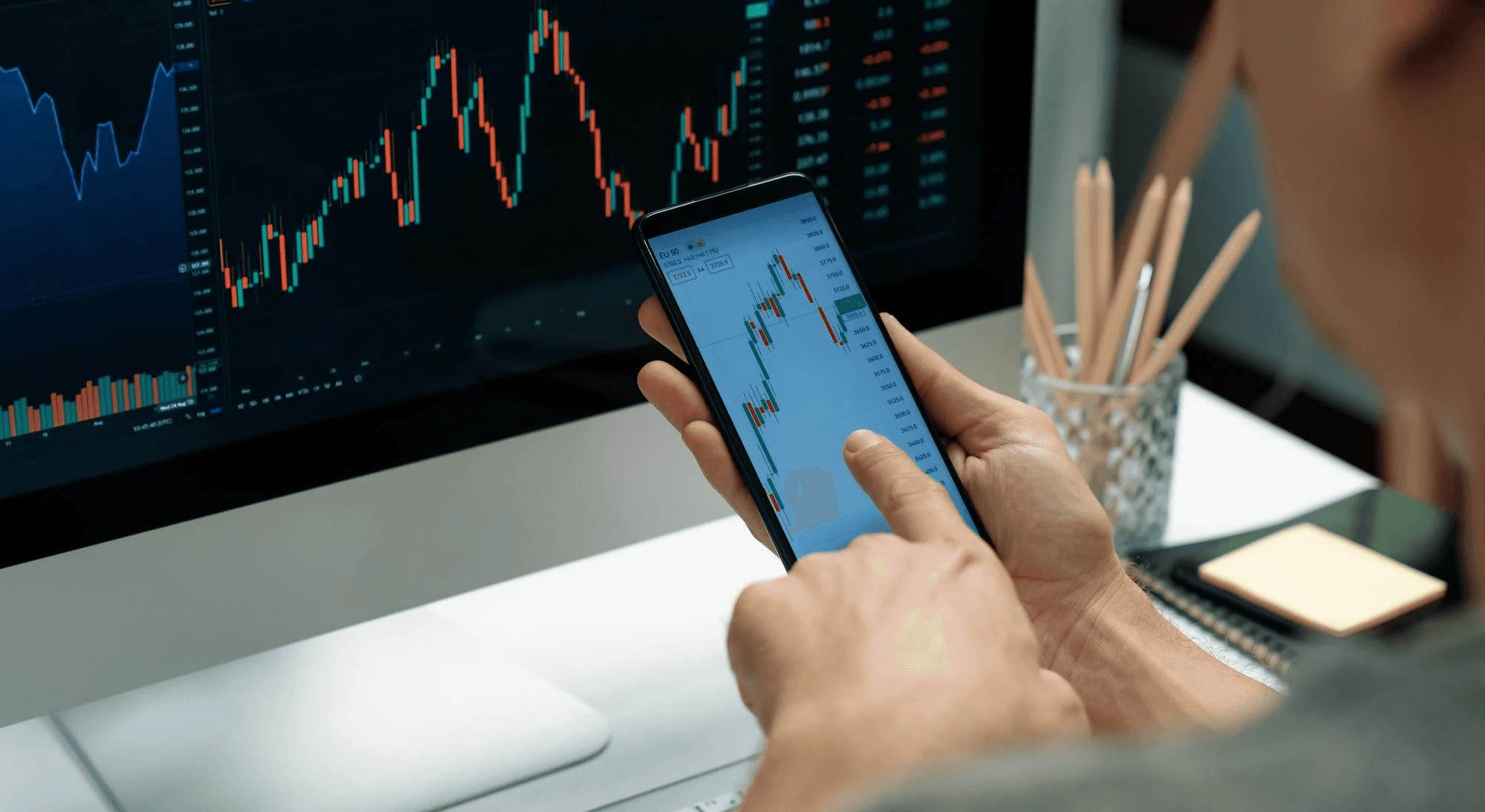
Daily profitability comes down to three interacting factors: the quality of your execution, the fit between your strategy and the day's market conditions, and your limits as a trader. Slight differences in spreads, fills, or discipline can turn a "good" session into a losing one. That is why using average headlines can be misleading if you rely on them as a plan instead of using them for context — according to BestBrokers.com, 2024: "The average forex trader makes about $200 per day." Additionally, using funded accounts for futures trading can provide you with greater leverage and insights, enhancing your overall trading experience.
How much does execution quality change your daily take-home?
Execution is not just a background cost; it is central to the business model. Track the realized spread in pips, the fill rate at your limit price, and the percentage of trades that suffer slippage. Then convert those losses to dollars per 10,000 notional units. If your routing increases average slippage from 0.5 pips to 1.5 pips on a fast day, it will consume a significant portion of your scalping profits. This situation forces you to either widen your targets or reduce trading frequency. Treat these metrics as daily PnL line items, and base your scaling decisions on them.
When should you increase position size within a session?
Scale by observed market depth and market conditions, not just by what you feel. If the depth at your target price can support three lots without changing the price, then a slight increase in size makes sense. But if the depth disappears during news events, it's better to hold back. Use this simple rule: only increase size when your recent 20-trade impact metric remains within a defined range and your rolling expectancy per unit risk improves. This guideline helps avoid the standard error of increasing position size during short-term ups and downs, which can mistakenly seem like a skilled decision.
How do human limits shape which hours you trade?
Emotional fatigue and pressure from short-term goals can erode your edge, just as liquidity does. This problem often happens to newer traders. After losing several trades in a row, they usually tighten their stops or chase new entries. On the other hand, after winning streaks, they might take on too much risk to “grab the day.” To maintain the quality of your decisions, set strict limits on the number of trades per session, take mandatory breaks after two losing trades, and set a hard stop time for the day. Think of trading hours like a high-performance engine; if you push it too hard, you will soon face expensive repairs.
What is the familiar way most traders fund growth?
Most traders fund growth, the familiar way: small personal accounts or long-term evaluations, because it feels safe and cheap. However, as capital needs grow, this method creates hidden costs, psychological stress, and slower progress, which delays reaching steady daily profit. Platforms like AquaFutures offer instant or proof-of-skill-funded futures trading accounts up to $450K, with clear profit targets, quick payouts, and 24/7 support. This gives traders a way to test execution and sizing under real-life conditions without the same incremental stress or locked capital.
What operational habits preserve an edge day after day?
Measure the right things each week: the average realized spread in pips per session, your fill rate at the intended price, expectancy per unit risk across 100 trades, the percent of trades closed by algorithm versus manually, and the number of cooling-off events triggered. Run a 30-day live simulation, changing only one variable at a time. Afterward, block out anything that reduces realized expectancy after execution costs. This discipline separates a fragile backtest from a repeatable daily payout.
What external constraints quietly cap per-day earnings?
Regulatory leverage caps, funding rules, rollover costs, and payout timing all set practical limits on earnings. Real outcomes are more important than theoretical advantages because they decide what can really be taken out and used for compounding. It's important to remember that top performers are much higher than the average, according to BestBrokers.com, 2024: "successful forex traders can earn up to $500 per day." These limits should be used to create realistic scaling steps and backup plans for taxes, withdrawals, and losses.
Why is it exhausting to chase short-term wins?
Chasing short-term wins can be tiring. This method often leads us to overlook the importance of improving our daily processes. Ultimately, this tiredness is the quickest way to turn a sound system into a bleeding account.
What difference does your next move make?
That tension is not the end of the story; rather, it is the moment when what you do next really matters.
Tips to Maximize Your Forex Trading Profit
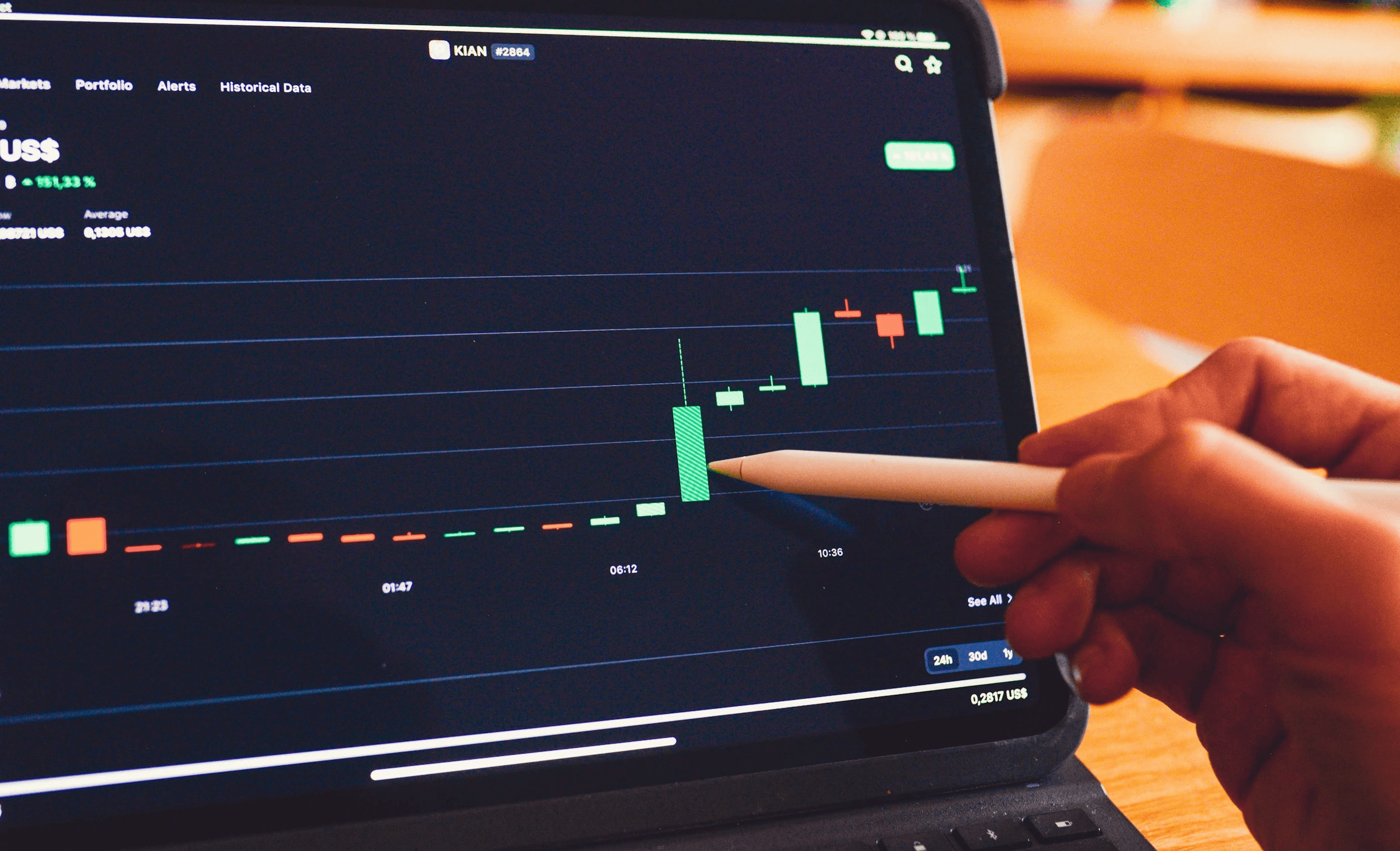
To maximize forex trading profit each day, turn every rule into a measurable business metric. Then, make strict execution and capital rules for scaling. Focus on unit economics for each trade to ensure execution quality is kept high. Use a disciplined scaling plan that increases trade size only when live results show an edge after costs.
How can you turn fee tracking into an actionable tool?
Treat spreads, commissions, swaps, and slippage as direct costs per pip, per lot, and per session. Create a small workbook that changes realized spreads and slippage into dollars per 1,000 units at your usual sizes. Then, show that as a fraction of your average take-profit. For example, if a scalping edge yields five pips but your realized cost is two pips, then 60 percent of your target is consumed before any wins. This shows you should either widen your targets, trade less often, or choose a different session. Think of it like filling a bucket with a small hole; you can either carry more water, fix the hole, or pour more slowly. In this case, fixing execution loss is often the fastest win.
How should you size positions as you scale and as market regimes shift?
Transition from fixed-percentage sizing to units based on volatility. Define one unit as the dollar risk when the stop is set to 1 ATR on your timeframe. Allow scaling only if your 20-trade expectancy per unit stays positive after costs. Backtest different multipliers while limiting total exposure across related pairs. This ensures that a single spike in volatility does not trigger multiple margin calls simultaneously. Use a conservative Kelly fraction, adjusted for slippage and the worst-case run length. Finally, perform a rolling Monte Carlo stress test before using any new lot size.
What execution KPIs will protect your edge?
Treat broker execution like a vendor Service Level Agreement (SLA). Track three weekly KPIs: average slippage in pips, percent of fills at limit price, and mean execution latency during active hours. Automate alerts when any KPI goes outside a preset range. Also, have a documented fallback that switches you to limit-only orders or reduces lot size until the issue is fixed. Run a 30-day live simulation on micro lots to ensure backtest expectations are accurate under real fills before you start scaling.
Which rules stop emotional cycling and protect daily PnL?
Replace vague guardrails with numeric triggers. For example, set a maximum of three active units at once, create a session drawdown cap in both dollars and percentage, and have a mandatory 24-hour cool-off period after two consecutive sessions that exceed the drawdown limit. Use trade sequencing to maintain a buffer of equity for unexpected liquidity events, rather than allowing all available margin to be used simultaneously. Additionally, link stop placement to volatility so that stops are not random penalties but predictable parts of your unit economics. Evidence shows this approach works, as highlighted by IG International: "Traders who use stop-loss orders can reduce their losses by up to 50%." This shows that disciplined stops are as much a profitability tool as a risk-control tool.
How do you tune reward targets so scaling actually increases profitability?
Treat risk-reward as something to test, not as a strict rule. Try different sets of trades comparing 1:1, 1:2, and 1:3 targets while keeping execution and fees the same. Measure both profit per hour and hit-rate volatility. If your funds and costs allow, prefer higher-reward options. Studies show that a stronger R: R can significantly improve returns. For example, IG International: "Implementing a risk-reward ratio of 1:3 can increase profitability by 30%". Use this information to set the lowest acceptable reward-to-cost ratios before deciding on higher-frequency trading.
What is a short operational checklist to start today?
Start by picking one pair and one timeframe. Calculate the realized cost per pip across 50 live trades. Convert that into the required minimum target pips for your trading style. Then, follow the position-size rules behind a 20-trade live gate that checks the expectancy after costs. If the gate fails, repeat the process; if it passes, add one conservative lot and rerun the gate. For those interested in expanding their trading options, consider exploring funded accounts for futures trading like those offered by AquaFutures.
How does AquaFutures facilitate growth for traders?
AquaFutures provides traders with quick, affordable access to funded futures accounts. These accounts have instant options, simple rules, and real payouts. This setup is ideal for testing execution at scale without risking personal funds. Traders can check out our funded accounts for futures trading to improve their learning speed, keep more of their profits, and (most importantly) grow when their live stats show a clear advantage.
What should you remember when scaling live?
This approach may look effective on paper, but when tested in practice, a slight timing shift can be critical. This shift could either help or hurt the scaling process.
Related Reading
- Fibonacci Trading Strategy
- Best Prop Trading Firms
- ORB Trading Strategy
- Crypto Swing Trading Strategy
- Best Copy Trading Platform
- Best Proprietary Trading Firms for Beginners
- Best Stocks for Options Trading
- Silver Bullet Trading Strategy
- Order Block Trading Strategy
- The Strat Trading Strategy
- Supply and Demand Trading Strategy
- Profitable Gold Trading Strategy
- Higher High Lower Low Trading Strategy
Unlock up to 50% off Your First Funded Account for Futures Trading
Chasing steady daily PnL can feel personal. The common experience of handling capital alone often makes it hard to see whether daily profits can hold up in real trades, and as you grow. To test your edge in realistic conditions and turn forex trading profits into consistent daily earnings, consider AquaFutures funded accounts. This option lets you review your process, focus on execution, and grow as the numbers support your strategy.
