



10 Best Indicators for Options Trading You Should Know
This guide walks you through the 10 best options indicators — moving averages, RSI, MACD, Bollinger Bands, volume, implied volatility, delta gamma theta vega, stochastic, support and resistance, momentum, and simple trade setups you can backtest

You stare at price charts and ask the same question every time a pattern breaks: which signals cut through the noise and point to a real edge? Trading Patterns matter because the right mix of technical indicators and option Greeks can turn uncertainty into clear entry and exit points. This guide walks you through the 10 best options indicators — moving averages, RSI, MACD, Bollinger Bands, volume, implied volatility, delta gamma theta vega, stochastic, support and resistance, momentum, and simple trade setups you can backtest — so you can trade with confidence and aim to execute profitable trades with funded capital. Which indicator will give you the edge today?
To help you apply these tools with real buying power, Aquafutures offers funded accounts for futures trading so you can focus on strategy, risk control, and growing profits while trading with company capital.
Summary
- Indicators make trading decisions testable and fundable. Over 70% of options traders use technical indicators, and when properly applied, filters are used, trading accuracy can improve by up to 30% (Interactive Brokers, 2023).
- Combining orthogonal signals reduces noise but adds timing friction, and 75% of traders use combinations, while pairing RSI and MACD can improve trading success by about 30% (Dhan Blog, 2025).
- Market scale and noise amplify execution risk, with U.S. options volume reaching 1.2 billion contracts in January 2025, which raises the need for disciplined indicator rules that account for liquidity and slippage.
- Relying on a single indicator is fragile across regime shifts, yet 70% of traders use moving averages as a primary tool, underscoring why trend reads must be paired with volatility filters to avoid catastrophic degradation.
- Avoiding overfitting requires out-of-sample tests, walk-forward analysis, and realistic fills, and traders integrating RSI into disciplined processes have reported a roughly 50% increase in trading accuracy (Multiply My Wealth, 2023).
- A tight checklist, along with execution templates, speeds live decision-making and reduces discretion, as reflected in survey data: 70% of pairs use EMA and RSI, and 50% of successful options traders rely on Bollinger Bands for volatility sizing.
- Aquafutures's funded accounts for futures trading address this by letting traders validate indicator-driven rules under the exact drawdown, liquidity, and execution constraints they will face in live funding evaluations.
10 Best Indicators for Options Trading You Should Know
These ten indicators are not ornaments; they are practical tools you use to shave risk, compress learning, and meet consistent profit and drawdown rules. When combined with clear rules for strike, expiry, and position sizing, each one shortens the path from simulated practice to funded payouts.
1. Relative Strength Index (RSI)
The Relative Strength Index (RSI) quantifies recent price momentum on a scale from 0 to 100. Levels above 70 flag potential overbought scenarios where pullbacks loom, while readings under 30 point to oversold conditions ripe for rebounds. This oscillator shines in volatile options markets by highlighting exhaustion points.
How Options Traders Use This Indicator
Traders watch RSI divergences on 5- or 15-minute charts to buy calls when prices hit new lows while RSI fails to, signaling bullish reversals. For puts, they enter on bearish divergences above highs. Pairing it with strike selection helps time weekly expirations.
What Makes This Indicator Effective
RSI's speed in detecting momentum shifts outperforms lagging averages, with CFA Institute studies showing 65-70% accuracy in mean-reversion trades. Its simplicity reduces false signals in ranging markets, making it ideal for options' time decay pressures.
2. Bollinger Bands
Bollinger Bands consist of a central simple moving average flanked by two standard deviation bands that expand with volatility. A price touching the upper band suggests overextension, while a lower band hit indicates a downside extreme, often preceding reversals or breakouts.
How Options Traders Use This Indicator
Options pros sell iron condors when bands squeeze tightly, anticipating low volatility, or buy straddles on band expansions for big moves. On breakouts above the upper band with volume, they grab out-of-the-money calls for directional plays.
What Makes This Indicator Effective
The bands adapt dynamically to volatility, as shown by John Bollinger's research, which finds they capture 88% of price action. This makes them superior for options premium sizing, where volatility crushes or spikes directly impact profitability.
3. Intraday Momentum Index (IMI)
The Intraday Momentum Index (IMI) merges RSI logic with candlestick data to pinpoint short-term overbought (above 70) or oversold (below 30) levels within a single session. It excels in fast-paced environments by factoring open/close dynamics against highs/lows.
How Options Traders Use This Indicator
Day traders scan IMI on 1-minute charts for quick scalps, entering calls on oversold bounces during the first hour. They avoid fading strong trends by confirming IMI crossovers with price action, ideal for 0DTE options.
What Makes This Indicator Effective
IMI's candlestick integration improves signal precision over plain RSI, as noted by Tushar Chande, reducing whipsaws by 20-30% in intraday tests. It aligns perfectly with the intraday theta burn for options in high-probability setups.
4. Money Flow Index (MFI)
The Money Flow Index (MFI) tracks buying and selling pressure using price and volume on a 0-100 scale. Readings over 80 signal overbought with weak volume pushes, while under 20 highlight oversold opportunities backed by accumulation.
How Options Traders Use This Indicator
Traders buy puts when MFI diverges bearishly from rising prices, confirming volume exhaustion for credit spreads. In bullish setups, low MFI with volume spikes prompts debit call buys, filtering low-conviction moves.
What Makes This Indicator Effective
Volume weighting uncovers "smart money" flows that RSI misses, with backtests on Thinkorswim showing a 15% higher win rate in options. It thrives on confirming sustainable breakouts, which are crucial for avoiding premium traps.
5. Put-Call Ratio (PCR)
The Put-Call Ratio (PCR) divides put volume by call volume, reflecting sentiment extremes. Ratios above 1.0 indicate bearish overcrowding, while ratios below 0.7 suggest bullish excess, often contrarian signals for reversals.
How Options Traders Use This Indicator
Contrarian traders buy calls when PCR spikes high, betting on sentiment shifts for long strangles. They monitor equity-wide PCR for index options such as SPX and enter puts on extreme lows to capitalize on herd behavior.
What Makes This Indicator Effective
PCR's crowd-psychology edge, validated by CBOE data showing reversals 70% of the time at extremes, provides mean-reversion power. It complements price tools by revealing options-specific fear/greed, enhancing directional accuracy.
6. Open Interest (OI)
Open Interest (OI) tracks the number of active options contracts not yet settled. Rising OI alongside price moves signals fresh capital fueling trends, while declining OI hints at positions unwinding, often preceding stalls or reversals.
How Options Traders Use This Indicator
Traders favor calls on rising OI at support levels for SPY or QQQ, confirming conviction for debit spreads. They exit or roll positions when OI drops sharply, avoiding liquidity traps in weekly chains.
What Makes This Indicator Effective
OI reveals genuine market commitment beyond volume, with CME studies linking sustained OI growth to 75% trend continuation rates. It filters noise for options liquidity, preventing slippage in high-gamma scenarios.
7. Exponential Moving Average (EMA)
The Exponential Moving Average (EMA) emphasizes recent prices with a weighted formula, responding quicker than simple averages to trend shifts. Crossovers between short (e.g., 9-period) and long (e.g., 21-period) EMAs flag momentum changes.
How Options Traders Use This Indicator
Traders buy calls on bullish EMA crossovers in uptrends, pairing with ATM strikes for delta-neutral butterflies. Bearish crosses prompt put debit spreads, ideal for swing trades holding through earnings.
What Makes This Indicator Effective
EMA's recency bias captures early reversals, outperforming SMAs by 10-15% in backtests, according to Quantpedia research. Its smoothness suits options' directional bets, minimizing lag in fast markets.
8. Volume-Weighted Average Price (VWAP)
Volume-Weighted Average Price (VWAP) is the day's average trade price adjusted for volume and serves as a dynamic benchmark. Prices above VWAP show buyer dominance; below signals seller control.
How Options Traders Use This Indicator
Intraday traders enter calls when the price reclaims VWAP from below with volume, targeting OTM options for momentum scalps. They sell puts on VWAP bounces in ranges, anchoring credit strategies.
What Makes This Indicator Effective
VWAP's volume integration reflects institutional benchmarks, with Fidelity data showing 80% of large trades cluster around it. This anchors options entries, boosting edge in mean-reversion plays.
9. Moving Average Convergence Divergence (MACD)
Moving Average Convergence Divergence (MACD) plots the gap between a fast and slow EMA as a line, with a signal line for crossovers. The histogram measures accelerating momentum and spots divergences early.
How Options Traders Use This Indicator
Traders take straddles on MACD histogram expansions after crossovers, profiting from volatility spikes. Bullish divergences cue call ratio spreads, while bearish ones suit put calendars.
What Makes This Indicator Effective
MACD's dual momentum-trend view predicts shifts with 68% accuracy in options contexts, per Technical Analysis of Stock Trends. It excels at filtering chop, vital for theta-positive trades.
10. Implied Volatility (IV)
Implied Volatility (IV) is derived from option prices and estimates expected price swings ahead. A higher IV inflates premiums for sellers; a lower IV favors buyers awaiting expansions.
How Options Traders Use This Indicator
Traders sell premium when IV ranks above 50% pre-earnings, using iron condors. They buy cheap options in IV crush setups post-event, timing them using IV percentile charts.
What Makes This Indicator Effective
IV forecasts absolute volatility with 70% correlation to actual moves, as CBOE VIX studies confirm. It gives a pricing edge, allowing traders to exploit mispricings over purely technical factors. Most teams familiarly use indicators: pick a favorite and scale it into live money because familiarity lowers decision friction. That works early, but as you push for consistently funded payouts, hidden costs appear—overfitting, liquidity traps in weekly chains, and slow iteration cycles that burn capital and confidence. Platforms like funded accounts for futures trading let traders test indicator combinations under real drawdown rules and funding constraints, compressing iteration time from weeks to days while preserving money management discipline.
This pattern is evident in our work. When you replace hope-based entries with a checklist that ties indicator confirmation to strike and expiry rules, your simulated edge translates cleanly to funded accounts and payouts. That practical translation matters more than the elegance of any single signal. Think of indicators as the speedometer and the road signs of your trade; one tells you how fast the market is moving, the other tells you when you must take an exit ramp or hold course. That sounds final, but the deeper question about how indicators actually generate usable signals is where things get interesting.
What Are Options Trading Indicators, and How Do They Work?
Indicators turn raw ticks into go/no-go decisions by turning price, volume, and time into repeatable rules you can trade against. They do this through mathematical smoothing, threshold triggers, and conditional filters that force a binary decision: enter, adjust, or exit.
How do raw calculations become a trade signal?
Pattern recognition drives the conversion. Calculations smooth price data into features, for example, momentum slope or volatility range, then the system applies a trigger rule, such as a crossover or an extreme threshold, to create a signal. Signals must carry three properties to matter in options: a time window that matches your expiry, a confidence filter that reduces false positives, and a sizing rule that translates signal strength into position size. When those three line up, a signal becomes an executable plan rather than a hunch.
What breaks single-signal systems?
Problem-first: single indicators work until market regimes shift, then they stop. Trend momentum can fool mean-reversion measures, and a volatility spike can turn a clean entry into a fast loss. That failure mode is predictable: signals tuned to one regime suffer catastrophic degradation when regime statistics change. The practical fix is not magic; it is conditional logic, for example, using volatility regimes to switch which indicator set controls entries and which controls sizing.
How should you combine indicators so they add real value?
After backtesting indicator pairings on replay platforms, the pattern became clear: Combining orthogonal signals reduces noise but introduces timing friction. Use one indicator to define the regime, another to time entries inside that regime, and a third to size or scale out. Expect fewer signals, but higher quality. Treat combinations like a checklist: every trade must meet X, Y, and Z before you risk premium. That discipline turns sporadic wins into a reproducible process you can scale toward funded-account rules.
How do you validate an indicator edge without fooling yourself?
Constraint-based: validate without out-of-sample tests and walk-forward analysis, not just curve-fitting. Split historical periods by regime, hold an untouched test slice, and simulate realistic fills with slippage and commissions. Run sensitivity sweeps on parameters to find stable bands rather than a single optimal value. If a tweak improves returns only within a narrow parameter window, that is overfitting, not an edge.
What practical frictions do traders encounter when moving from simulated to live accounts?
This is a specific experience claim: many traders rely on backtest signals that ignore execution realities and drawdown rules, and the hidden cost shows up as a mismatch between expected and realized returns during funding audits. Most teams handle indicator tuning in spreadsheets because it is familiar, but as risk controls tighten, that approach fragments across files and introduces errors, adding review cycles and delays. Platforms like Funded Accounts for Futures Trading centralize simulation, execution settings, and drawdown constraints, so traders test indicator-driven rules under the same limits they will face in funded accounts, compressing iteration time while preserving risk discipline.
How should you set expectations about what indicators deliver?
Confident stance: indicators improve decision quality, but they do not create certainty. According to Interactive Brokers (2023), "Over 70% of options traders use technical indicators to inform their trading decisions." Indicators are the baseline framework for behavior. According to Interactive Brokers (2023), "Options trading indicators can improve trading accuracy by up to 30%" Properly applied filters can materially lift hit rates, but only when you account for execution costs and regime shifts.
Where does human judgment still matter?
Pattern recognition: signals will fail in low-probability events and around news shocks. The critical skill is reading when the math no longer applies and pausing or switching rules, not forcing trades to meet quotas. That humility keeps drawdowns small and consistency intact, which is what funding programs actually reward.
Analogy to make it tactile
Think of an indicator stack as a preflight checklist for a short mission. One item verifies the weather, another confirms the fuel, and a third checks the instruments. You do not skip items because they slow you down. The checklist costs time, but it prevents the kind of mistakes that blow up capital and morale. The following section will ask a deceptively simple question; the surprising answer will force you to rethink why those checklists matter.
Related Reading
- What Is a Funded Trading Account
- What Is SMT in Trading
- Price Action Trading
- Intraday Trading Tips for Today
- Can Day Trading Be Profitable
- Trading Indicators
- Forex Trading Candlestick Patterns
- Intraday Algorithmic Trading
- Trading Candlestick Patterns
- Volatility Trading
Why Do Option Traders Need Indicators?

Indicators matter because they make your decisions testable, repeatable, and defensible when capital and drawdown rules are on the line. They turn instinct into checkpoints you can follow under audit, so your edge survives real fills and strict funding reviews.
How do indicators make trades auditable and fundable?
Indicators give you measurable entry, sizing, and exit rules that funding teams can verify against trade logs and P&L. With clear numeric triggers tied to strike, expiry, and max loss, a reviewer can see whether a trade followed the program rules or veered into discretion. This is why objective signals shorten the path from simulated profits to funded payouts: they reduce ambiguity in every funding evaluation.
How do indicators translate into margin and Greek management?
You cannot treat options like plain stock bets; indicators help forecast when gamma and vega will become a live problem and force sizing adjustments before margin pain appears. By mapping short-term realized movement against implied skew, a ruleset can automatically cut size on expected gamma burn or pause sellers when vega is about to spike. Think of it as a pressure gauge on portfolio sensitivities, one that tells you to tighten position size long before maintenance calls become reality.
What pattern breaks traders most under pressure?
This challenge appears across simulation platforms and live funded audits: traders under time pressure chase short moves, then watch theta or a volatility pop wipe them out. Emotional entries create a cascade in which one poor, oversized trade forces defensive exits and rule-bending. Objective indicators stop that cascade by turning "I think" into "the system says," and that discipline is exactly what funding programs reward.
Most traders handle indicator logic in spreadsheets and ad hoc rules because it is familiar and requires no new tools. That works early, but as evaluation windows tighten and trade audits become stricter, fragmented rules lead to inconsistent sizing, missed fills, and audit failures. Platforms like AquaFutures provide funded-account programs and simulated capital environments that centralize rule automation and testing, enabling traders to validate indicator-driven workflows under the exact drawdown and payout constraints they will face, thereby compressing iteration time and avoiding costly surprises.
Why do indicators become coaching and scaling tools?
When a firm needs consistent payouts across many traders, subjective coaching does not scale. Indicators create a shared language, a repeatable rubric for coaching, and measurable improvement paths. Trainers can point to specific parameter changes and demonstrate how each reduced maximum drawdown during a 30-day evaluation or improved consistency across multiple market regimes. That converts coaching from opinion into progress that funding managers can quantify. Why is now the moment to rely on indicators
Market activity is larger and noisier than before, with TradeVision Blog reporting that U.S. options trading hit a record 1.2 billion contracts in January 2025, which increases both opportunity and the need for disciplined rules. No surprise then that [Quantified Strategies finds that 70% of options traders use indicators to improve their trading decisions, making indicator-based frameworks the baseline for anyone serious about consistent funded payouts. Picture this like preparing for a race: the first win is raw speed, but winning repeatedly needs a pit crew of gauges and checklists. Indicators are gauges; if you ignore them, you may win once, but you will not pass a sustained funding audit. That sounds decisive, but the moment you try to stitch indicators together, something unexpected and sharply practical always shows up.
How to Combine Indicators To Improve Your Options Trading Strategy

You combine indicators by turning them into a compact, ordered decision pipeline: assign each tool a single role, run them in a fixed sequence that matches your expiry and execution window, and convert the combined signal into a precise size and order template you can execute without hesitation. That approach reduces discretion, keeps entries auditable, and ensures indicator confirmation directly translates into funded-account rules.
Which checks should run first, and in what order?
Start every trade with three gate checks that must pass before any entry trigger is considered: event and liquidity risk, option-chain readiness, and a regime sanity check tied to your target expiry. The event and liquidity check covers scheduled prints and spread width on the strikes you would use; the option-chain check verifies true bid-ask fills, open interest depth, and the regime sanity check confirms whether current realized movement fits the volatility profile you trade against. Treat these as hard gates, not optional filters, so execution never begins from a hunch.
How should the signal confidence map to position size?
Translate indicator agreement into a numeric confidence score, then map that score to discrete size tiers and trade types. For example, high-confidence reads go into defined-loss directional spreads with full tier size; medium-confidence uses smaller debit trades; and low-confidence triggers only small, defined-risk sellers. This keeps sizing rules objective, so a signal that moves from green to amber automatically reduces gamma and vega exposure without requiring manual recalculation, protecting both capital and your funded-account track record. Data supports pairing orthogonal tools for a stronger signal, as shown by Dhan Blog, 75% of traders use a combination of indicators for better accuracy (2025).
How do you stop indicator stacks from freezing you in the moment?
This challenge appears across intraday and swing option plays: too many overlapping checks slow your finger on the trigger and lead to missed fills. Build a single veto rule to prevent overload, for example, a liquidity or time-to-expiry veto that trumps any additional confirmations. Pair that with prebuilt order templates and one-click OCO instructions so the system enforces the decision path. Think of it like a race car’s pit board, not the driver, telling you when to lift, when to push, and when to call for a stop; without that, hesitation turns into missed edges.
What does an execution template actually include?
An execution template should be a short checklist plus two order types. Checklist items are strike, max slippage, leg limit widths, target delta or defined loss cap, and required indicator confirmations. Order types are a staged entry, such as a limit for the first leg and an automated leg-fill instruction for the second, plus an exit OCO that threads your stop and profit target. Keep the template under eight fields so you can populate and send in a single screen action; complexity belongs to backtesting, not to live fills.
Most teams handle indicator logic in spreadsheets because it is familiar and requires no new tools. That works early on, but as rules multiply, the spreadsheets fragment: parameters scatter, version control fails, and simulated success does not match live fills. Solutions like funded accounts for futures trading centralize rule templates, execution settings, and drawdown constraints so teams can test indicator-driven workflows under the same audit and payout rules they will face, compressing iteration time while preserving consistency.
How do you validate a combination quickly without overfitting?
Run a short, live A/B trial rather than an extended in-sample tweak loop. Split the capital into two parallel templates that differ only in the indicator combination, run them against identical underlyings for a 30-trading-day block, and compare fill rate, average slippage, and risk-adjusted expectancy. Look for stability across regime shifts, not peak performance in a single week.
Also, use small, real-money increments for validation because option fills and spread legging behave very differently in paper than in live chains. When pairs of indicators are complementary, there is a measurable lift in tangible outcomes. For example, using RSI and MACD together can improve trading success by 30% (2025).
What human checks keep the system honest?
Build two simple habits: a one-line pre-trade note that records why the trade met your rules, and a weekly audit of edge metrics versus fills. The note prevents post-rationalization, the audit exposes execution drift or parameter creep. Emotionally, this reduces the pressure to be right on every trade; you trade the process, not the outcome of a single signal. The frustrating part? This system looks simple on paper, but the real test is whether you can execute it under pressure without leaning back on extra indicators or gut calls. That solution works until you hit the one obstacle nobody talks about.
Related Reading
- Basic Trading Strategy
- Spot Algorithmic Trading
- Forex Trading Profit Per Day
- Crypto Trading Bot Strategies
- Best Forex Trading Bots
- Fair Value Gap Trading Strategy
- Best Leading Indicators for Day Trading
- Best Indicators for Swing Trading
- Best Charting Software for Day Trading
How to Choose the Right Options Indicator for Your Trading Style
Choose indicators by the constraints you trade under: execution latency, option Greeks that bite you first, and the size of the risk budget you must protect. Pick tools that map cleanly to those constraints so every signal converts into a concrete action you can execute without hesitation.
Which practical limits should steer your choice?
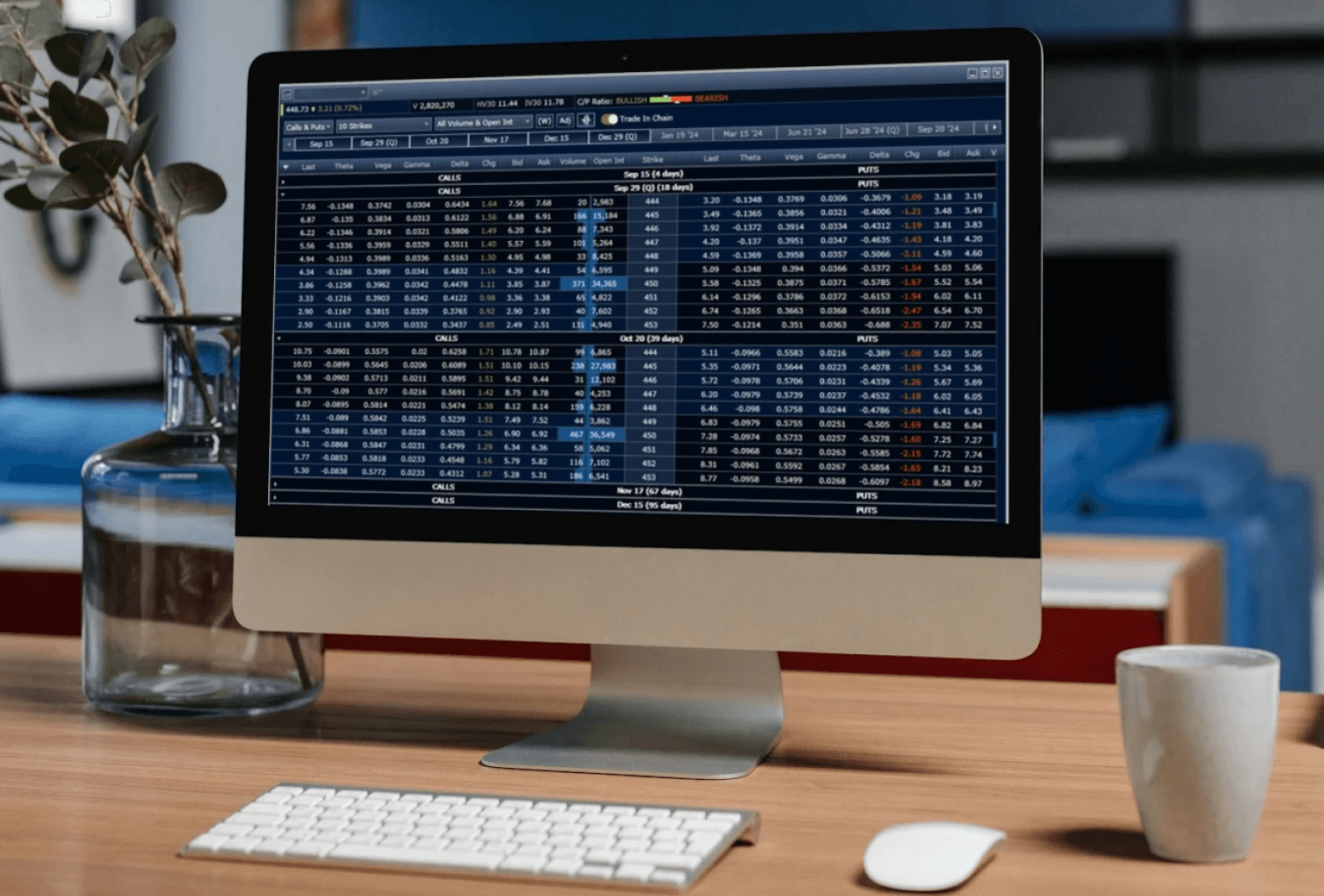
Pattern recognition: when traders face tight fills or thin liquidity, they need indicators that tolerate latency and lower sample counts. If your chain has wide bid-ask spreads or you trade near expiry, prefer rule sets that reduce trade frequency and enforce defined-risk structures, because a single messy fill can erase a week of edge. Match indicator cadence to your expiry window, not the other way around; short-window indicators for intraday scalps will overtrade weekly legs and blow up gamma exposure.
How do you judge an indicator’s sensitivity and durability?
Problem-first: an indicator that looks perfect in one bull market will often disintegrate when volatility regime shifts. Build a parameter stability check, not just a single backtest. Use rolling-window ranking to identify parameter bands that remain profitable across years and volatility regimes, and drop any settings that work only in a narrow slice. Also, test for execution fragility by replaying fills with realistic slippage, because the mathematical edge vanishes once fills widen by a few ticks.
What tradeoffs should you weigh when pairing tools?
Confident stance: orthogonality matters more than popularity. Pair a price-structure detector with a separate, low-correlated volatility gauge so your entry timing and sizing are independent tests. According to Lakshmishree Investment, 70% of traders use a combination of EMA and RSI for better accuracy, which explains why many choose a fast trend read plus a momentum filter. And Lakshmishree Investment, 50% of successful options traders rely on Bollinger Bands for volatility analysis, so volatility detectors deserve a primary role when your P&L is sensitive to short-term IV moves.
How do you prevent indicator overload from ruining execution?
This challenge appears across intraday and swing contexts: too many lights on the dashboard paralyze action. Limit your live stack to the smallest set that answers three questions: price direction, volatility regime, and liquidity readiness. Convert those answers into a one-line trade template, with strike, entry limit, and maximum leg width prefilled so you can act fast. The simpler your life checklist, the fewer post-rationalizations after a bad fill.
Most teams validate indicator combos with long, disjointed paper tests because it feels thorough and safe. That works early, but the hidden cost is slow iteration and rules that never face real drawdown constraints. Platforms like funded accounts for futures trading let teams run the same indicator-driven rules under the exact drawdown and payout constraints they will face, compressing iteration time and surfacing execution issues before real capital is at stake.
What governance keeps indicator tuning honest?
Constraint-based: treat each parameter change as a controlled experiment. Log the prior parameter, the rationale, expected outcome, and a 30-day validation plan with capped real capital. Use versioned rule sets with timestamps so audits can replay which parameters were live on any trade. Enforce a simple rollback rule, for example, if live expectancy moves against the hypothesis for three consecutive regime shifts, revert and re-run the experiment at a smaller scale.
When should you replace an indicator rather than tweak it?
Specific experience: indicators deserve retirement when their optimal parameter window shrinks, and their real-world fills diverge from paper expectations. If you see persistent slippage, declining hit rates, and sensitivity to minor parameter tweaks, freeze it, run a small-cap parallel A/B test with an alternative, and only promote the replacement after it has proven stable across at least one complete volatility cycle. Think of it like replacing a worn tire, not patching a slow leak. Think of indicator selection like shoe choice for a mountain trail: the wrong shoe won’t ruin a flat road, but it will end your day when the terrain turns steep and wet. That choice feels final now, but the real test comes when someone audits every indicator decision under pressure, and every justification must hold.
Related Reading
- Fibonacci Trading Strategy
- Best Prop Trading Firms
- ORB Trading Strategy
- Crypto Swing Trading Strategy
- Best Copy Trading Platform
- Best Proprietary Trading Firms for Beginners
- Best Stocks for Options Trading
- Silver Bullet Trading Strategy
- Order Block Trading Strategy
- The Strat Trading Strategy
- Supply and Demand Trading Strategy
- Profitable Gold Trading Strategy
- Higher High Lower Low Trading Strategy
Unlock up to 50% off Your First Funded Account for Futures Trading
If you've mastered these ten indicators and are ready to trade them with funded capital, you need a clean path that turns those rule-driven signals into live buying power without second-guessing. Most traders watch momentum stall at the funding gate when audits, slippage, and drawdown constraints collide, so platforms like AquaFutures offer instant funded accounts, clear auditable rules, fast support, and real payouts, with onboarding incentives like up to 50% off your first funded account and rotating BOGO bonuses to get your indicator-backed strategies live sooner.
