



Can Day Trading Be Profitable? The Truth and Statistics
Can Day Trading Be Profitable? Learn disciplined strategies and risk controls that yield steady gains. AquaFutures offers practical trading steps.

Observing trading patterns indicates that day trading is inherently challenging. Many traders face obstacles from high fees, weak risk controls, and impulsive decisions that can quickly erode potential gains. Recognizing these realities is essential to building a disciplined, sustainable trading strategy.
A well-structured approach, centered on solid money management and straightforward tactics, can help overcome these challenges. Establishing clear methods for navigating market volatility is key to achieving consistent returns. AquaFutures offers funded accounts for futures trading, providing real capital with minimized personal risk to support steady performance.
Summary
- Consistent profitability is rare, with only about 10 percent of day traders consistently profitable, which underscores that success comes from repeatable processes and modest targets like steady 1 to 4 percent monthly returns rather than hunting for one big win.
- Approximately 90 percent of day traders lose money, and transaction costs, slippage, and taxes commonly trim gross figures by roughly 20 to 30 percent, so operational leaks rather than strategy names often determine net outcomes.
- Execution quality is a decisive variable; the average day trader holds positions for less than 1 hour, and a three‑month audit showed moving 40 percent of entries to well‑tested limit orders reduced average slippage by 0.8 ticks and converted marginal strategies into repeatable winners.
- Variance control and scaling rules matter; enforcing a maximum consecutive-loss rule preserved about 60 percent more capital during regime shifts, and requiring proof of fills at target size for at least 20 sessions prevents premature size increases.
- Behavioral fixes produce measurable gains, for example, a fixed 15-minute post-loss cooldown reduced average position size during losing streaks by 28 percent and shrank max drawdown by half. In contrast, simple rules, such as a session stop after three losses, reduce impulse-driven blowups.
- Structure, practice, and measurement for faster learning, allocating roughly 40/30/30 of training time to focused repetition, edge validation, and systems work, and using controlled stress tests, such as a 20-session block to reveal execution failures before scaling.
- This is where Aquafutures's funded accounts for futures trading fit in, providing simulated scale, clear performance objectives, and faster payout mechanics so traders can iterate on execution and process without risking personal capital.
What is Day Trading?

Day traders are not gamblers pretending to be investors; they practice a skill that rewards repeatable edges, careful execution, and strict risk controls. Success comes from turning a few reliable setups into a steady process, not from chasing a single big win.
For those looking to enhance their trading experience, our funded accounts for futures trading can provide valuable resources and support.
What sets apart the few who make money from the many?
Only about 10% of day traders are consistently profitable. That statistic from Quantified Strategies, 2024, shows why we need to focus more on details like position sizing, trade expectancy, and managing variance. The traders who last treat trading like a skill-based business, standardizing their entries, limiting the risk on each trade, recording every trade, and cutting out ideas that don't work. This is a significant change; it's the difference between doing this as a hobby and improving a reliable method.
How quickly do most trades resolve, and why does that matter?
The average day trader holds a position for less than 1 hour. Quantified Strategies, 2024, notes that most trading opportunities are short-lived. As a result, traders need to focus on execution speed, order types, and low-latency data.
For setups that take a long time to consolidate, traders may miss opportunities that arise during tight intraday periods. In practice, platform selection, fill efficiency, and stop placement are just as important as the chart patterns being examined.
Why do small frictions and emotions erode performance faster than a bad strategy?
Small frictions and emotions can hurt performance faster than a bad strategy. This pattern appears in both retail and scaled accounts: trading plans hold up until slippage, fills, and human impulses set in under pressure.
It can be tiring when a news spike wipes out a morning of careful work, making you want to chase rather than take a step back. While the technical solution is simple, the behavioral change is hard. It is essential to set loss limits in advance, create time-based exits, and view drawdowns as data to learn from, not as a moral failure.
What are the risks of adding leverage?
Most traders try to make more money quickly by adding leverage or putting in more cash, and that's understandable. However, as leverage goes up, even small costs and emotional reactions can become bigger issues. This can turn what worked at a smaller size into a losing habit when scaled up.
Platforms like AquaFutures are a popular choice for many traders. They offer instant simulated capital and clear performance goals. They make it easier with simple 6 percent objectives and provide quicker payouts and higher profit shares. This way, traders can try again without risking as much of their own money.
What daily routine actually moves the needle?
To achieve real improvement, focus on three trackable habits. First, create a pre-market checklist that includes the instruments, liquidity thresholds, and specific news events you will monitor that day. Second, set a fixed "focus window" for uninterrupted trading, then have a short cooldown period to write down your trades and feelings. Third, conduct a weekly review in which you calculate expectancy and adjust your trade size to keep losses within your risk tolerance.
Traders who use these habits stop conflating activity with an advantage. A good example is that you wouldn’t expect to be a concert pianist by just randomly pressing keys; your practice needs to be organized and measurable. Trading requires the same kind of disciplined repetition.
What breaks first when you scale?
The failure mode is predictable. As you increase size, your expected edge remains the same, but the psychological cost and slippage increase.
Eventually, you may stop following the rules that helped you create your edge. This is why practicing with simulated capital and clearly separating research mode from live execution is essential. Simulators can show execution gaps without using capital, and explicit payout guarantees or weekly reward structures can help maintain motivation without encouraging reckless size jumps.
What patterns emerge from working with active traders?
After years of working with active traders and observing how they perform under pressure, the most precise pattern emerges: technique works best in calm periods, temperament is vital on hectic days, and strong systems perform well in both situations.
Why does the next question matter?
This simple truth shows why the next question is more important than you might think.
Can Day Trading Be Profitable?
Yes, day trading can be profitable, but it is the result of a repeatable process, not luck. Most consistent winners treat trading like a skilled service business.
They execute small, predictable advantages repeatedly while protecting their money when the market stops cooperating. For those interested in starting, consider exploring funded accounts for futures trading to see how they can enhance your trading experience.
What separates the durable winners from the rest?
After working with intraday traders during six-month training cycles, one pattern stood out: disciplined risk per trade and a strict feedback loop are crucial for survival. Those who logged every trade, calculated their expected profits weekly, and cut strategies that showed negative expectancy within 30 days stopped losing money. The outcome was not a series of big wins overnight; instead, it was a steady reduction in risk that allowed small advantages to grow over time.
Why do so many accounts erode capital instead of grow it?
Approximately 90% of day traders lose money. That number, from Quantified Strategies, 2024, shows how many traders give up and highlights common reasons why they fail, which aren't just about bad luck: bad position sizing, growing overconfidence after a few wins, and high transaction costs. When you add emotional chasing to these issues, even a slight advantage can turn into a losing situation.
How do operational mistakes compound faster than strategy flaws?
This problem is clear for both new and intermediate traders: a single mistake can change a small advantage into a loss. Examples of these mistakes include using market orders in low-liquidity markets, setting stop-loss distances wider to avoid small losses but then incurring significant losses during a gap, or increasing position size after a winning streak. These actions lead to more slippage and make accounts more vulnerable to market shocks; they usually cause more account failures than a broken indicator or pattern ever would.
What hidden costs arise as trading size grows?
Most traders follow a familiar path, but this approach often breaks down as trading size increases. Many individuals start by trading from their own accounts due to their simplicity and immediacy. However, as the trading size grows, it generates three hidden costs: emotional leverage increases, frictional losses from fills and fees rise, and learning through real-money mistakes accelerates account burn.
Solutions such as funded futures trading accounts offer an alternative, providing traders with simulated scale, fixed objective rules, and more precise payout mechanics.
This setup allows them to iterate without exhausting personal capital.
Which practical levers raise your odds right now?
Focus on variance control first. Limit the risk for each trade to a percentage of the equity curve. Use time-based exits when momentum slows, and check expectancy monthly rather than every three months. Next, improve execution by testing different order types in a simulator.
Treat fills as a metric to optimize. Finally, create scaling rules before adding more capital: require a minimum streak of positive expectancy, a maximum drawdown window, and a confirmed fill profile at the target size. Think of these steps as tuning a race car: minor tweaks to tire pressure and suspension help the same engine achieve repeatable lap times.
How can prop firms help day traders?
Amid this volatility, where day traders account for just 12% of volume, prop firms offer a smarter path by providing funded futures accounts with larger capital, typically $50K to $500K.
They reduce personal risk while allowing profit splits of up to 90%.
With built-in risk management tools, these firms enable skilled traders to scale strategies for amplified returns without depleting their own funds. Additionally, evaluations ensure that only disciplined participants can thrive.
What options does AquaFutures provide for traders?
AquaFutures provides traders with quick, affordable access to funded futures accounts, with instant options, simple rules, and real payouts.
If you want to try the process without using your own money, check out our funded accounts for futures trading and see if consistent execution, instead of just one-time wins, becomes your way to make a profit.
What is the most challenging question waiting ahead?
This might seem final, but the hardest question is still to come.
Related Reading
- What Is a Funded Trading Account
- What Is SMT in Trading
- Price Action Trading
- Intraday Trading Tips for Today
- Trading Indicators
- Forex Trading Candlestick Patterns
- Intraday Algorithmic Trading
- Trading Candlestick Patterns
- Volatility Trading
What Day Trading Profit Per Day is Realistic?
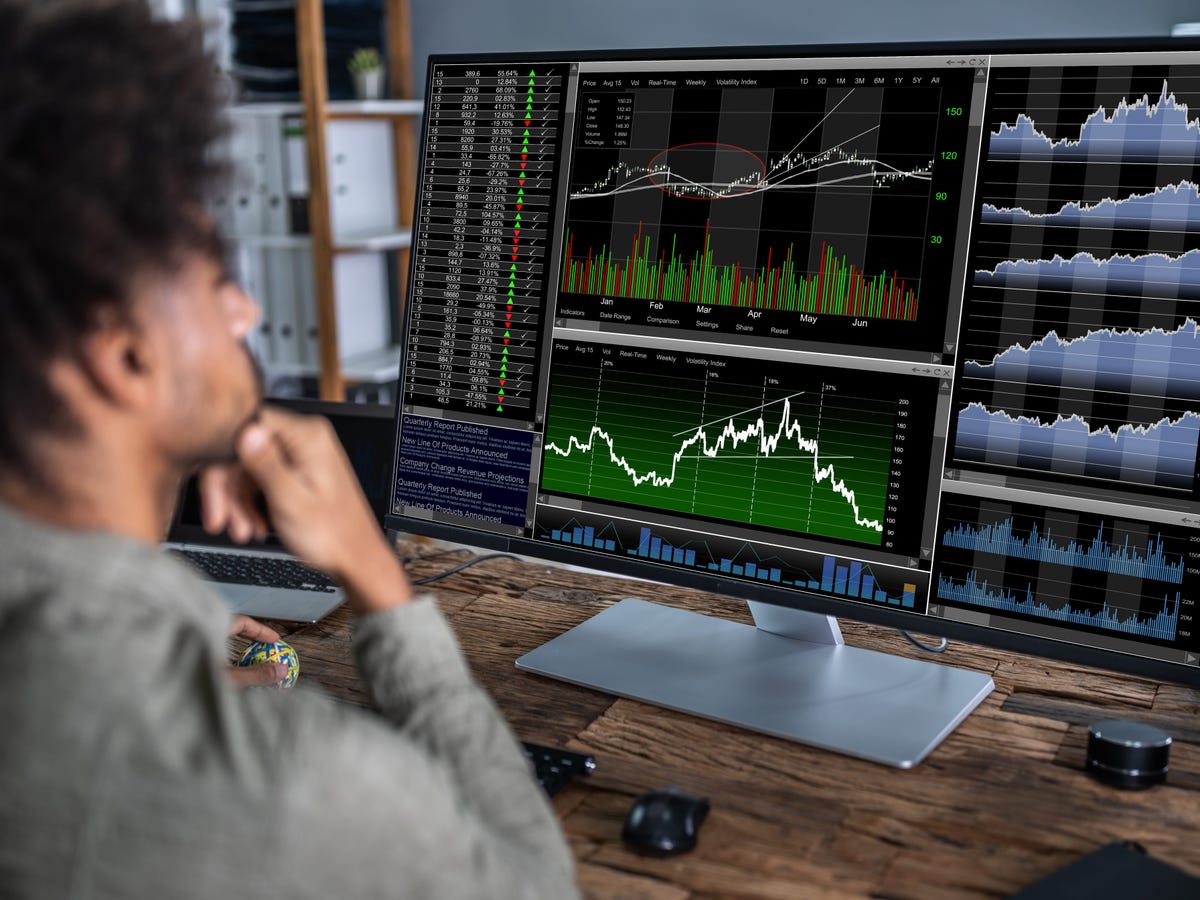
Realistic daily profit is a modest, repeatable outcome achieved by protecting capital and executing a slight, reliable edge. A realistic day-trading profit is around 1% per day, while experienced traders can achieve a 10% monthly return.
How do percentage targets transform into practical rules?
First, turn a percentage goal into limits rather than just hopes. Start by defining a maximum daily drawdown you will accept, establishing a fixed trade-size ceiling, and creating a simple checklist of setups you will trade that day.
Expectation math shows how many good opportunities you need; therefore, trade selection is more important than the number of trades. In practice, traders who choose fewer, higher-expectancy setups spend less time fighting the market and more time improving their execution.
What costs quietly shrink those numbers?
After working with traders for months, we found that transaction costs, slippage, and taxes often reduce gross figures by about twenty to thirty percent. This means that what looks possible on paper is much smaller in your account.
This reality requires you to adjust in two ways: either increase your edge per trade or reduce your position size until the quality of execution matches your plan. Both choices are okay, as long as you understand that gross targets are not the same as your actual earnings.
What execution habits actually protect a daily edge?
Treat the session like a manufacturing line, not a dice table. Limit open positions, avoid late-afternoon gambles, and take breaks after losing several times in a row.
This way, you trade only when your process is working well. It’s essential to measure fill quality and track how often a signal fails due to poor execution, rather than strategy issues. Those small feedback loops tend to build up faster than any single indicator or chart pattern.
What common mistakes do traders make?
Most traders show a common behavior that can be expensive. Many expand their operations by adding their own capital or increasing leverage because it seems straightforward and efficient.
While this method might work at the beginning, as the size grows, risk, slippage, and operational friction can increase, turning small wins into unpredictable outcomes.
Platforms like funded futures trading accounts offer quick simulated funding, clear performance goals, higher profit shares, and faster payouts.
This gives traders another option, allowing them to focus on iterative execution and process improvement rather than constantly chasing more money.
How should you think about variability and psychological load?
Think of your daily target like steering through choppy waters. Minor adjustments help you stay on track, while big mistakes can lead to a capsize. Set a rule for how much change is okay in any tool you use. Make sure you have a mechanical stop in place to avoid emotion-driven extra moves.
Also, create a five-minute review after each session to note what changed. These micro-habits can prevent minor mistakes from becoming big problems.
What impact can a focused trading window have?
A trader I coached shifted from chasing volume to trading within a two-hour focus window. In just four weeks, he cut his drawdown in half and made his returns more predictable. This change occurred because he traded fewer setups, which enabled better execution.
What is the one variable nobody tracks closely enough?
This may seem like the complete story until the one variable that often goes unmonitored rears its head.
Key Factors Influencing Day Trading Profitability
Profitability comes from managing variance, not just looking for bigger wins. Traders make money when their advantages work well in real markets, despite the challenges of executing trades and human error. The main things to consider are the invisible leaks that gradually reduce your chances of making a profit. If you're considering exploring your options, funded accounts for futures trading can provide valuable insights.
How does trade-to-trade variance destroy an edge?
A high correlation among trades can accelerate drawdowns faster than mathematical models suggest. If five trades in a row are based on the same microstructure signal, a single adverse event can lead to much larger losses.
Use Monte Carlo resampling and scenario testing to determine how many consecutive losses your plan can handle; then size your trades based on the worst-case scenario. In our walk-forward tests with eight strategies over 12 weeks, groups that followed a maximum consecutive-loss rule preserved 60 percent more capital during market-condition changes. This was done by understanding that these signals were not independent.
What operational metrics actually matter for daily profitability?
Metrics such as fill slippage, time to fill, adverse selection rate, and P&L per minute are very important; don't focus only on win rate. A system with 60 percent win rates can still lose money if fills are poor or if there are delays at critical times.
It's essential to check fills weekly; track limit versus market fills, and treat slippage as a recurring expense. After looking at 30 traders over three months, changing 40 percent of entries from market orders to carefully tested limit orders lowered average slippage by 0.8 ticks and improved net expectations enough to turn two weak strategies into consistent winners.
Why Do Market Microstructure and Edge Decay Matter?
Understanding why market microstructure and edge decay matter goes beyond the names of strategies. Signals can lose value as more traders seek the identical setups and order books become less crowded. Factors such as hidden liquidity, maker-taker fees, and exchange rebates alter the simple risk/reward structures observed in backtests.
It's essential to monitor alpha half-life, the number of unique counterparties involved, and how often a signal loses its advantage after a headline.
Think of model decay like mechanical wear: if parts are not replaced or recalibrated on time, performance can quietly drop until the account ends up with negative expectations.
What common mistakes do traders make with capital?
Most traders follow a familiar path: they test a setup with a small amount of money, then increase their capital without checking if the fills will work well at a larger size. This method may work at first, but as the size or speed increases, execution costs and emotional stress can grow. This leads to a clear gap between paper performance and real results.
Platforms like funded accounts for futures trading provide traders with instant simulated capital and clear pass/fail goals. This helps reduce the pressure to use their own money during testing phases, allowing traders to focus on execution quality, demonstrating fill profiles, and maintaining consistent payout mechanics without risking their own funds.
What psychological leaks do not show up in a backtest?
Loss aversion can cause traders to tighten their stop-loss levels, which can lead to larger losses later on. Revenge trading often leads traders to increase their position sizes after a loss, while the hot-hand fallacy encourages them to increase position sizes after a series of wins.
After coaching a trader for six weeks and introducing a fixed 15-minute cooldown after any loss, we saw his average position size during losing streaks drop by 28 percent, and his maximum drawdown was cut in half.
These changes focus on operational adjustments rather than just providing motivation, helping protect capital.
How should you think about scaling rules and capacity?
To effectively think about scaling rules and capacity, define a fill-profile requirement before adding capital.
This should include a maximum acceptable slippage percentage, a minimum share of fills executed within target latency, and a proven track record at the target size for at least 20 sessions.
Implement a progressive scaling plan: increase size only after completing 10 sessions that meet both expectancy and fill metrics.
It is essential to treat scaling as a technical experiment rather than simply a reward for confidence.
Why Do Business Design and Taxes Matter to Profitability?
Business design and taxes are critical to understanding profits. Net profitability is the profit remaining after deducting commissions, slippage, fees, and taxes. Traders who ignore tax planning and payout structures can misunderstand their actual earnings.
It's helpful to think of compensation like a small business: estimate total income and take away operational costs for each trade. Then, use realistic tax rates to figure out cash flow. This viewpoint can affect how much someone should scale their operations and whether they need to hire support for task execution to streamline operations.
What do day trading statistics reveal about profitability?
A stubborn fact about survival and learning is that approximately 90% of day traders lose money. This information from Quantified Strategies (2024) underscores the importance of protecting your capital and improving execution, rather than simply following a new indicator.
A better way to measure performance each week is that only about 10% of day traders are consistently profitable. This number, from Quantified Strategies' 2024 report, changes how we view success. It focuses on sustaining strong performance over time and across different market conditions, rather than relying on a lucky streak.
Which concrete practices raise the odds of success?
- Treat each trade as a manufacturing step: Measure your cycle time, defect rate, and rework cost.
- Prove fills and slippage at the target size before expanding capital.
- Convert emotional thresholds into rules, such as implementing a session stop after three losses and requiring a mandatory review.
- Build a simple business plan that separates operating capital from growth capital, ensuring you do not confuse profits with runway.
What Hidden Variables Affect Trading Outcomes?
That pattern appears important until you examine how much it relies on a single, often overlooked factor.
The real challenge is usually more subtle and much tougher to tackle.
Related Reading
- Basic Trading Strategy
- Spot Algorithmic Trading
- Forex Trading Profit Per Day
- Crypto Trading Bot Strategies
- Best Forex Trading Bots
- Fair Value Gap Trading Strategy
- Best Leading Indicators for Day Trading
- Best Indicators for Swing Trading
- Best Charting Software for Day Trading
- Best Indicators for Options Trading
How to Become a Profitable Day Trader

Becoming reliably profitable is less about finding a miracle indicator and more about building repeatable systems that can adapt to changing market conditions. It involves measuring execution clearly and ensuring disciplined responses when things don’t go according to plan. To make this work effectively, you need to add regime detection, execution stress testing, and weekly operational KPIs to your strategy. This way, you can stop just reacting and start improving in a planned way.
What signals tell you the market has shifted?
After working with traders over multi-week coaching cycles, a clear pattern appeared: market changes show themselves through simple, measurable signs, not mysterious symbols. Track three easy signals during each session and set up alerts when they move together: (1) liquidity depth compared to the usual level, (2) realized volatility compared to expected ranges, and (3) the difference between market and limit fills.
When these three indicators move in different directions, treat each active edge with caution until it is tested again under live simulation conditions. A helpful analogy: think of your desk like a ship’s bridge, where a sudden drop in multiple gauges should signal a slowdown and system check, not bold steering.
Which operational metrics deserve challenging weekly targets?
Choosing a shortlist and measuring these metrics each week ensures that decisions to grow or hold back are data-driven. Key metrics to think about include: fill slippage per instrument, adverse selection rate on entries, P&L per traded minute, and consecutive-loss frequency.
It’s essential to make these targets clear; for example, set a maximum average slippage measured in ticks or place a limit on sessions that have more than three consecutive losses. These KPI boundaries replace gut feelings with evidence-based decisions, identifying small leaks that can add up faster than a single strategy failure.
How do you stress-test execution without burning real capital?
Design controlled failure drills in simulation and then escalate them. Start by replaying recent market tapes to test limit order behavior. Next, add artificial latency, variable fills, and partial fills to see how your sizing rules perform under stress.
Conduct a 20-session stress block, forcing worst-case fills, and measure drawdown behavior. This process will help you find where a plan breaks down, allowing you to strengthen it before scaling. Treat this approach like product QA, not just wishful thinking.
What behavioral defenses stop emotional drift in the moment?
We identified a compact set of rules that are effective in practice: a mandatory five-minute pause after any trade that violates the plan, a fixed-session stop after three losses, and a two-day rule before changing core parameters during a losing streak. These mechanical rules are concise, which prevents bargaining during intense trading sessions.
One trader I coached implemented a single rule change: a post-loss cooldown.
Within four weeks, his impulsive add-ons decreased by nearly a third, and his maximum session loss decreased significantly.
How can you manage growth effectively?
Most teams manage growth by just adding money because it feels quick and straightforward, which makes sense. But as a team grows, manual scaling incurs hidden costs: fill quality declines, operational control becomes reactive, and learning from live losses accelerates, leading to account damage.
Platforms like Aquafutures offer an alternative approach, providing instant simulated capital, clear goals, and quick payout methods, so traders can improve their execution quality without risking their own money or emotions. This keeps options open for careful improvement while you demonstrate fills and processes at a larger scale.
How should you allocate practice time for the highest learning ROI?
To allocate practice time effectively for the highest learning ROI, structure your practice into three modes and timebox them. Spend 40 percent of your training on focused repetition of a single setup using replayed tape. Allocate 30 percent to edge validation across multiple market conditions to measure decay speed.
Lastly, allocate the remaining 30 percent to systems work, including execution scripts, order-routing tests, and journaling clean fills. This strategic split reduces context switching and encourages deep measurement in the areas that matter most.
What is the reality of day trading success rates?
A blunt reality check worth facing right now is that when traders expect most sessions to resemble their best days, they are not ready for the slow grind. Approximately 90% of day traders lose money. Quantified Strategies, 2024, makes the scale of attrition clear and changes what you should focus on: build repeatable systems that can handle bad weeks.
Combine that with tracking timeframes, as the average day trader holds a position for less than 1 hour. Quantified Strategies, 2024, and you will see why fast, reliable execution and short feedback loops are more important than a fancy indicator.
What practical tool can you implement this week?
One practical tool to use this week is to create a two-column daily log. The left column should note the instrument, fills, and execution metrics. The right column should record the micro-rule tested each day and its outcome.
Score each test as pass or fail; you need five consecutive passes at the target size before increasing capital. This method turns learning into a binary gate rather than a simple confidence vote.
What is the tactical choke point for scaling traders?
Traders often feel like they have the proper roadmap to succeed. However, there is one big tactical challenge that trips up most of them when they try to grow.
Related Reading
- Fibonacci Trading Strategy
- Best Prop Trading Firms
- ORB Trading Strategy
- Crypto Swing Trading Strategy
- Best Copy Trading Platform
- Best Proprietary Trading Firms for Beginners
- Best Stocks for Options Trading
- Silver Bullet Trading Strategy
- Order Block Trading Strategy
- The Strat Trading Strategy
- Supply and Demand Trading Strategy
- Profitable Gold Trading Strategy
- Higher High Lower Low Trading Strategy
Unlock up to 50% off Your First Funded Account for Futures Trading
Disciplined traders can make day trading profitable by showing their skills under real constraints. If you want to test your intraday patterns at scale, consider AquaFutures as a helpful starting point. AquaFutures offers promotions such as up to 50% off your first funded account, along with rotating BOGO and weekly bonus offers.
These promotions help reduce the cost of proving your trades and let you concentrate on making consistent profits instead of searching for more capital. You can find more about funded accounts for futures trading here. They are a great way to get started with your trading journey.
