



What Is Intraday Algorithmic Trading? Benefits & How to Start
Intraday Algorithmic Trading explained: Learn realistic fills, risk controls, and strategy design with AquaFutures. Build a scalable edge today.
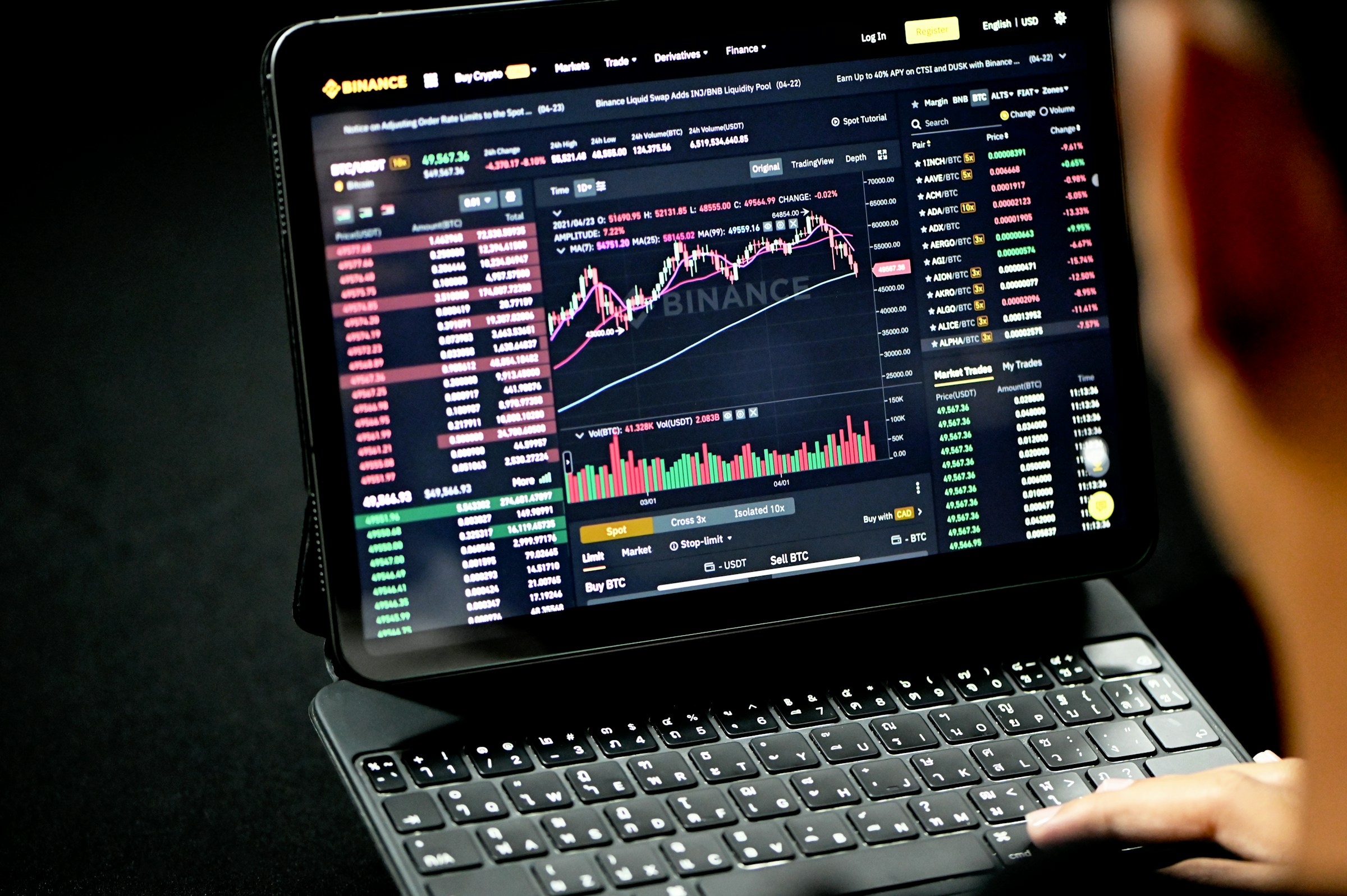
Recurring trading patterns in the market reward quick, systematic decisions, yet many traders struggle when relying on intuition and slower execution. Algorithmic trading demands a clear strategy that incorporates backtesting, precise data analysis, latency control, and robust risk management. Strategies addressing momentum, mean reversion, and scalping approaches can transform how opportunities are captured in real time.
Automated systems minimize the pitfalls of emotional trading by executing well-tested strategies with precision. AquaFutures supports traders by offering funded accounts for futures trading, which provide real capital, live execution, and defined risk parameters to help refine and scale algorithmic trading approaches.
Summary
- Execution is the core lever for intraday algos, because optimizing order types, slicing, and latency converts simulated signals into live PnL, and algorithmic execution can reduce transaction costs by 10–15% while trades execute in milliseconds.
- Automated flows compress opportunities, with over 70% of US market trades now algorithmic, which makes over-optimized backtests and naive fill models common failure modes when strategies hit real order queues.
- Robust validation demands tick-level simulation, exchange-matched fills, and walk-forward tests that iterate parameters monthly, and committing to fixed trials of 30 to 90 trading days reduces manual overrides and stabilizes equity curves.
- Prioritizing repeatable signals and conservative risk rules scales better than chasing nanoseconds, and intraday automation can increase trading efficiency by up to 30%, letting teams run more hypothesis tests per engineer.
- Operational monitoring matters, track latency percentiles, fill rates, and cancel-to-fill ratios to detect drift quickly, especially since over 50% of traders report challenges running algos during high volatility regimes.
- Slippage and micro-impact silently eat edge, with slippage cited as causing around a 15% increase in transaction costs, so measure marginal slippage per additional $10k and favor breadth of low-correlation contracts over piling size into one instrument.
- Aquafutures's funded accounts for futures trading address this by offering realistic simulated execution, staged capital up to $450K, and standardized risk rules so traders can validate repeatability under live-like conditions.
What is Intraday Algorithmic Trading, and How Does It Work?

Intraday algorithmic trading uses automated strategies that mix signal generation with careful execution and intraday risk controls. This method cycles positions during a single session to capture short-lived edges. Careful validation and real-time execution monitoring are crucial because performance metrics change when the strategy moves from backtesting to real-world market microstructure. Additionally, using funded accounts for futures trading can enhance your trading experience by providing the necessary capital for executing these complex strategies.
How does execution influence PnL so directly?
Execution is not something to think about later; it is the main lever. Modern intraday systems can execute trades in milliseconds. This means entry rules, order slicing, and cancellation logic need to be designed with this speed in mind.
Traders have to choose between market, limit, and passive post-only tactics, linking these choices to execution algorithms like TWAP, VWAP, or percent-of-volume slicing. Making the wrong choice can increase slippage, turning a profitable backtest into a losing live run.
Where do edges vanish between backtest and live trading?
This pattern appears in both momentum and mean-reversion systems: strong historical performance disappears when you account for realistic fills, order queueing, and exchange fees.
According to Investopedia, "algorithmic trading accounts for 70% of the overall trading volume in the U.S. equity markets," most short-term moves are caused by automated flows, which limit chances and increase competition for liquidity.
The usual failure mode is straightforward and tough: over-optimized parameters, poor slippage modeling, and naive beliefs about fill probability.
What practical validation steps stop that leakage?
Treat backtesting like controlled lab work, then test it in real-world situations. Use tick-level simulation or exchange-matched fills to understand queue position and market impact. Keep an honest out-of-sample window that you never change, and run walk-forward tests that adjust parameters monthly rather than yearly.
Checks at the instrument level are vital: measure how often your limit orders get filled at each spread level, record realized slippage for each venue, and run sensitivity tests by changing latency and fee estimates by reasonable amounts. Think of it like stress-testing a bridge: you do not guess how much weight it can handle; you measure until you find the failure points.
Why focus on repeatability instead of raw speed?
After coaching intraday algo traders in different funded evaluation programs, a clear pattern showed up within a year.
Teams that focused on repeatable signals and adhered to conservative risk rules were able to protect their capital and grow their operations.
On the other hand, teams that chased nanoseconds often lost their advantage in a pointless effort to get faster.
Many retail traders believe they can't compete with high-frequency firms, leading them to adopt slower strategies. This idea makes sense and, in many cases, is the right choice.
The innovative approach is to create strategies that remain profitable even if execution worsens, rather than joining an arms race to achieve lower latency.
What challenges do traders face when scaling?
Most traders start with personal accounts and paper tests, which feel comfortable. This method works until traders try to grow, revealing issues like execution differences, lack of capital, and slow processes. These problems can cause missed chances and wasted development time.
Platforms like AquaFutures provide instant simulated funded trading accounts and evaluation programs with realistic trading results, offering up to $450K in capital and quick payouts. This setup helps traders improve their performance with adequate risk controls, while the platform handles funding and compliance. This allows skill and execution to be the main drivers for growth.
What operational monitoring keeps a live intraday algo honest?
Instrument live trade telemetry into dashboards that show latency percentiles, fill rates by venue, realized versus expected slippage, and position exposure in seconds.
Set alerts for logic failures, stale data feeds, or execution divergence that goes beyond a set tolerance.
Conduct routine post-trade reconciliation to match your OMS with exchange reports, flagging any systematic fill shortfalls. Small issues can add up quickly during volatile sessions; the difference between having an edge and losing capital is often just one overlooked exception.
Why is having an execution plan crucial?
Testing without an execution plan is just theory, not real trading. Consider a car that works great on a test track but struggles when driving through a city street damaged by floods. This example shows what happens when moving from simulated fills to actual order queues. By improving the execution model and checking it in tough situations, one can build a strategy that is both repeatable and monetizable.
What implications does it have when a simulation feels comfortable?
The comfortable feeling of "it’s working" in a simulation is fragile. What breaks next can be more important than expected.
How Does Intraday Algorithmic Trading Differ From Other Strategies?

What many people miss is that intraday algorithmic trading is a distinct system, not just a faster way to trade.
You create signals, execution methods, and monitoring with a focus on minute-to-minute liquidity, venue quirks, and marginal slippage. Making a profit depends as much on where and how you send orders as on the signal itself.
How does timing in liquidity affect signal design?
Markets move with a daily rhythm, so strategies are adjusted to that rhythm. Opening auctions, the quiet time in the middle of the session, and the spike in volume before major announcements all create different chances for risk and reward. This means that we need to create event-aware scheduling and event-time features instead of just relying on regular time bars.
Since automated trading now takes a big part in how quotes are made, it’s important to model not just prices but also queue dynamics and cancellation rates to figure out if a passive order will be filled or taken away. With that in mind, consider our funded accounts for futures trading to enhance your trading strategies.
What order types and venue tactics actually change execution?
Choosing order types goes along with specific trading ideas. Midpoint pegs lower spread costs but keeps traders in queue positions. On the other hand, immediate or cancel and fill or kill orders remove uncertainty in execution, but raise market impact. Also, reserve and hidden orders obscure the trader's intentions and typically reduce the likelihood of execution.
The choice of venue is very important too. Fee and rebate schedules, as well as matching algorithms, vary a lot, which forces routing logic to look at historical fill rates for each venue, not just the best price. This detail in the process ultimately decides if a small advantage can last as trading increases.
How should you think about capacity and scaling?
Treat capacity as a practical curve, not just a theory. Measure marginal slippage for every additional $10,000 or for each 1% in volume participation. Then, plot the point where adding more capital gives you diminishing returns.
Often, the best way to grow is by increasing breadth. This means adding low-correlation contracts and parallelizing many small, well-tested signals, rather than putting more money into a single asset, where market impact can skyrocket.
Most teams start by using their own systems, as they seem flexible and familiar. While this approach works on a small scale, as their holdings and execution complexity rise, routing, realistic fills, and regulatory checks can become major obstacles. This fragmentation can slow down performance and the ability to make changes quickly.
Platforms like funded accounts for futures trading offer instant simulated funded accounts with realistic fills, capital up to $450K, and operational controls. This helps teams speed up their iteration while keeping auditability and compliance intact.
What telemetry tells you when a strategy drifts?
Per-trade diagnostics are essential for quick insights. It's better to wake traders up at 2 a.m. instead of waiting until they check the monthly PnL. Key metrics to monitor include the probability of a trade being filled, queue positions, the ratio of cancelled to filled orders, and how execution prices compare to the midpoint.
Running simple A/B experiments that switch between different order types or routes for a small group helps quickly measure changes in slippage.
If those metrics change, it shows that the market mechanics have changed, but the underlying signal itself has not.
Where does the PnL really come from?
Execution is not just a cost center; it is a source of alpha when it is continuously optimized. On average, algorithmic execution reduces transaction costs, helping strategies that might be hurt by friction. This is shown by uTrade Algos, 2025: "Algorithmic trading reduces transaction costs by 10-15%".
It is essential to adjust the business model based on the cost savings achieved. It's also important to test how those savings might shrink as scale increases or as fee structures change.
How should you think about the mechanics of execution?
Think of intraday algos as racecars designed for a specific track. Small setup changes can significantly affect lap times. The importance of the pit crew, tires, and fuel strategy is as significant as that of the engine. The following section will show how to get into the cockpit and start driving.
Related Reading
- What Is a Funded Trading Account
- What Is SMT in Trading
- Price Action Trading
- Intraday Trading Tips for Today
- Can Day Trading Be Profitable
- Trading Indicators
- Forex Trading Candlestick Patterns
- Trading Candlestick Patterns
- Volatility Trading
How to Start Intraday Algorithmic Trading

Start by building a tight feedback loop. First, learn the tools, collect tick-level data, and test small using realistic fills. Only increase your capital when the real-life slippage matches your simulations.
Start with one clear hypothesis for each strategy, create a measurable execution plan, and set conservative risk limits. These limits will require you to demonstrate repeatability before you pursue growth.
What skills should I focus on first?
Focus on mastering Python for data work, along with a low-level language like C++ if you want ultra-low latency. Also, get comfortable with asynchronous APIs and message queues. In the first two months, focus on automating data pipelines, writing unit-tested signal generators, and setting up logging that captures every decision. Good telemetry can save you hours when strategies go off track.
Which platform and data vendors actually speed iteration?
Choose a broker and market data vendor that publishes fill statistics and latency SLAs. Validate those claims on a demo account. Our funded futures trading accounts simplify the process, allowing you to focus on honing your trading strategies.
When comparing providers, score them on measurable items such as median round-trip time, historical fill rate for your order types, and the quality of historical tape down to tick granularity.
Expect integration work to take longer than you think; therefore, prioritize platforms that allow you to integrate monitoring and replay feeds without significant engineering overhead.
How should I design my first intraday strategy?
Ask a single, testable question. For example, think about whether short-term momentum on a specific contract does better than transaction costs when you include fees and slippage. Create the simplest set of rules to answer this question.
Then stress-test it under different market conditions and at various times of day. Use walk-forward testing, randomized start points, and single-parameter sensitivity checks to identify which factors most affect performance.
How do I prevent the urge to override the bot?
This is a real, recurring problem: traders often feel compelled to step in during difficult times, which undermines their advantage. After working with traders in various funded trials, one pattern became clear: when they committed to a fixed set of rules for a 30- to 90-day trading trial and recorded every manual change, their equity curves became more stable, and their decision-making noise decreased significantly. Create a simple, enforceable discipline protocol that includes a cooling-off period before any manual trades and a required review after any overrides.
What operational checks keep an algo honest in live markets?
Instrument per-trade telemetry includes comparing expected versus realized fill prices, watching cancel-to-fill ratios, and checking venue-level latency percentiles. It is essential to set up alerts for anomalies. For example, alerts should be triggered when realized slippage exceeds the historical median by a specified amount. A one-button kill feature can help restore the system to a safe state if issues arise.
Also, running small A/B experiments in production is very important. By changing one execution parameter at a time, traders can identify which factors affect slippage in real-world scenarios.
Why track capacity as a curve rather than a number?
Capacity is measurable and should be tracked as a curve. By looking at marginal slippage when order sizes grow in fixed increments, you can find out when marginal returns start to drop below zero.
It's often better to broaden the range of instruments rather than simply increase leverage on a single contract, as this supports more sustainable growth in scalable capacity. It's important to view capacity tests as ongoing experiments, not one-time estimates, because market structures and fee schedules can change.
Why bother with small, real-money starts?
A small live allocation reveals hidden costs that are difficult to model accurately. These costs include issues with queue positions, problems with last-mile APIs, and human errors when under stress.
By funding a small account and running the system for a month while keeping strict records, traders can compare every mistake against their simulation. This one habit helps stop the slow loss of capital that has caught many traders off guard.
What does AquaFutures offer to traders?
AquaFutures provides traders with quick, affordable access to funded futures accounts. These accounts have instant options, easy rules, and steady payouts. Check out AquaFutures’ programs to see live-like simulated runs and pick funded accounts for futures trading that fit your strategy profile.
What important decision must I make next?
That next decision will make you choose what to protect: capital, time, or ego. This choice is more important than you think.
Related Reading
- Basic Trading Strategy
- Spot Algorithmic Trading
- Forex Trading Profit Per Day
- Crypto Trading Bot Strategies
- Best Forex Trading Bots
- Fair Value Gap Trading Strategy
- Best Leading Indicators for Day Trading
- Best Indicators for Swing Trading
- Best Charting Software for Day Trading
- Best Indicators for Options Trading
Benefits of Intraday Algo Trading

Intraday algorithmic trading changes discretionary skill into repeatable operational output. This allows for scaling the edge without adding noise. It offers measurable business tools, like throughput, clear performance records, and repeatable risk controls, which institutional partners and capital programs can assess and support.
How does this change the trading business?
When trades follow rules, they become metrics that can be improved. Traders stop guessing which day was essential and start improving measurable metrics such as trade throughput, realized variance, and execution cost per contract. According to a 2025 report by AlphaGamma, intraday algorithmic trading can increase trading efficiency by up to 30%. This means more tests of ideas can be done per engineer, reducing the time from idea to confirmed result. This change isn’t just about speed; it also shows a new return-on-effort calculus.
How does automation reduce hidden operational friction?
Most small teams spend hours reconciling fills, rebuilding reports, and answering basic compliance questions. Automating these tasks replaces ad hoc firefighting with repeatable processes: automated reconciliation, standardized logs, and alerting that isolates a failing rule instead of the trader.
This is akin to transforming a woodworking bench into a precision shop, where identical parts come off the line and quality control flags the single defective piece for review.
What are the challenges of managing growth?
Many teams manage growth using spreadsheets and manual capital requests because this approach seems low-cost and flexible. While it may work in the early stages, as strategies grow and external capital is involved, these practices can lead to delays, unclear reporting, and missed opportunities to scale.
Platforms like Funded Accounts for Futures Trading centralize simulated funding, provide standardized performance records, and streamline payout mechanics. This reduces onboarding friction and allows traders to show their ability to repeat success without getting overwhelmed by administrative tasks.
How does an algorithm’s predictability change risk allocation?
Quantifying per-trade variance, skew, and max drawdown under controlled execution rules allows for precise capital budgeting.
This clarity enables cleaner portfolio construction: allocating capital to low-correlation algos, capping marginal risk per strategy, and conducting systematic stress tests that align with real allocation decisions.
According to AlphaGamma (2025, traders using intraday algorithms report a 25% reduction in transaction costs. This reduction directly improves the calculations that funding and programmatic programs use to determine whether to scale a strategy.
What does this mean for an individual trader’s runway?
Automation enables one person's work to expand across multiple streams without requiring additional hires. Traders can manage multiple symbols, set schedules around times when liquidity is available, and turn a strategy into a repeatable and verifiable record for investors or funding programs. This record, along with steady risk controls and clear payout methods, turns simulated results into real capital access and predictable cash flow.
What practical tradeoffs lie ahead?
There are practical tradeoffs ahead, and this is where the real story becomes interesting.
Limitations of Intraday Algo Trading and How to Overcome Them

Intraday algos have clear chokepoints. These include weak assumptions about fills, sudden changes that make parameters invalid, and operational gaps that can turn small errors into big losses. To address these issues, designers should create layered defenses, perform strong failure-mode experiments, and use realistic, funded simulations. This method allows traders to prove their strategies can be repeated before expanding their operations.
How do execution surprises persist after careful backtests?
Backtests rarely capture tail behaviors in latency, message loss, or timestamp drift. Because of this, live fills often surprise traders in ways that the lab did not expect. Instrumentation must go beyond averages; thus, tracking tail latency percentiles, cancel-to-fill tails, and queue-position histograms by venue and time of day is very important.
Conduct synthetic failure runs that add packet delays and dropped heartbeats while keeping the strategy live. Then, check auto-recovery and expected PnL under those conditions. These exercises show the operational debt that can appear as 'mystery losses.'
Why do algos fail when volatility spikes?
When the market changes quickly, static thresholds are ineffective. Models that are set up for calm times often fail, showing that this is not just random noise but a common failure mode.
It's important to create clear regime detectors that adjust risk parameters, limit participation, or change execution methods when realized volatility or order flow skew crosses a known boundary.
Using a soft pause can help by lowering the size and widening the limits for several trades before making a full stop. This approach lets the system adapt gradually instead of facing a big failure.
What hidden costs silently eat your edge?
Slippage and micro-impact add up quicker than most models think, especially when size or frequency goes up. Think of slippage as a necessary part of your budget, not something to worry about later.
Begin with per-strategy slippage budgets and track the actual costs for each place and time period. After that, use these numbers in your entry trigger and profit targets. When the extra cost is more than the extra gain, focus on widening your strategy instead of just increasing your position by adding low-correlated contracts.
How do teams scale effectively without losing control?
Most teams manage scaling by running small live experiments and remembering past results. This method works well in the beginning because it feels cheap and familiar. However, as strategies and partners grow, this method breaks data into pieces, lengthens iteration cycles, and obscures where failures occur.
Platforms like funded accounts for futures trading, centralize realistic simulated execution, offer scaled capital up to $450k, and keep a record along with support channels. This setup helps traders speed up validation time without losing control.
How do you stop human instincts from destroying a good system?
Panic overrides are predictable. A governance layer should be enforced that logs every manual action, requires a short mandatory cooldown after an override, and triggers an immediate post-mortem if an override changes PnL by a defined threshold. This approach acts like a safety net with a camera: interventions are allowed, but each one is accountable and analyzed. That simple discipline reduces decision noise and preserves the statistical properties that you optimized for.
Which experiments expose brittle assumptions fastest?
To identify brittle assumptions quickly, run four tight tests: replay the worst historical volatility with real order book depth, randomize timestamp offsets to reveal time-sync errors, flip order types in a small canary pool to measure shifts in fill probability, and implement walk-forward parameter shifts on sliding monthly windows.
The first metric to monitor is not profit but divergence: specifically, look at the realized versus expected fill price and the cancel-to-fill ratio that moves beyond two standard deviations.
Catching divergence early helps avoid slow capital bleed.
How should you treat failure drills?
Treat failure drills like maintenance, not drama. A one-hour stress test that simulates a connection drop and automatic recovery is worth more than a week of manual firefighting after a live gap. The system built to survive moments of failure is the same system that helps you scale without fear.
What operational cost do traders underestimate?
The promise of safe scaling might seem well-covered, but many traders still overlook one operational cost.
Unlock up to 50% off Your First Funded Account for Futures Trading.
Experiencing a repeatable intraday algorithmic trading edge without a clear plan to grow can be frustrating, especially when you have to use your own money. Solutions like AquaFutures’ account options provide quick, funded accounts with clear profit splits and fast payouts. This helps traders focus on improving their strategies and performance rather than getting bogged down in paperwork.
For those who want to protect their balance while demonstrating consistency, exploring AquaFutures’ account options is a smart move. They offer up to 50% off your first funded account and rotating BOGO bonuses to make the initial investment easier. Check out the available funded accounts for futures trading.
Related Reading
- Fibonacci Trading Strategy
- Best Prop Trading Firms
- ORB Trading Strategy
- Crypto Swing Trading Strategy
- Best Copy Trading Platform
- Best Proprietary Trading Firms for Beginners
- Best Stocks for Options Trading
- Silver Bullet Trading Strategy
- Order Block Trading Strategy
- The Strat Trading Strategy
- Supply and Demand Trading Strategy
- Profitable Gold Trading Strategy
- Higher High Lower Low Trading Strategy
