



12 Best Crypto Trading Bot Strategies For Maximized Profits
Crypto Trading Bot Strategies: Discover 12 proven tactics for consistent profits with precise risk controls. AquaFutures offers funded accounts for live tests.

Automated bots must withstand real market pressures by adapting to evolving conditions. Recognizing trading patterns and their influence on strategies such as trend following, mean reversion, grid trading, scalping, and arbitrage refines entry and exit signals, indicator calibration, and risk management in volatile markets. Fine-tuning these elements in both controlled backtests and live environments clarifies how strategies perform under stress.
Resilient setups benefit from a balanced approach to algorithm design, parameter optimization, and exchange API integration, ensuring robust trade execution and monitoring. Transitioning from simulations to active trading enhances confidence and performance; AquaFutures provides a smooth experience with funded accounts for futures trading that allow users to run their automated strategies with real capital.
Summary
- Match strategy family to market regime, not wishful hope, as an eight-week cohort showed traders who aligned strategy class to realized volatility and constrained per-trade risk avoided the frantic toggling that destroys long-term returns.
- Execution is the gap between expectation and reality. Crypto bots can operate 24/7 and process up to 1000 trades per second, so model slippage, fee simulation, and latency budgets before deploying any intraday rule.
- Tight risk controls matter; start with about 1 percent of account risk per trade and a 4 percent portfolio-level hard stop to prevent panic cascades during the move from discretionary to automated runs.
- Validate with three-layer testing: historical backtest, 30 to 90 days of forward paper testing, then a phased live rollout with micro-allocations and canary sizes before scaling capital.
- Plan scaling around market impact and competition. Over 70 percent of cryptocurrency trading volume is driven by bots, and a well-configured bot can increase trading efficiency by up to 50 percent. Slice capital and measure marginal slippage per tranche.
- Operational hygiene prevents catastrophes: shadow trade parameters for 72 hours, run tiny live-sim experiments for 7 to 14 days, and pause if hypothetical capture diverges from simulated fills by more than 20 percent.
- This is where Aquafutures's funded accounts for futures trading fit in, providing simulated-capital programs and instant funded-account workflows that compress validation cycles and preserve immutable audit trails for strategy review.
12 Best Crypto Trading Bot Strategies For Maximized Profits
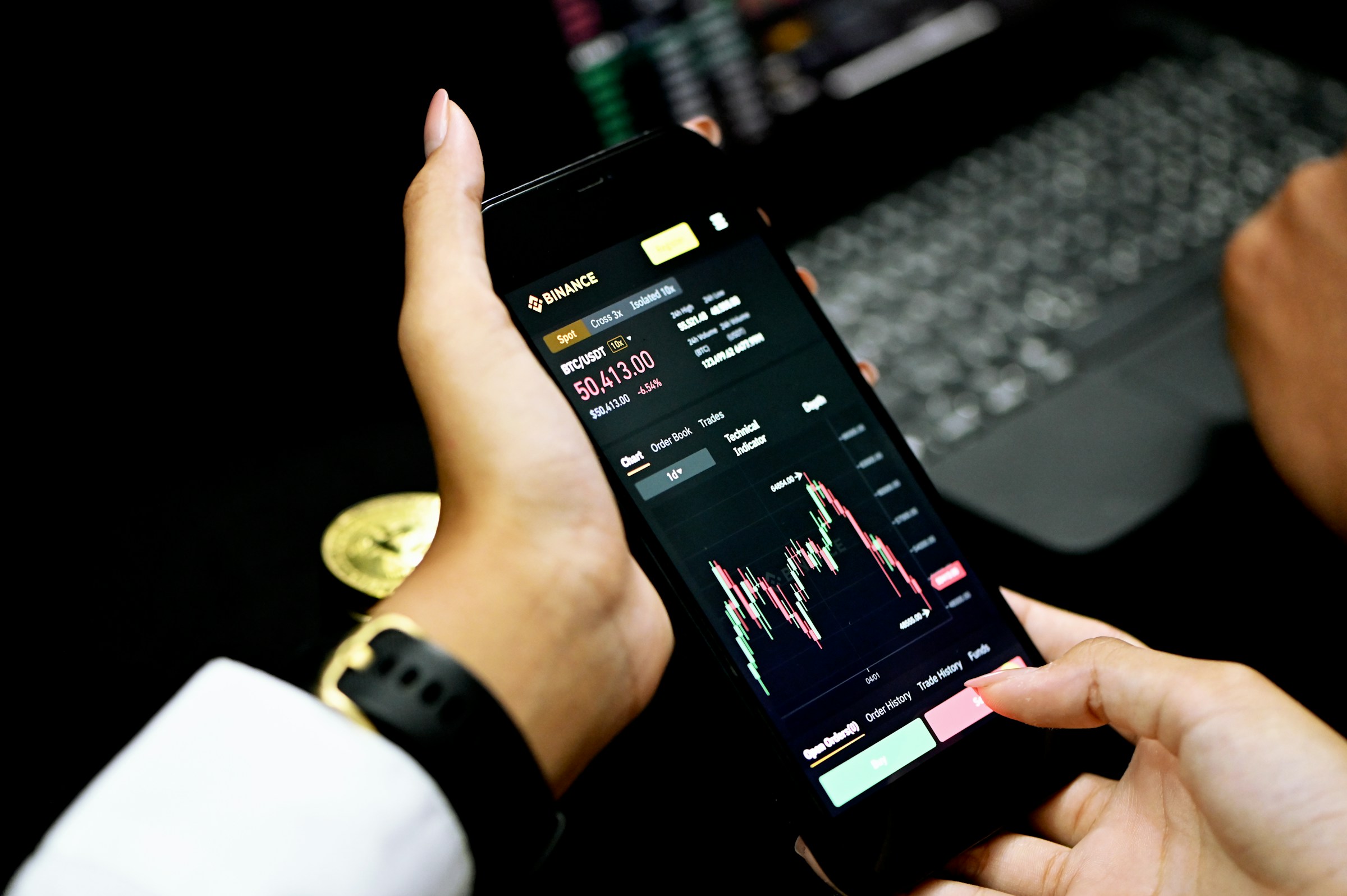
These twelve strategies are essential toolkits, not magic bullets. Each strategy has a specific market where it excels, a potential failure mode, and predictable operational needs you must meet to turn a statistical edge into repeatable payouts. By treating them as part of a larger system and focusing on execution, position sizing, slippage, and thorough testing, you can create bot plans that meet achievable profit targets and adhere to tight risk limits. Additionally, if you're looking to enhance your trading experience, consider exploring our funded accounts for futures trading to leverage more resources in your strategies.
1. Moving Average Crossover
Moving average crossover strategies help crypto trading bots by tracking average asset prices over set periods to find new trends. These bots track both short- and long-term averages and trigger buys when the faster lines cross above the slower ones, indicating upward momentum, and sell when the opposite occurs. This method works well in stable markets, making decisions automatically through simple or exponential calculations to filter out distractions and capture lasting changes.
Key Features
- Automates trend detection using customizable periods, such as 50-day and 200-day moving averages.
- Executes buys on bullish crossovers and sells on bearish ones for clear signals.
- It reduces emotional trading by sticking to data-driven rules.
- Adapts to different timeframes, from intraday to weekly charts.
- Pairs well with volume filters to confirm real breakouts.
2. RSI Momentum Trading
RSI momentum strategies help bots measure how quickly prices are changing, identifying when prices are overbought above 70 or oversold below 30 for potential reversals. These systems work around the clock, buying assets when prices dip and selling them at highs to benefit from corrections. They are great for crypto areas with clear price ranges, combining speed analysis with automation to improve timing.
Key Features
- Monitors the 14-period RSI by default, but can be adjusted for crypto's fast changes.
- Automatically triggers long positions when RSI is under 30, and short positions when it's over 70.
- Checks signals against price action to filter out divergences.
- Uses analysis across multiple timeframes to build greater confidence.
- Establishes flexible exit points to secure profits early.
3. MACD Trend Signals
MACD trend strategies help bots by comparing short and long exponential moving averages. They highlight changes in momentum through line crossovers and histogram expansions.
When the MACD line crosses over the signal line, bots jump on uptrends; when it crosses the zero line, it adds confidence. This tool is effective for identifying hidden strengths in volatile crypto markets.
Key Features
- Calculates using 12, 26, and 9-period EMAs for quick signals.
- Sends alerts on bullish crossovers above signal lines for entries.
- Tracks divergences to predict when trends may tire.
- Uses histogram bars to measure increasing momentum.
- Applies centerline crosses to confirm major trends.
4. Fibonacci Pullback Levels
Fibonacci pullback strategies help bots identify retracement zones in major moves using ratios such as 38.2%, 50%, and 61.8%. These ratios come from the sequence. Bots identify bounces at these support levels during uptrends and at these resistance levels during downtrends.
This allows them to make counter-trend trades with small stops. They are excellent at locating high-probability zones during volatile swings.
Key features
- Automatic plotting of levels from recent highs to lows.
- Long entries at 61.8% retracement in bull markets.
- Integration with candlestick patterns for precise entry points.
- Trailing stops using extension levels like 161.8%.
- Validation with volume spikes at key ratios.
5. Pivot Point Reversals
Pivot point reversal strategies help bots identify support and resistance levels based on previous session highs, lows, and closes. Central pivots act as trend indicators; when they are breached, they signal a change.
This can lead to buying below for potential upward moves or selling above for potential downward moves. This approach is well-suited for day trading crypto intraday pivots.
Key Features
- Calculates R1 and S1 levels, plus additional layers for different zones.
- Buys when prices bounce from S1, confirmed by bullish signals.
- Sells when prices fail at R1 during resistance tests.
- Adjusts based on daily or hourly pivots, depending on the timeframe.
- Includes traditional, Fibonacci, or Camarilla styles.
6. Supertrend Following
Supertrend-following strategies use an ATR-based indicator that moves above or below the price to signal downtrends or uptrends. Bots follow the trend until it flips, adjusting sensitivity with multiplier tweaks for crypto's wild price changes. This visual tool makes it easier to capture trends without too much delay.
Key Features
- It defaults to a 10-period ATR with a 3x multiplier for signals.
- It creates buy dots below the price for entering uptrends.
- It switches to sell signals when the dots flip above candles.
- It adjusts sensitivity to help avoid false signals in flat markets.
- It trails stops automatically with the line.
7. Parabolic SAR Trailing
Parabolic SAR trailing strategies use dots that trail price changes. These dots alert traders to reversals when they switch sides to follow stops, helping them catch potential runs.
As trends intensify, bots tighten their positions, adjusting in response to dot shifts to protect profits. This strategy works best during trending crypto periods instead of flat ones.
Key features include
- Starts at 0.02 acceleration, peaking at 0.20 for increased speed.
- Dots below the price indicate uptrends and suggest buy holds.
- Dot crossovers cause position reversals.
- Escalating profits are secured during strong moves.
- Fine-tuning enables shorter steps for volatile assets.
8. Bollinger Band Squeezes
Bollinger Band squeeze strategies use volatility bands two standard deviations from a 20-period SMA to identify contraction breakouts. Bots buy when prices touch the upper band after a squeeze or sell when they hit the lower band, taking advantage of price jumps. They measure market breadth during crypto's typical price movements.
Key Features
- Tracks the 20-period middle band with 2-deviation bands.
- Signals squeeze through narrow bands that indicate upcoming movements.
- Enters the band when trends are confirmed.
- Measures volatility using bandwidth percentage.
- Works well with the %B oscillator to read overextensions.
9. Mean Reversion Edges
Mean-reversion edge strategies rely on the premise that prices will revert to their mean after reaching extremes. They use tools such as Bollinger Bands or z-scores to determine when a price deviates.
Bots buy when the price dips below the average and sell when it rises too high, making a profit from these price movements in steady crypto markets.
Key Features
- Uses the SMA or EMA as the main average line.
- Buys when prices drop 2 or more standard deviations, with the idea that they will bounce back.
- Sell when prices reach comparably high spikes to keep balanced.
- Uses time-based exits if prices do not revert quickly enough.
- Adjusts position sizes based on how substantial the deviation is.
10. Arbitrage Price Gaps
Arbitrage price gap strategies seek to exploit price differences between exchanges. Bots buy low on one platform and sell high on another to make profits without risk.
Speed is critical because it accounts for fees and delays to ensure profitability in volatile crypto markets.
Key Features
- Monitors 10+ exchanges for real-time spreads.
- Executes paired trades in milliseconds.
- Calculates the net after commissions and slippage.
- Focuses on high-liquidity pairs like BTC/USDT.
- Hedges with triangular paths for efficiency.
11. Grid Trading Ranges
Grid trading range strategies place buy/sell orders at set intervals around the current prices. This way, it profits from price swings without making directional bets.
Bots benefit from small price changes across grids in sideways-moving markets, automatically adjusting as prices move.
Key Features
- Sets grid spacing using a percentage or fixed pips.
- Places alternating buys below and sells above.
- Reinvests profits to make grids wider or grow them.
- Changes dynamically with shifts in volatility.
- Limits losses with overall stop limits.
12. Dollar-Cost Averaging Bots
Dollar-cost averaging bots invest fixed amounts at regular intervals or when prices dip. This helps reduce the risk of making poor timing decisions. They buy more during market corrections, which lowers the average cost for long-term holdings in the often-changing crypto market.
Key Features
- They schedule purchases weekly or when prices drop by a certain percentage.
- They allocate the same dollar amount each time, regardless of the price.
- They track the average purchase price to identify the best times to sell.
- They pause buying in long-lasting downtrends using specific filters.
- They automatically reinvest profits to increase returns.
Where should beginners start?
Beginners should start with low-friction strategies such as dollar-cost averaging (DCA) or conservative grid ranges. It's a good idea to set small capital slices and have weekly reviews before increasing your investments. This method reduces emotional stress, helps you check your assumptions, and follows the careful methods successful funded traders use to turn a repeatable edge into larger returns.
While this may seem like the end of a plan, the true challenge is how these strategies do when put to the test in real-time situations. That is where things get interesting.
Related Reading
- What Is a Funded Trading Account
- What Is SMT in Trading
- Price Action Trading
- Intraday Trading Tips for Today
- Can Day Trading Be Profitable
- Trading Indicators
- Forex Trading Candlestick Patterns
- Intraday Algorithmic Trading
- Trading Candlestick Patterns
- Volatility Trading
What are Crypto Trading Bot Strategies, and How Does It Work?

Crypto trading bot strategies are systems based on rules that convert predictive signals into live orders, manage order fills, and automatically enforce risk limits. This helps users expand a repeatable edge. These strategies work on three primary levels: signal, execution, and governance.
The goal is to modify the connections between these layers, ensuring that a slight statistical advantage translates into steady cash flow. For those interested, our approach to funded accounts for futures trading can provide significant benefits.
How do bots build reliable signals from noisy data?
Signal engineering focuses on feature selection, not complicated math. To create reliable signals, use layered inputs such as cleaned order-book deltas, funding rate drift, on-chain flow indicators, and short-window volatility. Normalize each feature to the same time scale to prevent your model from conflating noise with real opportunities.
A common mistake is letting raw exchange clocks and message-ordering differences affect features. It's essential to add a synchronization step and a single primary timestamping layer.
When teams use alternative data, they should see it as a filter, not a replacement. For example, on-chain wallet flows can slightly change probabilities, but order book imbalance is what truly decides immediate execution risk. Set clear ensemble rules that require cross-confirmation, and log every activation with the exact parameter version that triggered it.
How should execution be engineered so signals actually become fills?
Execution is the gap between expectation and reality. To improve this, use intelligent order routing that prioritizes maker orders to achieve predictable spreads. However, it should switch to aggressive taker fills when timing issues could cause slippage. Design a cancel-replace system with strict rate-limit backoffs and idempotency keys. This ensures that retries do not accidentally duplicate orders. Automated systems work all the time.
According to Fourchain Technologies, "crypto trading bots can execute trades 24/7, processing up to 1000 trades per second." This means budgeting for bursts, setting limits on queue depth, and considering exchange rate-limit resets. Test how fills would work under these burst conditions and track the entire process from signal to exchange. Also, hard-code latency budgets for each venue so that any small profit does not disappear in microseconds.
What governance prevents a well-tuned bot from going rogue?
Treating code and parameters as financial instruments is essential. You should use versioned parameter registries and tagged releases for strategy code, and set up mandatory review windows before parameter sweeps go live. Shadow trading every release against simulated capital helps ensure robustness, while immutable audit logs keep things transparent for every live decision, making it easier to see what happened after trades.
Alerts should use a two-tiered system: one set for execution issues, such as repeated rejections, and another for statistical drift, especially when the hit rate or average slippage moves outside a rolling confidence band for 72 hours. These controls significantly reduce the anxiety that traders often bring to automation. This anxiety is what makes many give up on their disciplined plans mid-cycle because fear and noise overshadow the rules.
How do traders handle iteration with spreadsheets and test trades?
Most traders manage their process using spreadsheets and informal test trades, which feel familiar and easy to use. While that method may work for a while, it often fails on scale. Manual testing can mask integration issues, slow down the discovery of critical settings, and result in delayed, uncertain payouts.
Platforms like funded accounts for futures trading offer simulated-capital programs with tangible rewards and quick funded account workflows. This new idea shortens the experiment cycle from weeks to days while keeping strict audit trails and payout rules.
As a result, teams can test a strategy under live-like conditions without putting all their money at risk.
How do you scale a small edge into meaningful capital?
Scaling a slight edge into meaningful capital is like conducting an orchestra: each part must be loud enough to be important, but not so loud that it drowns out the others. Start by breaking down capital into multiple micro-allocations and assessing how each one affects slippage and spread capture. Use volatility parity or risk budgeting to allocate capacity across strategies while setting limits on the amount allocated to each plan. These limits should automatically decrease if slippage goes up.
By predicting feedback loops, traders can adjust their strategies as needed. Since bots are the leading providers of liquidity and, according to Fourchain Technologies, 'Over 70% of cryptocurrency trading volume is driven by trading bots,' any scaling plans need to consider how algorithms react to trades. As throughput increases, move from executing trades on a single venue to using multi-venue order fans. Implement coordinated cancellation logic to prevent a single exchange outage from affecting the entire process.
What is the importance of technical discipline in trading?
Traders often want control while also reducing stress. Emotional decision-making can harm consistent trading practices. A disciplined approach, backed by robust automation and governance systems, helps restore focus and create a sense of calm. It's essential to keep telemetry honest and to set up step-by-step rollout gates.
Also, reproducible operational hygiene usually matters more than math calculations when it comes to achieving success.
What is the next part that uncovers the benefits of these systems?
Understanding the technical side is essential. The next part explains why these systems offer unexpected benefits for traders.
Benefits of Crypto Trading Bot Strategies

Crypto trading bot strategies do more than execute orders faster; they change a repeatable edge into auditable, scalable income.
When your rules, fills, and risk controls can be measured and repeated, you can turn small, consistent wins into the kind of performance that reviewers and capital allocators will quickly fund and pay out.
How do bots make performance bankable?
This involves traceability and repeatability. Measured trade-by-trade telemetry, versioned parameter sets, and immutable logs let you prove that a strategy worked consistently across multiple cycles. This consistency is precisely what funded-account programs need when deciding eligibility for instant funding and quick payouts.
Automated controls also reduce the risk of significant errors. In addition, computerized trading strategies can minimize trading risk by 30%, according to Smart Trade, providing a meaningful buffer when the goal is to keep your allocation safe while reaching funded futures accounts.
Why do bots scale capital more efficiently than manual traders?
Bots run parallel experiments under the same rules, allowing traders to allocate their capital across multiple strategies. This setup helps to see how slippage, spread capture, and fill quality change as the scale grows. Such structural efficiency is critical, as scale increases; execution and throughput determine whether an extra $50k boosts returns or adds friction.
Trading bots can improve trading efficiency by up to 50%, according to Smart Trade. This increase means more usable signal per dollar and a quicker path to payout-ready performance.
What are the hidden costs of manual trading validation?
Most teams handle testing with ad hoc spreadsheets and manual practice trades. While this method may work in the beginning, as teams try to achieve repeatable funded-account cycles, the hidden costs become clear. These costs include slow validation, inconsistent audit trails, and delayed payouts, which compound the difficulty of compounding.
Solutions like funded accounts for futures trading provide simulated-capital programs and instant funded account workflows. These tools help traders quickly validate automated strategies under real payout rules, while ensuring strict auditability and aligning iteration speed with weekly or 24-hour payout expectations.
What does automation do to trader psychology?
This pattern appears in both part-time and full-time traders: eliminating the need for quick emotional decisions reduces burnout and prevents panic-driven trades that can harm progress. The practical effect is steady behavior, not dreamy ideas about trading.
Traders report more precise analyses, fewer emergency interventions, and greater willingness to scale once the numbers show repeatability. Think of it like replacing a chaotic street vendor with a calm, disciplined machine that counts receipts and closes the stall on time.
What operational wins most people miss?
Bots standardize onboarding and review processes. By using strategy versions, parameter audits, and deterministic backtests, organizations can reduce reviewer friction and shorten the process of obtaining larger allocations and faster payouts.
This operational clarity also reduces administrative tasks, allowing teams to spend less time resolving issues and more time improving their expectations. Over multiple payout cycles, faster validation and cleaner audits lead to larger allocations and steadier cash flow for traders aiming for platform-aligned targets.
What is the real leverage of disciplined automation?
While the technical gains are helpful, the real leverage comes from organization. Disciplined automation transforms behavioral consistency into fundable performance. This change makes repeatable payouts turn into reliable income.
What is the hardest part of building strategies?
That advantage seems resolved. However, the hardest part is determining how to set the rules and parameters that ensure consistent payouts.
Related Reading
- Basic Trading Strategy
- Spot Algorithmic Trading
- Forex Trading Profit Per Day
- Best Forex Trading Bots
- Fair Value Gap Trading Strategy
- Best Leading Indicators for Day Trading
- Best Indicators for Swing Trading
- Best Charting Software for Day Trading
- Best Indicators for Options Trading
How to Build and Configure a Crypto Bot Strategy

To build and deploy a crypto bot strategy, you must translate clear rules into testable, version-controlled deployments. After you establish these rules, it's important to prove they work under real execution stress before you put in more money.
Focus less on clever indicators and more on governance, fill quality, and a measured scaling plan. This plan should align with achievable payout targets, such as a 6 percent cycle.
How should I manage parameters so changes are safe?
When making changes to parameters, treat them like software releases: use a miniature canary, a staged rollout, and have a strict rollback rule.
Start with a 1 percent capital canary for 48 to 72 hours.
Run the new parameters in shadow mode against live order books, requiring two-pass conditions to proceed; for example, slippage within 1.5 times baseline and hit rate deviation under 10 percent.
Keep a versioned parameter registry and ensure at least one peer review, along with an automated unit test that simulates order rejections.
If any metric exceeds the threshold, the system will automatically roll back and notify the human reviewer, helping prevent slow, painful cascading failures.
How do you budget for slippage, fees, and venue differences?
Treat transaction cost analysis as nonnegotiable math, not a guess. Build per-venue slippage curves by size bucket and apply VWAP or TWAP splitting logic, with a budgeted slippage ceiling. Run Monte Carlo fills to estimate the 95th-percentile tail slippage and incorporate it into position sizing so that a single unexpected fill does not disrupt your trading cycle.
Think of it like tuning a race car: the choice of aerodynamics and tires affects how well the vehicle can maintain speed in a turn; execution parameters determine whether your edge can handle market friction.
How do you prove repeatability to reviewers and unlock fast payouts?
Most teams still check performance using ad hoc spreadsheets and slow demos. These methods are familiar and easy to use. This approach may work for early experiments, but as things get more complex, it makes audits messy, slows down reviews, and makes payouts harder to get.
Platforms like funded futures trading accounts bring together trade data, versioned settings, and simulated capital programs. This consolidation reduces validation time from weeks to days while preserving the immutable logs that reviewers need to approve faster payouts.
When is it safe to scale capital, and how fast should you move?
Scale like a metronome, not a sprint. Break your incremental allocations into smaller parts and increase your exposure only when two conditions are met over a rolling 14-day window: stable realized spread capture and slippage per dollar that stays below your budget.
Use an auto-throttle that reduces new order sizes by half when slippage exceeds a defined threshold. Prefer staged-venue fans over significant single-venue events. This method helps avoid the common mistake of scaling that increases market impact and turns a repeatable advantage into an execution issue.
How do you test real-world resilience beyond backtests?
Introduce controlled faults into your staging environment. This can include simulated rate-limit errors, partial fills, and delayed websockets. Verify the bot’s failover logic and reconciliation paths through these situations.
Schedule a weekly reconciliation to verify that fill-level logs match exchange executions. If there are unsettled orders, this should trigger an immediate human review.
Implement a circuit breaker that pauses trading if fill quality declines by a specified threshold over six consecutive hours. Automated systems must fail safely, not noisily.
What operational signals should determine go/no-go decisions?
To effectively manage operations, build three alert tiers: execution anomalies, statistical drift, and governance violations. Execution anomalies include repeated rejections or spikes in queue backlogs.
Statistical drift refers to changes in hit rate, average win/loss, and realized slippage relative to backtesting. Governance violations point out unauthorized changes to parameters or missing peer reviews.
It is essential to make alerts actionable and link them to automated responses. This way, humans only need to review significant problems the system flags, eliminating unnecessary issues.
Why monitoring and telemetry matter more than extra indicators?
Adding indicators forever does not ensure success; bad fills can still happen. Telemetry provides accurate data on key metrics such as time in market, maker-taker splits, queue depth at submission, and realized spread capture per order.
These critical numbers indicate whether the strategy worked as planned and whether it can grow. It is crucial to record everything because you cannot show repeatability to capital allocators who expect fast, auditable payouts.
What advantage do bots give in a market dominated by algorithms?
Over 70% of cryptocurrency trading volume is driven by automated trading bots, according to Shamlatech. This means execution assumptions must account for how other algorithms will respond to orders and the same signals they use. Traders can use this knowledge to improve their strategies by planning order fans, coordinating cancel logic, and avoiding drawing attention in liquidity pools.
How much operational efficiency can you realistically gain?
Shamlatech, A well-configured crypto bot can increase trading efficiency by up to 50%. However, this improvement occurs only when governance, fill modeling, and scaling rules are used effectively. Think of efficiency like the output of an engine that needs proper alignment: telemetry, disciplined rollouts, and realistic slippage budgets.
What short test can you run today?
Shadow trade your live parameters for 72 hours with real order placement disabled. After this period, compare each simulated fill with actual order-book events. If your pretend capture differs from simulated fills by more than 20 percent, pause and fix it.
What emotional challenges do traders face?
The technical fixes might be straightforward, but the most challenging aspect is emotional. Traders often hesitate due to complex setups and unclear fees. This moment of uncertainty often delays payouts. Once this logjam is broken, the path to consistent cycles becomes much clearer.
Which bot strategy should you choose?
The solution may seem complete, but the real decision involves choosing which bot strategy actually matches your goals. This choice is more significant than you think.
How to Choose the Best Crypto Trading Bot Strategy

Select a strategy that shows it can provide your target advantage under real execution pressure, instead of choosing the one with the most impressive list of indicators. Start by defining the payout goal you want to reach. Next, select the simplest strategy family whose live fills, slippage profile, and scaling path align with that goal.
What tradeoff should you measure first?
The first tradeoff to measure is edge durability versus capacity. Test how your signal decays as you increase order size in controlled micro-tranches. Measure marginal slippage per tranche rather than relying on total backtest returns.
A helpful rule, drawn from engineering thinking, is to treat the first tranche as an instrument calibration rather than a performance claim. If slippage rises sharply after small size increases, that strategy has limited capacity and will not scale to funded-account targets without additional execution work.
How do I assemble strategies so they complement rather than compete?
To develop strategies that work together rather than against each other, create a system like a portfolio manager rather than just pumping out features. Allocate resources based on realized serviceable liquidity rather than past win rates. Monitor short-term return correlations between strategies and limit total exposure when these correlations, over rolling 7-day periods, exceed your set limits.
When strategies are connected, minor problems can become serious issues. Also, use different order types and timeframes to make sure that one strategy’s orders don’t mess with another’s signals. Lastly, set up an auto-throttle that reduces new order sizes when queue depth or spread capture worsens.
What hidden operational costs should I budget for?
What hidden operational costs should I budget for? Operational maintenance is an ongoing cost for any bot strategy. You should expect ongoing work on API credential rotation, venue-specific order fans, and telemetry hygiene.
Measure how many operational hours you spend each week and the number of incident drills you do each quarter. Consider these metrics as part of your cost of goods sold. A strategy that appears profitable in a clean backtest but requires daily intervention will rarely deliver steady payouts.
How do I lock down behavioral risk so a bot actually helps my discipline?
Locking down behavioral risk is critical to ensure a trading bot effectively supports discipline. This problem often arises for momentum traders and swing players, as making manual changes at the wrong moment can undo months of hard work. A report from Blockchainreporter states that over 70% of cryptocurrency traders use trading bots to automate their strategies. This is why many teams are using automation to maintain consistent behavior.
To address this, implementing strict policy windows, enforcing cooldown timers after manual cancellations, and creating an override ledger that requires a brief written justification before any changes are made can help. These steps ensure the person involved is accountable rather than merely reacting. Also, this ledger makes emotional shortcuts clear during post-cycle reviews.
What telemetry actually predicts breakage before it becomes a crisis?
Monitor marginal metrics, not just overall KPIs. Track marginal slippage for every $10k, realized alpha by volatility group, and throughput-induced fill decay over 24- and 72-hour rolling periods.
Set automatic gating rules; for example, pause scaling when marginal spread capture drops by a specific amount compared to the baseline for three days in a row. These signals can spot regime shifts and execution crowding before your PnL does.
Which questions separate a candidate strategy from a deployable strategy?
Ask whether the approach has deterministic governance, a versioned parameter history, and a clear roll-forward plan for scaling.
Demand a simple, testable rollback procedure and a plan to simulate worst-case fills and API errors. If the strategy cannot be run in shadow mode against live order books for at least 72 hours without manual fixes, it is not ready to carry real capital.
Why does choosing the right bot strategy feel like choosing the right engine for a race car?
Choosing the right bot strategy is like picking the right engine for a race car. The indicator suite serves as the engine mapping, while execution, telemetry, and governance are like the chassis and tires that determine whether you complete the lap in one piece. You need to choose an engine you can maintain, a chassis that can handle real roads, and tires you can afford to replace when they get hot. This comparison highlights what really leads to success in funded accounts for futures trading: sustained, provable performance under stress.
What additional checks should I include in my tests?
During your next test, include one more check: figure out how much automation reduces reactive mistakes during a live run. Then, ask if that reduction is repeatable across cycles, not just in a single lucky fortnight. This repeatability is what unlocks larger allocations and faster payouts.
What is the twist that nobody warns you about?
The twist that often goes unmentioned is this: the right strategy can free you from emotional mistakes. This freedom, however, is only possible if your systems and governance are set up to help it.
Related Reading
- Fibonacci Trading Strategy
- Best Prop Trading Firms
- ORB Trading Strategy
- Crypto Swing Trading Strategy
- Best Copy Trading Platform
- Best Proprietary Trading Firms for Beginners
- Best Stocks for Options Trading
- Silver Bullet Trading Strategy
- Order Block Trading Strategy
- The Strat Trading Strategy
- Supply and Demand Trading Strategy
- Profitable Gold Trading Strategy
- Higher High Lower Low Trading Strategy
Unlock up to 50% off Your First Funded Account for Futures Trading
Scaling crypto trading bot strategies to reliable, fundable performance can be frustrating. Execution noise, slippage, and position sizing often reduce your edge. If you want to turn consistent bot performance into real payouts, consider AquaFutures' instant-funded accounts and simulated-capital programs. These programs have easy rules, tight risk controls, and quick payouts.
Explore account options that let you skip evaluations or improve through performance-based scaling. You can unlock up to 50% off your first funded account, plus surprise BOGO deals and weekly bonuses to help you get funded faster.
