



15 Intraday Trading Tips for Today to Boost Your Profits
Discover 15 expert intraday trading tips for today to help you make smarter moves, reduce risk, and improve your trading results.

Morning volatility throws up sudden moves: charts shift, headlines spike, and a single bad entry can erase your edge. For intraday traders today, reading Trading Patterns along with price action, volume, and momentum gives you the timing and context to act. Want to trade the open with a clear edge and better timing?
This guide lays out practical intraday trading tips for today, including entry and exit rules, stop loss and profit targets, a clear trade plan, risk management, and the innovative use of technical indicators and quick setups, so you can master actionable techniques, avoid common traps, take high probability trades with confidence, and protect daily profits while cutting losses.
To help you apply these tips, Aquafutures offers funded futures trading accounts that let you scale proven day-trading strategies with less personal capital at risk and access live guidance that keeps your execution disciplined.
Summary
- Intraday activity now accounts for over 36% of daily share market volume in some markets, so liquidity and fill behavior during the session, not just daily averages, should govern entry timing and sizing.
- Size positions against tolerated movement, not wishful returns, following a volatility-based method and the conservative rule to risk no more than 3% of capital per trade.
- Consistent profitability is rare: only about 10% of day traders maintain steady wins, underscoring that repeatable processes and measured scaling matter far more than finding a new indicator.
- Attrition is steep; roughly 80% of day traders quit within the first two years, so operationalized routines and measurable guardrails are essential to survive the early validation period.
- Execution must be quantified; track realized slippage, fill rate, and time-to-fill, because intraday volume can exceed 1 billion shares on major exchanges and doubling minute-by-minute volume materially widens expected slippage.
- Institute behavioral and validation rules that scale, for example, a 30-trade or 10-session patience rule before abandoning a strategy and a heat-check that halts entries if P&L per decision drops more than 25% across three sessions.
- Aquafutures's funded futures-trading accounts address this by providing rapid capital access and standardized risk rules, enabling traders to validate execution and scaling under real-world constraints.
15 Intraday Trading Tips for Today
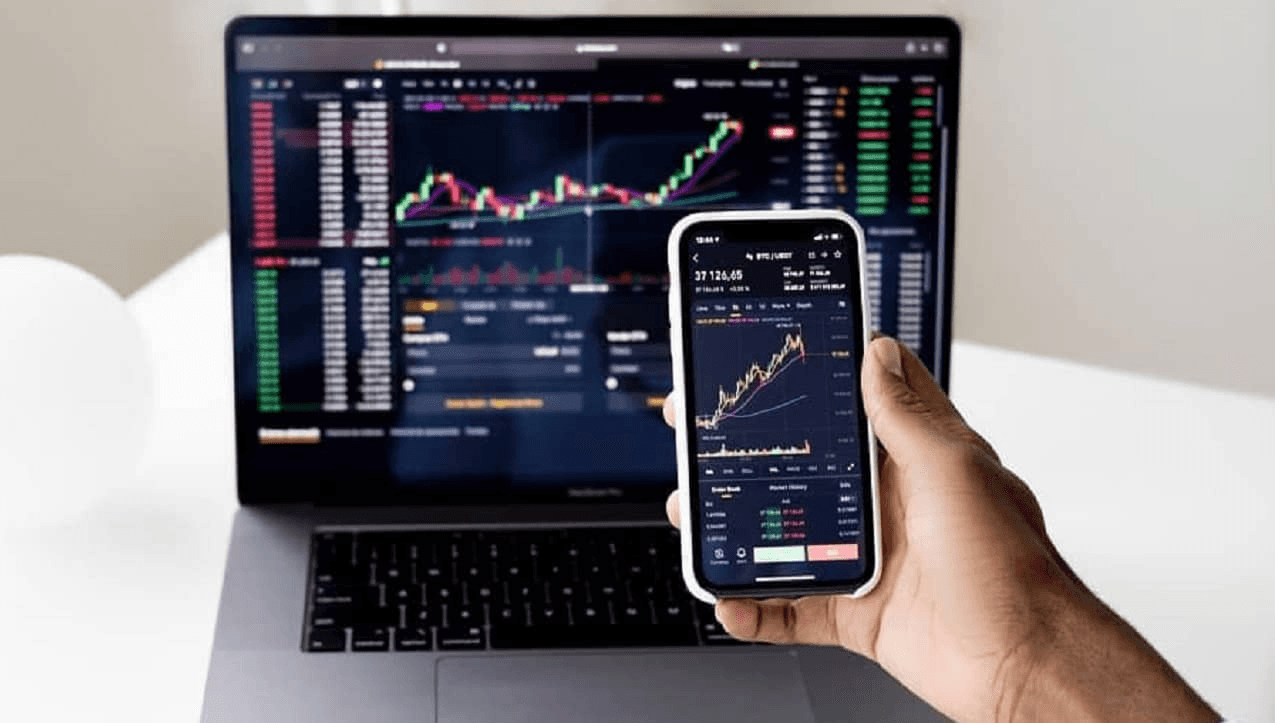
These 15 tips are a practical playbook, not a checklist to memorize. I’ll show how to implement the rules, what usually breaks in live sessions, and a handful of repeatable templates you can use in simulation and funded accounts to protect capital and scale reliably.
1. Select a Cost-Effective Broker
Choosing the right broker sets the foundation for profitable day trading by minimizing expenses that eat into gains. Opt for platforms offering flat-rate commissions on same-day trades rather than high per-trade fees, where top platforms charge under $1 per trade. This keeps more of your earnings intact, especially during high-volume sessions.
2. Choose a Reliable Trading Platform
A solid platform delivers real-time or near-real-time quotes to spot opportunities quickly, with delays of no more than 15 minutes. Brokers often bundle these, but independent brokers offer advanced charting and faster execution. Reliable tools ensure you react swiftly to price swings without missing key moves.
3. Build a Clear Trading Strategy
Master a defined approach before entering trades, knowing exactly why a stock fits, whether from news catalysts or technical reversals at support levels. Resources such as "How to Day Trade for a Living" by Andrew Aziz outline scanner-based methods, emphasizing setups such as momentum breakouts. Discipline in following rules, such as exiting losers early, improves consistency relative to random picks.
4. Begin with Limited Positions
New traders should focus on 2-3 stocks per day to build familiarity with their volatility patterns. Track a curated watchlist, observing average daily ranges, typically 2-5% for liquid names like AAPL or TSLA. This hands-on monitoring fosters confidence and sharper timing when setups align.
5. Exit Losing Trades Promptly
Avoid clinging to positions that are heading south, as SEC data show that most intraday reversals worsen without intervention. Set mental alerts for when price action invalidates your thesis, like breaking a key level, and close out to cap damage at 1% of capital. This preserves buying power for stronger setups later in the session.
6. Avoid Adding to Losing Positions
Avoid scaling into trades that move against you, as this compounds risk and often leads to outsized drawdowns, according to CFA Institute studies on trader psychology. Instead, preserve capital by closing the position entirely when it hits your predefined exit, freeing funds for fresh opportunities. This disciplined move prevents minor setbacks from spiraling into account blowups.
7. Ignore Media-Driven Trade Calls
Skip relying on TV pundits or free online alerts, where hit rates hover around 20% based on backtest performance. Craft your own edge through data-driven analysis rather than chasing hyped picks that lure crowds into traps. Independent verification always trumps broadcast noise.
8. Craft and Commit to a Core Plan
Design a personalized system, such as gap fades or VWAP crosses, tailored to your risk profile, drawing from proven frameworks in books like "Mastering the Trade" by John Carter. Test it on paper first to confirm viability across sessions. A well-honed plan provides the structure needed for repeatable results.
9. Stay Loyal to Your Chosen Methods
Resist abandoning a solid strategy after a couple of misses, as markets cycle through phases in which no single tactic dominates. Uptrends favor momentum plays, while ranges suit mean reversion, according to CME Group volatility research. Maintain 2-3 adaptable approaches in your toolkit and rotate based on conditions. Consistency in execution separates winners from wanderers.
10. Implement Strict Stop-Loss Orders
Anchor every trade with a precise stop-loss tied to technical levels, like below a recent swing low or EMA, as recommended by FINRA guidelines for risk control. For a bounce off the 20-period SMA, place it just beneath to exit automatically if momentum fades. This mechanical safeguard enforces discipline and limits per-trade exposure to 1-2% of your portfolio.
11. Prioritize Ironclad Discipline
Discipline anchors success in fast-paced day trading, preventing emotional revenge trades that amplify losses, as evidenced by trader journals analyzed in "The Psychology of Trading" by Brett Steenbarger. Stick to your plan with patience, using tools like trade logs to review adherence. This mental fortitude turns volatile sessions into steady progress.
12. Curate a Targeted Watchlist
Limit your focus to 10-20 high-volume stocks like NVDA or SPY, monitoring their habits through scanners on StockCharts or TradingView. Wait for precise strategy triggers, such as volume spikes at resistance, before acting, per liquidity studies from the NYSE. This selective approach sharpens the edge over scattershot entries.
13. Gauge Market Sentiment First
Scan broader indices like the VIX or S&P 500 futures pre-open via CBOE data to classify the day as trending or choppy, aligning trades accordingly. Bullish breadth favors longs, while fear spikes signal shorts, as confirmed in SSRN papers on intraday regime detection. Context-aware positioning boosts win rates significantly.
14. Cap Daily Risk Exposure
Set a hard limit, like 3% of total capital per session, across all positions to weather rough patches without margin calls, aligning with CFTC risk management advisories. Track via position-sizing calculators and adjust shares dynamically. This portfolio-level guardrail ensures longevity in the game.
15. Review Trades Post-Market
End each day by reviewing entries, exits, and P&L in a journal, spotting patterns such as overtrading during lunch lulls, as advocated by Van Tharp's performance coaching. Use replay tools for objective playback. Iterative analysis refines your edge, turning experience into compounded proficiency.
How should you treat fees and broker choice?
Fees and execution quality are the slow leak that kills an edge. Test a broker by measuring realized slippage on three typical orders during the first trading hour, then run the same order size during the quiet hour, and compare fills. If your commission plus slippage approaches your average trade edge, you need a new provider or a smaller size. Traders who switch from per-share to low flat commissions often find their edge converts to real profit because they stop overtrading small edges just to make the math work, and that change alone can turn a break-even system into a profitable one.
How do you make platform reliability part of your risk plan?
Latency and UI quirks are operational risk, not theory. Create a two-minute platform checklist you run before the open: quote delay test, hotkey sanity check, order entry speed, and a failover plan (alternate app or market order rules). Keep a simple stopwatch log for a week to quantify execution speed. When a platform hiccups, a scripted plan prevents panic, and that’s the difference between a contained loss and a cascade.
How do you convert a good idea into a repeatable strategy?
Translate intuition into rules with a five-line trade definition: signal, entry trigger, stop logic, target, and time-of-day cutoffs. Backtest only to rule out obvious edge failures, then forward-test in simulation with identical order sizes and the same market hours you will trade live. The failure mode I see most often is chopping between strategies after two bad days; build a 30-trade or 10-session patience rule before declaring a method dead, because short samples hide regime noise.
How should you size positions against market movement?
Size positions by the movement you can tolerate, not by how much you want to win. Use a volatility-based sizing method that converts a technical stop into shares so that a stop using average true range consumes a fixed fraction of risk budget. Follow the conservative guidance, and also monitor how correlated positions combine into one big bet, because three small bets that all move together are the same as one oversized position.
What exit mechanics actually protect capital?
Hard stops are insurance; trailing stops capture winners. Use OCO orders or pre-set conditional orders to remove manual timing from exits. For gap risk, avoid market-on-close banditry by predefining your behavior when a stock opens beyond your stop. Partial scaling rules work well: take off one third at the first target, move the stop to breakeven, then let the remainder run with a trailing stop guided by volatility. This sequence reduces emotional pressure and locks in repeatable outcomes.
Why focus your attention on fewer symbols?
Attention is a limited resource in intraday trading. The pattern is consistent across trainees and funded traders: when you curate a tight watchlist and rehearse the same setups on 2 to 3 names each session, decision latency falls, and your execution improves. Use a morning checklist to flag the day’s best candidate for each setup, and deliberately skip opportunities that do not meet your preflight criteria; that discipline prevents the slow bleed of overtrading.
Which behaviors wreck accounts fastest, and how do you stop them?
Revenge trading and scaling into losers compound risk. The emotional arc is predictable: a slight loss triggers frustration, which shortens decision-making and increases size out of hope, not signal. Insert a behavioral circuit breaker, for example, an automatic 15-minute lockout after two consecutive losses or a session loss limit tied to your risk budget. That prevents a bad minute from becoming a catastrophic day.
How do you use market context instead of noise?
Use macro cues to select the class of setups you will trade. If futures and breadth indicate a trending environment, favor momentum breakouts and volume-confirmed entries; if breadth is neutral and the VIX is stable, bias mean-reversion and range plays. This conditional approach reduces wasted setups and aligns your tactics to what the market is actually offering that day.
What should your post-market review look like?
Make the review lean and metric-driven: track expectancy per trade, percent of trades that hit stop versus target, average R, and time-of-day P&L heatmap. Tag entries by setup to quickly aggregate samples. Replay two trades per day that went wrong and two that worked, but focus commentary on decision points, not outcomes. Over time, those tiny revisions compound into a measurable increase in edge.
Most teams do things the familiar way, relying on slow funding cycles and manual evaluation that feel safe. That works at first, but as you try to scale a repeatable intraday edge, those frictions cost time, opportunities, and the ability to iterate quickly. Platforms like AquaFutures provide instant funding and simulated prop trading that let traders validate a system against real constraints, reach common milestone targets such as 6 percent faster, and transition from practice to paid execution without long waits or administrative drag.
What simple habits keep performance consistent?
Adopt micro-routines: pre-open notes, mid-day risk check, and a single end-of-day emotion audit. These habits create predictable inputs into your process, so your output becomes more predictable as well. The human pattern is stubborn; structure tames it. Make your daily rules non-negotiable the same way you would a seatbelt, and you stop gambling on hope.
How does market structure change what you trade?
Intraday activity now dominates turnover in many markets, and that changes where the edge lives. The shift is captured in "Intraday trades now comprise over 36% of daily share market trading volume in India", which means liquidity and fill behavior during the session matter more than ever when you size and time entries. Treat that reality as your operating constraint; design rules that survive the busiest minutes, not just the quiet ones. One small mental trick before you move on: ask yourself which single rule, if enforced today, would prevent your next large losing day. That simple choice reveals where your process is weakest, and what to fix first. But the real reason these tips matter is more surprising than you think, and it starts with one misunderstood piece of intraday structure.
Related Reading
- What Is a Funded Trading Account
- What Is SMT in Trading
- Price Action Trading
- Can Day Trading Be Profitable
- Trading Indicators
- Forex Trading Candlestick Patterns
- Intraday Algorithmic Trading
- Trading Candlestick Patterns
- Volatility Trading
What is Intraday Trading, and How Does It Work?
Intraday trading is about converting small, repeatable edges into consistent results within a single session, and it requires mastery of execution, market microstructure, and disciplined scaling. Get those three right, and you turn short moves into reliable income streams; miss any and small losses compound fast.
How does market microstructure actually change what you trade?
Order book behavior dictates where the real edge lives. Depth, displayed versus hidden liquidity, and opening and closing auctions create predictable pockets of slippage and opportunity. Think of the book like rush-hour traffic: a single stalled lane forces everyone to merge, causes a blowout, and either accelerates or stalls momentum. Reading that traffic is not mystical, it is a habit of watching size at price levels, noticing when bids thin, and avoiding aggressive entries when the book shows one-way pressure.
Which order types give you practical control over fills?
Choose order types to match the market state, not habit. Use limit orders when you want to control price and accept partial fills, use immediate-or-cancel when momentum demands quick execution, and use pegged or midpoint orders when spread capture matters. Stop-limit orders often protect against runaway fills in thin minutes; market stops remain useful only when speed outweighs certainty. The rule to follow: before you click, know the book and pick the order type that preserves your edge rather than the one that solves your impatience.
How should you treat leverage when you scale a strategy?
Position size becomes a mechanical decision once you accept how margin interacts with your rules. Remember that [Intraday traders often use leverage of up to 4:1 — Investopedia, which in practice means your drawdown tolerance must be simulated and stress-tested before you go live. Treat leverage as a tuning knob you adjust in simulation, not a shortcut to significant returns, because margin rules and intraday volatility can turn a disciplined entry into overexposure within a few ticks.
What does liquidity look like on a busy day versus a quiet day?
Volume concentration changes who sets the price. On many sessions, [Intraday trading volume can exceed 1 billion shares on major exchanges — Investopedia, so your execution plan that worked in a quiet hour may fail when the tape floods with order flow. Build simple heuristics: if volume per minute doubles, widen your expected slippage and tighten your time-based exits; if it halves, shrink size or refuse the trade. These are not theoretical tweaks; they are the operating system for scalable intraday work.
Why do night sessions and thin markets wreck otherwise solid scalps?
This pattern appears across traders testing off-hours micro scalps: the order book thins, spreads widen, and attempts to squeeze a few ticks morph into outsized losses, especially when emotion intrudes. When traders report feeling as if they are fighting for their lives after a bad streak, it is usually because size was not reduced and liquidity risk was ignored. The practical fix is simple, if uncomfortable: move to a smaller size, wider acceptable spread, or skip the session until your process proves profitable in simulation under those exact conditions.
What metrics should you track to make execution measurable, not mystical?
Move beyond raw P&L. Track realized slippage, fill rate by order type, and time-to-fill versus expected. Build a fill-probability curve by submitting many small limit orders across different prices and times, then quantify expected execution likelihood for each aggressiveness level. That lets you translate an indicator signal into a probability-weighted expected value, so you choose only trades where the math and execution probabilities line up.
Most traders handle funding and scaling with incremental personal capital because it is familiar and feels lower risk. That works early, but it slows iteration and buries the real cost: you cannot reliably test how your rules behave under proper leverage and live risk constraints. Platforms like AquaFutures provide funded pathways and simulated accounts with built-in risk rules and rapid capital access, letting traders compress test cycles and validate scaling choices against real constraints without waiting weeks for manual funding processes.
How should real-time psychology be managed differently from general discipline training?
Discipline in intraday trading is microbehavior, not grand philosophy. Use one-action commitments: a pre-commit to size, a one-line entry checklist, and a two-minute cool-down after any trade that hits your loss threshold. That structural pause breaks the revenge-trade impulse that turns minor errors into session blowouts. The difference between a marginally profitable trader and a catastrophic one is not strategy complexity; it is whether they have these tiny mechanical brakes. You can make execution a repeatable machine, but there is an uncomfortable question about profitability that this does not yet address.
Do People Really Make Money in Intraday Trading?

Yes, people do make real money intraday, but it is the exception, not the rule. Profit comes to traders who convert an edge into repeatable business practices, control variance, and accept that income will be uneven while they scale.
Who actually earns a stable income?
The reality of who succeeds is concentrated and unforgiving, which shows up in hard summaries and explains why the loudest success stories feel common when they are not. The profitable cohort treats trading as a small enterprise: fixed hours, documented process, a clear P&L by setup, and relentless focus on limiting night-to-night variance rather than chasing single big wins.
What behavior separates survivors from dropouts?
After working with traders over multiple six to twelve-month cycles, the pattern was clear: those who survive stop treating wins as validation and losses as punishment. They build mechanical routines, enforce session loss limits, and log every decision so their edge becomes attributable and trainable. That mindset is also why so many leave early. The quitting group usually collapses under inconsistent routine, poor risk math, or the stress of running out of capital before an edge is truly proven.
Why is funding and scaling the choke point?
Most traders start on personal capital because it feels low friction, which is understandable and familiar. As size increases, that familiar approach creates delays, funding shortages, and inconsistent leverage rules that obscure whether your rules hold up under accurate scale. Platforms like AquaFutures act as a bridge, giving standardized risk rules and rapid access to capital so traders can test scaling under real constraints, compressing what used to take months of incremental funding into weeks of validated performance.
How should you think about income versus expectancy?
Treat income as a function of three inputs, not a magic number: realized expectancy per trade, number of quality opportunities, and drawdown management. Think like a baker, not a gambler: you want a repeatable morning batch that sells out consistently, not a single scratch-off that pays a jackpot. That means turning edge into frequency and controlling variance so compounding becomes reliable, not explosive. Expect months of uneven P&L while you iron out the process, then steadier, longer stretches when the routine holds.
What I want you to feel is this: profitable intraday trading is less about finding a secret indicator and more about surviving the first hard years, building rules that survive real losses, and testing scaling under real constraints so your gains can be paid out and repeated. AquaFutures gives traders fast, affordable access to funded accounts for futures trading with instant options, simple rules, and honest payouts. Whether you want to skip lengthy evaluations or scale by performance, our programs reward consistency with transparent rules, quick support, and real capital. That next question about picking the right stocks for intraday work is the quiet hinge that separates steady earners from hopefuls.
How to Choose Stocks for Intraday Trading

Pick names that show real, tradable behaviour at the open and during the first two hours, and let execution signals decide which ones you risk capital on. Use a layered filter that starts with liquidity and moves through order‑book confirmation, options or ETF flow, and a float or news screen, then validate every candidate in a timed simulation before scaling to live size.
Prioritize High Liquidity
Focus on stocks with robust trading volume, typically over 1 million shares daily, to ensure smooth entry and exit without price slippage. Liquidity measures how easily you can buy or sell shares at stable prices, which is crucial for intraday trading, since positions close by market end. Check NSE or NYSE volume leaders; for example, stocks like Reliance or Apple often trade millions of shares per hour, minimizing execution risk during volatile sessions.
Manage Volatility Wisely
Steer clear of extreme volatility unless you're experienced, as wild swings amplify losses in minutes. Aim for moderate beta (0.8-1.5) stocks. While high volatility offers big moves, it demands tight stop-losses at 0.5-1% below entry to cap downside. Verified strategies from backtests on platforms like TradingView show controlled volatility yields better win rates for beginners by avoiding gap-down surprises.
Target Sector-Linked Stocks
Pick stocks tied to strong sectors or indices, like banking plays during Nifty Bank rallies, for predictable momentum. Sector correlation simplifies reads. Use ETF trackers to spot leaders mirroring broader trends. This approach leverages index flows; historical NSE data confirms sector outperformers deliver 2-3x average intraday returns when aligned with market direction.
Seek Transparent Companies
Choose firms with clear disclosures via SEC filings or BSE announcements, avoiding opaque operations that hide risks. Transparent businesses, such as consumer goods companies with steady earnings reports, enable quick fundamental scans during trading. Research from McKinsey shows that highly transparent stocks reduce informational asymmetry, enabling intraday traders to respond more quickly to earnings beats or management updates.
Leverage News Catalysts Carefully
Select stocks buzzing with fresh news, such as earnings surprises or mergers, but verify to dodge rumors. These react sharply, and positive FDA approvals can spike biotech shares 5-10% intraday, but set alerts for reversals, as per CMT Association studies showing how news pops fade quickly. Balance with volume confirmation to filter traps.
How do I know a stock will fill when I need it?
Look beyond headline volume to how that volume distributes across the day. A stock that trades consistently throughout the session, with tight spreads and steady opening auction participation, is far easier to enter and exit than one that concentrates most volume in two or three spikes. Aim for names that show predictable minute‑by‑minute depth, not just a high daily figure; the practical rule is to prioritize symbols whose average daily volume clears the one million share threshold, because that baseline significantly reduces slippage, according to Investopedia.
Which market signals confirm an intraday leader?
Look for confirmation across market plumbing, not just price. I use three quick checks before putting size on: open interest, abnormal call or put flow that matches the directional bias, ETF or sector flow that amplifies the name, and consistent mid‑tape prints that show buyers or sellers willing to lift the book. When all three align, the setup usually has follow‑through; when only one flickers, the trade becomes a probability fade. Pattern-wise, moves that begin with genuine pre‑market participation and carry into the first 15 minutes with steady hit‑rates are the most reliable.
What should trigger an automatic skip?
Skip any name where the bid‑ask spread is a material fraction of your target, where borrow cost or short interest suggests a squeeze is likely, or where a scheduled event creates gap risk later the same day. Another red flag is heavy block trades or spikes in pre‑market volume without supporting news, because those are often dealer‑level flows that reverse once the market finds an actual price. In practice, these micro‑signs matter more than flashy price charts; they are the hidden mechanics that turn good setups into stop‑hungry traps.
This is a common habit and its hidden cost.
Most traders start with a simple screener and chase whatever pops, because that method is fast and feels productive. That familiar approach works well at small sizes, but as you scale it, it fragments capital and inflates slippage, turning a statistical edge into steady losses. Platforms like AquaFutures provide simulated prop accounts and rapid funding pathways that let traders validate selection filters under real execution constraints and realistic risk rules, reducing the time to prove a watchlist at scale while preserving capital and process integrity.
How should you validate a candidate without burning real capital?
Treat your selection like a small experiment with explicit success criteria. Run the symbol in simulation for a fixed window, use the exact order types you would live, and track realized slippage and fill rates by minute of day. That discipline matters because the math is unforgiving and the market punishes assumptions quickly. Remember, success comes from repeating small wins, not from guessing big ones. Be ruthless about tagging failures as execution problems or invalid signals so you can fix the process, not double down emotionally. Think of choosing stocks like picking a boat for a river trip. A flashy speedboat looks exciting, but if the current and rocks are wrong, you will flip; the right choice is the craft that matches the water and the distance you plan to travel. That simple decision is the one most traders miss, and it explains why so many promising methods fail in live conditions. But the real snag here is deeper than filters or simulation; it is the single behavioural habit that quietly destroys otherwise sound selection — and that’s what comes next.
Related Reading
- Basic Trading Strategy
- Spot Algorithmic Trading
- Forex Trading Profit Per Day
- Crypto Trading Bot Strategies
- Best Forex Trading Bots
- Fair Value Gap Trading Strategy
- Best Leading Indicators for Day Trading
- Best Indicators for Swing Trading
- Best Charting Software for Day Trading
- Best Indicators for Options Trading
Common Mistakes to Avoid in Intraday Trading

These mistakes are the visible symptoms of three deeper failures: rules that do not survive real-time pressure, execution systems that are not instrumented, and emotion that hijacks processes. Fix the upstream issues, and the errors will stop recurring; ignore them, and you join the majority who never stabilize performance.
Skipping a Stop-Loss
Entering a day trade without a stop-loss is one of the fastest ways to blow up an account. A predefined stop-loss caps the downside on each position, so a single unexpected move or news shock cannot wipe out a large portion of trading capital. Many experienced day traders risk only a small percentage of their account per trade and automate stop orders so emotions do not interfere once the trade is live.
Trading Without a Written Plan
Placing trades without a written, tested plan turns intraday activity into guesswork. A solid plan defines setups, entry triggers, profit targets, maximum loss per trade, and daily loss limits, so decisions follow rules rather than impulses. Traders who document their strategies and keep a journal can spot patterns in their behavior, refine what works, and cut out unprofitable habits over time.
Letting Emotions Drive Decisions
Fear, greed, and frustration often appear when prices move quickly and can push traders into revenge trading or chasing entries. Emotional decisions usually lead to late entries, premature closings of winners, and holding losers too long. Building routines—such as limiting the number of trades, taking breaks after big wins or losses, and following a checklist before each order—helps keep decisions calm and rule-based.
Holding Onto Losing Trades
Refusing to close a losing position and “hoping it comes back” can turn a slight planned loss into a significant, account-damaging drawdown. Intraday traders generally accept that not every trade will work and treat the stop-loss as final once the price hits that level. Cutting losers quickly preserves capital and mental bandwidth so the trader can stay ready for better opportunities later in the session.
Overtrading Throughout the Day
Taking too many trades in a single session increases transaction costs and often correlates with declining trade quality. Overtrading typically shows up as forcing setups that do not meet criteria or repeatedly trading around minor price noise. Many disciplined intraday traders set a daily trade limit or focus on a few high-probability setups and time windows, such as the market open or specific news events.
Ignoring Technical Analysis
Relying solely on hunches rather than reading charts and key price levels makes entries and exits random. Basic technical tools—such as support and resistance, volume, trend direction, and a few well-understood indicators—help frame entry, stop placement, and profit-taking. Even traders who keep charts simple benefit from waiting for the price to align with their technical criteria instead of reacting to every tick.
Trading Blind to Market News
Opening or holding positions through major announcements without awareness exposes trades to sharp intraday gaps and spikes. Economic data, earnings releases, and policy statements can all create volatility that blows past normal intraday ranges. Checking a financial calendar, being aware of scheduled company events, and avoiding opening new trades just before high-impact news help reduce surprise moves against open positions.
Misusing Leverage and Position Size
Using excessive leverage or oversized positions magnifies even small price moves into significant gains or losses, which can quickly exceed a trader’s risk tolerance. Proper position sizing aligns each trade with a fixed percentage of account risk, so a string of losing trades does not cause catastrophic damage. Many intraday traders keep margin usage conservative and adjust the size downward in periods of high volatility or after a drawdown.
Chasing Tips and Rumors
Basing trades on chat rooms, social media calls, or unverified tips often leads to buying late into a move or holding stocks affected by rumor-driven swings. Price can reverse sharply once the initial attention fades, leaving late entrants stuck in poor locations. Using outside ideas only as a starting point and confirming every trade with personal analysis and risk rules keeps decision-making under the trader’s control.
Neglecting Post-Trade Review
Skipping review means repeating the same mistakes day after day. Reviewing trades—especially losers—helps identify issues such as entering too early, deviating from the plan, or trading during low-liquidity periods. Keeping screenshots and notes for each trade, then evaluating them after the market closes, turns experience into structured learning and gives clear direction for improving intraday performance.
Why do smart traders skip stop losses and then hold losers?
When we coached a group of traders over six months, the failure mode had two parts: a tactical fear of being whipsawed, and an operational doubt about execution quality. Traders say they avoid stops because they think the market will “shake them out,” but more often, the real reason is that they never test stop placement against real fills. The fix is procedural, not motivational: build a short replay test where you place simulated stops at three ATR multiples across thirty live-replay trades, record how many were filled at or near the price, and keep only the stop that shows an acceptable tradeoff between stop-hit frequency and average loss size. That test converts an emotional guess into a measurable rule you can trust under real slippage.
How does emotion escalate into overtrading and revenge sizing?
Emotion is a momentum machine. A small hurt accelerates decision-making, and faster decisions favor impulses over processes. In practice, we ask traders to pre-allocate an “opportunity budget” each session, representing a fraction of the daily risk they may allocate to discretionary entries. When the budget is exhausted, the system auto-enforces a lockout. This simple constraint reframes failure from a moral lapse into a rule-based resource problem, and it reduces the impulse to chase by turning every trade into a measured allocation decision, not a reaction.
What operational signals reveal rumor-chasing and blind trading in response to news?
Rumor-driven trades often begin with asymmetric information flow: a spike in social mentions, a sudden flurry of odd-lot prints, or unusual option sweep activity before price confirms. Instead of treating these as causes to act, turn them into filters. Create two automated rules you can validate in simulation: block new entries for X minutes after any headline with a volatility score above Y, and cut size by Z percent when pre-market volume on the name exceeds its 30-day median by more than 200 percent. These are simple, testable rules that convert uncertainty into conservative, repeatable behavior.
What operational checks stop leaks before they become blowouts?
Measure the behaviors that precede mistakes, not the mistakes themselves. Track stop-adherence rate, trade-count drift per 30-minute window, and realized slippage versus expected slippage by order type. Set complex triggers, for example: if stop-adherence drops below 90 percent over three trading days, reduce size by half until the metric recovers. These are not suggestions; they are operational alarms that remove subjectivity the moment the system tilts toward risk. Most traders follow familiar habits because they are low-friction, and that familiarity masks real costs. The familiar approach is to patch behavioral problems with pep talks and to trust manual discretion when markets get noisy. That works short-term, but as scale, speed, or capital at risk grows, those habits fragment attention, increase errors, and slow feedback loops.|
Solutions like funded accounts for futures trading offer a different path: they embed risk rules and realistic funding constraints into the testing environment, so traders validate processes under the same limits they will face in live trading, compressing what used to take months of messy trial and error into a few disciplined test cycles.
How do you translate these fixes into day-to-day rules you will actually follow?
Pick three complex changes you can implement in simulation for 30 calendar days: (1) a tested stop-placement protocol backed by fill-replay, (2) an opportunity budget with automatic session lockouts, and (3) a headline/flow filter that forces size reductions around asymmetric information. Track only a handful of metrics tied to those rules, and let those metrics govern sizing, not emotion. Think of it like tuning a precision instrument, not trying to be a better gambler. A short analogy to make it concrete: treating intraday mistakes as character flaws is like blaming a car for engine failure without checking the oil, the coolant, or whether you are driving in fifth gear up a mountain. Fix the maintenance, not the driver.
One overlooked detection trick that most traders ignore
Add a simple heat-check: record the two-minute decision count each session and the P&L per decision. When decision count rises but P&L per decision slides by more than 25 percent across three sessions, that is your early warning signal to halt new entries and re-run the three rule tests above. Implementing this took a small trading desk we worked with eight weeks to adopt, and it immediately shortened recovery times after bad runs. That solution works until you try to scale without a matching validation environment. But the deeper snag is this, and it explains what comes next.
Unlock up to 50% off Your First Funded Account for Futures Trading.
I get why traders prove intraday patterns on personal capital, it feels lower risk and keeps the process simple. Platforms like AquaFutures offer instant, funded accounts up to $450,000, straightforward intraday risk rules, and fast payouts so that you can validate execution and scale under real constraints rather than waiting weeks for approvals. If you want to turn today’s intraday trading tips into paid performance, consider Aquafutures account options now, with up to 50 percent off your first funded account plus rotating BOGO and bonus offers to shorten the path from simulation to real payouts.
Related Reading
- Fibonacci Trading Strategy
- Best Prop Trading Firms
- ORB Trading Strategy
- Crypto Swing Trading Strategy
- Best Copy Trading Platform
- Best Proprietary Trading Firms for Beginners
- Best Stocks for Options Trading
- Silver Bullet Trading Strategy
- Order Block Trading Strategy
- The Strat Trading Strategy
- Supply and Demand Trading Strategy
- Profitable Gold Trading Strategy
- Higher High Lower Low Trading Strategy
