



What Is Spot Algorithmic Trading, and How Does it Work?
Spot Algorithmic Trading demystified: build, test, and execute live strategies with AquaFutures funded accounts and proven risk controls. Learn more.

Spot algorithmic trading leverages technology to analyze market data and execute orders reliably. By monitoring trading patterns using indicators such as moving averages and momentum, automated strategies reduce the impact of delayed reactions and emotional decision-making. The approach smoothly combines data analysis with disciplined execution to capture fleeting market opportunities.
Practical methodologies outline the building, backtesting, and deployment of strategies, addressing order types, slippage, latency, position sizing, and risk management. This systematic process enhances trading performance by ensuring precise, consistent risk controls. AquaFutures supports traders in refining and scaling their techniques with funded accounts for futures trading.
Summary
- Execution quality often determines whether an idea turns a profit or incurs a loss, as approximately 70% of US stock trades are algorithmic, making routing, order slicing, and fill quality primary drivers of real returns.
- Spot liquidity and crowding materially shape strategy outcomes. Given that spot algorithmic trading accounts for about 40% of total algorithmic trading volume, validation must include venue-specific behavior and competitor feedback.
- Transaction costs remain a stealthy drag even for automated systems, since algorithmic approaches can reduce explicit transaction costs by only 10% to 20%, while exchange fees, taker/maker spreads, clearing fees, and operational overhead persist.
- Capacity is a core constraint, not a detail, because an edge that wins at roughly $5,000 a day can fail when scaled toward $50,000 due to market impact and intensified automated competition.
- Operational rigor shortens failure cycles, for example, by deploying changes to 1 to 5 percent notional canary buckets, monitoring telemetry for 24 to 72 hours, and measuring round-trip latency in milliseconds to detect degraded execution before significant losses occur.
- This is where Aquafutures's funded accounts for futures trading fits in, as they allow testing execution, fills, and liquidity limits on real capital under explicit risk limits and payout rules.
What is Spot Algorithmic Trading?
Spot algorithmic trading uses prewritten rules that automatically buy and sell tangible assets on the spot order book. This method connects signals to execution logic, allowing positions to change hands in real time. It shortens decision-making loops by integrating strategy design, execution routing, and risk controls into a continuous system. If you're considering venturing into more advanced strategies, consider our funded accounts for futures trading to help you get started. This system must be carefully tested against real liquidity and operational limits.
How does a spot algo actually execute trades?
Execution is a chain, not just one step. Live market data feeds into signal logic, and the system changes these signals into specific order types and sizes. The execution layer then sends those orders to venues while monitoring fills and slippage. Because execution is as important as the signal, teams focus on metrics such as latency, effective spreads, and fill quality; these are treated as key, not afterthoughts. According to uTrade Algos, "Approximately 70% of all trades in the US stock market are executed using algorithmic trading." This level of automation means your routing and order-slicing logic determines whether an idea yields real returns or loses value due to microstructure costs.
What risk controls must be baked into the loop?
The failure mode for many spot systems happens when they operate without clear limits. It's important to set hard caps, such as maximum values per instrument, stop-losses for each trade, daily loss limits, and a ceiling on slippage that cancels remaining child orders when fills worsen. Also, stateful protections should be in place; for example, lowering exposure when realized volatility goes above a certain historical level. Research shows that strategies with automatic safe-mode triggers typically return to profitability more often than those that rely on human decisions during rapid market changes.
Why do different algorithms often seem to "mimic" each other?
This pattern is evident in liquid FX pools and major crypto pairs. Different strategies converge to create similar trading patterns because the market rewards conservative spacing and liquidity-avoiding behavior, especially after significant price changes. Traders often feel frustrated, as it seems like everyone is working together; however, feedback loops lead rational traders to prefer low-impact patterns. Consider several cars on the same highway that all decide to take the same exit at the same time; when they merge, traffic slows. The result is unexpected price swings and unclear responses, unless a system can predict and adjust to these shared behaviors.
What are the hidden costs of backtesting?
Most teams handle development by backtesting on historical ticks and then running long paper sessions because it feels thorough and requires little additional tooling. That method works at first, but the hidden cost shows up when simulated fills don't match live venue behavior. Paper-perfect backtests will fail once order book depth and counterparty reactions come into play, leading to failed evaluations or sudden drawdowns in funded environments. Platforms like AquaFutures provide instant, evaluation-based, funded accounts and simulated capital services that enable traders to iterate quickly under funding constraints. These services match profit targets and risk limits to real payout cadence, so you can scale a working execution approach without waiting months for capital.
How should you validate execution against real liquidity?
Treat validation as a staged escalation. Start with high-fidelity replay using complete depth-of-book data to measure realized slippage distribution. Then, run small live experiments with strict position and loss caps to observe venue-specific behaviors. As strategies scale, increase notional in controlled steps while tracking fill rates, adverse selection, and the probability of partial fills. Given that Tradetron Blog, "Spot algorithmic trading accounts for 40% of the total algorithmic trading volume.", validation must encompass venue interactions and crowding effects. Spot activity now significantly shapes the market impact that your code will encounter.
How can we manage complexity in trading?
Managing trading complexity effectively requires strict metrics, step-by-step scaling, and defined rules that account for market resistance. Knowing what comes next will help you see if these rules can lead to lasting gains.
Is Spot Algorithmic Trading Profitable?
Yes, you can achieve durable profits with spot algorithmic trading. Success requires treating it as an engineered business rather than a magic script. Profitability comes from matching a measurable advantage with realistic ability. It's important to consider all apparent and hidden costs and to follow careful risk and deployment practices that can evolve with market conditions. Additionally, using funded accounts for futures trading can be an effective way to enhance your trading strategy and maximize your potential profits.
How large can your edge actually scale?
How large can your edge actually scale? Capacity matters more than most traders admit. An edge that wins at $5,000 a day can fail at $50,000 due to market impact and competition. This concentration is essential, as about 70% of trading volume in the US stock market is created through algorithmic trading. When most volume is from algorithmic trading, your strategy competes against many other automated programs. So, capacity becomes a significant design constraint you need to consider: you must choose between a trim, repeatable micro edge that can be scaled across many instruments or a rarer, larger edge that must remain small to remain effective.
What quietly eats your profits?
What quietly eats your profits? Execution and fees are stealthy killers. Good execution can significantly cut costs, and algorithmic trading can reduce transaction costs by 10% to 20% (Reddit discussion, 2013). While this improvement helps, traders still face costs such as exchange fees, taker/maker spreads, clearing fees, taxes, and the cost of maintaining low-latency infrastructure. Over time, factors such as latency arbitrage, rebate shifts, and small changes in order-book behavior can erode these simple advantages. It's essential to keep measuring the costs you actually pay and to change order types, routing, and sizing as needed.
How should you judge live profitability versus paper gains?
To judge live profitability versus paper gains, focus on net economic return per unit of capital rather than gross signal accuracy. Track metrics such as rolling net PnL, drawdown-to-return ratios, percentage of days profitable, and expectancy per trade after fees. Conduct small, time-bound live experiments with strict loss limits to verify that simulated fills align with reality. After verification, scale in buckets while monitoring slippage curves and adverse selection. If your live edge diminishes with each scale step, view this as valuable data rather than failure; consider reducing the size or redesigning the alpha to be more impact-aware.
What operational habits protect returns?
Treat live trading like manufacturing. Version control every rule, deploy changes in canary phases, instrument real-time cost metrics, and build automatic safe modes that halt activity when execution quality drops or correlation spikes. Diversify across low-correlation strategies and stagger rebalancing to avoid simultaneous drawdowns. Think in terms of maintenance: preventative work keeps a marginal edge from collapsing into a loss.
How can you visualize the trading process?
Visualize the trading process as a mechanic tuning a high-performance engine, rather than a driver hoping their car will run forever. Every adjustment must be carefully measured, stress-tested, and planned for maintenance to prevent failures.
What insight changes your approach to scaling?
This simple insight changes everything about how someone can scale an algorithm into real profits.
Related Reading
- What Is a Funded Trading Account
- What Is SMT in Trading
- Price Action Trading
- Intraday Trading Tips for Today
- Can Day Trading Be Profitable
- Trading Indicators
- Forex Trading Candlestick Patterns
- Intraday Algorithmic Trading
- Trading Candlestick Patterns
- Volatility Trading
How Does Spot Algorithmic Trading Work?
Spot algorithmic trading works when your deployment and operations look more like software engineering than a hobby project: automated code commits, staged releases, live telemetry, and hard automated guards that stop trading the moment things go wrong. The strategy remains profitable only if you measure drift, control capacity in live buckets, and treat each deployment as an experiment with clear stop criteria.
How do you keep models honest in production?
How do you keep models honest in production? Instrument every model with feature-level monitoring, instead of only focusing on PnL. It's essential to track input distributions, feature importance, and model score decay using rolling windows. This helps to catch a degrading signal early, before profits disappear. When a core feature changes beyond a defined threshold, automatic rollback or parameter freezing should occur; also, a secondary safe mode must be enabled to reduce order size and widen execution thresholds until a human can review the change. Think of these protections like brakes on a race car, not just extra padding.
How should you scale capital without killing the edge?
Scaling capital effectively while keeping a competitive edge requires careful strategy. Design capacity curves using live data rather than relying on historical assumptions. Measure realized slippage compared to notional in smaller groups. Fit a curve that predicts expected PnL per dollar as you scale. This method helps you decide whether to expand across related instruments or copy the strategy with different latency and order-routing rules. It's important to remember that most of the market is automated now. This change increases competition and affects capacity math, as shown by B2Broker, "approximately 70% of all trades in the US stock market are executed using algorithmic trading." Given such a high level of automation, you should treat scaling as a careful optimization problem, not just a random allocation.
What telemetry actually matters in live spot trading?
In live spot trading, specific telemetry metrics are critical. Key operational KPIs include latency budgets, realized spread capture, fill rate by venue, and adverse selection probability; these metrics are more essential than indicator accuracy alone. To improve performance, track the full round-trip: monitor the time from signal to order placement, the time to first fill, the percentage of child orders that are repriced, and the price movement during the child-slice window. Faster reaction times are crucial, as noted by sources like uTrade Algos, "Algorithmic trading can execute trades in milliseconds, significantly faster than human traders." Low-latency execution helps traders capture microstructure edges, but this advantage only works if monitoring shows that these micro-advantages stay under realistic fill conditions.
Why do so many teams lose money with bots?
This happens often with self-taught builders and startup founders. They usually think of bots as passive-income machines and pursue high-frequency ideas like flash arbitrage. However, they frequently face problems with slippage, fees, and maintenance costs. The emotional impact is real: after months of adjustment, traders become upset when a strong bot fails in a funded account challenge due to a single-venue outage or a poorly configured price feed. The right approach is uncomfortable but straightforward: keep strategies small while proving live robustness, automate safety measures, and understand that active maintenance is part of the job.
What operational practices prevent surprise drawdowns?
What operational practices really stop surprise drawdowns? Using canary releases and live A/B buckets can be helpful. Changes should first be pushed to a 1 to 5 percent notional bucket. It's essential to monitor the full telemetry suite for 24 to 72 hours. After that, the changes can be automatically promoted or rolled back based on predefined gates. Keeping strict change logs, along with versioned rulebooks, ensures that any fill can be traced back to the correct code and parameter versions. Additionally, running daily automated stress tests that incorporate real market plays into the system helps validate fill and slippage assumptions. This process should also include automating stops on stress triggers.
How do you handle validation beyond paper runs?
Most teams handle validation through long paper runs because it seems thorough. That might work at first, but it masks the real cost: slow changes and mistaken confidence when simulated fills differ from what happens in real-life venues. The usual approach is to hope for the best and increase nominal capital, which often splits returns as honest market reactions emerge. Platforms such as Aquafutures shorten this feedback loop by providing staged funding steps, clear live evaluation rules, and weekly payout schedules. This allows traders to test whether their edge holds up against absolute funding limits and payout cycles before using full capital.
How do you prioritize engineering work?
How do you decide which engineering work is most important when time and budget are limited? If real-time observability is essential, build it first. If figuring out capacity is the priority, start measuring slippage curves early. When you have limited resources, focus on features that help you detect failures faster. This includes reliable feeds with backups, unchangeable order logs, and an automated emergency stop connected to profit and loss (PnL) and slippage limits. Think about reducing the mean time to detect and the mean time to recover. Ultimately, preventing a major problem is more valuable than achieving small efficiency gains through order slicing.
What analogy helps understand the risks?
A straightforward analogy helps explain this concept: running an algorithm without proper methods is like flying a jet with only a rearview mirror, depending on a passenger to point out dangers. Instead, you need forward sensors, automatic controls, and a thorough checklist to ensure everything is safe and efficient.
What challenges arise when proving a live edge?
While that solution sounds neat, the real challenge comes when trying to prove a live edge under funding rules and withdrawal schedule. Most teams eventually come across a surprising truth about the process.
Related Reading
- Basic Trading Strategy
- Forex Trading Profit Per Day
- Crypto Trading Bot Strategies
- Best Forex Trading Bots
- Fair Value Gap Trading Strategy
- Best Leading Indicators for Day Trading
- Best Indicators for Swing Trading
- Best Charting Software for Day Trading
- Best Indicators for Options Trading
Key Benefits of Spot Algorithmic Trading
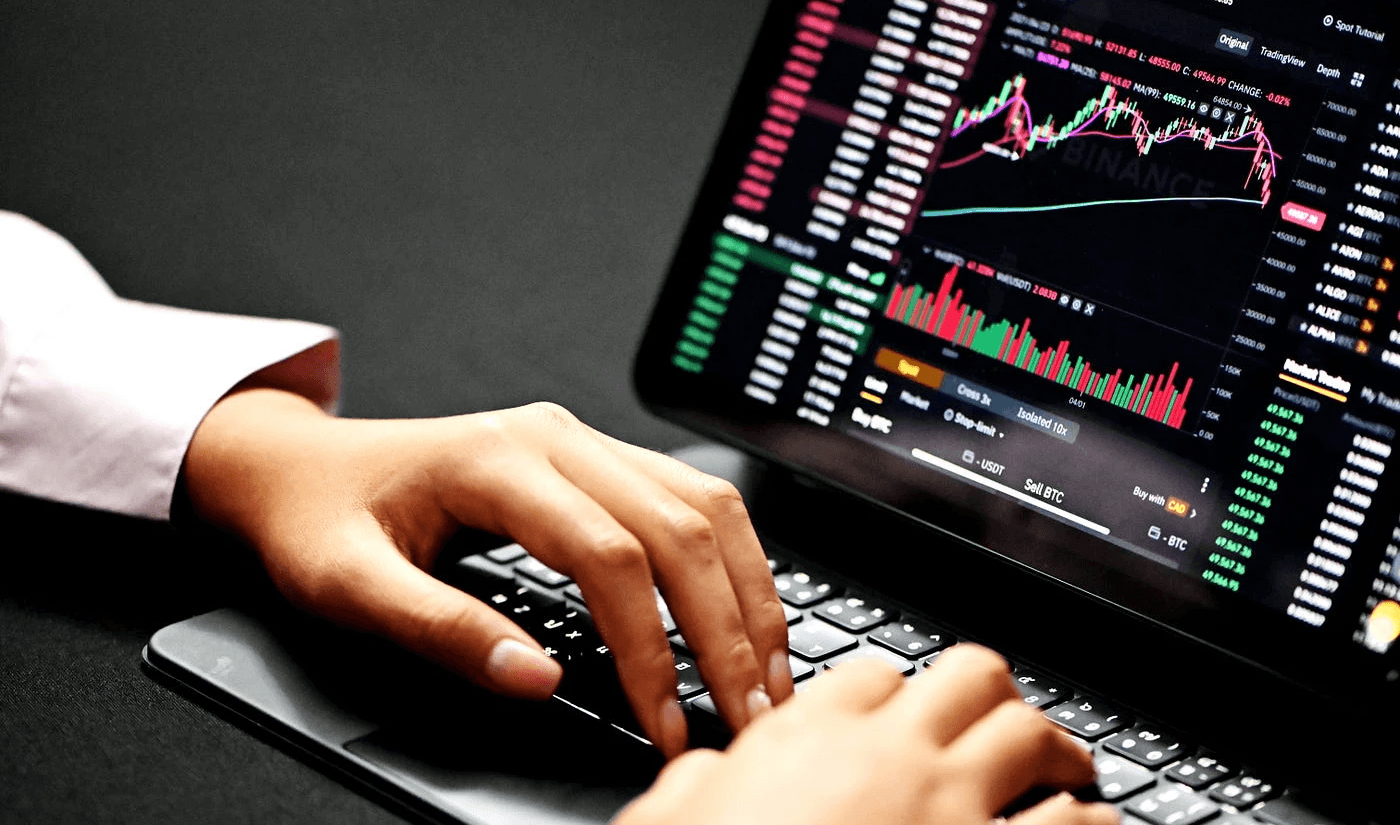
Spot algorithmic trading gives fast rules-based execution in the spot market. When designed and overseen, it helps traders improve consistency, risk control, and scalability. While it does not promise profits, it provides both institutions and active retail traders a more systematic way to capture short-term price changes and manage positions in real time.
1. High-speed, precise execution.
Spot algorithms scan live order books and market data in milliseconds. This allows orders to be sent and completed much faster than a person can click a button. This speed helps reduce slippage, increases the likelihood of getting prices close to the quoted levels in fast-moving markets, and is especially important when trading assets where quotes change many times per second, such as liquid forex pairs or major cryptocurrencies. For those interested in trading, opening a funded futures account can be a solid choice.
2. Around-the-clock market coverage
24/7 market coverage is essential for successful trading. Since the code runs continuously on a server or trading platform, spot algos can monitor markets 24/7 and respond immediately to new prices, news, or sudden changes without interruption. This constant presence is invaluable in markets such as crypto and, particularly, foreign exchange (FX) sites that trade all day. If you trade manually, you may miss overnight gaps or moves that occur when the market is closed.
3. Emotionless, rules-based discipline
Algorithmic strategies follow predefined rules and parameters, ensuring that every order is driven by logic rather than fear, greed, or fatigue. By enforcing consistent position sizing, entry and exit criteria, and risk limits, spot algos help reduce impulsive decisions. This approach minimizes the inconsistent behavior that often undermines discretionary traders over time. In our pursuit of effective trading, consider the advantages of funded futures accounts that align with these disciplined strategies.
4. Deep data and pattern analysis
Modern spot trading algorithms can process large streams of tick data, historical prices, volume, and order flow much faster than a human. They look for recurring patterns or minor pricing errors. Some platforms use machine learning or advanced statistics that help models adapt as conditions change and be retrained when they start to perform poorly.
5. Integrated, automated risk management
Risk controls can be built right into the strategy's rules. This way, stop-loss orders, take-profit levels, and maximum position sizes are automatically applied to every trade. Algorithms can also adjust exposure based on market volatility or how different assets relate to one another. This helps prevent overemphasis on a single asset or idea during volatile periods.
6. Lower operational costs and easy scaling
Once developed and tested, a single-spot algorithm can execute multiple trades across different symbols with minimal additional manual effort. This automation reduces per-trade operational costs, enables consistent workflows for both small and large accounts, and allows human traders to focus on research and strategy development rather than constantly monitoring the screen.
Access to institutional-style techniques
Spot algorithms give access to institutional-style techniques. They can use approaches like intelligent order routing, passive liquidity provision, and basic statistical arbitrage. These methods were usually available only to professional trading desks. For active retail traders on reliable platforms, this means better access to execution quality and strategy structures that look like those used by hedge funds or proprietary firms. However, it does not promise the same results.
Key Limitations and How to Overcome Them

Spot algorithmic trading faces significant challenges related to technical requirements, risk tolerance, system reliability, and day-to-day operations. To overcome these challenges, you need specific strategies to strengthen your position and leverage external resources. The best traders handle these issues well by leveraging redundancy, continually adapting, and building innovative partnerships.
What challenges arise from the steep learning curve in technical skills?
Mastering algo trading requires a mix of financial knowledge and coding skills, which confuses many beginners. Traders need to know a lot about price changes, how order books work, and how data moves in the markets. Without this combination, think Python fluency mixed with statistical understanding, it's hard to create reliable bots. Studies show that fewer than 15% of independent traders consistently profit, often because they lack these skills. To tackle these challenges, you can begin with structured learning paths such as online quant bootcamps or certifications in financial engineering. Combining this with practical platforms that provide API sandboxes lets you practice safely. Top performers typically spend 6-12 months in careful practice, gradually building skills from data handling to live deployment.
How does heightened exposure to market shocks impact trading?
Automated systems can turn minor glitches into significant losses by scaling trades too aggressively during chaotic events. For example, sudden market drops or periods when there isn't enough buying or selling can cause bots to keep firing orders without thinking. Over-optimized models also perform poorly when real-world conditions differ from those they have seen in the past. Meanwhile, when many traders do the same thing, it erodes unique advantages because everyone follows one another. To address this, use robust risk controls, such as dynamic position sizing based on market movement. Use walk-forward testing to simulate real market changes better and spread out strategies that are not connected. Professionals also monitor crowding by assessing how signals relate, ensuring their edge remains strong against the competition.
What are the vulnerabilities of an unreliable tech stack?
Heavy reliance on hardware and feeds creates vulnerabilities. Server crashes, bad data streams, or API hiccups can wipe out gains in seconds. Exchange blackouts during busy trading periods exacerbate these problems, while hackers target high-stakes trading setups. To build resilience, set up failover systems, like cloud backups and multi-broker links. Carefully check data sources using anomaly detectors, and have monthly drills for emergency shutdowns. Leading teams invest in air-gapped monitoring systems to catch cyber risks early.
How to navigate the evolving regulatory maze?
Rules change quickly from one country to another, like with MiFID II in Europe and SEC pattern-day trader limits in the US. This can trap unwary algorithm users, leading to fines or bans. Failing to follow reporting rules or anti-manipulation checks can slow operations. To stay on top, use compliance software that automates audits. Joining industry groups can provide valuable updates on regulatory changes. It’s also a good idea to start small in controlled practice environments. Many experts choose to have annual legal reviews conducted by external counsel to help manage this mix of rules.
What causes the shrinkage of strategy lifespan in algorithmic trading?
Market forces chew through profitable edges more quickly now; most algos peak at 3-9 months before fading as conditions evolve or rivals adapt. Failing to recognize this reality can easily make yesterday's winner tomorrow's dud. To combat decay, establish ongoing R&D pipelines. Spend 20% of the time looking for new signals using machine learning scans. Rotate groups of 5-10 models, retiring those that perform poorly based on live performance metrics.
How do scalability bottlenecks affect algorithm performance?
What works on a $10K demo often breaks down at $ the $1M scale because of liquidity walls or execution slippage. Micro-strategies can fail when their own trades become too large as volume increases. To fix these problems, test algorithms at the target sizes early on. Using iceberg orders helps with stealth execution. Slowly increase volume using volume-weighted methods, and use dark pools to execute large trades without affecting the market.
What are the gaps in psychological oversight during trading?
Blind faith in machines can lead to complacency; traders may skip critical checks and ignore small changes until serious problems arise. Also, relying too much on automation can weaken the gut feelings that usually help notice regime changes. To build discipline, establish daily review routines, and conduct third-party audits. Also, set strict drawdown triggers that require human intervention. This method combines human and machine oversight, enabling balanced control.
What funding and fee hurdles do algorithmic traders face?
Launching a competitive algorithmic trading operation requires significant upfront capital for servers, data subscriptions, and co-location. Professionals often face costs of over $75,000 yearly. On the other hand, retail traders deal with exchange fees, software licenses, and slippage that eat into their already small profits, making it hard for all but the richest to participate. Prop firm funding changes this situation. Firms like AquaFutures evaluate your strategy through challenges and then provide funded accounts with profit splits, typically 80/20 in your favor. This significantly reduces the risk to your personal funds while covering key fees, allowing you to grow your operations without depleting your savings.
Platforms like AquaFutures offer traders instant or evaluation-funded accounts with clear profit splits and quick payouts. Their promotional pricing can go up to 50% off and includes rotating BOGO bonuses. Check out account options to get funded and boost your strategies with real money.
Unlock up to 50% off Your First Funded Account for Futures Trading.
To turn spot algorithmic trading code into long-lasting profits, it is essential to have funded capital that shows execution, fills, and liquidity limits. This exposure helps test your order-routing and slippage assumptions under real-world conditions. Platforms like AquaFutures offer traders instant or evaluation-funded accounts, with simple profit splits, quick payouts, and promotional pricing up to 50% off, along with rotating BOGO bonuses. Check out account options and get funded to grow your strategies with real capital.
Related Reading
- Fibonacci Trading Strategy
- Best Prop Trading Firms
- ORB Trading Strategy
- Crypto Swing Trading Strategy
- Best Copy Trading Platform
- Best Proprietary Trading Firms for Beginners
- Best Stocks for Options Trading
- Silver Bullet Trading Strategy
- Order Block Trading Strategy
- The Strat Trading Strategy
- Supply and Demand Trading Strategy
- Profitable Gold Trading Strategy
- Higher High Lower Low Trading Strategy
