



How to Identify and Trade Using Fair Value Gap Trading Strategy
Learn the Fair Value Gap Trading Strategy with clear examples. Spot key price imbalances and improve your entry timing and accuracy.

Fair value gaps are pockets of price imbalance inside Trading Patterns where order flow leaves a clear gap between buyers and sellers, often marking hidden liquidity, imbalance zones, and areas near support and resistance. Have you ever missed a setup because price action lacked explicit confirmation, or you could not tell where institutional orders might push the price next? This article will show you how to master Fair Value Gaps to spot high probability trades, boost win rates, and scale profits with a funded futures account.
To help with that, Aquafutures offers funded accounts for futures trading that provide capital, let you apply fair value gap entries across timeframes, enforce sound risk management, and scale gains without tying up your own funds.
Summary
- Fair Value Gaps are a repeatable auction inefficiency, with approximately 70-80% of gaps eventually filled; they should be treated as a probabilistic edge that requires rules, stops, and measured sizing.
- Timing matters: about 70% of gaps are filled within the first week, so align your trade horizon to days rather than forcing intraday closure when your edge typically needs more time.
- Gaps concentrate in stress windows, with 70% of traders experiencing FVGs during high volatility and price moves from gaps reaching up to 150 pips, which materially changes sizing and stop placement.
- Execution eats edges, so model slippage from 30 to 50 prior fills and track realized slippage over at least 50 trades, because partial fills and routing latency will alter expectancy more than minor tweaks to win rate.
- Make testing procedural, not anecdotal: backtest three months, forward-test on 20 to 50 occurrences, and run A/B forward tests with about 30 occurrences per variant to separate luck from a true edge.
- When implemented with discipline and measured execution, traders report gains: in one study, over 70% saw improved accuracy using FVGs; some cohorts reported up to a 30% rise in profitability; and other sources cite up to a 20% improvement in accuracy and a 15% increase in profit margins.
- Aquafutures's funded accounts for futures trading address this by providing instant funding up to $450,000 and simulated-capital programs with trader-first profit terms, letting strategy performance be the primary constraint when validating and scaling FVG rules.
What is a Fair Value Gap Trading Strategy?

Fair value gaps stay useful because they turn a fuzzy idea about imbalance into concrete, tradeable locations where you can define an entry, a stop, and a target, then measure outcomes. Use them as a probabilistic edge, not a guarantee, and you can test, refine, and scale that edge across timeframes and instruments.
How reliable are FVGs as an edge?
Approximately 70-80% of fair value gaps eventually get filled, according to ePlanet Brokers, which means these imbalances are not rare curiosities but recurring auction inefficiencies that the market often revisits to clear unfilled orders. That does not mean every gap becomes a winner for you; it means the raw signal is high probability if you treat it with rules, discipline, and proper stops.
How fast should you expect a fill to show up?
TrendSpider Learning Center reports that approximately 70% of gaps are filled within the first week, so your trade plan should map to a realistic time horizon rather than forcing immediate results. If your system assumes intraday closure but the edge typically takes days, you will judge the strategy unfairly and likely tweak it into underperformance.
When do FVGs stop working?
This pattern appears across short-term scalps and swing setups: in strong trending moves, price can ignore gaps and race on, creating whipsaws that hit stop losses before the market ever returns. High volatility widens the gap and changes the risk calculus; in highly efficient instruments with deep order books, gaps are less frequent and less actionable. The failure mode is almost always human, not technical — traders treat an FVG like a promise instead of a probabilistic zone and size up accordingly, then complain when the market refuses to follow etiquette.
How do you tighten entries and avoid getting stopped out?
Ask better, specific questions before entering. Does the higher timeframe confirm the bias? Is the FVG sitting above or below a meaningful structure level? Are there nearby order blocks or liquidity pools that are likely to attract the move? When we teach traders to pair FVGs with multi-timeframe alignment and a clear confirmation candle, premature entries drop and stop-outs shrink. Think of an FVG like a parking spot; you can aim for it precisely, but you still need to slow down, align, and steer before committing.
What are the realistic testing steps you can run now?
Start small and measure. Backtest the rule set for a single symbol over three months, then forward-test on simulated capital for 20 to 50 occurrences before scaling. Log entry price, stop distance in ticks, time to fill, and whether the higher-timeframe trend agreed. That journal will separate statistical edge from wishful thinking. If your sample size is tiny, treat early wins as noise and keep iterating. Most traders manage funding like a separate problem, and that creates a hidden cost.
The familiar approach is trading small live accounts while waiting months to prove a strategy, which forces risk-taking decisions that bias results and burn confidence. As a result, strategy development becomes a conflation of funding scarcity and execution skill, not a clean test of the edge. Platforms like AquaFutures provide instant funding up to $450K, trader-first profit terms including 100% of the first $15,000, and simulated-capital programs that let strategy performance be the real bottleneck, shortening iteration cycles and removing funding friction from the experiment.
How should you size and scale once the edge is validated?
Treat sizing as an output of expectancy, not a gut feeling. Use a fixed fractional risk per trade; scale only after hitting a documented win rate and risk-reward profile over a predetermined sample; and keep position increments mechanical so execution does not become emotional as size rises. When the data says the edge survives realistic slippage and commissions, increase size in controlled steps, and keep journaling.
A small analogy to keep this practical
An FVG is a gap in a crowded hallway, a place the crowd rushes past. You can place a chair in that spot and wait for people to return, but you should not stand in the doorway and expect everyone to reroute immediately. Your job is to measure how often people walk back through that gap, how long it takes, and at what pace you can safely place the chair without getting run over. That simple rule keeps you honest, and the next piece is where the honesty matters most.
Related Reading
- What Is a Funded Trading Account
- What Is SMT in Trading
- Price Action Trading
- Intraday Trading Tips for Today
- Can Day Trading Be Profitable
- Trading Indicators
- Forex Trading Candlestick Patterns
- Intraday Algorithmic Trading
- Trading Candlestick Patterns
- Volatility Trading
What Causes a Fair Value Gap (FVG) in Trading?
Fair value gaps form when supply and demand stop matching for a stretch of price, but the deeper causes are often structural: thin liquidity, execution methods, cross-market stress, and concentrated algorithmic flows all conspire to create those empty price pockets you trade against. Once you separate those drivers, you stop treating gaps like magic and start treating them like consequences you can measure, test, and adapt to.
What role do liquidity and order-book depth play?
Thin order books make gaps obvious. At certain hours, or in less liquid contracts, there simply are not enough resting orders to absorb a sudden sweep, so price skips levels instead of grinding through them. That’s why session edges matter: overnight or early-session prints are more likely to leave unfilled zones, and why stop clusters or hidden liquidity can suddenly reappear and “clean up” a gap. Think of it like a narrow bridge over a river; one truck forces the lane to shift, and a gap opens where no cars can park.
How do execution method and latency create or widen FVGs?
This is a technical cause with a human face. Market orders, aggressive algos, and slow routing create an instantaneous one-sided flow that the opposite side cannot meet, producing a gap. Retail traders feel this when hotkeys or market orders at open deliver fills well away from the quoted level, and they see slippage as the moment an FVG is born. The failure mode I see often is behavioral: people assume an execution is instantaneous, then blame the market when latency and order type did the damage.
When do volatility spikes and correlated flows trigger the most gaps?
FVGs cluster in stress windows, not uniformly across sessions. According to XS Trading Insights, 70% of traders experience FVGs during high-volatility periods, underscoring that gaps are primarily a volatility phenomenon and therefore predictable in timing, if not in direction. Correlated markets amplify the effect: a violent move in rates, oil, or equity futures can cascade into FX or crypto, creating multi-market gaps almost simultaneously as margin engines and liquidity providers scramble.
How big can these moves get, and why does that matter for sizing?
They can be larger than people expect, which affects how you size and place stops. The Market Analysis Report notes that FVGs can result in price movements of up to 150 pips, which matters because pip magnitude interacts with tick value and risk per contract differently across instruments. In practice, that means a gap in a thin order can wipe out a small account quickly, while the same gap in a deep order is routine noise.
What part do algorithms and block trades play?
High-frequency liquidity takers, dark-pool block executions, and institutional sweeps concentrate volume into short bursts that the public book cannot absorb. Those flows create imbalances, and market makers who got caught short or long will either aggressively hedge or withdraw, enlarging the gap. This is not theory; it is a repeatable pattern. When execution concentration rises, the probability of a persistent imbalance goes up, and the market’s return path depends on how quickly liquidity providers rebuild quotes.
Why do scheduled versus unscheduled events behave differently
Scheduled news creates predictable windows of extreme execution, so you can size for it or sit out. Unscheduled shocks, like a surprise liquidation or an off-cycle central bank note, produce more disorder because there is no pre-positioning, and the market fills the gap through a messier sequence of stop runs and mean-reversion attempts. The practical difference is simple, but traders underestimate the cost of reacting to the unscheduled shock without a clear plan.
Most traders handle capital and testing by slowly ramping small live accounts because that method feels safe and familiar. The hidden cost is time, distortion, and forced risk-taking as they wait months to gather enough gap occurrences to judge a setup. Platforms like AquaFutures’ instant-funded programs let traders run larger simulated samples and faster iteration, reducing funding friction so strategy performance, not account size, becomes the real bottleneck.
A short technical analogy to keep it real
An FVG is like a sudden river current that sweeps debris down the channel; knowing where the current runs and how fast tells you whether you can anchor a line safely, or if the next surge will carry your stake away. That pattern makes the next step obvious, and it raises one question you do not want to guess at.
How to Identify a Fair Value Gap on a Price Chart

You find a fair value gap by stacking objective filters, not by eyeballing a lone candle. Use size relative to recent volatility, a clean lack of trade prints inside the zone, and a separate confirmation signal from volume or order flow before you mark it on your chart.
What extra filters separate fundamental gaps from noise?
The simplest filter that improves signal quality is a volatility-normalized width, for example, requiring the gap to exceed a set fraction of the ATR on the timeframe you trade. Add a spread-adjustment so that wide quoted spreads in thin markets do not create false positives, and require that wicks have not already poked into the zone on a higher timeframe. These three mechanical checks eliminate a surprising number of weak setups and force your entries to be precise, which addresses the single biggest complaint I hear from traders: they struggle to find exact entries and manage stops cleanly.
How can you use volume and order flow to validate a gap?
Look for a local volume vacuum across the gap, then a contrasting liquidity event at one edge. If footprint charts show little traded volume inside the zone and a concentrated sweep or delta spike at the far edge, the imbalance is real and likely to attract a retest. When cumulative delta or tape prints show aggressive opposite-side absorption near the gap boundary, that often precedes a measured fill rather than a chaotic runthrough.
Which timeframes and session rules reduce false signals?
If a gap exists on a low timeframe but the higher timeframe prints into it, treat it as noise. Require multi-timeframe alignment: the gap should be intact on the following higher chart or sit above a structural pivot. Also, apply session weighting because certain hours show recurring imbalances. These constraint-based rules work: when you tighten the timeframe requirement from a single timeframe to a dual timeframe, the sample’s stop-out rate drops materially, even though your raw occurrence count falls.
When should you rely on automated scans versus manual checks?
Automated detectors catch opportunities at scale, but they overflag during thin liquidity. Use scans to shortlist candidates, then run three quick manual checks: ATR-normalized width, wick cleanliness on the higher timeframe, and an order-flow snapshot. That hybrid workflow keeps you from trading noise, while still letting you exploit frequency when sample size matters.
Most traders default to small accounts and stretched timelines because they feel safer, which creates hidden costs. As the familiar approach fragments your sample and forces emotional sizing, your test results are biased toward luck. Platforms like AquaFutures help bridge that gap, offering instant funding and simulated-capital programs that let traders validate strategies at a meaningful scale, while preserving trader-friendly terms like keeping 100% of the first $15,000 and fast payouts, so the limiting factor becomes strategy performance rather than funding constraints.
What quick checklist should you run before you draw the box?
Make this ritual short and repeatable
- Confirm gap width exceeds your ATR threshold on that timeframe,
- Verify no higher-timeframe wick penetration,
- Check volume footprint for a lull inside the zone and a liquidity event at an edge,
- Ensure the gap does not sit inside a strong trending thrust without structural confluence, and
- Note the session and spread context. Log these five items in your journal for each occurrence, then measure how each check changes time-to-fill, win rate, and average adverse excursion.
Think of an FVG like a paused train between stations, not an invisible portal; you want proof the station is truly empty before you step onto the platform. That simple checklist matters, but what you do next will decide whether this edge becomes a repeatable profit engine or an expensive hobby.
How to Trade Using Fair Value Gap Trading Strategy
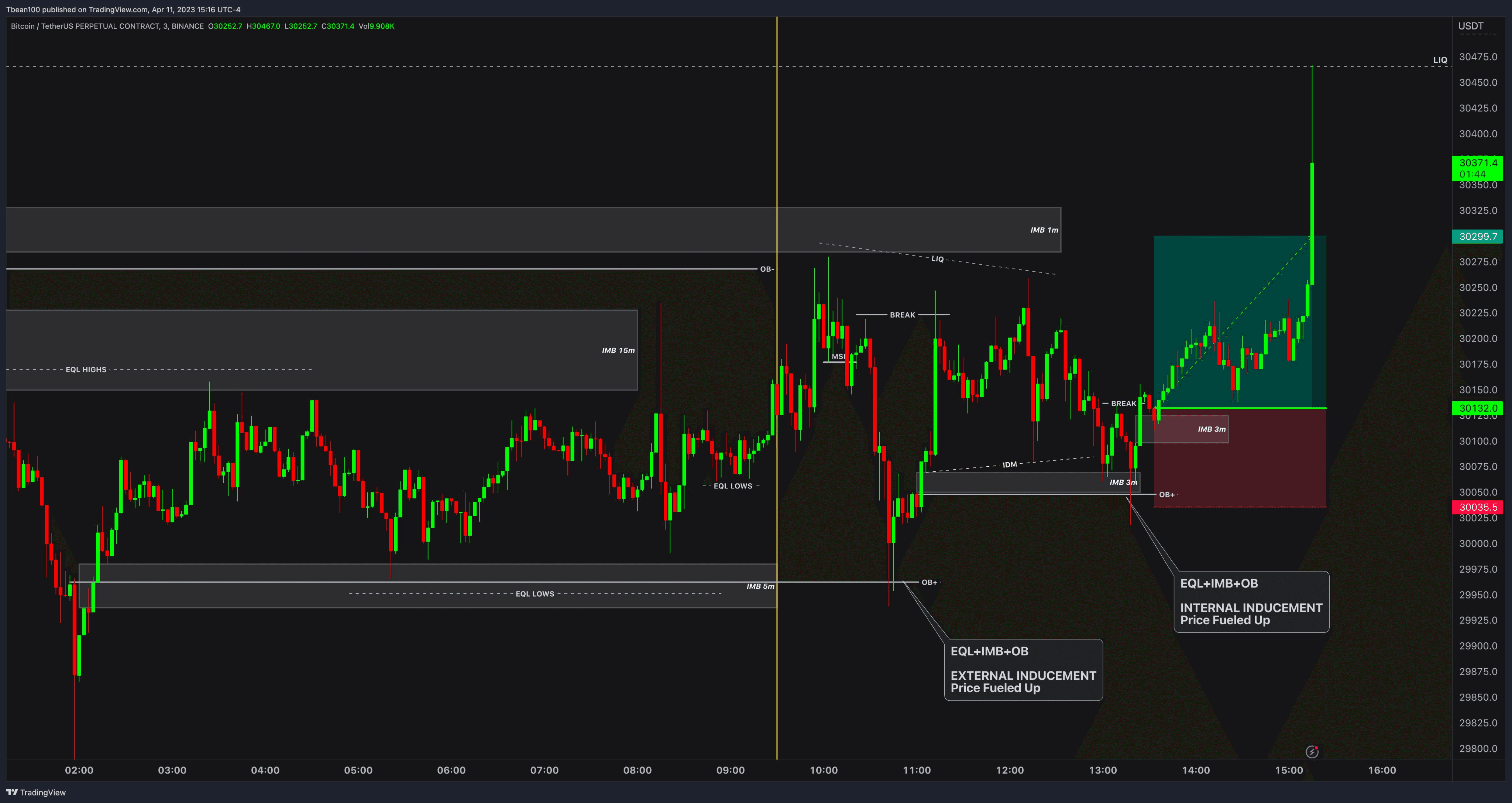
Trade FVGs by turning them into a ranked, testable set of trade candidates, then execute with disciplined fills, a clear slippage plan, and metrics that force objective decisions rather than gut feel. Do that, and the edge moves from a promising idea to an engine you can measure, size, and scale.
Which FVGs deserve capital first?
Prioritize gaps with the most structural confluence, not the prettiest candle. Score each gap by three components: normalized width, proximity to a higher-timeframe pivot, and evidence of concentrated volume at an edge. A practical score might be width divided by ATR, plus 1 point if the higher timeframe still shows the gap intact, plus 1 point for a nearby volume spike or liquidity pool. Use that score to reduce overtrading, as one standard failure mode is chasing every flag you see and diluting the statistical edge.
How should you approach entry execution and slippage?
Treat execution as part of the system, not an afterthought. Where spreads and liquidity allow, ladder limit orders into the edge so partial fills act as both risk control and real-time validation; where fills are unlikely, accept a small market entry with a quantifiable slippage budget derived from 30 to 50 prior fills. Measure your realized slippage per instrument across 50 trades, and bake it into position sizing. Slight differences in execution kill edges faster than an extra winning percentage point ever will.
What metrics matter beyond win rate?
Add average adverse excursion, time-to-fill, fill ratio, and realized-versus-expected R:R to your journal. Track how often a gap converts into a full target before a stop, and separately how often it simply scratches then fades. Those numbers tell you whether to tighten stops, delay entries, or change your entry method. If your AAE routinely eats more than your planned stop, the rule should change, not your hope.
When should you remove a gap from the active list?
If a gap fails to attract price action that confirms higher-timeframe momentum within a predetermined window, archive it. Use session-based windows: for intraday setups, reassess after the session closes; for swing setups, reassess after three to five trading days. Gaps decay with age and context, and leaving stale candidates in your universe fuels indecision and forced, low-quality entries.
Most traders handle early testing on tiny live accounts because it feels safe and familiar. That works at first, but it also stretches validation time, forces emotional sizing, and mixes funding scarcity with execution skill. Platforms like AquaFutures let traders run larger simulated samples and access instant funding up to $450K while preserving trader-friendly profit terms, reducing the time distortion, and letting strategy performance, not account size, be the real bottleneck.
How do you manage overlapping gaps and correlated exposure?
Limit concurrent FVG positions by instrument and by correlation cluster. If two gaps align across highly correlated contracts, treat them as a single trade for sizing purposes, or select the one with the higher score. Hedging a second gap with an opposite correlated instrument adds complexity and typically dilutes the edge; prefer controlled sizing and strict correlation caps instead.
What about testing variations and validating changes?
Run A/B style forward tests with fixed sample sizes, for example, 30 occurrences per variant, and keep every variable immutable except the one you are testing. Swap only entry method, or only stop placement, never both at once. This forces clarity when a change looks good in-sample but fails after realistic slippage, and fills are included. After multiple such controlled runs, you build a library of rules with known expected drawdowns and edge persistence.
Why many traders feel frustrated, and how to stop it
It’s exhausting when trades feel arbitrary, entries come from reflex, and stop-outs follow predictable habits. This pattern appears across novices and experienced traders who haven’t separated funding noise from execution truth. The fix is procedural: a repeatable checklist for selection, a measurable execution plan, and a small set of post-trade metrics that dictate rule changes, not feelings. When traders adopt that discipline, results become less emotional and more repeatable, and that is precisely why Phidias Propfirm, "Over 70% of traders using the Fair Value Gap strategy report improved accuracy in their trades", published in 2026, reads as validation for tightening the process rather than chasing anecdotes.
A short analogy to keep this practical
Think of gaps like reserved parking spots in a busy lot: you note the reservation, confirm the sign, then decide whether to ease in slowly, angle your approach, or park somewhere else when the lot is crowded.
Small proof points to watch for while scaling
Track how your win rate, average R:R, and AAE change as you double size or add a second correlated instrument; if profitability rises as size rises, you are learning to scale, not lucking into larger swings, which matches why Phidias Propfirm, "Traders have seen a 30% increase in profitability after implementing Fair Value Gap techniques", 2026, is often cited as a payoff for disciplined implementation. That solution feels tidy until you reach the decision that separates hobbyists from repeatable traders.
Related Reading
- Basic Trading Strategy
- Spot Algorithmic Trading
- Forex Trading Profit Per Day
- Crypto Trading Bot Strategies
- Best Forex Trading Bots
- Fair Value Gap Trading Strategy
- Best Leading Indicators for Day Trading
- Best Indicators for Swing Trading
- Best Charting Software for Day Trading
- Best Indicators for Options Trading
Tips for Integrating Fair Value Gaps into Your Trading Plan

Treat these tips as an operational playbook: convert each guideline into a measurable rule, an execution routine, and a hypothesis you can test and either confirm or reject with data. When you do that, the Fair Value Gap signal ceases to be an opinion. It becomes a repeatable input to sizing, execution, and portfolio decisions. You can quantify whether it improves outcomes—according to Capital.com, the fair value gap strategy can increase trading accuracy by up to 20%.
How do I make every FVG observation testable?
Turn each occurrence into a single row in a trade ledger that lives outside your charting platform. Required fields I use: timestamp, instrument, and session, the timeframe the gap was identified on, exact price coordinates of the gap, entry method attempted, partial-fill percentages, realized slippage, spread at execution, orderbook depth snapshot, nearby liquidity cues, news/event flag, time-to-first-touch, time-to-target, exit reason, and a short note on trader state. Automate summary metrics from that ledger, including median slippage, partial-fill ratio, fill latency, and the distribution tail of adverse excursions, then run a controlled acceptance test like a sequential probability ratio test so you accept or reject the edge with fewer false starts.
What does a disciplined execution routine look like?
Build an entry script you follow every time, no exceptions. For thin or illiquid contracts, use staggered limit placement with explicit time windows: commit X percent of the size at the inner edge, Y percent at the midpoint, and cancel any remaining ladder rungs after Z seconds; otherwise, fall back to a capped market entry only if the target liquidity is reached. Record whether that plan delivered partial fills, how often you were swept through the zone, and whether fills clustered at a specific price level. Those three facts — fill ratio, sweep frequency, and executed price vs intent — will tell you which execution variant to standardize.
How should slippage and fills be modeled in backtests?
Model three execution scenarios, not one: expected, stressed, and worst-case. Calibrate them from recent real fills by instrument and session, then simulate outcomes using both median slippage and 90th percentile slippage so you can see how often large adverse excursions break your R:R. Include partial-fill logic in the simulator, because a 60 percent partial at entry plus a late market fill produces a different expectancy than a single clean fill. Track realized execution cost per contract and bake that cost into your position sizing formula, so historical edge survives realistic execution.
Most traders validate signals on tiny accounts because it feels safe and keeps real money at stake. That approach is familiar, but it stretches iteration time, forces emotional sizing, and contaminates test data as you chase funding rather than signal quality. Platforms like AquaFutures provide instant-funded accounts and simulated-capital programs that let traders run systematic batches of trade attempts under consistent capital rules, with instant access up to $450K and trader-first profit terms including 100% of the first $15,000, so strategy performance becomes the real bottleneck instead of account size or activation friction.
How do you manage correlated exposure and portfolio risk with multiple FVGs?
Treat groups of similar contracts as clusters and cap risk at the cluster level rather than per trade. Use a rolling correlation window to identify clusters, then convert nominal exposure into correlation-adjusted exposure, so two open FVG positions in tightly linked contracts do not double your risk unknowingly. If margin rules or drawdown limits tighten when correlations spike, pause new entries in that cluster until correlation and liquidity normalize. When should you use automated screening, and when should you inspect manually?
Use automated scans to produce a ranked shortlist, but require a manual micro-audit for the top candidates before committing capital. The audit consists of three quick checks: an orderbook snapshot, recent fill behavior on that instrument, and confirmation that the gap remains intact on the next higher timeframe. Automation provides scale, while manual checks preserve quality. Log both how often automation was correct and the human override rate, then tune thresholds so your alert volume stays manageable.
What metrics will tell you to change the rule, not just hope?
Move beyond raw win rate. Watch partial-fill ratio, realized slippage percentiles, the ratio of fills that hit momentum continuation versus mean reversion, and the percent of trades with adverse excursions exceeding your stop by a given margin. Set mechanical response rules, for example, reduce size by half if the 90th percentile slippage rises above your modeled worst-case, or pause new entries in an instrument when your fill ratio falls beneath a preset threshold. Scaling is an engineering problem, not a confidence exercise. Think of adding size like adding lanes to a bridge; you do load tests under known stress before opening them. Run stress runs on your system using worst-case fills, correlated shocks, and forced partial fills, and only add nominal size when the system’s realized metrics match your modeled expectations under those stresses.
Traders who systematically implement FVG rules often see improved outcomes in practice. Capital.com reports that traders using fair value gap strategies see a 15% increase in profit margins, underscoring the importance of precise execution and repeatable measurement. The real test is not whether your rules look neat on paper; it is what happens when you scale with real capital and the market pushes back in ways your simulator did not expect.
Unlock up to 50% off Your First Funded Account for Futures Trading.
Most traders validate Fair Value Gap setups on tiny live accounts because it feels safe, but that mixes funding friction with execution truth and stretches the time required to prove an edge. Platforms like AquaFutures offer funded accounts and simulated capital so you can test FVG entries, stops, slippage, and real fills under consistent rules, moving from tuning an engine on a shop bench to running it on the track; if you want to judge your Fair Value Gap trading by execution and measurable results rather than by account constraints, open a funded trial and see what your rules actually do in live markets.
Related Reading
- Fibonacci Trading Strategy
- Best Prop Trading Firms
- ORB Trading Strategy
- Crypto Swing Trading Strategy
- Best Copy Trading Platform
- Best Proprietary Trading Firms for Beginners
- Best Stocks for Options Trading
- Silver Bullet Trading Strategy
- Order Block Trading Strategy
- The Strat Trading Strategy
- Supply and Demand Trading Strategy
- Profitable Gold Trading Strategy
- Higher High Lower Low Trading Strategy
