11 Best Regulated Prop Firms You Should Know in 2026
Discover 11 top regulated prop firms for 2026. AquaFutures reveals which firms offer the best funded trading accounts, fees, and profit splits.

Trading with substantial capital while risking none of your own money represents the core appeal of regulated prop firms. Understanding what a funded account is and how proprietary trading companies operate determines whether traders find genuine opportunity or face costly disappointment. Success requires selecting credible firms, overcoming their challenges, and accessing protected capital to scale profits.
Regulatory standards and transparency remain essential when evaluating proprietary trading programs. Traders need structured approaches that provide access to capital without the financial stress of using personal funds. AquaFutures offers funded accounts for futures trading that provide the support and framework needed to grow trading careers through well-managed funded programs.
Summary
- Proprietary trading firms supply traders with capital to execute trades while splitting profits, typically allowing traders to keep 50-90% of earnings, according to Nasdaq. This performance-based partnership aligns incentives around consistent results rather than transaction fees, giving traders access to capital they might not have personally, while firms gain exposure to trading talent without hiring full-time employees. The model creates opportunities for skilled individuals to scale profits without risking personal funds, but success depends entirely on choosing firms with the infrastructure to honor their commitments.
- Over 40% of unregulated prop firms shut down in 2025, leaving traders with no recourse and no capital, according to Investing.com Analysis. Regulated entities face mandatory audits, capital reserve requirements, and transparent reporting standards that ensure firms can honor payouts during volatile markets. Without external oversight, firms can optimize for evaluation fee collection rather than trader success, creating misaligned incentives where the business profits most when traders fail. The same analysis found that 95% of prop firms surviving 2025 had implemented robust compliance frameworks, demonstrating that regulatory oversight filters out operators who cannot survive transparency.
- Evaluation challenges test whether traders can execute strategies under pressure without violating risk parameters, typically requiring specific profit targets while respecting maximum drawdown rules over 30 to 60 days. Most traders who succeed on demo accounts fail evaluations because real consequences change decision-making behavior, even when the only risk is a lost evaluation fee. Firms use this process to identify traders who can manage risk consistently rather than those who get lucky during favorable conditions, protecting firm capital while creating pathways to funding that wouldn't exist through traditional means.
- The psychological shift after getting funded destroys most traders who abandon the disciplined approach that earned them the account. Traders often reduce risk during evaluations to demonstrate competence, then immediately double it once funded, treating abundant capital like a lottery ticket rather than a business asset. The firms that succeed long-term reduce risk after funding rather than increase it, building accounts slowly until conservative position sizing generates meaningful income. This pattern separates traders who build sustainable careers from those who lose access after a few reckless trades.
- Capital reserve requirements mandated by financial authorities contributed to a failure rate approximately 40% lower among supervised entities than among unsupervised models operating under similar market conditions, according to a 2023 ESMA report. These reserves ensure firms retain sufficient capital to meet payout commitments even during losing periods or market shocks, preventing the scenario in which incoming evaluation fees finance payouts to earlier participants. Between 2023 and 2024, industry observers documented 80 to 100 unregulated prop firm closures, many of which disappeared overnight with outstanding obligations unfulfilled, demonstrating the systemic risk posed by firms operating without mandatory financial safeguards.
- Ninety percent of prop firms fail to meet regulatory standards, explaining why so many disappear when market conditions tighten or withdrawal requests spike. Verification through public registries maintained by authorities such as the CFTC, FCA, or ASIC reveals active licenses, enforcement actions, and compliance history, distinguishing accountable operations from entities with no regulatory footprint. Real regulation comes with registration numbers and clear dispute-resolution paths, not vague marketing language about industry standards or best practices that substitute promises for accountability.
- Funded accounts for futures trading address common industry friction points by offering 24-hour payout guarantees with a $500 penalty for missed payouts, no activation fees, and 100% profit retention on the first $15,000 earned, removing obstacles that turn evaluation programs into revenue engines for firms rather than genuine pathways to capital for traders.
What are Prop Firms, and How Do They Work?
Proprietary trading firms provide traders with capital to trade futures, forex, stocks, and derivatives markets. Rather than risking your own money, you trade the firm's capital and split profits, typically keeping 50-90%. The firm assumes the financial risk while you focus on executing strategies that generate returns.
🎯 Key Point: This profit-sharing model eliminates the need for traders to risk their personal savings while giving firms access to trading talent without traditional employment costs. This model aligns incentives around steady results rather than transaction fees or management charges. You gain access to capital you might lack personally, and the firm gains exposure to trading talent without hiring full-time employees.

"Prop trading allows skilled traders to access significantly more capital than they could trade with personally, often 10-100x their personal account size." — Trading Industry Analysis, 2024
💡 Example: A trader with a $5,000 personal account might qualify for a $100,000 prop firm account, giving them 20x more buying power while keeping 80% of all profits generated.

How Prop Firms Operate
Independent prop firms trade with their own money, taking on all the risk themselves. They find traders through evaluation programs, allocate capital based on performance, and enforce strict risk controls. These firms support remote traders worldwide with technology platforms and real-time data. Brokerage-affiliated prop desks operate as specialised units within larger financial institutions, benefiting from broader market data and infrastructure while maintaining separate operations from client services. Independent firms typically offer more flexible arrangements for individual traders, whereas broker-integrated desks prioritise institutional scale.
Getting Access to Capital
You apply to a prop firm and enter an evaluation phase (challenge or combine), paying an upfront fee for access to a simulated trading account with set capital limits. Over 30 to 60 days, you must meet specific profit targets while adhering to maximum drawdown rules.
How do regulated prop firms test trading skills?
The evaluation tests how well you can make trades under pressure while maintaining risk parameters—for example, achieving a 6% return within a 3% daily loss or 6% total drawdown limit. These constraints simulate real trading conditions and filter out impulsive decisions.
What happens after passing the evaluation?
Once you pass, the firm provides real capital, typically $25,000 to $100,000, with opportunities to earn more as you demonstrate consistent profitability. The evaluation fee protects the firm from funding unproven traders.
Why do most traders struggle with prop firm evaluations?
Passing a prop firm evaluation is harder than most traders expect. You're trading in a simulated environment where every rule violation ends your attempt, and the psychological pressure differs significantly from that of a demo account. Traders who succeed on demo accounts often fail evaluations because real consequences, even the lost evaluation fee, change how they make decisions.
What makes the profit and risk requirements so challenging?
The challenge requires hitting profit goals without exceeding drawdown limits. If you're targeting an 8% gain with a 2% daily loss cap, a single bad trade can end the attempt. You might need 10 profitable trading days within a calendar month, a target that becomes difficult when accounting for choppy markets, missed setups, and days when your strategy doesn't align with price action.
How do regulated prop firms use evaluations to protect their capital?
Companies use this process to identify traders who can manage risk consistently, rather than those who succeed during favourable conditions. It protects their capital while creating a pathway for skilled individuals to access funding unavailable through traditional means.
Profit Splits and Payout Structure
Once you get funded, you keep a percentage of your earnings, often up to 80% or more. Some firms offer 100% of initial profits up to a certain amount, then switch to a split structure. Payouts typically process after you meet minimum trading day requirements, often 5 to 10 profitable days, with funds transferred via bank transfer or electronic payment within days or weeks.
How do regulated prop firms scale trader allocations?
The split rewards sustained performance. If you generate $10,000 in profit and keep 80%, you receive $8,000 while the firm keeps $2,000 for providing capital and infrastructure. As you hit milestones, many firms increase your allocation, sometimes doubling or tripling your buying power, which amplifies both potential earnings and the firm's profit share.
Why do profit splits encourage consistent trading strategies?
This structure rewards consistent traders over those making big, risky trades. Traders who lose all their money chasing huge gains lose access to capital, while those making small, steady wins build larger allocations over time, creating a compounding effect that benefits both trader and firm.
The Pressure Nobody Mentions
Passing the evaluation feels like the finish line, but it's where the hardest part begins. The same discipline that secured funding often disappears once you're trading live capital. Traders frequently cut their risk in half during evaluations, then double it once funded, abandoning the exact approach that proved they deserved the account.
Why do traders change their approach after getting funded?
During the challenge, you're protecting an evaluation fee and proving you can trade well. Once funded, the money feels abundant, and you want to rush toward withdrawals. This makes you forget the patience that earned you the account in the first place. You start taking risky trades to hit withdrawal goals faster, forgetting that the firm's drawdown rules remain unchanged. This is where most funded traders fail. They treat the funded account as a lottery ticket rather than a business asset, and the firm revokes access after careless trading. Successful traders reduce risk after funding, building the account slowly through careful position sizing to generate meaningful income.
How do regulated prop firms address these common challenges?
Most traditional prop firm models create friction through long payout timelines, strict activation fees, and evaluation structures designed to collect challenge fees rather than fund capable traders. Our funded accounts for futures trading address this by offering 24-hour payout guarantees with financial penalties for missed payouts, no activation fees, and 100% profit retention on the first $15,000 earned. This structure prioritizes funding and paying skilled traders quickly, removing obstacles that turn evaluation programs into revenue engines for the firm rather than pathways to capital for traders.
What Happens When You Break the Rules
If you exceed a drawdown limit, your account is suspended immediately with no appeal option. You lose access to your money, and pursuing another opportunity requires paying for a new evaluation. A single mistake—whether caused by a platform issue or unexpected news—can end your participation.
How do strict rules limit your trading flexibility?
The strict rules protect the company's capital but limit your trading flexibility. You cannot hold through temporary losses, add money to losing positions, or adjust your strategy mid-month if market conditions shift. The same rules that provide funding restrict your freedom compared to trading your own capital.
Why do regulated prop firms enforce such strict policies?
But here's what most people miss about those rules: they're not protecting only the firm's money.
Why is Regulation Important for Prop Firms?
Drawdown limits and profit targets protect you from making reckless choices that destroy accounts and undermine the mental strength needed for consistent trading. Without these limits, most traders lose all their capital by chasing losses or using excessive leverage on winning trades, then blame the firm when accounts fail.

🎯 Key Point: Regulation acts as a safety net that prevents emotional trading decisions from wiping out your trading career before it even begins.
"Proper risk management through regulated limits is the difference between long-term success and account blowouts that end trading dreams." — Trading Psychology Research, 2024

⚠️ Warning: Unregulated prop firms often lack these essential protections, leaving traders vulnerable to unlimited losses and predatory practices that can destroy both capital and confidence.
The Real Function of Oversight
Rules and oversight create responsibility where it might not exist otherwise. When a prop firm operates under supervision, it cannot change payout terms mid-contract or disappear with evaluation fees. According to Investing.com Analysis, over 40% of unregulated prop firms shut down in 2025, leaving traders without recourse or compensation. Regulated companies must undergo required audits, maintain adequate reserves, and report information clearly. These ensure that when you reach your profit goals, the money is available to pay you, and when the firm advertises a funding program, it has the funds to support it.
What happens when regulated prop firms aren't involved?
Unregulated firms prioritise challenge fees over trader success. Without financial oversight or rules requiring payout of winnings, the business model shifts from funding successful traders to collecting fees from those who fail. The firm profits most when you don't pass, creating a perverse incentive structure.
What problems do traders face without regulatory protection?
Traders report that profitable accounts got flagged for minor, poorly defined rule violations. They also report payout delays stretching from days to weeks to indefinitely, with unanswered support tickets and withdrawals stuck in review. Without regulatory recourse, you're arguing with an entity that holds all the leverage and none of the accountability. You cannot sue an offshore company or force transparency from an unregistered operation.
Why do traders struggle with trust in prop trading
Regulation solves the credibility gap that plagues this industry. When a firm agrees to oversight, it demonstrates a willingness to operate under scrutiny, filtering out operators unable to survive transparency. Traders gravitate toward regulated entities because the risk of sudden closure or arbitrary rule enforcement drops significantly. That trust is practical: you're investing time, evaluation fees, and mental energy into a relationship that only works if the other party honours their commitments.
How do Regulated Prop Firms boost industry standards
The same Investing.com Analysis found that 95% of prop firms expected to survive 2025 had implemented strong compliance frameworks. Firms that accept oversight build strong reputations that attract better traders, creating a cycle in which quality improves, and weak firms exit. Regulation strengthens the sector by making it unprofitable for bad actors.
Why do regulated prop firms cost more upfront?
Following the rules costs money. Companies must pay for lawyers, audits, and staff time to comply with the law. These costs are passed on to customers through lower profits, higher fees, or stricter account rules. You're paying for systems that ensure the company will operate next quarter and that your money won't get lost in a support line run by two people from a rented office abroad.
What happens when you choose unregulated alternatives?
The cheaper option costs less initially but can cost significantly more later. Unregulated companies offer better splits and lower fees by skipping the systems that protect you when something goes wrong. Those savings disappear when you run into a problem: a platform glitch during volatility, a disputed trade, or a withdrawal that doesn't process. Regulation gives you a way to fix the problem. Without it, you're hoping the company decides to be fair.
How should traders prioritize the features of regulated prop firms?
Most traders focus entirely on profit splits and evaluation difficulty, treating regulation as background noise. The structure protecting your capital and ensuring payouts matters more than an extra 5% on your split, because without it, you might never see that split at all. Funded accounts for futures trading with AquaFutures address this by combining trader-friendly terms with operational transparency. Our funded accounts offer 24-hour payout guarantees, backed by financial penalties for missed payouts.
Why do traders overlook regulatory verification when choosing prop firms?
The excitement of securing capital can lead founders to skip verifying whether a company is real and trustworthy. You're focused on passing the evaluation and hitting profit targets, not researching whether the firm maintains separate accounts or undergoes outside audits. That's how traders end up funded by companies unable to pay withdrawals when multiple accounts request their money simultaneously.
How do unregulated prop firms exploit trader oversight?
A company offers aggressive terms, attracts traders, collects evaluation fees, and funds a percentage of them. When funded traders generate profits, the company struggles. Without capital reserves required by regulation, it delays payouts, invents rule violations to terminate accounts, or shuts down and relaunches under a new name. Traders who ignored due diligence lost everything. Those who checked regulatory status had an exit plan.
What separates regulated prop firms from unreliable ones?
What separates firms that last from ones that disappear is more than having rules.
Related Reading
- What Is a Funded Account
- Does Ftmo Offer Instant Funding
- How to Get a Funded Trading Account
- No Challenge Prop Firm
- Funding Traders Rules
- What Is a Prop Firm Account
- Synthetic Funded Account
- What is a Funded Firm
- One Step Prop Firm Challenge
- Trading Challenges
- Instant Funding Rules
- Prop Firm Ip Address Rule
- Halal Prop Firms
- Top 10 Prop Firms 2025
- Australia Prop Firm
- Cheapest Futures Prop Firm
- No Activation Fee Prop Firm
- Prop Firms In Usa
- Prop Firms That Allow Trade Copiers
- Best Prop Trading Firms
- Forex Prop Firms With Instant Funding
- Best Prop Firms For Forex
- Best Prop Firm To Start
- Best Instant Funded Prop Firm
- Best Prop Firms in UAE
How Do Regulated Prop Firms Differ From Unregulated Prop Firms?
The retail prop trading evaluation model presents itself as an easy way to trade large amounts of money without personal risk, yet a significant portion of the market operates in a regulatory gray area. According to a 2025 survey reported by Finance Magnates, nearly 70% of retail traders believe prop firms should face stronger regulation, reflecting frustration with inconsistencies, payout issues, and sudden firm closures. Regulated prop firms are subject to strict oversight by financial authorities such as the FCA, ASIC, or CySEC, ensuring client fund protection and transparent business practices. These firms must maintain segregated accounts, provide clear terms and conditions, and follow dispute resolution procedures. Unregulated prop firms, by contrast, operate with minimal oversight, often resulting in unclear payout policies and a higher risk of operational issues.

"Nearly 70% of retail traders believe prop firms should face stronger regulation, reflecting frustration with inconsistencies, payout issues, and sudden firm closures." — Finance Magnates, 2025

What safeguards do regulated prop firms provide compared to unregulated ones?
Regulated prop firms offer built-in safeguards and accountability, while unregulated ones prioritize flexibility at the cost of greater trader uncertainty. Regulated options address common pain points by providing reliable structures that enable skilled traders to focus on performance rather than on firm stability or fair treatment.
How do regulated prop firms ensure transparency?
Oversight forces disclosure. Registered firms must report capital reserves, client fund segregation, and operational health through periodic audits, preventing scenarios in which a firm collects evaluation fees, funds traders, and then collapses when payouts exceed available liquidity. Independent auditors verify the firm can honour its commitments: you're relying on structure, not promises.
What risks do unregulated entities pose to traders?
Unregulated companies don't have to follow the same rules. They can advertise funding programs without proving they have sufficient reserves. When the market becomes volatile or too many traders attempt withdrawals, these firms delay payouts by citing vague "compliance reviews" or sudden rule changes. Without outside enforcement, unanswered support tickets are your only recourse, and the firm faces no legal consequences for non-payment.
What happens when regulated prop firms violate their terms?
Regulation creates a mechanism to solve problems. If a regulated firm breaks payout rules or changes rules without justification, you can report them to the regulatory body that oversees them. Complaints trigger investigations, and firms risk fines, licence revocation, or public enforcement actions that damage their ability to operate. The firm knows that treating traders badly carries real costs beyond negative reviews.
Why do unregulated firms leave traders with limited options?
Unregulated firms eliminate that leverage. You signed a contract with a company that might be registered offshore, operates through shell companies, or has no regulatory footprint you can challenge. When disputes arise, your options narrow to public complaints and walking away. You cannot force transparency, require audits, or sue effectively across jurisdictions. The power imbalance is complete.
How do capital requirements protect regulated prop firms
Financial authorities require regulated firms to maintain minimum capital reserves based on their obligations, ensuring they can meet liabilities even during losses or market downturns. According to a 2023 ESMA report analysing supervised financial entities, these capital requirements contributed to a failure rate approximately 40% lower than that of unsupervised models under similar market conditions.
Why do unregulated prop firms fail more frequently
Unregulated firms operate without this safety net. They can use money from new evaluation fees instead of maintaining separate capital reserves, creating a structure similar to a Ponzi scheme in which new participants finance payouts to earlier ones. When new evaluation sign-ups slow down or funded traders regularly withdraw profits, the model breaks. Between 2023 and 2024, industry observers documented 80 to 100 unregulated prop firm closures, many of which disappeared overnight with outstanding payout obligations unfulfilled.
How do fast payouts benefit funded traders?
Funded accounts for futures trading address this problem directly with 24-hour payout guarantees backed by a $500 penalty if missed. Our AquaFutures accounts combine this with no activation fees and 100% profit retention on the first $15,000, prioritising rapid payouts over protecting firm cash flow at trader expense.
How do regulated prop firms ensure rule stability?
Regulated environments limit how freely companies can change their terms. Profit splits, drawdown limits, and payout processes must match disclosed terms, and changes typically require notice periods or regulatory approval. This stability lets you build strategies around known parameters without worrying that next month's update will invalidate your progress.
What happens with unregulated firms' terms?
Unregulated firms change their terms at will. Traders report that profit targets rise mid-evaluation, new trading restrictions appear after funding, or payout thresholds increase without announcement. The firm's agreement includes language allowing "updates to terms and conditions," enabling unilateral changes when financial pressure builds. You thought you were trading toward a 70% split, but after hitting targets, the firm introduces a "withdrawal processing fee" that wasn't mentioned during sign-up.
The Survival Filter
Compliance costs money: legal fees, audits, and administrative overhead. Those costs get built into the business model through slightly higher evaluation fees or lower profit splits. But you're paying for infrastructure that ensures the firm can handle scrutiny. The firms that survived 2025's shakeout built systems that withstand regulatory pressure, and that strength protects your time investment as much as their reputation.
Why do unregulated firms appear cheaper upfront?
The cheaper option saves money initially but creates significant risks later. You pay less upfront because the company skips regulatory compliance, segregating customer funds, and independent audits. That savings evaporates when you need these protections: a website failure during market volatility, a trade dispute requiring third-party resolution, or a withdrawal that fails to process. Regulations provide recourse mechanisms. Without them, you depend on the company's goodwill—a precarious position in a business where the company profits from your losses.
How can you identify legitimate regulated prop firms?
Knowing the difference between regulated and unregulated structures matters only if you know which firms operate under legitimate oversight.
11 Best Regulated Prop Firms You Should Know in 2026
Choosing a prop firm in 2026 means evaluating regulatory credibility, capital reserves, payout consistency, and trader protection mechanisms. The firms below survived recent industry consolidation by building transparent operations and prioritizing trader payouts over short-term revenue extraction.
1. AquaFutures
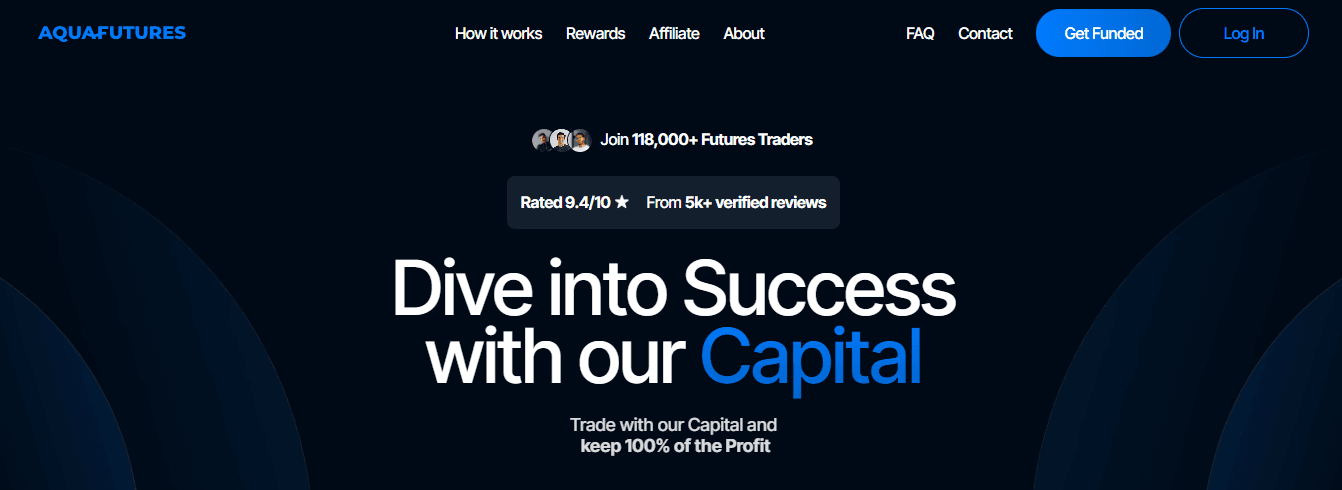
AquaFutures operates as a proprietary trading firm specializing in futures trading, offering traders access to funded accounts up to $450,000 through instant funding options or simple one-step challenges. Traders use the firm's simulated capital with no personal liability for losses, focusing on real rewards from performance while benefiting from flexible conditions, rapid payouts, and high profit retention. It positions itself as a reliable choice in the prop trading space through transparent rules, strong payout guarantees, and positive trader feedback, making it appealing to those seeking quick capitalization in futures and related markets such as forex, indices, metals, and crypto.
Key Features
- Instant funding is available to skip evaluations and start trading immediately.
- Funding levels up to $450,000 across various account sizes ($25k, $50k, $100k, $150k, and higher scaling).
- 100% profit split on the first $15,000 in lifetime profits, then 90% thereafter.
- No personal liability for losses — trade with the firm's capital only.
- Reward guarantee: Payouts processed in 24 hours or receive an extra $500 bonus.
- No activation fees, no time limits on trading, and no hidden rules.
- Weekly or on-demand rewards with no fixed schedule — withdraw when eligible.
- Multiple account types (Beginner, Standard, Pro, Instant Funded) with tailored rules like profit targets (e.g., 6% in some models), drawdown limits (EOD or trailing), and consistency requirements.
- Support for futures primarily, plus forex, indices, metals, and crypto.
- Advanced platforms, including ProjectX and Volumetrica.
- 24/7 customer support via chat, Discord, email, and social media.
- Over $5,000,000 in total rewards have been paid out, with verified examples and an average of around $2,450.
- High trader ratings (9.4/10 from 5,000+ verified reviews) and a community of 118,000+ joined traders.
- Additional perks like charity contributions to ocean cleanup and clean drinking water initiatives.
- Strict KYC/AML verification for reward requests to ensure compliance and security.
- No prohibited strategies enforced (e.g., restrictions on certain high-risk tactics like latency arbitrage).
Why Traders Choose AquaFutures
Traders opt for AquaFutures in the prop firm landscape for its emphasis on speed, transparency, and trader-centric policies that reduce barriers, while prioritizing reliable earnings and protection. The instant funding path allows skilled individuals to bypass lengthy challenges and access substantial capital quickly, with zero risk to personal funds since losses fall on the firm. Generous profit sharing, full retention of the initial $15,000, followed by a strong 90% split, combined with a firm payout guarantee (24-hour processing or bonus compensation) and no denials, fosters high confidence in receiving earnings, backed by millions already disbursed and consistent positive testimonials on fast, trustworthy withdrawals. Flexible rules without time pressures or excessive restrictions support sustainable trading styles, while robust 24/7 support and clear guidelines help resolve issues promptly. Overall, it attracts futures-focused traders seeking a dependable, high-reward environment with proven reliability over flashy promises.
2. DNA Funded
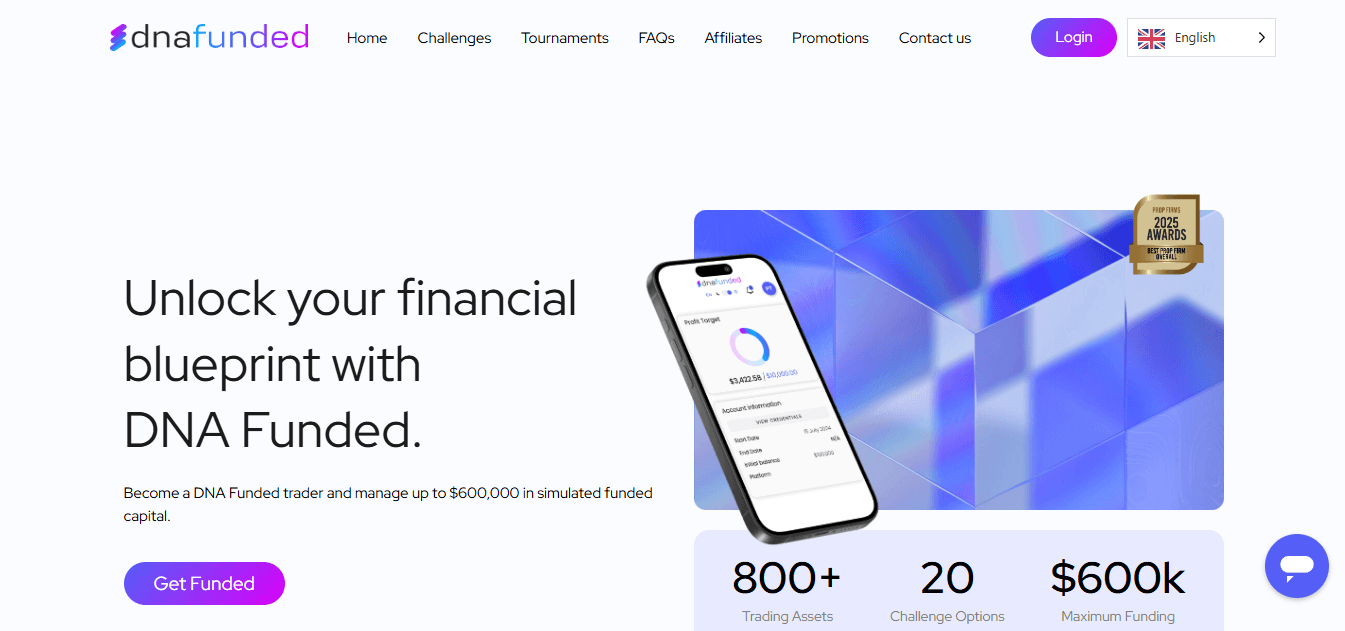
DNA Funded stands out as a broker-backed prop firm that partners with DNA Markets (regulated by ASIC), which enhances its credibility for secure trading environments and competitive conditions, particularly appealing to U.S. traders. It offers broad market access and a strong platform.
Key Features
- Broker partnership with ASIC-regulated DNA Markets for added oversight.
- Access to hundreds of instruments, including forex, indices, and commodities.
- The TradeLocker platform support for advanced trading.
- Competitive challenge pricing and structures.
- Reliable payout processes with positive trader feedback.
- Strong focus on U.S. trader accessibility.
3. Topstep

Topstep remains a leader in futures prop trading, known for its long-standing reputation and operations in a highly regulated futures market (through exchanges like CME). It prioritizes transparency and has built trust through consistent payouts over the years.
Key Features
- Focused on futures trading with exchange-regulated contracts.
- Transparent 90/10 profit split in many cases.
- Structured evaluation with clear rules.
- Strong emphasis on trader education and support.
- High payout reliability with millions distributed.
- Compliant setup suitable for U.S. traders.
4. FTMO
FTMO continues to set benchmarks for reliability in the forex and CFD space, with a strong track record of transparent operations, consistent payouts, and a structured approach that appeals to serious traders worldwide.
Key Features
- Up to 90% profit splits on funded accounts.
- Bi-weekly payout options.
- Multi-level scaling plans.
- Proven history of reliable payouts.
- Strong community and educational resources.
- Clear risk management guidelines.
5. Apex Trader Funding

Apex Trader Funding excels in futures trading with a simple, trader-friendly model and impressive payout history, operating in the regulated futures ecosystem while offering generous scaling and minimal restrictions.
Key Features
- Simple evaluation and generous scaling plans.
- High profit splits and flexible rules.
- Trader-friendly policies with low restrictions.
- Strong verified reviews and payout proofs.
- Focus on day trading suitability.
- U.S.-centric accessibility.
6. The5ers

The5ers is highly regarded for its instant funding options and scalability, with a focus on forex trading and a reputation for fair conditions and long-term support for traders.
Key Features
- Multi-level scaling up to significant capital.
- 80-90% profit splits.
- Instant or challenge-based funding paths.
- cTrader platform availability.
- Bi-weekly payouts.
- Strong emphasis on risk management.
7. Blueberry Funded
Blueberry Funded earns recognition as a broker-backed option linked to Blueberry Markets (ASIC-regulated), delivering reliable execution, instant funding options, and broad instrument access, appealing to traders seeking CFDs and futures with enhanced credibility.
Key Features
- ASIC-regulated broker backing via Blueberry Markets.
- Instant funding and multiple challenge types available.
- Access to over 1,100 instruments across markets.
- Raw spreads start from low levels like 0.1 pips.
- Solid scaling and flexible drawdown rules.
- Quick support response times (often under 6 hours).
8. BrightFunded

BrightFunded distinguishes itself with a trader-focused model that includes innovative loyalty rewards, unlimited scalability, and acceptance of U.S. participants, making it a strong choice for those prioritizing growth and engagement.
Key Features
- Unlimited scaling on funded accounts.
- High overall testing scores (around 95/100 in reviews).
- Flexible challenge structures and profit shares.
- Broad acceptance, including U.S. traders.
- Competitive rules with emphasis on trader benefits.
- Reliable operations with positive community input.
9. FXIFY
FXIFY earns praise for its robust platform lineup, broker-like infrastructure, and versatile challenge options, positioning it as a dependable pick for traders who value execution quality and a diverse set of trading tools.
Key Features
- Strong challenge, flexibility, and account options.
- Competitive spreads and execution standards.
- High rankings in independent evaluations.
- Focus on trader-friendly conditions.
- Solid payout track record.
- Accessible for various trading styles.
10. FundedX
FundedX stands out for its emphasis on rapid payouts and efficient processes, combined with solid platform support and a reputation for quick, dependable withdrawals that build trader confidence.
Key Features
- Access to forex, crypto, indices, and commodities.
- Competitive pricing on evaluations.
- Strong customer service ratings.
- Flexible trading conditions.
- Positive verified feedback on reliability.
- Modern features for efficient trading.
11. FunderPro

FunderPro is known for its daily payout capabilities and a straightforward approach, offering traders frequent access to earnings, clear rules, and dependable operations in the prop space.
Key Features
- Transparent evaluation and funding paths.
- Good balance of features and costs.
- Emphasis on reliable withdrawals.
- Support for multiple asset classes.
- High marks in platform and service areas.
- Consistent positive trader experiences.
But picking a firm from this list only works if you know what actually matters for your specific situation.
Related Reading
- Best Funded Prop Firms
- Prop Firms That Use TradingView
- 1 Phase Prop Firm
- No Consistency Rule Prop Firm
- Prop Firms That Use Tradelocker
- Prop Firm Comparison
- How Do Prop Firms Work
- Prop Challenge
- The Cheapest Prop Firm
- Trading With Borrowed Capital
- Top Tradig Prop Firms
- Top Prop Company
- US-based Prop Firms
- Top 10 Prop Firms In The World
- Forex Prop Firms In The Us
- Best Prop Firm Forex
- No Minimum Trading Days Prop Firm
- Prop Firms With Instant Funding
How to Choose the Right Regulated Prop Firm For Your Trading Needs
Your choice of a prop firm directly impacts how well you can trade and how reliably you can withdraw money. Verify the firm is regulated through public registries, examine how they make money from hidden fees, test whether their challenge suits your specific trading style, confirm their platform supports the instruments you want to trade, and read real reviews from actual traders rather than testimonials the firm controls.

🎯 Key Point: Regulation status is your first line of defense against fraudulent firms - always verify through official regulatory databases before depositing any funds.
⚠️ Warning: Many prop firms use misleading testimonials and fake success stories - focus on independent reviews from verified traders on third-party platforms.

"The difference between a regulated and unregulated prop firm can mean the difference between profitable trading and total loss of capital." — Trading Industry Report, 2024
Verify Regulation and Credibility
Regulation provides oversight and accountability, protecting traders from unfair practices. Look for firms that clearly share their regulatory status, as this indicates greater openness in operations and dispute resolution. AquaFutures builds credibility through high user satisfaction, verified reviews, and consistent performance delivery. While many prop firms operate with simulated capital models rather than traditional broker regulation, our funded futures accounts prioritize reliability through fast payouts, no hidden fees, and dedicated support, earning trust among over 118,000 traders.
Examine Profit Splits and Payout Reliability
Good profit-sharing arrangements motivate consistent performance, while payout speed and consistency build confidence in the partnership. AquaFutures offers a generous profit structure: traders keep 100% of the first $15,000 in profits, then 90% thereafter. A 24-hour reward guarantee ensures payouts are processed on time, or traders receive an extra $500 bonus, with weekly reward opportunities providing reliable access to earnings.
Review Evaluation Process and Trading Rules
The evaluation phase tests skills without excessive barriers, with clear rules on drawdown, position sizing, and time limits. Firms with flexible, trader-friendly conditions better suit a variety of trading styles, especially for futures trading. AquaFutures offers instant funding to bypass challenges or a one-step evaluation with achievable targets (6-8% in beginner plans) and no strict time limits. Funded accounts feature end-of-day (EOD) or trailing drawdown (typically 3-5%), position limits aligned with account size, and no daily loss caps in select plans, enabling disciplined yet flexible trading on futures, forex, indices, metals, and crypto.
Assess Supported Instruments and Platforms
Having access to diverse assets and strong platforms ensures the firm can match your expertise and strategic needs. AquaFutures supports futures, forex, indices, metals, and crypto through advanced platforms like ProjectX and Volumetrica, enabling careful analysis and execution across all supported asset classes.
Consider Costs, Fees, and Account Flexibility
Low starting costs, clear pricing, and flexible account sizes help prevent money problems. Avoid firms that charge hidden fees or restrict account adjustments. AquaFutures offers competitive pricing starting from $26/month for a $25,000 account with no activation costs or denials upon qualification. Funded accounts scale up to $450,000, with subscription or one-time fee options to suit different trader budgets.
Evaluate Customer Support and Community Feedback
Quick support fixes problems fast. AquaFutures offers 24/7 assistance through live chat, email, Discord, and social media with rapid response times. High ratings (9.4/10 from over 5,000 verified reviews) and a community of 118,000+ traders demonstrate strong support and proven real-world results. Independent reviews reveal patterns in their reliability.
Unlock up to 50% off Your First Funded Account for Futures Trading
AquaFutures offers fast, affordable access to funded futures accounts with instant funding, straightforward rules, and real payouts. Skip evaluations or grow your account based on consistent performance without restrictive limitations. Thousands of traders trust AquaFutures for transparent rules, quick support, and trading capital.

🎯 Key Point: AquaFutures eliminates the typical barriers that slow down traders, offering immediate access to real capital without the usual evaluation hurdles.
"Thousands of traders trust AquaFutures for transparent rules, quick support, and actual trading capital." — AquaFutures Platform

Ready to get funded on your terms? Check out AquaFutures' account options and unlock up to 50% off your first funded account, plus weekly BOGO deals and bonuses. Get started now and trade with the freedom you deserve.
🔑 Takeaway: With up to 50% savings and weekly promotions, AquaFutures makes funded trading more accessible and affordable than traditional prop firms.