



18 Best Prop Firms for Forex Traders of All Levels in 2026
Explore the 18 Best Prop Firms for Forex in 2026, comparing fees, rules, payouts, and funding options for every trader level.
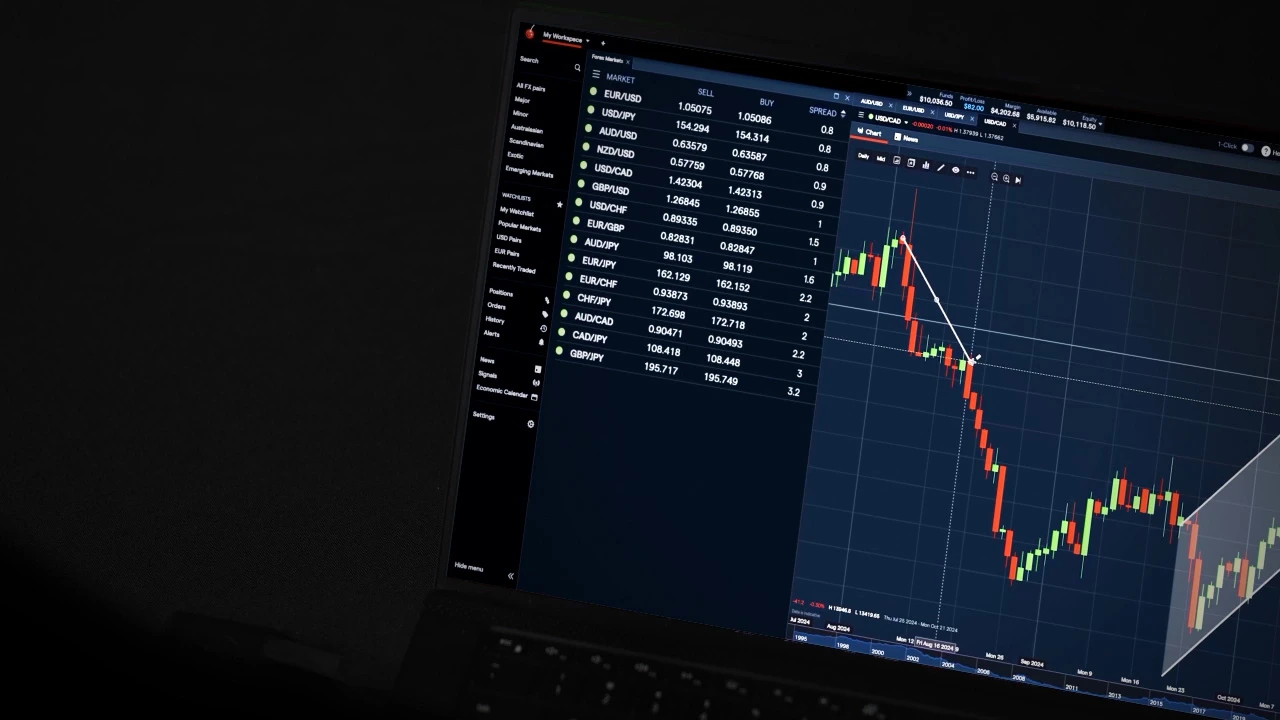
Consider having the skills to trade forex but lacking the capital to make meaningful returns. What Is a Funded Account? It's the bridge between your trading ability and substantial profit potential, where proprietary trading firms provide you with their capital to trade in exchange for a share of your gains. This guide breaks down the best prop firms for forex in 2026, guiding you through evaluation criteria, challenge structures, and profit splits so you can select the right firm, pass their assessment, and secure a funded account that matches your trading style and experience level.
AquaFutures offers funded accounts for futures trading that complement your forex journey by providing access to capital without risking your own money. Their evaluation process focuses on consistent risk management rather than unrealistic profit targets, making it accessible whether you're just starting out or refining advanced strategies. With transparent rules and competitive profit sharing, AquaFutures provides a practical path to trading larger positions and building sustainable income from the markets.
Summary
- Prop firm evaluations filter out 90% of applicants, not because strategies fail, but because traders violate risk rules or produce inconsistent results under pressure. The challenge isn't about profitability in isolation. It's a stress test of your relationship with drawdown limits, position-sizing discipline, and the ability to walk away when conditions don't suit your edge, even when setups appear perfect on the surface.
- Revenue sharing in prop trading typically allocates 70 to 90 percent of profits to traders, with firms retaining the remainder as compensation for capital and infrastructure. This structure means firms only earn when you generate returns above breakeven, creating alignment where your success drives their revenue rather than profiting from spreads or commissions regardless of outcomes, as traditional brokers do.
- Payout speed reveals operational priorities more than any marketing claim, with 24-hour processing demonstrating maturity and confidence in risk management, while multi-week delays often mask cash flow concerns or hope that traders keep funds deployed. Firms that require manual reviews or use batch cycles typically manage liquidity constraints rather than protect traders' interests, turning what should be routine withdrawals into anxious waiting periods.
- Challenge fees represent visible entry costs, but total economics depend on monthly subscriptions, spread markups, commission structures, and profit split percentages over time. A $200 evaluation with $50 monthly fees and 70 percent splits costs more across six months than a $500 challenge with no recurring charges and 90 percent splits when you factor in sustained profitability and withdrawal frequency.
- Only 5 to 15 percent of traders pass the prop firm's challenges, with most failures stemming from mismatched operational constraints rather than from unprofitable systems. Swing traders forced into daily profit targets start overtrading, while scalpers restricted to arbitrary position limits abandon their edge to fit rules that penalize legitimate setups, creating friction that drains motivation before skill development occurs.
- Regulatory gaps in prop trading create both opportunity and risk, as firms trade proprietary capital rather than holding client deposits and face lighter oversight than traditional brokers. This allows faster setup and flexible terms but means less protection when firms delay payouts or change conditions unilaterally, making verified track records across market cycles more important than promotional promises.
- AquaFutures addresses payout uncertainty through funded futures trading accounts by guaranteeing 24-hour processing or compensating with an additional $500, removing the anxiety that turns performance into a waiting game at firms where manual reviews stretch weeks and create friction between traders and capital access.
What is a Forex Prop Firm, and How Does It Work?

A forex prop firm bridges the gap between skill and capital by funding traders who demonstrate consistent profitability without requiring them to risk personal savings. These firms operate on a performance-based model where they provide trading accounts loaded with their own money, typically ranging from $10,000 to $200,000, in exchange for a share of the profits generated. The arrangement transforms forex trading from a capital-intensive barrier into an accessible opportunity for those who can prove they manage risk better than they chase returns.
Unlike retail brokers that profit from spreads and commissions regardless of your success, prop firms only win when you do. They're selective gatekeepers, not passive facilitators. Their business model depends entirely on identifying traders who can generate sustainable returns while respecting strict risk parameters. This alignment creates an environment where discipline matters more than account size, and where your edge gets amplified by institutional capital rather than drained by personal financial stress.
The Evaluation Process
Getting funded starts with proving you can trade within boundaries, not just hit profit targets. Most firms require you to pass a challenge phase where you navigate a simulated account under real market conditions, complete with slippage, spreads, and the psychological weight of performance pressure. You'll typically need to achieve 8 to 10 percent gains over one to two months, without breaching daily drawdown limits of 4 to 6 percent or overall caps of 10 to 12 percent. These aren't arbitrary rules. They mirror the risk tolerance of institutional traders, who prioritize preserving capital during losing streaks over maximizing gains during hot runs.
90% of prop firm traders fail evaluation challenges, not because they lack winning strategies, but because they violate risk rules or produce inconsistent results. The filters are harsh by design. Firms need traders who can adapt to 24-hour forex cycles, handle sudden volatility from central bank announcements, and resist the urge to overtrade after a string of losses. When traders describe multiple red days wiping out their accounts with 2-3 percent losses, it's rarely the strategy that failed. It's the inability to step back when market conditions shift against their edge.
The evaluation isn't just a test of profitability. It's a stress test of your relationship with risk. Can you walk away from a setup that looks perfect but violates your rules? Will you cut a winner early to protect against a reversal, even when it feels like leaving money on the table? These decisions separate the 10 percent who get funded from the majority who flame out chasing what could have been.
From Funded Account to Scaling Capital
Once you clear the evaluation, you transition to a live, funded account where real money moves through your trades, and payouts are deposited into your bank account. The firm monitors your performance continuously, not to micromanage your strategy, but to ensure you stay within the risk framework that got you funded in the first place. Violate the daily drawdown limit even once, and most firms will terminate the account immediately. It sounds harsh until you realize they're protecting both their capital and your ability to trade another day. Automated systems enforce these boundaries because emotional traders rarely stop themselves before catastrophic losses compound.
The revenue split typically favors the trader heavily. Prop firms offer traders profit splits of 70 to 90 percent, keeping the smaller portion as compensation for capital and infrastructure. This structure incentivizes firms to help you succeed rather than profit from your failures. Your payout frequency depends on meeting withdrawal criteria, such as minimum trading days or account stability, but the core dynamic remains: you keep the lion's share of what you earn.
Scaling happens as your track record strengthens. Some firms offer pathways to larger accounts, doubling or tripling your capital allocation as you demonstrate consistency over months of live trading. This progression rewards patience and risk management over aggressive profit chasing. The trader who grinds out 2 percent monthly gains without violations will scale faster than the one who swings for 15 percent and occasionally blows through drawdown limits.
The Hidden Costs Nobody Mentions Upfront
Challenge fees are the firm's primary revenue source, accounting for more than profit splits, ranging from $100 for small accounts to over $1,000 for six-figure allocations. Some firms have shifted toward fee-free models under regulatory pressure, but most still charge upfront for evaluation access. These fees aren't refundable if you fail, which means multiple attempts can drain hundreds of dollars before you ever see a funded account. It's not a scam, but it's also not the zero-risk opportunity some marketing suggests.
Then there are the psychological costs that don't appear on any fee schedule. Trading under constant scrutiny amplifies stress in ways retail trading never does. You're not just managing positions. You're managing the fear that one bad decision terminates your access to capital you've worked weeks to secure. Sleep disruptions become common when forex markets run 24 hours, and economic news drops at 2 AM in your timezone. The mental load of performing within rigid boundaries while adapting to market volatility tests your discipline in ways that backtesting never reveals.
Hidden platform fees, data subscription costs, and profit-sharing dilutions can erode your effective take-home rate. A 90 percent split sounds generous until you factor in the monthly costs of maintaining the tools and infrastructure needed to trade professionally. When traders talk about thorough due diligence before committing to a firm, they're not being paranoid. They've learned that the firms with the flashiest marketing aren't always the ones with the most transparent payout structures or the most responsive support when technical issues freeze your account during volatile sessions.
Platforms like AquaFutures address these friction points by eliminating activation fees and offering instant funding that bypasses lengthy evaluation periods. Their 24-hour payout guarantee, backed by a $500 bonus if they miss the window, removes the uncertainty around when you'll actually access your earnings. For traders who've passed challenges elsewhere only to wait weeks for payouts or face unexplained delays, that speed and transparency shifts the relationship from adversarial to collaborative.
Regulatory Complexity and Firm Reliability
Not all prop firms operate under the same regulatory oversight, and that variation creates risks most traders don't consider until payout issues surface. Firms based in jurisdictions with loose financial regulations can change terms, delay withdrawals, or shut down without recourse. The challenge is that regulatory legitimacy doesn't always correlate with trader-friendly policies. Some heavily regulated firms impose rules so restrictive that passing becomes nearly impossible, while others in lighter regulatory environments offer fair terms but lack the institutional backing to guarantee payouts during market stress.
Abrupt account closures for minor rule breaches occur more often than firms publicly admit. A trader who inadvertently holds a position during a news event that violates the firm's policy may lose access to a funded account they've managed profitably for months. These terminations underscore the need for unwavering discipline, but they also reveal how little margin for error exists once you're funded. The firms that survive long-term are those that balance strict risk enforcement with reasonable flexibility when traders make honest mistakes, rather than those that repeatedly violate core parameters. But here's what most traders miss until they've cycled through multiple firms: the real differentiator isn't the profit split or the account size.
Related Reading
- What Is a Funded Account
- Does Ftmo Offer Instant Funding
- How to Get a Funded Trading Account
- No Challenge Prop Firm
- Funding Traders Rules
- What Is a Prop Firm Account
- Synthetic Funded Account
- What is a Funded Firm
- One Step Prop Firm Challenge
- Trading Challenges
- Instant Funding Rules
- Prop Firm Ip Address Rule
- Halal Prop Firms
- Top 10 Prop Firms 2025
- Australia Prop Firm
- Cheapest Futures Prop Firm
- No Activation Fee Prop Firm
- Prop Firms In Usa
- Prop Firms That Allow Trade Copiers
- Best Prop Trading Firms
- Forex Prop Firms With Instant Funding
- Best Prop Firm To Start
- Best Instant Funded Prop Firm
- Best Prop Firms in UAE
What are the Benefits of Trading With a Forex Prop Firm?

Trading with a forex prop firm removes the capital ceiling that traps most retail traders in small-position purgatory. Instead of grinding through years to accumulate meaningful account balances, you gain immediate access to substantial buying power, often $50,000 to $200,000 or more, funded entirely by the firm. This shift transforms your relationship with the market from survival mode, where every loss threatens your ability to continue, to strategic execution, where you can size positions appropriately for the volatility and timeframe you're trading. The psychological relief alone changes decision quality, but the tangible benefit is simpler: your edge gets amplified by institutional capital rather than constrained by personal savings.
The second benefit runs deeper than account size. Prop firms enforce the kind of risk discipline that separates professionals from gamblers. When you operate under strict drawdown limits, typically 5 to 10 percent maximum, you can't rationalize holding losers or doubling down during drawdowns. Automated enforcement removes the emotional negotiation that undermines retail accounts. You either respect the boundaries, or you lose access. That clarity, however uncomfortable at first, builds muscle memory for cutting losses quickly and preserving capital in unfavorable conditions. Over time, traders report that this structure becomes internalized, improving their decision-making even outside funded accounts.
Capital Access Without Personal Financial Exposure
The core transaction is straightforward: you prove you can manage risk through an evaluation challenge, and the firm stakes you with their money. No loans to repay, no personal capital at risk beyond a modest challenge fee. When trades go wrong, and they will, the firm absorbs the loss. Your downside is capped at losing access to the account, not draining your savings or accumulating debt. This arrangement flips the traditional retail model, where every pip against you comes directly from your pocket.
Only 10% of traders pass the evaluation challenges, underscoring how seriously firms take risk assessment. They're not funding everyone who applies. They're filtering for traders who demonstrate consistency under pressure, not just profitability in favorable conditions. Once you clear that hurdle, you're operating with institutional backing that would take years to self-fund through salary savings or incremental account growth.
The scaling potential compounds this advantage. Many firms offer pathways to double or triple your allocation while maintaining profitability over consecutive months. A trader who starts with $100,000 and achieves steady 3-4% monthly returns without violating rules can find themselves managing $300,000 within six months. That progression rewards patience and risk management over aggressive swings, aligning incentives toward sustainable performance rather than lottery-ticket trades.
Profit Splits That Reward Performance Directly
Revenue sharing in prop trading typically favors the trader heavily, with splits ranging from 70 to 90 percent of net profits. This means a $5,000 winning month on a $100,000 account could net you $3,500 to $4,500 after the firm takes its share. Compare that to retail trading, where you keep 100 percent of gains but operate with a fraction of the capital. The math favors larger allocations with shared profits over full ownership of small accounts.
The structure incentivizes firms to support your success rather than profit from your failures. Unlike brokers who earn from spreads and commissions regardless of your outcomes, prop firms only make money when you do. This alignment shifts the relationship from transactional to collaborative. When you win, they win. When you violate risk rules and get terminated, you lose the time invested in your evaluation and onboarding.
Payout frequency varies, but many firms offer weekly or biweekly withdrawals once you meet minimum trading-day requirements, typically 5 to 10 days per cycle. This regular income stream transforms trading from speculative gambling into a performance-based profession. Traders describe the shift from obsessively checking checking account balances to focusing on process, knowing payouts arrive predictably when they follow their system.
Risk Parameters That Build Professional Discipline
Operating under strict drawdown limits forces you to prioritize capital preservation over profit generation. When a single 5 percent drawdown day terminates your account, you can't afford the retail trader's luxury of hoping a loser reverses. You cut fast, reassess, and move to the next setup. This discipline, initially uncomfortable for traders accustomed to unlimited second chances in personal accounts, becomes the foundation of consistent performance.
The psychological shift matters more than most realize. When your own money is on the line, loss aversion creates paralysis. You hold losers too long, hoping to avoid realizing the pain. You exit too early, desperate to lock in any gain before it evaporates. With firm capital, those emotional hooks lose their grip. The pain of a stopped-out trade is real but bounded. You're not facing rent money disappearing or retirement savings evaporating. You're facing a reset, which stings but doesn't devastate.
Traders who've cycled through both retail and funded accounts consistently report better execution under prop firm constraints. The boundaries create clarity. You know exactly where you stand, what you can risk, and when you've crossed the line. That certainty, even when restrictive, reduces the cognitive load of constant self-negotiation about whether to bend your rules just this once.
Access to Institutional-Grade Infrastructure
Funded accounts typically include access to platforms and execution speeds that retail traders pay premium fees to obtain, if they can access them at all. Direct market access reduces slippage on volatile pairs, getting you fills closer to your intended price during fast-moving sessions. This matters enormously when trading news events or breakouts where a few pips of slippage can turn winners into scratches.
Some firms provide proprietary analytics tools that track your performance metrics in real time, showing win rates by session, drawdown patterns by currency pair, and risk-adjusted returns across different market conditions. This data visibility helps you identify what's working and what's draining equity before bad habits compound into account violations. Retail platforms offer basic statistics, but institutional tools break down performance with the granularity needed to systematically refine the edge.
The technology advantage extends to risk management automation. Position sizing calculators that adjust for current volatility, automatic stop-loss placement based on average true range, and alerts when you're approaching daily or overall drawdown limits all reduce the mental overhead of manual monitoring. These aren't luxuries. They're the infrastructure that lets you focus on reading price action instead of babysitting spreadsheets.
Structured Learning and Performance Feedback
Most prop firms offer some form of trader education, ranging from basic webinars on risk management to advanced coaching on specific strategies such as range-bound scalping or trend following in exotic currency pairs. The quality varies, but the underlying value is access to experienced traders who've navigated the challenges you're facing. When you're stuck in a pattern of violating daily loss limits, a mentor who's solved that problem can compress your learning curve from months to weeks.
The feedback loop tightens considerably under firm oversight. In retail trading, you can ignore bad habits indefinitely because no external consequence forces change. Under prop firm rules, bad habits terminate accounts. This forcing function accelerates improvement because the cost of not adapting is immediate and concrete. Traders describe this as painful but clarifying, the difference between knowing you should cut losers fast and actually doing it because the alternative is losing your allocation.
Live trade reviews, where experienced traders analyze your recent sessions, surface blind spots you can't see from inside your own decision-making. Maybe you're consistently entering too late after confirmation, sacrificing the risk-reward trade-off. Maybe you're overtrading during low-volatility sessions, racking up commission costs without corresponding profit. These patterns become obvious to outside observers but remain invisible when you're grinding through daily sessions alone.
Community and Competitive Benchmarking
Joining a prop firm connects you to a community of traders facing identical challenges under the same rules. This shared context creates accountability that solo trading lacks. When you see peers maintaining discipline through drawdown periods or scaling to larger accounts through consistent execution, it reinforces that success is achievable, not mythical. The isolation of retail trading, where you never know if your struggles are normal or fatal, dissolves in a community where everyone's navigating the same evaluation criteria.
Many traders report frustration with discount codes that don't work or promotional offers that seem misleading when they attempt to reduce evaluation costs. This skepticism reflects past disappointments in which advertised benefits didn't materialize, creating distrust of the firm's claims. The emotional tone shifts from excitement about opportunity to cynicism about whether any offer is legitimate. That pattern of broken promises makes traders value transparency and reliability over flashy marketing when choosing where to commit their time and effort.
Competitive elements, such as leaderboards showing top performers or challenges with prizes for best monthly returns, tap into motivation that a pure profit incentive may not always drive. Some traders thrive on external validation and peer recognition, pushing harder when they see their name climbing rankings. This gamification, when done without encouraging reckless risk-taking, channels competitive drive into disciplined execution rather than ego-driven gambling.
Career Pathways Beyond Individual Trading
A funded prop account with verified performance history becomes a credential in ways retail trading never does. When you can show months of audited results managing $200,000 with strict risk controls, that track record opens doors to hedge fund analyst roles, portfolio management positions, or consulting opportunities with other traders. The prop firm essentially provides the institutional validation that self-reported retail results can't match.
Some firms offer internal advancement pathways, with top performers transitioning into mentoring, strategy development, or risk management roles within the organization. This career progression transforms trading from a solo performance activity into a stepping stone toward broader roles in the financial industry. For traders who discover they prefer teaching or analysis over execution, these pathways provide alternatives without abandoning the trading world entirely.
The credential value extends to attracting external capital. Family offices and high-net-worth individuals seeking skilled traders to manage portions of their portfolios view a prop firm's success as proof of concept. You've already demonstrated you can perform under institutional constraints with someone else's money, which is exactly what they need. That bridge from prop trading to private wealth management represents a career trajectory that retail trading alone rarely provides.
Platforms like AquaFutures address friction points that derail this progression by eliminating activation fees and offering instant funding options that skip lengthy evaluation periods. Their 24-hour payout guarantee, backed by a $500 bonus if they miss the window, removes uncertainty about when earnings are actually available. For traders who've experienced weeks-long payout delays elsewhere, this speed and transparency shift the relationship from adversarial to supportive, allowing you to focus on performance rather than chasing withdrawals. But understanding these benefits matters only if you know how prop firms differ from the brokers most traders start with.
How Do Forex Prop Firms Differ From Traditional Brokers?

Many people think forex trading only works if you have a lot of your own money to start with. Traditional brokers make you put up your cash, take all the losses yourself, and limit how big you can trade based on what you deposit. This setup prevents skilled traders who lack large capital from growing quickly. But things are changing fast. The proprietary trading world, where firms give you their money to trade, is growing strongly. The global prop trading market stood at $6.7 billion in 2020 and is projected to continue growing at a 4.2% compound annual growth rate through 2028, according to Forbes. This boom shows more traders are finding ways to access serious capital without risking everything they own. Forex prop firms offer a new path that reduces personal risk and opens up greater opportunities. Let's look closely at the main ways they differ from traditional brokers, explained simply and in depth.
Capital Ownership and Risk Allocation
When you open an account with a traditional broker, every dollar at risk belongs to you. Deposit $10,000, and that's your ceiling until you add more funds or compound gains over time. Leverage might let you control larger positions, but the margin requirement and potential losses still draw from your balance. A bad week can erase months of progress. A catastrophic trade during a currency crisis can wipe you out entirely, leaving you to rebuild from zero or walk away permanently.
Prop firms flip this structure by providing capital allocations that would take years to self-fund. Funded accounts typically range from $10,000 to $200,000, with some firms offering even larger sizes for proven performers. You pay a challenge fee to access the evaluation, and once funded, the firm deposits the funds into your account. When trades go against you within allowed parameters, their capital absorbs the hit. Your financial exposure caps at losing access to the account, not draining personal savings or facing debt collection.
This shift changes how you think about position sizing and opportunity cost. With personal capital, every trade carries the weight of bills, savings goals, or family obligations. That emotional load distorts decision-making, making you exit winners too early or hold losers too long. With firm capital, the decisions become more clinical. You're still accountable to risk rules, but the fear of personal financial ruin lifts. Traders consistently describe this as the difference between trading scared and trading strategically.
Revenue Models and Incentive Alignment
Traditional brokers profit from your activity, not your success. They collect spreads on every trade, whether you close at a gain or a loss. Some operate as market makers, taking the opposite side of your positions and profiting when you lose. Others route orders to liquidity providers for rebates. These models create inherent conflicts. The broker benefits when you trade frequently, even if overtrading destroys your account. They have no financial stake in your long-term profitability because their income comes from volume and flow, not your net returns.
Prop firms tie their revenue directly to your performance through profit splits. Most firms offer traders 70 to 90 percent of net profits, keeping the remainder as compensation for capital provision and risk management infrastructure. This structure means the firm only earns returns above break-even. A trader who produces $5,000 in monthly profits on a $100,000 account might take home $3,500 to $4,500, with the firm collecting $500 to $1,500. If you lose money or violate rules, the firm gets nothing beyond the initial challenge fee.
That alignment shifts the dynamic from adversarial to cooperative, at least in theory. The firm wants you to succeed because your gains drive their revenue. They provide education, risk-management tools, and, in some cases, coaching to improve your performance. However, the relationship remains tense. Firms protect their capital aggressively by enforcing strict drawdown limits and imposing immediate termination for violations. They're supportive until you breach parameters, then they're unforgiving. The partnership works as long as you perform within boundaries, but it's not unconditional support.
Evaluation Requirements and Access Barriers
Opening a broker account takes minutes. You complete identity verification, deposit funds, and start trading immediately. No one tests your strategy or risk management. No one cares if you understand position sizing or correlation risk. The broker's job is to facilitate transactions, not gatekeep competence. This low barrier to entry helps beginners enter the market, but it also enables underprepared traders to lose money quickly due to lack of knowledge or poor discipline.
Prop firms impose structured evaluations designed to filter out everyone except consistent, rule-following traders. You pay a fee, trade a simulated account under real market conditions, and must hit profit targets while respecting drawdown limits. The challenge typically requires 8 to 10 percent gains over one to two phases without breaching daily loss caps of 4 to 6 percent or total drawdown limits around 10 percent. Only 10 percent of traders pass these evaluations. The rest fail by violating risk rules, producing inconsistent results, or abandoning the challenge after early losses.
This gatekeeping serves the firm's interests by identifying traders who can generate returns without causing account blowups. It also benefits serious traders by forcing them to develop discipline before accessing large capital. The evaluation becomes a proving ground where bad habits get exposed and corrected before they destroy funded accounts. Traders who pass report that the challenge taught them more about risk management than years of retail trading, precisely because the consequences for violations were immediate and non-negotiable.
Regulatory Oversight and Operational Transparency
Traditional brokers operate under heavy regulatory scrutiny in most developed markets. The CFTC in the United States, FCA in the UK, and ASIC in Australia require brokers to segregate client funds, maintain minimum capital reserves, provide negative balance protection, and disclose conflicts of interest. These regulations protect retail traders from broker insolvency, fraud, and predatory practices. The oversight adds operational costs that brokers pass through via wider spreads or higher commissions, but it creates a safety net that matters when brokers fail or markets crash.
Prop firms face lighter regulation because they trade proprietary capital rather than holding client deposits. Many operate from jurisdictions with minimal financial oversight, allowing faster setup and more flexible terms. This regulatory gap creates both opportunity and risk. Firms can offer higher leverage, more aggressive profit splits, and innovative structures without navigating complex compliance requirements. However, it also means less protection when firms delay payouts, change terms unilaterally, or shut down unexpectedly.
The regulatory landscape is shifting as prop trading grows. The CFTC has increased enforcement actions against firms that make misleading claims or operate without proper registration. Some prop firms now partner with regulated brokers for trade execution, adding a layer of legitimacy and infrastructure reliability. Traders navigating this space should research firms' track records, payout histories, and legal structures, rather than assuming regulatory bodies will intervene if problems arise.
Payout Mechanics and Withdrawal Friction
With a broker, your money stays yours. Withdraw anytime, subject to processing times that typically run one to three business days. The broker has no incentive to delay because they're not profiting from your account balance. Funds move smoothly unless you're withdrawing from a bonus-laden account with trading volume requirements, which introduces its own friction. But in standard accounts, liquidity is immediate and predictable.
Prop firm payouts involve more complexity because you're withdrawing a share of profits generated with their capital. Most firms require a minimum number of trading days per cycle, often 5 to 10, before allowing withdrawals. Some impose consistency rules, requiring profitable performance across multiple weeks to prevent one lucky trade from triggering a payout before the firm assesses your true skill level. Processing times vary widely, from 24 hours at firms prioritizing speed to several weeks at others dealing with high volumes or operational inefficiencies.
Most traders build frustration around payout delays, not the profit split itself. When you've followed every rule, hit targets, and waited the required trading days, a two-week delay to receive earnings feels like bad faith. Some firms use slow payouts as a retention tactic, hoping traders will keep funds in the account and continue generating performance fees. Others simply lack the operational infrastructure to process requests quickly. Platforms like AquaFutures address this friction by guaranteeing 24-hour payouts with a $500 bonus if they miss the window, removing the uncertainty that turns what should be a celebration into an anxious waiting game.
Leverage Limits and Position Flexibility
Retail brokers in regulated markets face strict leverage caps designed to protect inexperienced traders from catastrophic losses. In the European Union, forex leverage maxes out at 30:1 for major pairs, 20:1 for minors, and 10:1 for exotics. The United States restricts leverage to 50:1 across all currency pairs. These limits reduce the chance of account wipeouts but also constrain how much market exposure you can achieve with limited capital. A $5,000 account at 30:1 leverage controls $150,000 in notional value, which sounds large until you factor in margin requirements across multiple positions.
Prop firms often operate outside these regulatory constraints, offering leverage ratios of 100:1 or higher depending on asset class and firm policy. This flexibility allows you to maximize capital efficiency across the large allocations they provide. A $100,000 funded account at 100:1 leverage can control $10 million in notional positions, though risk management rules will limit how much of that you can actually deploy. The higher leverage doesn't mean you should use it recklessly. It means you have room to size positions appropriately for volatility without hitting artificial caps that lead to suboptimal trade structures.
The real advantage isn't the leverage ratio itself but the combination of large capital and flexible position sizing. You can trade multiple uncorrelated pairs simultaneously, scale into positions as setups develop, and manage risk across a portfolio rather than concentrating everything into one or two trades because margin constraints leave no other option. This operational freedom separates professional trading from retail guesswork, where capital limits force compromises that undermine the effectiveness of strategy. But here's what most miss until they've traded both sides: the real test isn't which model sounds better on paper, it's which firms actually deliver when you're ready to scale.
Related Reading
- Best Funded Prop Firms
- Prop Firms That Use TradingView
- 1 Phase Prop Firm
- No Consistency Rule Prop Firm
- Prop Firms That Use Tradelocker
- Prop Firm Comparison
- How Do Prop Firms Work
- Regulated Prop Firms
- Prop Challenge
- The Cheapest Prop Firm
- Trading With Borrowed Capital
- Top Tradig Prop Firms
- Top Prop Company
- US-based Prop Firms
- Top 10 Prop Firms In The World
- Forex Prop Firms In The Us
- Best Prop Firm Forex
18 Best Prop Firms for Forex Traders of All Levels in 2026
The firms that survive scrutiny in 2026 share traits that matter more than promotional noise: verified payout histories, transparent rule structures, and operational speed that respects your time. Whether you're starting with conservative swing strategies or scaling aggressive intraday execution, the platforms below represent tested pathways where performance translates into earnings without hidden friction. What separates contenders from pretenders isn't leverage ratios or marketing polish. It's whether they deliver capital when promised, enforce boundaries consistently, and support growth beyond initial funding.
1. AquaFutures

AquaFutures emerges as a dynamic player in the proprietary trading arena, delivering immediate access to substantial simulated capital for futures-oriented traders who also engage with forex, indices, metals, and cryptocurrencies, making it a versatile option for diverse market participants in 2026. By allowing skilled individuals to operate without personal financial exposure while retaining nearly all initial earnings, the firm has distributed over $5 million in rewards to more than 118,000 global users, with standout payouts reaching $119,175, underscoring its commitment to empowering traders at every stage through straightforward, high-reward pathways.
Key Features
- Instant Funding Availability: Bypasses traditional evaluations for direct entry into accounts up to $150,000, ideal for confident traders ready to deploy capital without delays.
- Account Size Spectrum: Ranges from $25,000 starter levels to a maximum of $450,000 through progressive scaling, accommodating beginners building portfolios to veterans expanding operations.
- Profit Retention Model: Secures 100% of the first $15,000 in gains, transitioning to 90% ongoing, maximizing early incentives while sustaining long-term viability.
- Weekly Reward System: Enables flexible withdrawals on demand with no fixed cadence, processed swiftly to maintain trader momentum.
- Guaranteed Payout Assurance: Commitment to disburse within 24 hours or provide an additional $500 to eliminate uncertainty in reward fulfillment.
- Risk Management Framework: Enforces clear daily loss caps (e.g., $625 for $25,000 accounts) and overall drawdown thresholds (e.g., $1,000), with end-of-day or trailing options to suit varied styles.
- No Temporal Constraints: Features unlimited trading durations and no activation costs, fostering unhurried strategy development.
- Platform Compatibility: Integrates with ProjectX and Volumetrica for smooth execution across futures, forex, crypto, indices, and metals.
- Position Limit Guidelines: Sets practical contract maximums (e.g., one per $25,000 balance) to promote disciplined sizing without stifling opportunities.
- Subscription and Fee Structures: Offers affordable monthly plans starting at $26 for $25,000 in access, or one-time challenge fees from $149, with no recurring obligations post-funding.
- Educational and Community Resources: Provides AquaTV for live trading sessions, giveaways, and insights from successful participants, enhancing skill growth.
- Charitable Alignment: Dedicates a portion of operations to environmental causes such as ocean cleanup and water provision, appealing to purpose-driven traders.
Why Traders Choose AquaFutures
Traders gravitate toward AquaFutures for its blend of accessibility and generosity, where the absence of concealed stipulations, combined with rapid weekly disbursements and a robust support network available around the clock, creates a low-pressure environment for honing skills and capturing profits. The firm's impressive 9.4 out of 10 rating from over 5,000 verified reviews highlights its trustworthiness, with users frequently citing lightning-fast response times—often under five minutes—and dependable executions that turn simulated success into tangible rewards, all while supporting scalable growth up to $450,000 without the weight of personal capital at stake.
2. FundingPips

FundingPips has earned a solid spot among top prop outfits thanks to its emphasis on rapid account expansion and straightforward guidelines, appealing to traders who prioritize efficiency and reliability. With more than $125 million in payouts to participants, it fosters a sense of security and satisfaction for users at any stage.
Key Features
- Frequent Reward Distributions: Participants receive rewards every two weeks, accelerating cash flow compared with standard monthly cycles and aligning with their revenue division setup for those seeking prompt returns.
- Revenue Division Ratios: Up to a full 100% retention at peak levels, drawing in ambitious traders eager to maximize their gains.
- Assessment Framework: A direct, adaptable testing phase suits diverse abilities, enabling mock capital allocations to reach $300,000 upon success while keeping the focus on skill development.
- Operational Guidelines: Simple, non-intrusive policies let strategies shine without extra hurdles, promoting concentration on market moves.
- Account Scaling Potential: Quick progression to larger balances rewards steady performers, supporting long-term expansion.
- Platform Support: Compatible with MetaTrader 5, Match-Trader, and cTrader, ensuring smooth execution across devices.
- Community Trust Metrics: High volume of positive feedback underscores consistent delivery and user-friendly support.
3. FundedNext

FundedNext shines as a global leader in prop environments, delivering versatile funding routes that match individual preferences, from immediate access for experts to phased trials for methodical builders. Its integration of secure payment gateways and pathways to real-time futures trading makes it a versatile choice for traders worldwide.
Key Features
- Diverse Funding Paths: Choices between quick-start funding and a dual-phase review cater to both veterans and learners, accommodating varied paces.
- Secure Transaction Methods: Partnerships with platforms such as Deel and Wise ensure hassle-free transfers, enhancing operational efficiency.
- Market Transition Bridge: A program that transitions successful sim traders to real-world futures markets, effectively bridging practice to production.
- Profit Retention Levels: Shares climb to 90%, incentivizing strong results while maintaining balanced risk.
- Account Size Variety: Ranges from $2,000 to $200,000, scaling with proven track records for ongoing growth.
- Platform Versatility: Supports MetaTrader 4/5, Match-Trader, and cTrader, fitting multiple strategy types.
- Global Accessibility: Broad regional availability ensures inclusivity for international participants.
4. FTMO

Since launching in 2015, FTMO has solidified its role as a foundational player in forex prop circles, influencing industry standards with its proven longevity and high benchmarks for trust and reward delivery.
Key Features
- Reward Timing Options: Standard monthly releases with bi-weekly choices, cleared in 1-2 working days, blending tradition with flexibility.
- Dual-Phase Review: Starts with a rigorous initial test, followed by an easier confirmation stage in demo settings, to safeguard personal funds.
- Risk Discipline Emphasis: Defined boundaries promote habitual caution and uniformity, ideal for cultivating enduring practices.
- Profit Share Progression: Up to 90% for qualifiers, rewarding adherence to core principles.
- Capital Allocation Range: From $10,000 to $400,000, with clear paths to larger sums via performance.
- Multi-Platform Access: Includes MetaTrader 4/5, DXtrade, and cTrader for smooth integration.
- Longevity and Feedback: Over a decade of operations backed by strong user endorsements for dependability.
5. The5ers

The5ers champions a measured capital-building strategy, prioritizing enduring achievements over hasty wins, and, after nearly a decade, it stands as a beacon for disciplined forex practitioners.
Key Features
- Single-Stage Access: A concise, boundless time trial grants prompt, funded entry, easing entry for strategy-focused individuals.
- Low-Entry Costing: Starts at $95 for demo setups with no ongoing charges, lowering barriers for starters.
- Sustainability Guidelines: Promotes conservative holds for swing or positional styles, with explicit targets and limits.
- Profit Retention Scale: Reaches 80%, scaling with consistent delivery for motivated users.
- Extended Holding Permissions: Suited for multi-day positions, aligning with patient market approaches.
- Platform Focus: Built around MetaTrader 5 for reliable, intuitive operations.
- Awarded Reliability: Frequent accolades for transparency and trader backing in community rankings.
6. Maven Trading

Operating from Saint Lucia for two years, Maven Trading provides practical funding of up to $200,000 across a range of assets, including currencies, cryptocurrencies, energy, and indices, reflecting its approachable brand. A 6% evaluation discount adds extra appeal for cost-conscious forex enthusiasts.
Key Features
- Multi-Asset Coverage: Encompasses forex, metals, energy, and crypto for diversified portfolios.
- Tiered Evaluation Choices: One, two, or three-phase options, plus instant paths, fit varying readiness levels.
- Profit Share Incentives: Up to 90%, encouraging skilled execution across markets.
- Bi-Weekly Rewards: Regular cycles keep momentum high for active traders.
- Discounted Entry: Built-in savings on trials make initial steps more affordable.
- Platform Array: MetaTrader 5, Match-Trader, and cTrader ensure broad compatibility.
- User Satisfaction Scores: Steady positive input highlights ease and support quality.
7. FXIFY

FXIFY distinguishes itself with a modern, efficient approach to evaluation and funding, featuring quick onboarding and flexible reward mechanisms that support both traditional and digital currency options. Its strong track record includes over $30 million in distributed earnings, making it a dependable choice for traders seeking speed and flexibility across experience levels.
Key Features
- Streamlined Assessment Paths: Offers single-step, dual-step, or immediate funding routes, enabling skilled participants to bypass lengthy processes and begin generating returns sooner.
- Reward Timing Flexibility: On-demand first withdrawals after initial profitable activity, with upgrades available for bi-weekly cycles, ensuring rapid access to gains.
- Revenue Division Options: Base of 80% scaling to 90% via add-ons, rewarding sustained performance and disciplined approaches.
- Payment Versatility: Supports both cryptocurrency and fiat disbursements, providing convenience for global users facing varying banking constraints.
- Platform Integration: Compatible with MetaTrader 4 and 5, supporting algorithmic, manual, and hybrid strategies effectively.
- Elite Tier Enhancements: Premium programs deliver priority processing and refined risk controls for high-performing individuals.
- Refund Incentives: Challenge fees are often fully reimbursed upon the first successful payout, reducing initial commitment risk.
8. Blueberry Funded

Blueberry Funded operates with added credibility through its affiliation with ASIC-regulated broker Blueberry Markets, emphasizing secure, transparent operations for forex participants. It has delivered over $5 million in payouts, appealing to those who value regulatory oversight and consistent execution amid volatility.
Key Features
- Broker-Backed Security: Ties to a regulated entity enhance trust and financial stability for funded accounts.
- Bi-Weekly Disbursements: Regular reward cycles, with options for accelerated 7-day processing, earning recognition for speed.
- Profit Retention Range: 80% to 90% splits, with top tiers achievable through scaling after meeting performance milestones.
- Straightforward Qualification: Focuses on demonstrated consistency without overly complex multi-phase requirements.
- Account Progression: Scaling up to $2 million in simulated capital, requiring four payouts within three months for advancement.
- Platform Compatibility: Supports leading tools like MetaTrader 5 for reliable forex trading environments.
- Asset Breadth: Strong emphasis on forex with competitive spreads, including metals like gold, for diversified approaches.
9. Goat Funded Trader

Goat Funded Trader provides accessible funding options, with allocations up to $400,000, backed by frequent promotional incentives that reduce entry costs. Operating for around two years, it fosters a supportive environment for traders exploring prop opportunities at various skill levels.
Key Features
- Generous Capital Access: Funding levels up to $400,000, enabling ambitious scaling for qualified participants.
- Promotional Discounts: Regular offers of 25%-50% off evaluations, making trials more accessible to newcomers.
- User Trust Indicators: Positive feedback highlights reliability and community engagement in the prop space.
- Flexible Evaluation Models: Options accommodate different risk tolerances and strategy preferences.
- Profit Share Potential: Competitive splits that align with performance, supporting long-term retention.
- Platform Support: Integrates standard tools for smooth forex execution.
- Trader-Friendly Environment: Focusing on accessibility helps build confidence across beginner to intermediate levels.
10. E8 Markets

E8 Markets appeals with its polished interface and substantial scaling ceilings, catering effectively to both manual and automated forex strategies. It features profit-sharing starting at 80% and reaching 100% in select configurations, along with multiple account types that allow customization from the outset to meet diverse trader needs.
Key Features
- Customizable Revenue Shares: Begins at 80% and escalates to 100% on funded accounts, with adjustable settings during setup.
- Varied Assessment Models: Includes traditional two-step and more rigorous three-step processes to match skill verification preferences.
- High Growth Limits: Significant scaling potential, rewards consistent results over time.
- Strategy Accommodation: Welcomes discretionary, algorithmic, and blended approaches without heavy restrictions.
- Platform Efficiency: Modern dashboard for performance monitoring and account management.
- Account Type Diversity: Standard and specialized variants offer tailored profit structures and conditions.
- User Experience Focus: Sleek design enhances usability for tracking progress and executing trades.
11. City Traders Imperium

City Traders Imperium prioritizes skill development and sustainable habits, providing access to forex and crypto markets, along with educational resources and community support. It offers unlimited evaluation timelines, though it currently restricts participation to U.S.-based participants.
Key Features
- No-Time-Limit Evaluations: Freedom to progress at a personal pace without deadline pressure, ideal for methodical growth.
- Profit Retention Structure: 70% base split designed to encourage steady, long-term performance.
- Market Variety: Includes forex and crypto for broader strategy exploration.
- Educational Emphasis: Resources and community support improved decision-making and psychological well-being.
- Platform Access: Professional-grade tools effectively support a range of trading styles.
- Reputation Strength: High user satisfaction scores reflect transparency and a supportive environment.
- Geographic Considerations: Strong fit for eligible regions, with focus on building enduring trader capabilities.
12. Funded Trading Plus

Funded Trading Plus maintains a reputation for straightforward operations and dependable reward processing, offering multiple evaluation formats that prioritize clarity and trader choice. Recognized frequently as a highly trusted option with strong community backing, it serves a wide range of forex participants seeking minimal complications and consistent support.
Key Features
- Varied Evaluation Formats: Includes single- and dual-phase models, enabling quicker or more thorough skill verification based on individual preferences and experience.
- Reward Consistency: Processes withdrawals through secure channels within standard industry windows, backed by transparent policies and a documented history of timely deliveries.
- Operational Simplicity: Clear daily loss and drawdown thresholds accommodate diverse approaches while supporting automated systems within guidelines.
- Platform Reliability: Integrates MetaTrader and other popular terminals for stable execution and familiar charting tools.
- Profit Retention Incentives: Starts at 80% and can reach 100% with add-ons or performance milestones, motivating sustained results.
- Account Flexibility: Ranges from starter to higher allocations, with instant access options in select programs.
- Community Endorsement: High satisfaction scores and recognitions highlight its focus on fairness and responsive assistance.
13. BrightFunded

BrightFunded emerges as a user-oriented contender with competitive entry costs and intuitive interfaces, particularly appealing to those who value customizable add-ons and early earning potential, even during assessments. Its emphasis on structured yet adaptable conditions, combined with positive user sentiment for support and execution, positions it well for forex traders across skill levels in dynamic markets.
Key Features
- Dual-Phase Structure: Features an 8% initial profit goal followed by 5%, with fixed risk limits and unlimited timeframes for thoughtful progression.
- Add-On Customization: Options to eliminate minimum trading days or secure full fee refunds upon funding enhance personalization.
- Early Profit Opportunity: A 15% share of evaluation-phase gains motivates action before full funding activation.
- Platform Diversity: Supports MetaTrader 5, cTrader, and DXtrade for broad strategy compatibility.
- News Trading Rules: Allow activity during evaluations, with limited restrictions post-funding, to balance opportunity and caution.
- Account Range: From $5,000 to $200,000, with one-time fees starting affordably.
- Support Feedback: Strong praise for responsive service and clear dashboards in trader reviews.
14. Funded Academy

Funded Academy integrates educational resources with funding pathways, focusing on building core competencies like volume analysis, order flow, and psychological resilience before full engagement. Its structured curriculum and varied challenge types make it especially valuable for developing traders who want guided improvement alongside practical capital access.
Key Features
- Educational Integration: Curriculum covers key concepts and mindset training to strengthen foundational skills for prop success.
- Challenge Options: Aggressive two-stage with time-bound targets or extended one-stage with stricter drawdowns and lower leverage.
- Profit Sharing Models: Up to 80% in phased programs, with a steady 70% in extended setups, adjusting for scaling dynamics.
- Trading Permissions: Permits overnight, weekend, and news activity within lot constraints for flexible styles.
- Platform Support: MetaTrader 4 and 5 compatibility ensures smooth transitions for most forex strategies.
- Instrument Access: Forex, indices, crypto, gold, and more, with leverage varying by program (up to 200:1 in aggressive paths).
- Payout Cadence: Bi-weekly for phased accounts and monthly for extended, with community-verified confirmations.
15. MyFundedFX (now operating as SeacrestFunded)

MyFundedFX, rebranded to SeacrestFunded, remains active with a broker-backed foundation, offering multiple challenge tiers and strong community interaction through promotions and platforms. It provides substantial simulated capital and flexible tools, making it suitable for forex traders who value variety in evaluation paths and ongoing engagement.
Key Features
- Multiple Challenge Tiers: One-step, two-step, max variants, and three-step options cater to different risk appetites and timelines.
- Base Profit Allocation: 80% standard across programs, with upgrades available to 90% or higher via add-ons and scaling.
- Automated Strategy Support: Permits Expert Advisors for systematic and algorithmic execution styles.
- Instrument Variety: Covers forex, indices, commodities, and related markets for diversified approaches.
- Capital Scaling: Up to significant allocations like $400,000, rewarding consistent performance.
- Community Activity: Active social and Discord presence with regular incentives to foster trader connections.
- Regulatory Ties: Backed by an FSCA-regulated entity for added operational assurance.
16. Alpha Capital Group

Alpha Capital Group adopts a measured, partnership-oriented philosophy, welcoming participants from various regions, including the US, while emphasizing consistent execution over aggressive expansion. Its unrestricted style flexibility and focus on long-term alignment make it a solid fit for forex traders prioritizing adaptability and trust under UK/EU oversight.
Key Features
- Style Freedom: No limitations on preferred methods, allowing smooth adjustments to market shifts.
- Performance Rewards: Structured to favor steady, reliable results through tailored sharing arrangements.
- Regulatory Framework: UK/EU-based oversight provides transparency and confidence for international users.
- Market Focus: Strong support for forex with access to the necessary tools for effective analysis.
- Partnership Mindset: Encourages enduring relationships rather than short-term gains.
- Account Suitability: Conditions promote disciplined growth across beginner to experienced levels.
- Trust Elements: Positive standing in trader discussions for reliability and fair dealings.
17. Funding Traders

Funding Traders focuses on accessibility and simplicity, delivering clear evaluation paths and tools that remove unnecessary complexity for forex participants. It stands out for its high profit retention and a user-friendly dashboard, making it attractive to those who prefer straightforward conditions and performance-based rewards across beginner to advanced levels.
Key Features
- Dual Evaluation Choices: One-step and two-step programs suit quick qualifiers or those wanting deeper verification.
- Maximum Profit Retention: Up to 100% shares available via add-ons, especially for proven strategies where the firm replicates trades at scale.
- Simplified Interface: Clean dashboard for monitoring performance and managing accounts without distractions.
- Clear Operational Guidelines: Minimal restrictions allow focus on core strategies while maintaining essential risk controls.
- Promotional Accessibility: Frequent discounts lower entry barriers for testing the platform.
- Platform Compatibility: Supports standard tools for reliable forex execution.
- Reward Alignment: Structure incentivizes skilled traders through win-win scaling models.
18. FXIFY Elite Programs

FXIFY's premium tier targets experienced forex traders with enhanced processing speeds, tighter risk management, and priority features, backed by a firm payout history of over $30 million. It combines flexibility with discipline, earning praise in reviews for efficiency and consistency.
Key Features
- Priority Reward Processing: On-demand first withdrawals and bi-weekly upgrades ensure swift access to earnings.
- Enhanced Profit Shares: Base 80% scaling to 90% with add-ons, applying across elite configurations.
- Refundable Challenges: Fees are often fully refunded after the initial successful payout, minimizing upfront exposure.
- Stricter Risk Parameters: Designed for consistent, high-discipline performers in volatile conditions.
- Payment Options: Crypto and fiat support for global convenience.
- Flexible Entry Paths: Retains standard one-step, two-step, or instant models.
- Trusted Feedback: High volume of positive ratings underscores reliability and quick setup.
But choosing wisely requires understanding what actually matters when firms look identical on paper.
How to Choose the Best Forex Prop Firm For Your Trading Goals

Start by mapping your trading rhythm against the firm's operational structure before considering account sizes or profit splits. If you hold positions through London open and New York overlap, a firm that prohibits weekend exposure or caps session duration will clash with your execution window. If you scalp 20 trades per session on tight spreads, firms charging per-lot commissions will erode profits faster than those with flat monthly fees. Alignment occurs in the details most promotional materials omit: lot-size restrictions by balance tier, allowed holding periods, news-trading permissions, and whether drawdown tracking resets daily or trails your high-water mark.
Match Risk Tolerance to Enforcement Mechanisms
Drawdown rules determine how much breathing room you get when trades move against you, but the enforcement method matters more than the percentage. A 10 percent overall cap with end-of-day tracking lets you ride intraday volatility without triggering violations if you close flat by session end. That same 10 percent with trailing enforcement locks in your peak balance, meaning a 3 percent pullback from your best day permanently reduces your allowed drawdown to 7 percent. For aggressive intraday traders who accept larger swings to capture momentum moves, trailing rules create constant violation risk even when the monthly performance stays positive.
Daily loss limits add another layer. Some firms impose hard caps at 4 to 6 percent per day, terminating accounts the moment you breach that threshold, regardless of recovery potential. Others use soft limits that trigger warnings but allow continuation if you stay within overall drawdown parameters. The difference determines whether you can weather a bad morning and recover by afternoon, or whether one volatile session ends your access to funding. Traders who've experienced both report that soft limits with clear escalation paths feel fairer than hard stops that ignore context, though firms prefer hard stops because they reduce monitoring complexity and capital exposure.
Position size restrictions often get overlooked until they constrain strategy deployment. A firm limiting you to one contract per $25,000 balance forces concentrated bets when your edge depends on spreading risk across multiple uncorrelated pairs. Conversely, unlimited position flexibility sounds appealing until you realize it enables overtrading that violates risk rules through death by a thousand small cuts. The sweet spot lies in firms that scale position limits proportionally with account size while capping total exposure at levels that prevent catastrophic single-trade losses.
Evaluate Payout Speed and Transparency
The gap between hitting profit targets and achieving earnings reveals more about the firm's priorities than any marketing claim. Firms that process payouts within 24 hours with automated systems demonstrate operational maturity and confidence in their risk management. Those requiring two to four weeks often cite manual review processes or batch payment cycles, but the real reason is usually cash flow management or the hope that traders will keep funds deployed and generate additional performance fees. When traders describe frustration with payout delays, they're not complaining about waiting for bonuses. They're questioning whether the firm views them as partners or revenue sources to be milked.
Withdrawal frequency options matter for cash flow planning. Weekly on-demand access suits traders treating this as primary income who need predictable liquidity for bills and reinvestment. Bi-weekly or monthly cycles work for those with other income streams who can tolerate longer gaps between performance and payment. The flexibility to choose based on your financial situation rather than being locked into the firm's preferred schedule demonstrates respect for trader autonomy.
Most firms operate without the regulatory oversight that forces brokers to segregate client funds and maintain capital reserves. This gap means payout guarantees carry weight only if backed by track records spanning multiple years and market cycles. A firm that promises instant withdrawals but has operated for only six months hasn't proven it can deliver during market stress, when multiple traders hit profit targets simultaneously. Verified payout histories showing millions distributed across thousands of traders provide evidence that systems scale beyond early adopters to handle volume without delays or excuses.
Platforms like AquaFutures remove payout uncertainty by guaranteeing 24-hour processing or compensating with an additional $500, transforming what's typically an anxious waiting game into a predictable operational step. Their weekly on-demand structure, combined with a no-denial policy, means you control withdrawal timing rather than relying on the firm to approve your request. For traders who've experienced weeks-long delays elsewhere, this speed and transparency shift the relationship from adversarial to supportive, allowing you to focus on trading rather than chasing payments.
Assess Challenge Structure and Reset Options
Single-phase evaluations compress the path to funding but demand immediate consistency under pressure. You hit the profit target while respecting risk rules, or you restart. Two-phase models add a verification step that requires you to replicate initial success before accessing live capital. The extra phase filters luck from skill but doubles the time investment before you earn. Three-phase structures exist primarily to extract additional challenge fees from traders who'll eventually quit, not to improve trader quality. If a firm's evaluation takes longer than three months to complete, it's prioritizing fee revenue over funding qualified participants.
Time limits during challenges create artificial urgency that benefits firms more than traders. A 30-day window forces rushed decisions during low-volatility periods or when market conditions don't suit your strategy. Unlimited timeframes let you wait for optimal setups and avoid trading just to meet calendar deadlines. The trade-off is that unlimited challenges sometimes include minimum trading-day requirements that prevent you from sitting out unfavorable weeks entirely, but that constraint still beats arbitrary time pressure that incentivizes overtrading.
Reset policies determine what happens after you fail. Some firms offer discounted retries, acknowledging that even skilled traders hit rough patches. Others charge full price for every attempt, treating each challenge as an independent revenue event. The most trader-friendly structures include one free reset after the initial purchase or a refund of challenge fees upon the first successful payout, reducing the financial penalty for early mistakes while learning firm-specific rules.
Instant funding options bypass evaluation entirely for traders who are confident in their edge and don't need another month to prove what they already know. The trade-off is typically higher monthly costs or tighter risk parameters compared with post-challenge accounts, but for experienced traders, the speed advantage outweighs the incremental expense. The availability of instant paths alongside traditional challenges signals that the firm trusts its risk management systems enough to fund traders without lengthy vetting.
Analyze Profit Split Progression and Scaling Paths
Revenue-sharing percentages mean nothing without context around how they scale with performance. A flat 80 percent split across all account sizes treats beginners and proven performers identically, offering no incentive for long-term commitment. Progressive structures starting at 70 percent and climbing to 90 or 100 percent as you hit milestones reward consistency and retention; leading firms offer 80 percent profit splits, but the real differentiator lies in how quickly you can improve that rate through performance rather than time served.
Front-loaded incentives that give you 100 percent of initial profits before reverting to standard splits accelerate early momentum when motivation peaks. A structure that offers full retention on your first $15,000 in gains, followed by 90 percent ongoing retention, means your first winning months deliver maximum impact, funding lifestyle needs or reinvestment without dilution. This approach better aligns with trader psychology than flat splits, which treat every dollar equally, regardless of when it's earned.
Account scaling mechanisms determine whether you can grow with the firm or need to restart elsewhere once you outgrow initial allocations. Clear pathways to double or triple capital based on consecutive profitable months without violations create progression without forcing new evaluations. Firms capping growth at arbitrary levels, such as $200,000, signal they don't want to manage larger positions, pushing successful traders toward competitors that accommodate scaling ambitions.
The speed of scaling matters as much as the ceiling. Firms that require six months of perfect performance before considering increases frustrate traders who demonstrate consistency sooner. Those offering quarterly reviews or monthly adjustments for top performers sustain momentum and reward rapid skill development. The transparency around what triggers scaling decisions, whether it's time-based, profit-based, or violation-free streaks, removes guesswork and lets you plan growth trajectories.
Examine Platform Compatibility and Execution Quality
Trading infrastructure determines whether your strategy executes as designed or gets compromised by technical limitations. MetaTrader 4 and 5 dominate retail forex for good reason: they're stable, widely supported, and compatible with thousands of indicators and Expert Advisors. Firms forcing proprietary platforms create adoption friction unless their tools offer clear advantages in execution speed or analytics depth. The best approach is to support multiple platforms, allowing traders to choose based on their existing workflows rather than forcing migrations that disrupt muscle memory.
Execution speed and slippage characteristics matter more during volatile sessions when prices gap and liquidity thins. Direct market access reduces the time between order submission and execution, helping you get into positions closer to your target price. Firms routing through dealing desks or bucket shops introduce lag that turns winning setups into scratches when slippage eats your edge. The difference of two or three pips per trade compounds over hundreds of executions per month, shifting profitable strategies toward breakeven.
Instrument availability shapes diversification options. Forex-only firms limit you to currency pairs, which often move in correlated clusters during risk-on or risk-off environments. Access to indices, commodities, and crypto lets you spread exposure across uncorrelated markets, reducing portfolio volatility. The breadth matters less than depth within your focus area. A firm offering 50 currency pairs but wide spreads on minors and exotics provides less value than one with tight pricing on the 15 pairs you actually trade.
Data feed reliability during news events separates professional infrastructure from retail-grade systems. Platforms that freeze or lag during NFP releases or central bank announcements force you to sit out the highest volatility periods when momentum strategies perform best. Firms with redundant data connections and servers that handle volume spikes without degradation let you trade through events that move markets the most.
Consider Total Cost Structure Beyond Challenge Fees
Challenge fees represent the upfront entry cost, but monthly subscriptions, platform charges, and profit-split percentages determine the long-term economics. A $200 challenge with $50 monthly fees and 70 percent splits costs more over six months than a $500 challenge with no recurring charges and 90 percent splits if you generate consistent profits. The breakeven calculation depends on your expected monthly returns and the length of time you plan to maintain the account.
Promotional discounts, such as 80 percent off, can reduce a $50,000 challenge to $35, significantly lowering entry barriers to testing firm compatibility. These sales cycles create opportunities to access evaluations at an affordable cost, but the savings matter only if the firm's operational structure aligns with your trading approach. A cheap challenge at a poorly run firm wastes more money than a premium evaluation at one that delivers reliable payouts and support.
Hidden costs emerge in spread markups, commission structures, and data subscription requirements. Firms that advertise zero fees sometimes widen spreads to compensate, thereby increasing per-trade costs without being transparent. Others charge per-lot commissions that seem minor until you calculate the total expense across your typical monthly volume. Transparency around all-in costs, presented as examples showing total expense for different trading volumes and styles, demonstrates respect for trader intelligence rather than relying on confusion to obscure true pricing.
Refund policies and fee reimbursements reduce effective costs for successful traders. Firms that return challenge fees upon the first payout or upon reaching specific milestones acknowledge that skilled traders shouldn't subsidize unsuccessful participants indefinitely. This structure aligns incentives: the firm profits from your ongoing performance, not just upfront fees, creating motivation to support your success rather than churn through challenge attempts.
Verify Support Responsiveness and Community Resources
Technical issues during live trading demand immediate resolution, not ticket queues that stretch hours or days. Firms offering 24/7 support via live chat or Discord, with response times under five minutes, demonstrate a strong operational commitment to trader success. Limiting support to email or business hours signals that your trading interruptions are a lower priority than their operational convenience. The difference matters most when you're locked out during a volatile session or facing payout questions that affect financial planning.
Educational resources ranging from live trading sessions to strategy breakdowns and psychology coaching add value beyond capital access. Firms investing in trader development through AquaTV-style programming or regular webinars create a community around shared learning rather than treating funding as a transactional relationship. The quality varies widely, from generic content recycled across firms to insights from traders managing the same accounts under identical rules you face.
Community engagement through Discord servers, forums, or social media groups provides peer support that isolated trading lacks. Seeing others navigate identical challenges, share solutions to common violations, and celebrate scaling milestones creates accountability and motivation that solo trading never delivers. The tone of these communities reflects firm culture: supportive environments where traders help one another versus competitive atmospheres where everyone guards their edge.
Charitable alignment and social responsibility initiatives appeal to traders who want their activities to be connected to a purpose beyond personal profit. Firms that support ocean cleanup, water provision, or other causes create an emotional connection that financial incentives alone cannot match. This positioning works when authentic, but rings hollow when applied to operations that otherwise treat traders as revenue sources rather than partners. But none of these factors matter if you can't access capital when an opportunity arises.
Related Reading
- Prop Firm Swing Trading
- Best Prop Firms for Stocks
- Prop Firms That Use MT5
- No Minimum Trading Days Prop Firm
- Prop Firms With Instant Funding
- One Phase Prop Firm
- Proprietary Trading Firms
- Best Funded Accounts UK
- Best Prop Firm in the World
- Cheapest Forex Funded Account
- Best Prop Firms That Allow EA
- Best UK Prop Firm
- Forex Prop Firms Accepting US Clients
- Best Forex Funded Prop Firms
- Best Funded Account Forex in UAE
Unlock up to 50% off Your First Funded Account for Futures Trading
Access to capital shouldn't depend on passing another month-long evaluation when you've already proven your edge. AquaFutures removes that friction by offering instant funding of up to $150,000, along with performance-based paths, so you can choose the entry route that matches your confidence level. With current promotions slashing up to 60% off first accounts, plus rotating weekly bonuses and surprise incentives, the financial barrier to testing their platform drops to levels where trying costs less than hesitating.
The 24-hour payout guarantee, backed by a $500 bonus if they miss the window, eliminates the anxiety that turns earnings into waiting games at other firms. You keep 100% of your first $15,000 in profits, then 90% ongoing, with weekly on-demand withdrawals that treat your performance as immediate income rather than deferred hope. No activation fees, no hidden subscription traps after funding, just transparent monthly costs starting at $26 for $25,000 access or one-time challenge fees from $149 that don't recur once you're live.
The platform supports ProjectX and Volumetrica for execution across futures, forex, crypto, indices, and metals, accommodating diverse strategies without imposing single-asset constraints. Accounts scale to $450,000 through performance milestones that reward consistency, not perfection. Risk parameters stay clear: daily loss caps of $625 on $25,000 accounts, $1,000 overall drawdowns, with end-of-day or trailing options that fit your holding style. Position limits of one contract per $25,000 enforce disciplined sizing without arbitrary complexity that penalizes legitimate setups.
Distributing over $5 million to 118,000 traders, with individual payouts reaching $119,175, demonstrates operational capacity beyond startup promises. The 9.4 out of 10 rating from over 5,000 verified reviews reflects delivery on speed and transparency, not just marketing polish. Response times under five minutes and 24/7 support availability mean technical issues or payout questions get resolved while they still matter, not after frustration has already cost you trades or trust.
Explore AquaFutures account options today and get funded quickly. Current limited-time offers unlock up to 60% off your first account, with weekly deals and surprise bonuses making your start easier. Whether you're building confidence or ready to scale, the programs reward steady results without the usual prop firm headaches that delay real progress. Visit AquaFutures now and take the next step in your forex journey.
