



11 Best Prop Firms That Allow Trade Copiers in 2026
Compare 11 best Prop Firms That Allow Trade Copiers in 2026. See rules, fees, profit splits, and platform support in one guide.

You've spent months perfecting your trading strategy, and now it consistently delivers profits. But here's the challenge: most proprietary trading firms restrict or outright ban trade copying software, leaving you unable to scale your success across multiple accounts. Understanding what a funded account is becomes essential when you're looking to maximize your earning potential, especially when you want to replicate winning trades through automated copiers across several prop firm accounts simultaneously. This guide will help you identify which proprietary trading firms actually permit trade copiers, so you can legally duplicate your strategy and multiply your income without risking account termination.
AquaFutures offers funded accounts for futures trading that directly address this scaling problem. Their platform allows traders to use trade-copying tools, enabling you to execute your proven system across multiple funded accounts without worrying about policy violations. When you pass their evaluation, you gain access to capital while maintaining the freedom to use the automation tools that make managing several accounts practical and efficient.
Summary
- Most proprietary trading firms restrict or ban trade copying software, but a small subset permits traders to replicate their own strategies across multiple funded accounts using automation tools. This internal replication differs fundamentally from retail copy trading, where users passively follow external signal providers. In prop firms, copying stays locked within your own portfolio; you're amplifying your own edge across capital you've earned through evaluations, not broadcasting signals to strangers or relying on another trader's discipline.
- Automation eliminates execution errors that creep in during manual replication across multiple accounts. A rushed keystroke, a forgotten stop-loss, or a miscalculated position size can turn a winning strategy into a rule violation or an unexpected loss. When systems handle replication, these mistakes disappear, but traders still own every outcome. Firms embed safeguards such as automatic halts when accounts approach drawdown limits, but these protections are reactive rather than predictive. According to DailyForex's research on proprietary firms, 78% of traders fail within their first year, often because operational complexity overwhelms strategic discipline.
- Distributing positions across several accounts with varying capital levels provides a cushion that concentrated exposure cannot. When one account experiences a drawdown, gains in other accounts offset the impact, smoothing the overall equity curve. If you split $100,000 across five accounts and one hits a 10% drawdown, the damage stays contained to $2,000 while the other four continue generating returns. This distribution prevents any single position or market condition from dominating results, though it requires proportional scaling that becomes practical only when automation handles the calculations.
- Firms deploy detection algorithms that analyze trade timing, sizing, and asset selection across all accounts in their system. According to PickMyTrade's platform data, the system has processed over 12 million executions, providing deep visibility into normal versus suspicious trading behavior. When two accounts show matching entry timestamps, identical instruments, and proportional sizing, the pattern stands out. Even when copying your own legitimate strategy, the firm's system doesn't automatically distinguish between authorized self-replication and prohibited external copying.
- Firms that allow trade copiers in 2026 focus heavily on futures markets, where tools like Replikanto enable traders to mirror strategies across multiple accounts without manual replication. According to Benzinga's analysis of proprietary trading firms, these platforms stand out for supporting such features under defined conditions. Apex Trader Funding limits traders to 20 accounts, ensuring replication stays within manageable oversight boundaries, while requiring detailed configuration documentation so traders can prove their setup aligns with policies if questions arise.
- AquaFutures addresses this scaling challenge by enabling trade-copying tools within funded futures accounts, recognizing that traders managing both personal capital and funded accounts need flexibility without sacrificing compliance.
What Does Copy Trading in Prop Firms Mean, and How Does It Work?
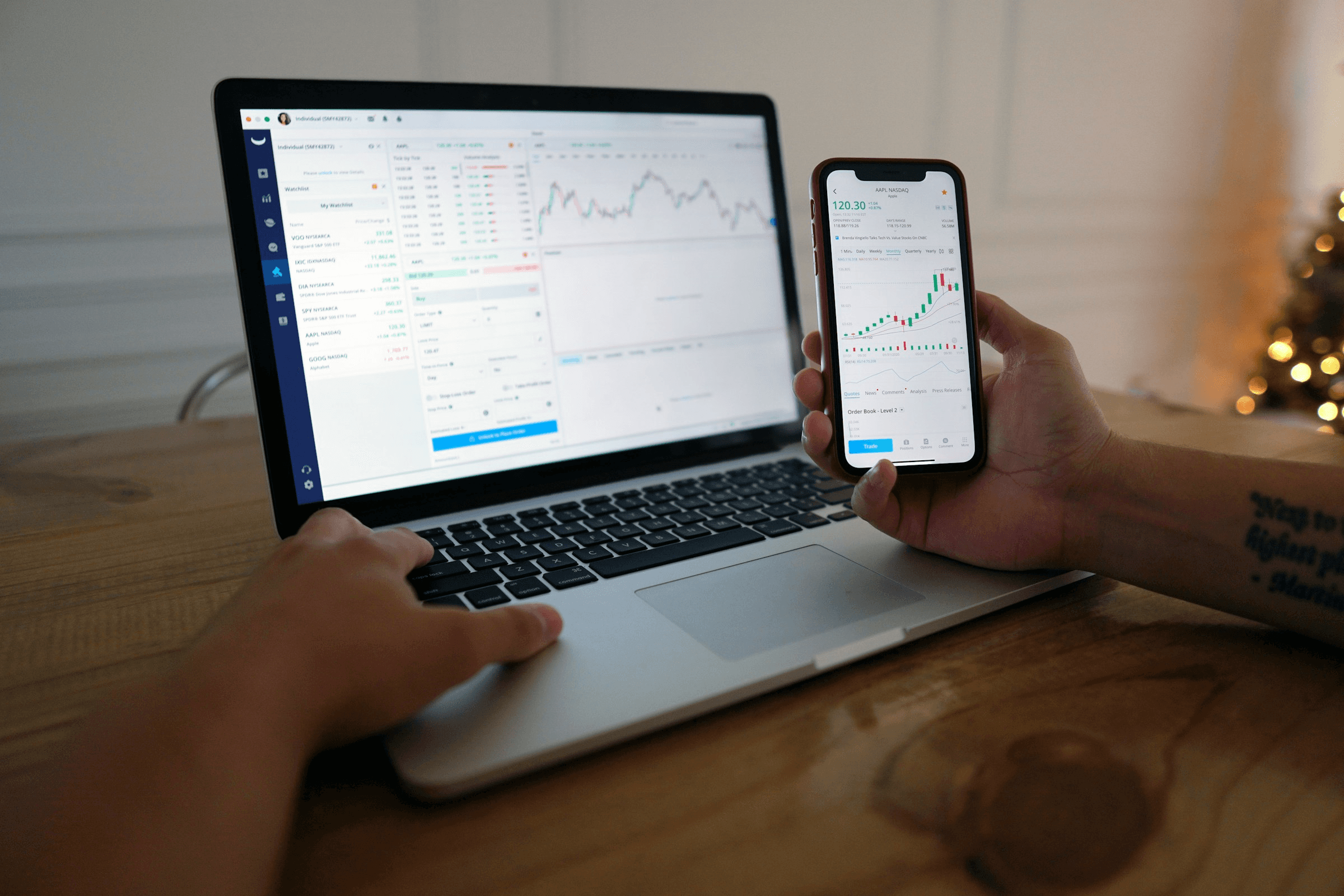
Copy trading in proprietary trading firms means replicating your own trade decisions across multiple funded accounts you control. It's not about following someone else's signals or subscribing to a third-party service. You execute a position in one master account, and automation mirrors that exact decision—entry price, position size, stop loss—across your other accounts instantly. This internal replication lets you scale a proven strategy without manually entering the same trade multiple times.
The distinction matters because retail broker copy trading operates differently. On standard platforms, anyone can subscribe to a leader's trades and automatically copy their moves. That's designed for passive investors seeking exposure to others' skills. In prop firms, copying stays locked within your own portfolio. You're not broadcasting signals to strangers or relying on external traders. You're amplifying your edge by leveraging the capital you've earned access to through evaluations.
This closed-loop approach protects both you and the firm. When trades originate from a single strategic decision you control, the firm can verify your performance is authentic. They're funding your skill, not your ability to aggregate someone else's work. It also eliminates the risk of strategy leakage—your methods stay private, and you're not dependent on another trader's discipline or availability.
Setting Up the Internal Framework
Before any trade replicates, you establish connections between your accounts within the firm's approved infrastructure. One account becomes the master, generating all original signals. The others link as followers, receiving those signals in real time. Most firms require you to use their vetted tools or extensions to ensure the setup doesn't violate drawdown limits, execution timing rules, or risk protocols.
Configuration happens upfront. You define how position sizes adjust across accounts with different capital levels. If your master account holds $100,000 and a follower holds $50,000, the system scales the position proportionally—perhaps 10 contracts in the master and 5 in the follower. This prevents a smaller account from taking disproportionate risk that could cause it to breach its drawdown threshold in a single trade. The math must align with each account's tolerance, and automation handles the calculation once you set the parameters.
The Master-Lead and Follower Dynamic
When you open a position in the master account—say, buying crude oil futures at a specific price—the follower accounts execute the same trade within milliseconds. The direction, asset, and timing mirror exactly. Position size adjusts based on the scaling rules you configured, but the strategic intent stays identical. If you set a stop loss at a certain level in the master, followers replicate that protection proportionally.
This synchronization transforms one insight into coordinated action. You're not re-entering the trade manually, copying and pasting order details, or hoping you didn't mistype a contract size. The system reliably propagates your decision, reducing the cognitive load of managing multiple accounts. For traders running five or more funded accounts, this efficiency becomes the difference between sustainable scaling and burnout from repetitive execution.
Automation's Role in Streamlining and Safeguarding
Automation eliminates the errors that creep in when you're manually replicating trades. A rushed keystroke, a forgotten stop loss, a miscalculated position size—any of these can turn a winning strategy into a rule violation or unexpected loss. When the system handles replication, those mistakes disappear. You focus on reading the market, refining your edge, and making strategic decisions. The software manages the operational details.
But automation isn't a free pass. You still own every outcome. If the master account takes a loss, every follower does too. The system doesn't make you smarter or more disciplined—it just makes your decisions faster and more consistent. Firms embed safeguards, such as automatic halts, when an account approaches its drawdown limit. These protections align with firm protocols but are reactive rather than predictive. Your strategy still needs to be sound, your risk management still needs to be tight.
Many traders assume automation means they can copy across unlimited accounts without consequence. The firm's monitoring systems track every execution. If ten accounts show identical entry times down to the second, identical position sizes, and identical stop losses, that pattern triggers a review. The firm wants to see your strategic thinking, not just mechanical replication. They're looking for evidence you're directing the trades, not passively mirroring an external source or gaming the evaluation process.
Spotting and Stopping Rule-Breaking Copies
Firms use detection algorithms that analyze trade timing, sizing, and asset selection across all accounts. If two unrelated traders—different names, different locations—suddenly start executing the same trades at the same millisecond, that's a red flag. The system flags synchronized patterns that suggest coordination or unauthorized signal sharing. Even if unintentional, identical behavior across accounts that shouldn't be connected can trigger an investigation.
When a pattern surfaces, the firm reviews account activity in detail. They might compare IP addresses, check for shared devices, or examine whether trades originated from the same automation tool configured with identical settings. If they find evidence of external copying—one trader subscribing to another's signals, or a group coordinating entries—they terminate accounts. The goal isn't to catch honest mistakes. It's to eliminate attempts to bypass evaluations by piggybacking on someone else's skill.
This scrutiny creates anxiety even among traders who are copying their own legitimate strategies. You're managing multiple accounts, using approved tools, following every rule—but you still worry that a pattern might look suspicious. That's why documentation matters. Keep records of your automation setup, your configuration settings, and your strategic rationale. If the firm questions your activity, you need proof that every trade originated from your own decision-making.
Boundaries and Best Practices to Follow
Copy trading within prop firms is subject to defined limits. You can't overextend position sizes in smaller accounts just because the master account can handle the risk. Each account has its own drawdown threshold, and breaching it means disqualification. If your master account can withstand a $5,000 loss but a follower account can handle only $2,000, your position sizing needs to reflect that constraint. Automation can scale proportionally, but you have to set those limits correctly upfront.
Some firms require timed spacing between trades, even within your own accounts. They want to see independent decision-making, not robotic replication. Others prohibit certain assets or strategies when using copy tools. These rules shift as firms refine their policies, so regular review of guidelines is essential. What was permitted six months ago may not be permitted today, and ignorance doesn't protect you from termination.
Comprehensive documentation supports compliance. Record your setup process, your configuration settings, and any adjustments you make over time. If the firm questions your activity, you need evidence that you're operating within their boundaries. This isn't about proving innocence—it's about demonstrating you understand their expectations and took steps to meet them.
For emerging traders, copy trading serves as a foundational aid. You prove consistency in one account, then replicate that success across others without starting from scratch each time. For experienced traders, it's an amplifier of proficiency. You've already demonstrated your edge; now you're scaling it across more capital. Either way, the strategy works only when your underlying skill is real. Automation doesn't create an edge—it just makes an existing edge more efficient.
AquaFutures addresses this scaling challenge directly by enabling trade copying in funded futures accounts. When you pass their evaluation, you gain access to capital while maintaining the freedom to use automation tools that make managing multiple accounts practical. Their platform doesn't penalize you for efficiency—it rewards the skill you've already proven with the flexibility to scale it. But the real tension isn't in how copy trading works—it's in deciding whether the effort and risk are worthwhile.
Why Choose a Prop Firm That Allows Trade Copiers?

Traders choose prop firms that permit copiers because automation turns proven skill into scalable execution without multiplying manual effort. When you've refined a strategy that generates consistent returns, copying it across multiple funded accounts amplifies your earning potential while keeping your workload manageable. The alternative—manually entering identical trades across five or ten accounts—creates operational drag that erodes both performance and focus.
Spreading Risk Without Spreading Thin
Distributing positions across several accounts with varying capital levels provides cushioning that concentrated exposure can't. When one account takes a drawdown, gains in others offset the impact, smoothing your overall equity curve. This isn't about avoiding losses—it's about preventing a single bad sequence from wiping out progress across your entire portfolio.
The math matters here. If you hold $100,000 in one account and hit a 10% drawdown, you've lost $10,000. If you split that same capital across five accounts and one hits the same drawdown, the damage stays contained to $2,000 while the other four continue generating returns. This distribution doesn't eliminate risk, but it prevents any single position or market condition from dominating your results.
Adjusting lot sizes per account while maintaining core strategy logic lets you tailor risk exposure to each account's drawdown threshold. A smaller account might take half the position size of a larger one, keeping both within safe limits while following the same entry and exit signals. This proportional scaling becomes practical only when automation handles the calculations—manual adjustments introduce errors that undermine the entire approach.
Reclaiming Hours Lost to Repetition
Manual trade entry across multiple accounts consumes time that could be spent on market analysis, strategy refinement, or simply stepping away from screens. When you're executing the same trade five times, you're not adding value—you're performing clerical work. Automation compresses repetitive tasks into milliseconds, freeing you to focus on decisions that actually drive performance.
The time savings compound with account volume and trade frequency. If you manage three accounts and trade twice daily, that's six manual entries. Scale to ten accounts and five trades daily, and you're looking at fifty repetitive actions before you've even analyzed a chart. According to DailyForex's research on proprietary firms, 78% of traders fail within their first year, often because operational complexity overwhelms strategic discipline. Automation removes that friction, allowing you to focus your energy on the decisions that drive success.
Delays between manual entries also create execution inconsistencies. By the time you've entered a trade in your third account, the price might have moved against you. The first account gets optimal entry, the last one gets slippage. Copy tools eliminate this variance, ensuring every account executes simultaneously with the same intent.
Lowering the Entry Barrier for Developing Traders
For traders still building consistency, copiers offer a way to engage with funded accounts without requiring mastery of every execution detail. You can replicate a strategy you're learning, observing how it performs across different market conditions while gradually absorbing the logic behind each decision. This hands-on exposure accelerates skill development in ways that paper trading or passive observation can't match.
Straightforward selection tools and performance metrics built into many platforms make starting less intimidating. You configure your accounts, set scaling parameters, and monitor results without needing advanced technical knowledge upfront. This accessibility doesn't replace the need for strategic understanding, but it removes operational barriers that might otherwise delay your progress.
Turning Observation Into Education
Watching replicated trades execute in real time provides direct insight into how timing, sizing, and adjustments interact under live conditions. You see not just what happens, but when and why—patterns that emerge only through repeated exposure to actual market behavior. Over weeks and months, this visibility sharpens your ability to recognize setups, anticipate reactions, and adjust parameters based on performance feedback.
Detailed logs and analytics that track every trade create a reference library of your own decision-making. You can review what worked, identify where losses clustered, and spot patterns in your execution that might not be obvious during the heat of trading. This ongoing review transforms passive copying into active learning, accelerating your progress toward independent strategy development faster than isolated practice could.
Removing Emotion From Execution
Automated replication sidesteps the impulsive reactions that surface when you're staring at red numbers or chasing a winning streak. The system operates according to predefined rules, not on momentary fear or greed. This mechanical consistency keeps you aligned with your original strategy, even when market volatility tempts you to deviate from it. The discipline of automation becomes especially valuable during drawdowns. When losses mount, the instinct to cut positions early or skip the next signal can derail an otherwise sound strategy. Copy tools don't feel stress—they execute the plan you set when you were thinking clearly, not reacting emotionally. This separation between decision and execution reduces overtrading, premature exits, and the psychological wear that compounds poor performance.
Most firms still treat automation as a liability rather than a tool, layering restrictions that assume efficiency equals gaming the system. AquaFutures takes the opposite stance, allowing trade copiers in funded accounts because it recognizes that scaling proven skill shouldn't require reinventing your workflow. When you pass their evaluation, you gain access to capital and the freedom to use automation tools that make managing multiple accounts practical. Their platform doesn't penalize you for efficiency—it rewards the skill you've already demonstrated with the flexibility to amplify it. But choosing a firm that allows copiers doesn't answer the harder question: can you actually use one to move trades from your personal account into a funded setup?
Related Reading
- What Is a Funded Account
- Does Ftmo Offer Instant Funding
- How to Get a Funded Trading Account
- No Challenge Prop Firm
- Funding Traders Rules
- What Is a Prop Firm Account
- Synthetic Funded Account
- What is a Funded Firm
- One Step Prop Firm Challenge
- Trading Challenges
- Instant Funding Rules
- Prop Firm Ip Address Rule
- Halal Prop Firms
- Top 10 Prop Firms 2025
- Australia Prop Firm
- Cheapest Futures Prop Firm
- No Activation Fee Prop Firm
- Prop Firms In Usa
- Best Prop Trading Firms
- Forex Prop Firms With Instant Funding
- Best Prop Firms For Forex
- Best Prop Firm To Start
- Best Instant Funded Prop Firm
- Best Prop Firms in UAE
Can I Use a Trade Copier to Copy Trades From My Own Account to a Prop Firm Account?

Using a trade copier to replicate trades from your personal brokerage account into a prop firm account sits in uncertain territory. Some firms permit it when trades originate from your independent analysis and the copier operates locally under your full control. Others view any external replication, even from your own personal capital account, as violating the expectation that funded accounts reflect direct decision-making on their platform. The answer depends entirely on the firm's written policies and the extent to which it monitors for synchronized execution patterns.
Where the Gray Area Lives
Prop firms evaluate your ability to generate returns using their simulated capital. When trades flow from a personal account through automation, the firm loses visibility into whether you're making decisions in real time on their platform or simply mirroring positions you've already committed to elsewhere. This distinction matters because their evaluation process assumes you're actively managing risk within their environment, not passively copying a strategy optimized for different leverage, spreads, or execution conditions.
Some firms accept this setup if you can demonstrate that the personal account serves as your strategic hub and that funded accounts are extensions of that same decision-making process. You're not following external signals or third-party services. You're scaling your own methodology across capital pools you control. But acceptance isn't universal. Policies shift as firms refine their automation strategies, and what one firm allows, another prohibits outright.
The tension surfaces when firms detect identical trade timing across accounts that shouldn't be linked. If your personal account and funded account both enter crude oil at the same millisecond with proportional position sizes, monitoring systems flag the pattern. Even if legitimate, synchronized execution looks identical to prohibited coordination or signal sharing. The burden is on you to prove that the trades stem from your independent strategy, not from an external source.
Technical Execution and Latency Challenges
Different brokers operate on different infrastructures. Your personal account might execute on one liquidity provider with specific spreads and slippage characteristics, while the prop firm routes orders through another liquidity provider. When a copier replicates trades across these environments, latency differences create mismatches. Your personal account fills at one price, the funded account fills two ticks worse. Over dozens of trades, these discrepancies compound into performance drift that can push a funded account toward its drawdown limit even when the personal account remains profitable.
Proportional scaling adds another layer of complexity. If your personal account holds $50,000 and your funded account holds $100,000, the copier must double the position sizes while adhering to the funded account's risk parameters. A misconfiguration here, one incorrect multiplier or rounding error, can result in oversized positions that breach the firm's maximum exposure rules. Automation handles the math, but only if you've set the parameters correctly upfront. Mistakes don't announce themselves until you've already violated a rule.
Some traders run into trouble when their personal broker allows hedging or different order types that the prop firm restricts. The copier replicates a hedge in the personal account, but the funded platform rejects it, leaving you with unbalanced exposure. Or the personal account uses trailing stops that the prop firm's platform doesn't support, causing exits to execute differently. These technical incompatibilities turn what should be identical trades into divergent outcomes.
Risk of Detection and Account Termination
Firms deploy algorithms that analyze trade patterns across all accounts in their system. When two accounts show matching entry timestamps, identical instruments, and proportional sizing, the pattern stands out. Even if you're copying your own legitimate strategy, the firm's system doesn't automatically distinguish between authorized self-replication and prohibited external copying.
If an investigation reveals that you've been copying from a personal account without explicit permission, termination will follow. The firm refunds nothing. Evaluation fees, time invested, and any profits accumulated disappear. Some firms include clauses that prohibit reapplication, cutting off future access entirely. The financial and opportunity costs of a policy misunderstanding can exceed months of trading progress.
This scrutiny creates a chilling effect even for compliant traders. You're operating within the rules, using approved tools, but you still worry that synchronized execution might trigger a false positive. That anxiety diverts focus from strategy refinement to compliance documentation, eroding the efficiency gains automation was supposed to deliver.
When Firms Explicitly Allow It
A small subset of firms recognizes that skilled traders manage personal capital alongside funded accounts and permit copiers under defined conditions. They require the personal account to be registered in your name, with no third-party signal sources involved. Trades must originate from your independent analysis, not subscription services or shared strategies. The copier must run locally on your infrastructure, not through cloud-based platforms that could introduce external dependencies.
These firms often cap the number of accounts you can link. They also require detailed configuration documentation, so if questions arise, you can prove your setup aligns with their policies. This transparency protects both parties, giving the firm confidence in your compliance and providing you with a clear framework to operate within.
Even with permission, best practices remain non-negotiable. Test configurations on demo accounts first, verifying that position sizing scales correctly and risk limits stay intact. Use a dedicated VPS to eliminate connectivity interruptions that could cause partial fills or missed exits. Monitor performance across all accounts daily, watching for drift that signals execution mismatches or parameter errors. Keep logs of every configuration change, every trade, and every communication with the firm's support team. If a question surfaces, documentation turns a potential termination into a clarification.
The Alternative Path
If copying from a personal account introduces too much risk or uncertainty, consider reversing the flow. Use the prop firm account as your primary trading environment and let it inform decisions in your personal account, not the other way around. This keeps the funded account fully independent, eliminating any appearance of external influence. You're trading directly on the firm's platform, demonstrating the real-time decision-making they want to see.
Another option is to run entirely separate strategies. Apply one methodology to your personal account and a different one to the funded setup. This removes any pattern overlap that could trigger detection systems. It also forces you to develop multiple edges, deepening your overall skill rather than relying on a single approach. The operational complexity increases, but so does your strategic flexibility.
Manual replication remains the safest route when policies are unclear. You execute trades on the prop firm account first, then mirror them in your personal account if you choose. This reverses the risk, ensuring the funded account never appears to follow an external source. The time cost rises, but the compliance risk drops to zero.
Most firms still treat external copying, even from your own accounts, as a potential violation rather than a legitimate scaling tool. AquaFutures takes a different stance, recognizing that traders managing both personal capital and funded accounts need flexibility. Their policies allow trade copiers within funded accounts because they trust that traders who pass evaluations have the skill to manage replication responsibly. This approach removes the uncertainty that forces traders to choose between efficiency and compliance, letting proven strategies scale without unnecessary friction. But even with clear policies, not all firms that permit copiers offer the same value or structure.
11 Best Prop Firms That Allow Trade Copiers in 2026
In 2026, firms that allow trade copiers focus heavily on futures markets, where tools like Replikanto enable traders to mirror their strategies across multiple accounts without manual replication. These platforms stand out for supporting such features under defined conditions, making them practical choices for scaling without violating evaluation integrity. Each firm balances flexibility with oversight, requiring traders to demonstrate personal control while benefiting from efficient replication.
1. AquaFutures

AquaFutures stands out as a futures-focused proprietary trading firm in 2026 that permits the use of trade copiers under clearly defined conditions, making it appealing for traders who want to efficiently manage and mirror their personal strategies across multiple accounts. While the firm strictly prohibits copying trades from or to other traders' accounts to preserve evaluation integrity and individual skill demonstration, it explicitly allows internal mirroring between a trader's funded accounts and between funded accounts and personally owned external accounts. This policy supports streamlined operations for scaling strategies without violating rules on third-party replication or automated outsourcing.
Key Features of AquaFutures as a Firm That Permits Copy Trading
- Trade copiers are allowed for mirroring trades exclusively between your own AquaFutures-funded accounts.
- Permitted to copy trades from AquaFutures funded accounts to any external accounts you personally own and control.
- Strict ban on copy trading between evaluation/challenge accounts, even if all are under the same trader, to ensure independent performance in passing evaluations.
- No allowance for replicating trades from other traders, using third-party copy services, shared EA settings, or account management tools.
- Enforcement includes penalties like resetting or breaching accounts for violations during evaluations, with potential permanent bans for repeated offenses.
- Focuses on futures trading, using platforms such as ProjectX and Volumetrica for execution.
- Offers instant funding options (skip challenges) up to $450K simulated capital, plus one-step or multi-step evaluations.
- Profit splits feature 100% on the first $15,000 earned, then 90% ongoing, with no liability for losses.
- Fast payouts (often within 24 hours, with a $500 guarantee if delayed) and no activation fees.
- Flexible drawdown types (End of Day or Trailing), no time limits on challenges, and high account scaling potential.
Why Traders Choose It
Traders gravitate to AquaFutures for its balanced approach to trade copier use, enabling effective multi-account management once funded, without the restrictions imposed by firms that outright ban such tools. The clear distinction between allowed personal mirroring and prohibited external/third-party copying helps maintain platform integrity while giving disciplined traders tools to replicate their proven strategies efficiently across funded positions.
Combined with attractive perks like instant funding access, generous initial profit retention, rapid, reliable payouts, and no personal loss risk, it appeals to those scaling futures trading operations in a compliant, trader-centric environment. Many appreciate the transparency and strong trust signals, such as strong review ratings and charitable initiatives, making it a practical choice for serious futures prop traders who leverage copiers responsibly.
2. FundingTicks
FundingTicks specializes in futures prop trading and has been recognized for permitting trade copiers, allowing users to replicate strategies across accounts using compatible tools. This flexibility suits traders aiming to manage multiple positions smoothly while adhering to the firm's evaluation and funding guidelines.
Key Features
- Focuses on futures markets using platforms such as NinjaTrader and TradingView.
- Trade copier usage is allowed, including tools such as Replikanto.
- Offers structured challenges for accessing funded capital.
- Emphasizes trader-friendly conditions for strategy execution.
- Provides access to real-time market data for accurate copying.
3. My Funded Futures

My Funded Futures is a reliable futures prop firm that permits copy trading under certain conditions, enabling traders to mirror their trades across accounts. This approach supports efficient management of multiple funded positions while maintaining compliance.
Key Features
- Operates in futures trading with platforms including NinjaTrader and TradingView.
- Copy trading is allowed across all account types, often using tools such as Replikanto.
- Features flexible evaluation paths and no daily loss limits on funded accounts in some plans.
- Up to 80% profit splits available.
- Instant payout approvals and no activation fees in select setups.
4. Apex Trader Funding

Apex Trader Funding ranks highly among futures prop firms for its clear policy on allowing trade copiers, particularly for internal mirroring of personal trades. Traders frequently use it to scale across multiple accounts while adhering to consistency and drawdown rules.
Key Features
- Dedicated to futures on platforms like NinjaTrader and Rithmic.
- Trade copiers are permitted, with strong compatibility for Replikanto and similar software.
- Supports up to multiple accounts simultaneously for scaling.
- Includes news trading freedom and specific consistency guidelines.
- High popularity for multi-account management.
5. TradeDay

TradeDay provides robust support for trade copiers within its futures-focused environment, making it easier for traders to reliably replicate their strategies. This firm appeals to those prioritizing straightforward execution and platform variety.
Key Features
- Futures trading is supported on NinjaTrader and Sierra Chart.
- Trade copier functionality is supported, compatible with Replikanto.
- Designed for efficient multi-account operations.
- Emphasizes reliable data feeds for accurate trade replication.
- Trader-oriented rules that accommodate copying tools.
6. BluSky Trading

BluSky Trading offers permissive policies for trade copiers within its futures prop setup, helping traders streamline operations across accounts. It is well-suited for those seeking straightforward support for automation tools like Replikanto.
Key Features
- Centers on futures with NinjaTrader platform access.
- Permitted use of trade copiers, including Replikanto integration.
- Focuses on funded account flexibility.
- Supports consistent strategy deployment.
- Reliable for multi-account futures trading.
7. TickTick Trader

TickTick Trader operates as a futures prop firm that supports trade copiers for replicating one's own strategies, though it enforces active trader oversight and prohibits fully automated or third-party signal replication. This makes it suitable for disciplined scalpers or day traders who manually or semi-automatically scale multiple evaluations or funded setups.
Key Features
- Dedicated to futures markets via the NinjaTrader platform.
- Trade copier is allowed, subject to conditions requiring personal management.
- Compatible with Replikanto for reliable internal trade mirroring.
- Structured evaluation process leading to funded accounts.
- Emphasizes risk controls aligned with copier usage.
8. Phidias Propfirm

Phidias Propfirm actively encourages trade copiers, standing out for high account limits and built-in support for replicating trades across multiple funded positions. It caters to traders who want to maximize scale while staying within firm guidelines on legitimate, replicable strategies.
Key Features
- Futures trading is supported on NinjaTrader and TradingView.
- Explicitly permits copy trading across 15+ internal accounts.
- Integrates tools such as DeepCharts Copier directly into the dashboard.
- No extra fees for copier usage beyond third-party software costs.
- High flexibility for intraday and swing approaches with copier compatibility.
9. Tradeify

Tradeify is a trader-friendly futures prop firm that offers trade copiers to manage multiple accounts efficiently. It appeals to those who prioritize affordability and flexibility when scaling personal strategies without excessive restrictions.
Key Features
- Focuses on futures with supportive execution platforms.
- Allows trade copiers for internal replication across accounts.
- Features end-of-day drawdown rules aiding copier consistency.
- Competitive pricing and no activation fees in many plans.
- Strong emphasis on multi-account management tools.
10. Bulenox

Bulenox supports trade copiers in its futures environment, enabling traders to mirror strategies reliably across funded accounts while adhering to drawdown and consistency requirements. It's favored for straightforward scaling in volatile markets.
Key Features
- Futures-centric with NinjaTrader compatibility.
- Trade copier permitted for personal account replication.
- Works well with Replikanto and similar efficient tools.
- Flexible evaluation paths to funded status.
- Focus on reliable execution for copied trades.
11. Top One Futures

Top One Futures allows manual trade copying across its accounts, enabling traders using copiers to maintain consistent strategy execution. It suits those building portfolios with consistent risk parameters.
Key Features
- Futures trading on compatible platforms.
- Copy trading allowed for own trades between accounts.
- Supports multi-account operations effectively.
- Trader rules accommodate copier-assisted execution.
- Emphasis on scalable funded environments.
Most firms still treat copiers as tools that require oversight rather than as tools for unrestricted automation. AquaFutures recognizes that traders managing both personal capital and funded accounts need flexibility without sacrificing compliance. Their policies allow trade copiers within funded accounts because they trust that traders who pass evaluations have the skill to manage replication responsibly. This approach removes the uncertainty that forces traders to choose between efficiency and compliance, letting proven strategies scale without unnecessary friction. But permission to use copiers doesn't guarantee success if you pick a firm with misaligned rules or poor execution infrastructure.
Related Reading
- Best Funded Prop Firms
- Prop Firms That Use TradingView
- 1 Phase Prop Firm
- No Consistency Rule Prop Firm
- Prop Firms That Use Tradelocker
- Prop Firm Comparison
- How Do Prop Firms Work
- Regulated Prop Firms
- Prop Challenge
- The Cheapest Prop Firm
- Trading With Borrowed Capital
- Top Tradig Prop Firms
- Top Prop Company
- US-based Prop Firms
- Top 10 Prop Firms In The World
- Forex Prop Firms In The Us
- Best Prop Firm Forex
How to Choose the Right Prop Firm That Allows Trade Copiers
Selecting a prop firm that permits trade copiers means verifying explicit policy language, testing platform compatibility with your replication tools, and confirming risk parameters won't conflict with synchronized execution across accounts. The firm's evaluation structure, profit distribution, and payout reliability matter just as much as copier permission, because scaling efficiency only pays off when the underlying business model supports your growth. You need alignment across technical infrastructure, compliance clarity, and economic incentives before committing capital or time to evaluations.
Assess Compatibility with Trade Copier Tools
Start by reviewing the firm's terms of service for explicit references to trade copiers, mirroring software, or automated replication. Generic language about "individual performance" or "no third-party signals" doesn't clarify whether your own internal copying between funded accounts violates rules. You need statements that specifically address mirroring from a master account you control to your follower accounts. Ambiguity here creates the risk that months of profitable trading get erased by a policy interpretation you didn't anticipate.
Contact support before signing up. Ask whether they permit Replikanto, TradingView alerts, or whatever tool you plan to use. Request written confirmation. Screenshot the response. Firms sometimes give verbal approval that contradicts written policy, and when disputes arise, documentation determines outcomes. If support can't answer definitively or refers you to vague guidelines, that's a signal the firm hasn't carefully thought through copier usage, leaving you in a gray zone where future policy changes could retroactively disqualify your approach.
Check whether copying restrictions differ between the evaluation and funded phases. Some firms ban copiers during challenges to ensure independent skill demonstration, then permit them once you're funded. Others prohibit them entirely. If you're planning to scale across ten accounts, discovering after evaluation that copying isn't allowed wastes both entry fees and the time spent passing challenges under false assumptions about how you'd operate afterward.
Examine the Evaluation and Funding Process
Evaluation length directly impacts how quickly you can deploy copiers. Multi-step challenges with profit targets, consistency rules, and minimum trading days stretch the timeline before you reach funded status, where copying becomes viable. If your strategy depends on high-frequency replication across accounts, spending three months per evaluation to unlock each account creates operational drag that undermines the efficiency copiers provide.
Instant funding options eliminate this delay entirely. You pay an upfront fee, receive immediate access to simulated capital, and start using copiers from day one. The trade-off is a higher initial cost compared with challenge-based models, but for traders confident in their strategy, bypassing evaluations accelerates scaling. One-step challenges with relaxed profit targets offer a middle path, shorter timelines than traditional multi-phase setups without the premium cost of instant access.
Consistency requirements during evaluations complicate copier use even when technically allowed. If the firm flags accounts in which 80% of trades occur within the same hour across multiple challenges, synchronized execution from a master account triggers scrutiny. You're following the rules, but the pattern looks suspicious. Firms with looser consistency thresholds, or those that explicitly accommodate copier timing, reduce this friction, allowing you to scale without constantly worrying whether legitimate replication will be misinterpreted as coordination.
Review Profit Allocation and Withdrawal Policies
Profit splits determine how much of your replicated gains you actually keep. An 80% share sounds strong until you realize a competitor offers 100% on the first $15,000, then 90% thereafter. When you're copying trades across five accounts, each generating $10,000 per month, that percentage difference translates into thousands in retained earnings. The math compounds as the number of accounts rises, making the split structure one of the most influential variables in firm selection.
Withdrawal frequency matters just as much as split percentage. Weekly payouts keep cash flow steady when you're managing operational costs across multiple accounts. Monthly processing introduces a lag that ties up capital you might need for scaling or personal expenses. On-demand withdrawals offer maximum flexibility but often come with higher fees or stricter eligibility requirements.
Processing guarantees protect against cash-flow uncertainty that disrupts scaling plans. If a firm promises payouts within 48 hours but routinely takes two weeks, you're left guessing whether profits will arrive in time to fund the next round of evaluations or cover subscription fees. Firms that back payout timelines with financial penalties for delays (paying you extra if they miss deadlines) signal operational reliability that matters when you're depending on consistent withdrawals to sustain multi-account operations.
Investigate Risk Management Requirements
Drawdown limits interact directly with copier operations. If your master account can tolerate a $5,000 loss but a follower account breaches at $2,000, synchronized trades that work fine in one context violate rules in another. End-of-day drawdown calculations provide intraday breathing room, allowing positions to move against you temporarily without triggering breaches. Trailing drawdowns lock in gains but tighten available risk as equity rises, which can force premature exits on copied trades that would have recovered given more time.
Position sizing restrictions vary widely. Some firms cap contracts per trade based on account size, others limit total open exposure, and a few restrict specific instruments during high-volatility periods. When your copier scales positions proportionally, a configuration that works on a $100,000 account might exceed limits on a $50,000 one. You need firms with transparent, predictable sizing rules that align with how your replication software calculates proportional adjustments, or you'll spend hours tweaking parameters to avoid accidental violations.
Daily loss limits add another constraint layer. A strategy that takes three small losses before hitting a winner works fine when you have room for those drawdowns. But if the firm's daily limit equals two losses, your third trade of the day (the one that would have been profitable) never executes because you've hit the threshold. Copier efficiency can't overcome risk rules that conflict with your strategy's natural loss distribution. Look for firms where daily limits accommodate your typical drawdown sequence without forcing you to stop trading mid-session.
Evaluate Supported Platforms and Instruments
Platform compatibility determines whether your copier software can even connect. NinjaTrader, TradingView, and MetaTrader dominate prop firm infrastructure, each with different API capabilities and latency characteristics. If your replication tool integrates smoothly with NinjaTrader but the firm supports only a proprietary platform with limited API access, you're stuck either switching tools (and relearning configuration) or choosing a different firm. Verify integration before committing, not after you've passed an evaluation.
Instrument availability shapes strategy applicability. A copier replicating crude oil trades across ten accounts creates no value if the firm offers only equity index futures. Breadth matters too. If your edge works across multiple commodities but the firm restricts you to ES and NQ, you're leaving opportunity on the table. Firms with deep instrument lists across futures, forex, or crypto give you flexibility to deploy copiers wherever your analysis identifies setups, rather than forcing you into markets where your strategy underperforms.
Data feed reliability affects execution accuracy. When your master account receives price updates 200 milliseconds faster than follower accounts due to infrastructure differences, copied trades fill at worse prices. Over hundreds of executions, this slippage compounds into performance drag that can push follower accounts toward drawdown limits even when the master remains profitable. Firms that invest in low-latency infrastructure and consistent data delivery across all accounts reduce this drift, keeping replicated performance aligned with the master account results.
Gauge Reputation and Trader Feedback
Review aggregation sites and community forums reveal patterns that marketing materials hide. If dozens of traders report sudden account terminations for copier use despite written permission, that's a red flag, regardless of the terms of service. Conversely, consistent positive feedback on transparent enforcement and responsive support when questions arise signals to a firm that it actually honors its policies rather than using them selectively.
Payout reliability is more clearly evident in trader testimonials than in official documentation. A firm that advertises 24-hour withdrawals but shows forum threads full of complaints about two-week delays indicates the guarantee isn't being enforced. Look for verified reviews with specific details (dates, amounts, processing times) rather than generic praise. Volume matters too. A firm with 500 reviews and a 9.2 rating carries more weight than one with 50 reviews at 9.8, because larger sample sizes smooth out outliers.
Longevity indicates operational stability. A firm operating for three years with steady trader growth has proven it can handle payout obligations and regulatory requirements. Newer firms offering aggressive terms may be legitimate, but they also carry a higher risk of policy changes, sudden closures, or payout delays as they scale operations. When you're planning to run copiers across multiple accounts for months or years, choosing an established firm reduces the chance that your entire portfolio gets disrupted by the firm's internal problems.
Consider Costs and Fee Structures
Entry fees vary from one-time challenge costs to monthly subscriptions. A $150 one-time fee for a $50,000 challenge looks attractive until you realize the firm charges $99 monthly once funded. Over a year, that subscription costs more than a $500 one-time fee with no recurring charges. When you're scaling to 10 accounts, monthly fees can quickly reach thousands annually, eroding the profit retention that made copiers appealing in the first place. Calculate the total cost of ownership across your target account count and timeline, not just the upfront cost.
Activation fees on funded accounts add hidden costs. Some firms charge $200 to activate each funded account after you pass evaluations. If you're planning to run five accounts, that's $1,000 in activation costs before you've executed a single trade. Firms with zero activation fees let you deploy capital immediately without additional cash outlay, preserving your working capital for actual trading rather than administrative charges.
Platform or data feed fees sometimes appear as separate line items. A firm might advertise low evaluation costs but charge $50 monthly for real-time data or $75 for premium platform access. These recurring charges compound when you're managing multiple accounts, turning an apparently affordable firm into an expensive one once you factor in all mandatory fees. Transparent all-in pricing, where the advertised cost includes everything needed to trade, simplifies budgeting and eliminates surprise expenses that erode profitability.
Most firms design fee structures assuming manual trading, where per-account operational overhead remains minimal. AquaFutures recognizes that traders using copiers operate differently, managing larger account portfolios with higher execution volumes. Their pricing model (one-time fees starting low, monthly subscriptions from $26, no activation charges) supports this scaling approach by keeping per-account costs manageable as you grow. Combined with clear copier permissions for funded accounts you own, this economic structure aligns with how serious traders actually build multi-account operations. But even the right firm and lowest fees won't matter if you miss the narrow window when capital becomes accessible at a discount.
Related Reading
- Prop Firm Swing Trading
- Best Prop Firms for Stocks
- Prop Firms That Use MT5
- No Minimum Trading Days Prop Firm
- Prop Firms With Instant Funding
- One Phase Prop Firm
- Proprietary Trading Firms
- Best Funded Accounts UK
- Best Prop Firm in the World
- Cheapest Forex Funded Account
- Best Prop Firms That Allow EA
- Best UK Prop Firm
- Forex Prop Firms Accepting US Clients
- Best Forex Funded Prop Firms
- Best Funded Account Forex in UAE
Unlock up to 50% off Your First Funded Account for Futures Trading
Timing matters when you're ready to scale. The difference between paying full price and capturing a discount can determine how many accounts you fund in your first quarter, which directly impacts how fast your replicated strategy compounds returns. Most firms that support trade copiers offer periodic promotions, but the best deals cluster around specific windows when they're competing hardest for skilled traders.
AquaFutures runs ongoing promotions that cut your entry cost by up to 50% on initially funded accounts, plus weekly BOGO (buy one, get one) deals that let you double your account count without doubling your capital outlay. These aren't bait-and-switch offers with hidden restrictions. The discounts apply to real funded accounts with full copier permissions, transparent profit splits (100% on your first $15,000, then 90% ongoing), and the same 24-hour payout guarantee that protects your cash flow. When you plan to manage multiple accounts with synchronized execution, saving hundreds or thousands in setup costs frees up capital for additional evaluations or covers operational expenses such as VPS hosting and copier software subscriptions.
The weekly surprise bonuses create recurring opportunities to expand your portfolio at reduced cost. Instead of waiting months for an annual sale, you can scale incrementally as your strategy proves itself. Pass one evaluation, capture profits, then use a BOGO deal to add two more accounts at the cost of one. This phased approach allows you to grow sustainably without overextending until you've validated that your copier configuration performs consistently across different account sizes and market conditions.
Ready to simplify your setup and scale your strategy with a firm built for efficiency? Check out AuaFutures today, explore their account options, and get funded fast. The combination of copier-friendly policies, instant funding paths, and promotional pricing removes the friction that keeps most traders stuck managing one or two accounts manually when they could be replicating proven performance across ten.
