



11 Best No Challenge Prop Firms in 2026
Discover the 11 best No Challenge Prop Firm options in 2026—no tests, just instant funding for traders who want to start right away.

Consider this: you're a skilled trader ready to prove yourself in the futures market, but traditional prop firms require weeks of evaluations, challenge phases, and strict testing protocols before you can access real capital. What is a Funded Account? In the context of no-challenge prop firms, it's an account that gives you immediate access to trading capital without jumping through hoops, allowing you to focus on what matters most: executing your strategy and generating profits. This guide reveals how you can bypass the evaluation grind entirely, secure instant funding, and begin scaling your trading career with genuine capital from day one in 2026.
That's exactly where Aquafutures steps in with their instant-funded accounts for futures trading. Instead of forcing you through multiple testing phases or artificial demo environments, they provide direct access to real trading capital so you can start building your track record immediately. Their approach removes the barriers that slow down capable traders, giving you the tools and capital to demonstrate your skills in live market conditions from the moment you're ready.
Summary
- No challenge: prop firms provide immediate trading capital without evaluation phases, allowing experienced traders to bypass weeks of testing and start generating income from day one. Traditional prop firms see only 10% of applicants pass their challenges, creating a revenue model funded primarily by trader failures rather than shared success.
- Instant funding eliminates the opportunity cost of prolonged evaluations. A trader generating 8% monthly returns who starts immediately earns approximately $24,000 over three months on a $100,000 allocation, while someone stuck in a 90-day challenge earns nothing during that same period despite possessing identical skills.
- Transparent cost structures in no challenge firms contrast sharply with traditional models. A single activation fee replaces the cycle of paying $500 per challenge attempt, with many traders spending thousands across multiple failures before either passing or giving up entirely.
- Profit splits of 80% to 90% become accessible from the first payout in most no-challenge firms, with top performers scaling to 95% or retaining 100% of initial profit tiers. This structure aligns firm revenue with trader success rather than evaluation failure rates.
- Operational reliability separates legitimate providers from marketing-focused startups. Firms processing millions in verified payouts across thousands of traders demonstrate infrastructure capacity that new entrants cannot match, regardless of advertised terms.
- AquaFutures offers instant, funded accounts for futures trading with no activation fees, 100% profit retention on the first $15,000 earned, and 24-hour payout processing, backed by a $500 penalty for missed deadlines.
What are No Challenge Prop Firms, and How Do They Operate?

No challenge prop firms give you access to trading capital without forcing you through evaluation phases. You pay an activation fee, agree to the firm's risk management rules, and start trading immediately using the firm's simulated capital. Profits you generate are split according to a preset agreement, typically favoring you with 80% to 90% of earnings after a brief activity period. The model upends traditional proprietary trading. Instead of proving yourself through demo challenges that can take weeks or months, you're operational from day one. The firm provides the buying power, you provide the skill, and both parties benefit when trades perform well. Your downside is capped at the activation fee, while the firm's exposure exists only in a simulated environment that mirrors real market conditions without actual capital at risk.
The Onboarding Process
Getting started involves minimal friction. You submit basic identification details, accept the firm's trading parameters, and pay the entry fee that corresponds to your chosen account size. Smaller allocations might cost a few hundred dollars, while access to six-figure simulated capital requires a higher upfront investment. Some firms refund portions of this fee once you meet performance milestones, aligning your success with their revenue model.
Once payment clears, you receive login credentials to a trading platform preloaded with your allocated capital. No waiting periods, no preliminary tests, no performance reviews of past trades. This immediacy attracts experienced traders who view evaluation phases as unnecessary delays, given that they already possess proven strategies and risk discipline. The entire sequence, from application to first trade, can happen within hours. This speed matters when market opportunities appear and disappear quickly, or when you've identified a setup that aligns with your tested approach.
Risk Parameters That Protect Both Sides
Every account operates within clearly defined boundaries. Daily loss limits prevent catastrophic drawdowns in a single session, typically set at 3%-5% of total capital. Overall account drawdowns, whether static or trailing, cap your maximum loss at 6% to 10% before the account gets suspended. Position sizing rules ensure no single trade dominates your portfolio, promoting diversification and measured exposure. These aren't arbitrary restrictions. They mirror professional risk-management standards used by institutional traders, in which capital preservation outweighs aggressive profit-chasing. Violating these parameters triggers automatic account closure to protect the firm's simulated environment from unsustainable trading behavior.
The framework also serves as a teaching mechanism. Traders accustomed to reckless position sizing or revenge trading after losses quickly discover that those habits don't survive in a structured capital environment. The rules enforce discipline, which, over time, becomes an internalized skill rather than an external constraint.
Profit Distribution Mechanics
Earnings are paid after you meet minimum trading requirements, typically five to ten days of activity. This waiting period filters out gamblers seeking quick wins and ensures the firm works with traders committed to sustainable performance. Once eligible, you request withdrawals through standard payment channels, with processing times ranging from 24 hours to a week, depending on the firm's operational setup. The split ratio heavily favors traders. Keeping 80% to 90% of profits means a $10,000 winning month nets you $8,000 to $9,000, with the firm taking the remainder to cover platform costs and payout pools. Top performers often secure better terms, scale to 90%-95% splits, or gain access to larger capital allocations, which compound their earning potential.
This structure creates a virtuous cycle. Your success enables the firm to onboard more traders and expand capital offerings, while consistent payouts build your track record and confidence. The firm's revenue comes primarily from activation fees and profit shares, not from trader losses, which aligns incentives around performance rather than failure.
Supported Markets and Execution Tools
Most no-challenge firms offer access across forex pairs, stock indices, commodities, cryptocurrencies, and futures contracts. This breadth lets you trade what you know best rather than forcing you to adapt to unfamiliar instruments. Execution is handled through platforms such as MetaTrader 4, MetaTrader 5, or proprietary interfaces built into the firm's infrastructure. These platforms include standard analytical tools such as charting packages, technical indicators, economic calendars, and order management systems. Some firms permit automated trading through expert advisors or algorithmic strategies, though this varies and requires explicit approval to ensure compliance with risk rules.
Liquidity in these simulated environments replicates real market conditions. Fills happen at realistic prices with spreads that mirror live trading, giving you genuine feedback on strategy performance without the firm deploying actual capital. This setup allows the firm to scale operations without proportionally increasing financial risk.
Scaling Opportunities for Consistent Performers
Proving yourself opens pathways to larger allocations. Firms outline clear criteria: generate a certain profit percentage without rule violations, maintain activity for a specified period, or demonstrate consistency across multiple payout cycles. Meeting these benchmarks can double or triple your trading capital, sometimes allowing you to manage multiple accounts simultaneously. The progression isn't just about bigger numbers. It's validation that your approach works under professional constraints, building a verifiable performance history that could translate into institutional opportunities or private capital management down the line. Each scaling milestone reinforces the discipline and strategic thinking that separates sustainable traders from those chasing luck.
Growth also compounds earning potential. A trader starting with $50,000 in simulated capital who scales to $200,000 over six months quadruples their profit potential per percentage point gained, assuming consistent performance and adherence to risk parameters. But there's a tension here most traders don't anticipate until they're several months in.
Why Choose a No Challenge Prop Firm?

The choice comes down to whether you value speed and directness over proving yourself through simulated hurdles. If you've already developed consistent strategies and understand risk management, no challenge firms let you apply that skill immediately without weeks spent navigating evaluation criteria designed for beginners. You skip the testing theater and move straight to what matters: executing trades with meaningful capital and keeping the profits you generate. This isn't about avoiding accountability. It's about recognizing that some traders have already paid their tuition through personal capital, live market experience, or years of disciplined practice. For them, evaluation phases feel like bureaucratic friction rather than a valuable validation of skills.
Eliminating the Gatekeeping Phase
Traditional prop firms structure their challenges as multi-week proving grounds where you must hit profit targets without breaching drawdown limits, often under artificial constraints like no overnight positions or restricted trading hours. These rules test your ability to navigate their specific framework more than your actual trading competence. No challenge firms remove this filtering mechanism entirely. You're not competing against arbitrary benchmarks designed to fail most applicants. Instead, you're trading under professional risk parameters from day one, with your performance measured by actual profitability rather than compliance with evaluation-specific rules that disappear once you're funded anyway.
The shift matters because it changes the psychological dynamic. You're not performing for judges or trying to game a system. You're managing capital with clear boundaries, the same way institutional traders operate daily. The firm trusts you enough to start immediately, and that trust gets validated or revoked based on results, not preliminary tests.
Immediate Capital Deployment
Waiting costs money in trading. Market opportunities can appear and vanish within hours or days, especially in volatile instruments such as futures and crypto. Spending three months passing a two-phase challenge means missing entire trend cycles or seasonal patterns that align with your strategy. No challenge firms let you capture those opportunities the moment you identify them, without the delay of proving yourself first. This immediacy also allows faster iteration. If your approach needs adjustment based on current market conditions, you can implement changes and see results within days rather than waiting until you complete an evaluation. That feedback loop accelerates learning and refinement in ways that simulated challenges, with their backward-looking performance reviews, simply cannot match.
The practical difference shows up in earnings timelines. A trader who starts immediately and generates 8% monthly returns begins compounding those gains from week one. A trader stuck in a 90-day challenge earns nothing during that period, even if their strategy would have performed identically. Three months of foregone profits on a $100,000 allocation could mean $24,000 in missed earnings for a consistent performer.
Transparent Cost Structure
Most no-challenge firms charge a one-time activation fee tied to your account size, typically ranging from $200 for smaller allocations to $1,500 for six-figure capital access. That's your total upfront cost. No recurring monthly fees, no additional charges for reset attempts, no hidden costs when you request withdrawals. You know exactly what you're paying before you start. Compare that to traditional evaluation models, where you might pay $500 for a challenge attempt, fail due to a single rule violation, then pay another $500 to retry. Traders often cycle through multiple attempts before passing or giving up entirely, spending thousands on what becomes an expensive lottery ticket. The firm profits regardless of your success, creating misaligned incentives in which your failure funds its business model.
The transparency extends to profit splits as well. You see the percentage you'll keep before trading a single contract. Many firms offer 80% to 90% splits from your first payout, with top performers scaling to 95% or keeping 100% of initial profit tiers. There's no ambiguity about how much you'll earn from a winning trade, no complex tier structures that change based on arbitrary milestones.
Focus on Performance Over Compliance
Challenge-based firms impose rules that often have little to do with sound trading practices: maximum daily profit limits, minimum trading-day requirements, prohibited news trading, and restricted lot sizes during specific hours. These constraints are in place to manage the firm's evaluation risk, not to teach you better trading. They create an artificial environment where success means mastering their rulebook rather than mastering markets. No challenge firms simplify this dramatically. You get straightforward risk parameters: don't exceed your daily loss limit, stay within your overall drawdown threshold, and manage position sizes responsibly. These rules mirror what any professional trader should follow anyway. There's no gaming the system because it isn't designed to be a test. It's designed as a sustainable trading framework.
This shift lets you trade your actual strategy instead of adapting to evaluation quirks. If your edge comes from holding positions through volatile news events, you can do that. If you trade best during specific market sessions, you're not forced into artificial activity patterns. The firm cares about net profitability and risk adherence, not whether you checked boxes on their compliance checklist.
Reduced Psychological Pressure
The stress of evaluation phases shows up in trader behavior. You take trades you wouldn't normally take because you need to hit profit targets before time runs out. You exit winning positions too early because you're afraid to give back gains and fail the challenge. You avoid legitimate setups because a single loss could breach your drawdown limit and end the trade. According to Axcera's 2026 research on prop firm retention, extreme churn and low trader longevity stem largely from the pressure-cooker dynamics of evaluation models that prioritize firm risk over trader development. Teams often report that challenge pressure creates revenge trading cycles. A single bad day triggers desperate attempts to recover losses before the evaluation period expires, compounding mistakes into account-ending drawdowns. The artificial deadline turns disciplined traders into gamblers, not because they lack skill but because the structure incentivizes short-term thinking over sustainable practice.
No challenge firms remove that countdown clock. You're not racing against arbitrary deadlines or trying to manufacture profits within a compressed timeframe. If you have a losing week, you adjust and continue. If market conditions don't suit your strategy for a few days, you step aside without penalty. The environment supports patient, methodical trading rather than forcing urgency that conflicts with sound decision-making.
Access for Experienced Traders
If you've successfully traded your own capital for years, evaluation challenges can feel insulting. You're being asked to prove basic competence you demonstrated long ago, under rules that don't reflect how you actually trade. No challenge firms recognize prior experience by letting you skip straight to funded status, respecting the track record you've already built. This respect matters beyond ego. Experienced traders have developed nuanced approaches that might not fit evaluation templates. Maybe you specialize in low-frequency swing trades that generate quarterly returns but wouldn't satisfy a challenge's monthly profit requirements. Maybe your edge comes from complex option strategies that evaluation platforms don't support. No challenge firms accommodate these realities by focusing on outcomes rather than methodology.
The model also attracts traders transitioning from institutional roles or managing personal capital who want to scale without starting over. A former hedge fund analyst doesn't need a 30-day demo challenge to prove they understand risk management. They need capital allocation that aligns with their capabilities and rules that mirror the professional standards they already follow.
Most traditional firms treat all applicants identically, forcing veterans through the same hoops as complete beginners. That one-size-fits-all approach wastes time for skilled traders and creates unnecessary barriers between proven ability and capital deployment. No challenge firms solve this by letting performance speak for itself from day one, without preliminary gatekeeping that serves no purpose for experienced participants. The familiar evaluation model protects firms from risk, but at what cost to traders who've already proven themselves elsewhere?
Related Reading
- What Is a Funded Account
- Does Ftmo Offer Instant Funding
- How to Get a Funded Trading Account
- Funding Traders Rules
- What Is a Prop Firm Account
- Synthetic Funded Account
- What is a Funded Firm
- One Step Prop Firm Challenge
- Trading Challenges
- Instant Funding Rules
- Prop Firm Ip Address Rule
- Halal Prop Firms
- Top 10 Prop Firms 2025
- Australia Prop Firm
- Cheapest Futures Prop Firm
- No Activation Fee Prop Firm
- Prop Firms In Usa
- Prop Firms That Allow Trade Copiers
- Best Prop Trading Firms
- Forex Prop Firms With Instant Funding
- Best Prop Firms For Forex
- Best Prop Firm To Start
- Best Instant Funded Prop Firm
- Best Prop Firms in UAE
Why Should I Choose a No Challenge Prop Firm Instead of a Traditional Prop Firm?

The cost you've already paid, in time and capital, shouldn't need repeating. Traditional prop firms force experienced traders to audition through evaluation phases that measure compliance more than competence, while no challenge firms recognize that your track record already speaks. You get funded immediately, trade under professional risk parameters, and keep most of what you earn without spending weeks proving you can follow arbitrary rules designed for novices. This shift matters because it changes who bears the burden of proof. Instead of assuming every applicant needs vetting through standardized tests, no challenge firms trust your ability first and adjust based on actual performance. The model respects what you bring to the table rather than treating you as an unknown quantity that requires validation.
The Real Cost of Evaluation Delays
Passing a traditional challenge means hitting profit targets within compressed timeframes, often 30 to 60 days, while avoiding rule violations that have nothing to do with sustainable trading. You're racing against calendars instead of managing risk intelligently. Miss the target by a percentage point or breach a drawdown limit on day 29, and you start over, paying another entry fee to retry. The delay compounds beyond just the evaluation window. Market cycles don't wait for you to complete phases. A volatility spike that suits your strategy perfectly might appear during week two of your challenge, but if you're forced to trade conservatively to protect against failure, you miss the setup entirely. By the time you're funded months later, conditions have shifted, and the opportunity is gone.
Traders who've already managed personal capital for years find this especially frustrating. You've proven you can handle drawdowns, size positions appropriately, and generate consistent returns in live markets. Yet you're asked to demonstrate basic competence through simulated environments that don't reflect how you actually trade. The mismatch wastes time you could spend capitalizing on real opportunities.
Immediate Deployment of Proven Strategies
No challenge firms hand you capital on day one, letting you execute the approach you've already refined. If your edge comes from swing trading commodity futures over multi-week periods, you can implement that immediately without adapting to evaluation rules that demand daily activity or prohibit overnight positions. Your strategy runs in its natural form, not a compromised version designed to satisfy challenge requirements. This immediacy also accelerates feedback loops. You quickly determine whether your approach aligns with the firm's platform, risk parameters, and market access. If adjustments are needed, you make them while trading live rather than after completing a months-long evaluation only to find your strategy doesn't fit the funded environment. Learning occurs in context, not in a simulation that may not reflect reality.
The practical difference shows up in earnings timelines. Starting immediately with $100,000 in simulated capital and generating 6% monthly returns means $6,000 in profit your first month, with $4,800 to $5,400 in your pocket after the split. A trader stuck in evaluation for three months earns nothing during that period, regardless of how well their strategy would have performed. That's $14,400 to $16,200 in foregone income for someone who already knew what they were doing.
Transparent Economics That Favor Traders
You pay a single activation fee based on your account size; that's your total upfront cost. No recurring subscriptions, no reset fees when you need to restart after a rule breach, no hidden charges for withdrawals. The firm makes money when you make money, through profit splits that typically give you 80% to 90% of earnings from the first payout. Traditional evaluation models generate revenue whether you succeed or fail. The firm collects challenge fees from hundreds of participants. Your failure funds their business model, creating misaligned incentives in which they profit most by keeping the bar just high enough that most people don't clear it.
No challenge firms flip this dynamic. They need you to succeed because their revenue comes primarily from profit shares, not from cycling traders through endless evaluations. If you wash out in the first week, they've lost money on onboarding you. This alignment means they're incentivized to provide support, reasonable risk parameters, and an environment where skilled traders can thrive rather than one designed to maximize failure rates. The difference in total cost becomes stark over time. A trader who passes a traditional challenge on their third attempt has spent $1,500 in evaluation fees before earning a dollar. Someone who starts with a no-challenge firm for $500 begins profiting immediately, recouping that cost within weeks if their strategy performs as expected. The math favors those who already possess the skills being tested.
Mental Space to Trade Well
Evaluation pressure creates desperation. You need specific profit percentages within fixed timeframes, so you take setups you'd normally skip because the clock is running. You exit winners prematurely because you're afraid to give back gains and fail. You avoid legitimate opportunities because a single bad trade could breach drawdown limits and end the attempt. This stress doesn't teach better trading. It teaches you to game the evaluation system, developing habits that work for challenges but fail in sustained capital management. You learn to prioritize compliance over conviction, checking boxes rather than reading markets. Those patterns persist even after you're funded, undermining the discipline you built before entering the evaluation environment.
No challenge firms remove the countdown. You're not manufacturing profits to satisfy arbitrary deadlines. If market conditions don't suit your approach for a week, you step aside without penalty. If you have a losing day, you adjust and continue rather than panicking about time running out. The framework supports patient execution rather than imposing urgency that undermines sound decision-making. Platforms like AquaFutures recognize this by offering instant funding with straightforward risk parameters, allowing traders to focus on strategy execution rather than compliance evaluation. You're managing capital under professional standards from day one, building habits that translate to long-term success rather than short-term challenge survival.
Access Scaled to Experience
If you've successfully traded your own six-figure account, starting over with a $10,000 demo challenge feels insulting. Your position sizing, risk tolerance, and strategy execution don't translate to that scale. You're being asked to prove competence at a level you surpassed years ago, under conditions that don't reflect how you actually operate. No challenge firms let you start at allocations that match your experience. Traders with documented track records can access $100,000 to $200,000 in simulated capital immediately, with higher amounts available for those with institutional backgrounds. The firm sizes your opportunity to your capability rather than forcing everyone through identical entry points designed for beginners.
This respect for prior achievement matters beyond ego. A swing trader who typically holds positions for weeks needs sufficient capital to diversify across multiple setups without over-leveraging any single trade. Starting with $25,000 forces concentration, which increases risk, while $150,000 allows proper position sizing that aligns with professional standards. The right capital level lets you trade your actual strategy, not a compressed version adapted to insufficient resources. The model also accommodates specialized approaches that don't fit evaluation templates. Maybe you trade options spreads that generate consistent income but wouldn't satisfy a challenge's monthly profit requirements. Maybe your edge comes from low-frequency setups that appear quarterly but deliver substantial returns when they hit. No challenge firms focus on net profitability over time rather than forcing you into trading patterns that don't align with your strengths.
Performance Focus Over Rule Compliance
Traditional challenges impose constraints intended to manage evaluation risk, not to improve trading. Maximum daily profit caps prevent you from capitalizing fully on exceptional setups. Minimum trading-day requirements force activity when there are no opportunities. Prohibited news trading blocks legitimate strategies around economic releases. These rules create an artificial environment where success means mastering their compliance framework rather than mastering markets. No challenge firms simplify dramatically. Don't exceed your daily loss limit, stay within your overall drawdown threshold, and manage position sizes responsibly. These boundaries mirror what any professional trader should follow anyway. There's no gaming the system because the system isn't a test. It's a sustainable capital management framework that aligns with institutional standards.
This clarity lets you trade on your actual edge rather than adapting to evaluation quirks. If your strategy involves holding through volatile announcements, you can do that. If you trade best during specific sessions, you're not forced into artificial activity patterns to satisfy minimum day counts. The firm cares about net profitability and risk adherence, not whether you checked boxes on their compliance checklist. The psychological difference matters. You're not second-guessing whether a legitimate setup violates some obscure rule buried in challenge guidelines. You're making decisions based on market analysis and risk assessment, the same way you would with personal capital. That mental clarity improves execution quality, reducing the cognitive load of constantly monitoring compliance alongside market conditions.
Faster Path to Scaling
Demonstrating consistency in a no-challenge environment enables faster access to larger allocations than traditional models. You're not waiting to complete multi-phase evaluations before accessing more capital. You demonstrate profitability under professional constraints, hit clearly defined milestones, and scale to the next tier, sometimes within weeks rather than months. This progression compounds earning potential quickly. A trader starting with $50,000 who scales to $150,000 after two months triples their profit potential per percentage point gained. The same trader in a traditional firm might still be in their second evaluation phase at that point, having earned nothing while repeatedly demonstrating their capabilities.
The growth also validates your approach in ways that matter beyond immediate earnings. Each scaling milestone builds a verifiable performance record under professional risk management, creating credentials that could translate into institutional opportunities or private capital management opportunities down the line. You're not just making money, you're documenting capability in a framework that sophisticated investors recognize. But here's what most traders discover only after they've committed to one model or the other.
Related Reading
- Best Funded Prop Firms
- Prop Firms That Use TradingView
- 1 Phase Prop Firm
- No Consistency Rule Prop Firm
- Prop Firms That Use Tradelocker
- Prop Firm Comparison
- How Do Prop Firms Work
- Regulated Prop Firms
- Prop Challenge
- The Cheapest Prop Firm
- Trading With Borrowed Capital
- Top Tradig Prop Firms
- Top Prop Company
- US-based Prop Firms
11 Best No Challenge Prop Firms in 2026

No-challenge proprietary trading firms offer immediate capital access without evaluation phases, letting traders deploy strategies from day one under professional risk parameters. These organizations prioritize speed, transparency, and trader-favorable economics, creating pathways to substantial funding that align incentives around performance rather than gatekeeping. The firms below represent the strongest options in 2026, each delivering distinct advantages for traders who've already proven their capability and want to skip the audition process.
1. AquaFutures
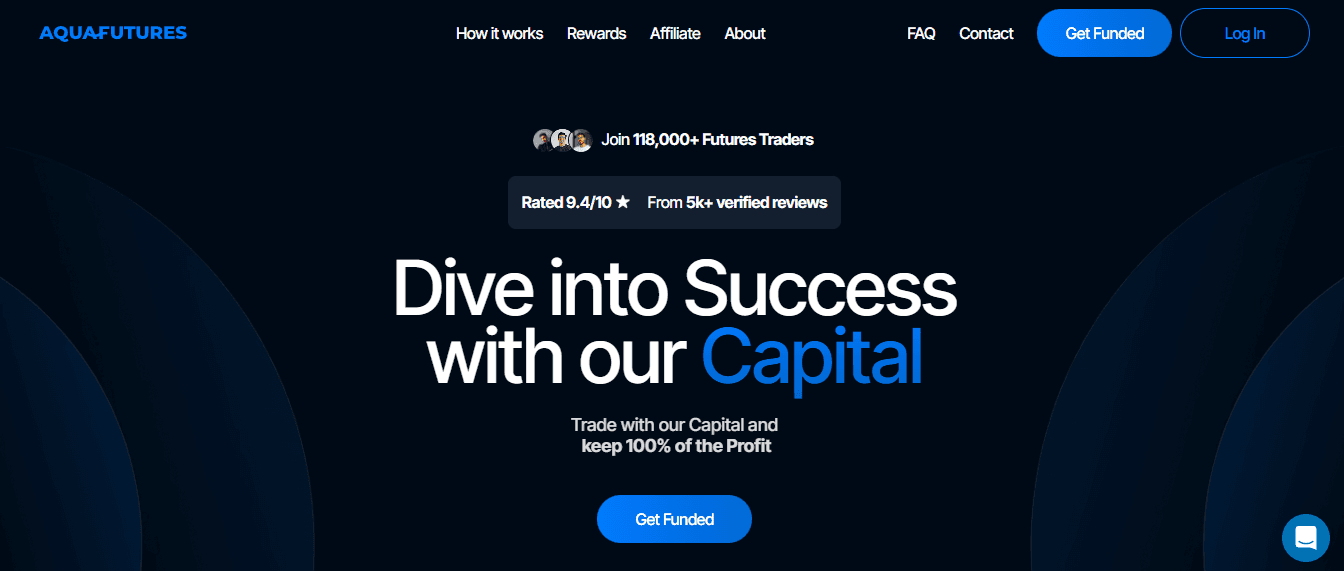
AquaFutures is a futures-focused proprietary trading firm that prioritizes instant funding, giving traders immediate access to simulated capital without evaluation hurdles or profit targets. Specializing in futures markets, the firm enables qualified participants to trade with allocations up to $450,000, with no personal liability for losses. This model appeals to experienced traders seeking a streamlined entry into funded trading, featuring generous profit retention, rapid payouts, and flexible conditions designed for consistent performance.
Key Features of AquaFutures as a No-Challenge Prop Firm
- Instant Funding Access: Traders can bypass all evaluations and start trading simulated, funded accounts immediately, with options for $25,000, $50,000, $100,000, and larger sizes.
- Generous Profit Splits: Keep 100% of the first $15,000 in profits, then retain 90% of all subsequent earnings, maximizing potential returns.
- No Profit Targets or Time Limits: The instant model imposes no mandatory earnings goals or trading duration requirements, offering complete freedom in approach.
- Flexible Risk Parameters: Features include trailing or end-of-day drawdowns (typically 3-4%), no daily loss limits on certain instant variants, and position limits scaled to account size.
- On-Demand and Fast Payouts: Withdrawals are available on demand with a 24-hour guarantee—any delay results in additional compensation to ensure reliable cash flow.
- Scalable Capital Allocation: Accounts grow up to $450,000, with equity expansion potential and the ability to hold multiple funded accounts simultaneously.
- Support for Diverse Futures Trading: Access to a wide range of instruments, including indices, commodities, metals, energies, and cryptocurrencies, plus platforms like ProjectX and Volumetrica.
Why Choose AquaFutures
Traders choose AquaFutures for its strong emphasis on transparency, reliability, and trader-first policies. The firm guarantees fast payouts with a 24-hour processing promise and a $500 bonus for any delays, alongside no hidden fees or restrictive rules. It provides 24/7 dedicated support via live chat and email, fostering a supportive community. Additionally, AquaFutures contributes to charitable causes, including ocean cleanup and clean water initiatives, with every account purchase supporting these efforts. With over 118,000 members, highly verified reviews, and millions in total payouts, the firm builds trust by prioritizing skill-based trading with no personal risk exposure. This combination of immediate funding, high earnings potential, and dependable service makes it a compelling choice for futures traders seeking efficiency and security.
2. Goat Funded Trader

Goat Funded Trader (GFT) delivers a hybrid approach to capital access, blending ease with structured pathways for market operators. Their direct access standard option eliminates the usual testing stage, letting users jump straight into managed portfolios. This setup promotes a relaxed atmosphere where people can apply their methods free from intense objectives or schedules, benefiting everyone from beginners to experts.
Key Features as a No Challenge Prop Firm
- Absence of required earnings thresholds or assessment timelines
- Entry to virtual trading environments
- Earnings distribution reaching 80%, with potential to reach full retention
- Rapid withdrawal processing within 48 hours, including fines for lateness
- Extensive asset selection: over 1,300 currency combinations, 14,000 equities, 21,000 exchange-traded funds, plus 1,500+ digital currency pairs
3. City Traders Imperium

City Traders Imperium (CTI) is a prop trading entity with a new direct funding option, enabling immediate market access without conventional checks. Known for supplying hazard-free resources through practice setups, CTI enables operators to generate virtual gains without personal investment. They offer various capital plans, including a prompt entry option that skips verification entirely, ideal for those seeking swift involvement in supported operations.
Key Features as a No Challenge Prop Firm
- Prompt capital program bypassing any checks or trials
- Boosted earnings portions for high achievers
- Unlimited durations for capital initiatives and verifications
- Freedom from constraints on event-based, off-hours, or extended positions
- Immediate withdrawal availability for quick access
4. Alpine Funded

Alpine Funded is a prop trading organization that provides a distinct direct-access feature, Prompt Capital, enabling real-time market access without verification or uniformity mandates. Operators can use up to $2 million in resources and receive earnings divisions, with disbursements processed weekly on Thursdays. The entity supports a range of conditions, including event-driven trades and off-day holdings, and offers 1:100 gearing, enabling a variety of approaches. They also include a classic two-stage verification for those favoring a guided scaling approach, with share levels up to 90%.
Key Features as a No Challenge Prop Firm
- Direct capital choice without verification or trial intervals
- Earnings divisions are climbing to 100% on prompt accounts
- Availability of up to $2 million in operational resources
- Adaptable guidelines permitting event and off-day activities
- Weekly disbursements are executed each Thursday
5. The 5%ers

The 5%ers functions as a prop trading group with a specialized capital system designed to support currency operators without the stress of typical verifications. Users can secure resources quickly and begin collecting data from initial benchmarks, with scaling at each milestone. The organization offers lenient conditions, such as permissions for extended and off-day holdings, event activities, and automated methods, accommodating multiple styles. Featuring no ongoing charges or surprises, The 5%ers prioritizes clarity and user-oriented guidelines.
Key Features as a No Challenge Prop Firm
- Prompt resource choices with unrestricted benchmark periods
- Earnings shares from 80% to 100%
- Portfolio expansion up to $4 million per achievement
- Zero ongoing charges or undisclosed fees
- Backing for event, off-day, and programmed operations
6. FTUK
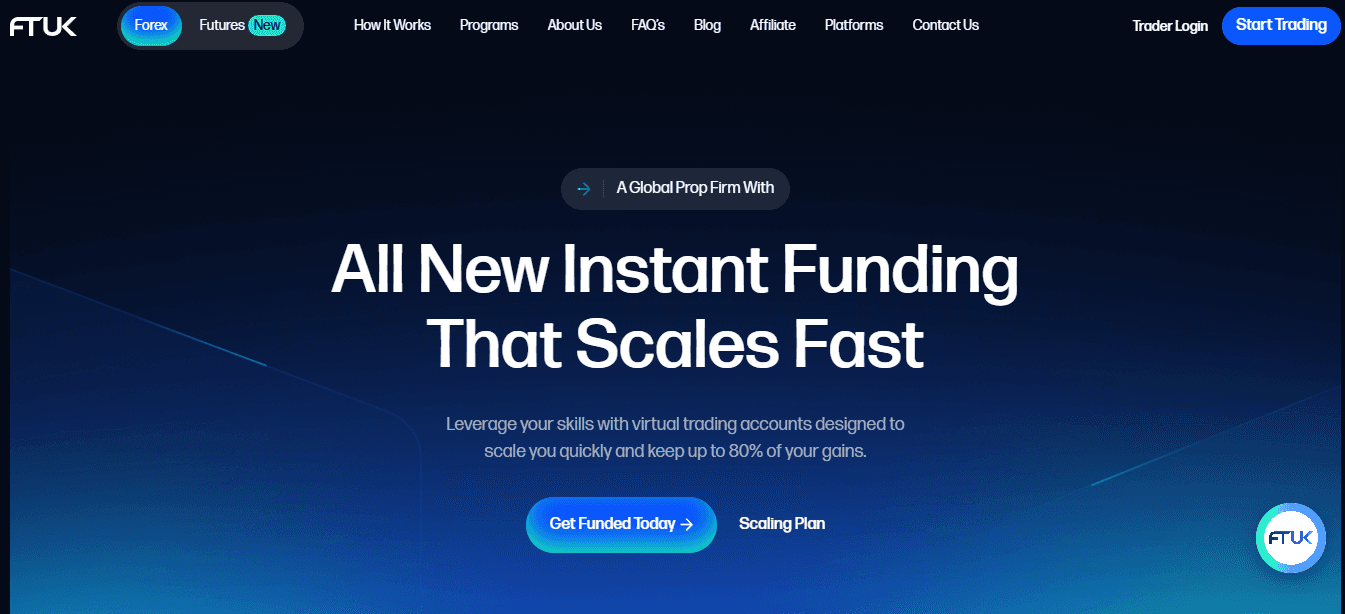
The direct capital initiative is part of FTUK's lineup, enabling operators to launch with supported portfolios instantly, free from least-activity days or cutoffs. Users retain up to 80% of gains and access swift, as-needed disbursements. FTUK supplies adjustable portfolio enhancements for diverse approaches, plus a growth scheme that multiplies resources at every benchmark. This mix of rapid entry and scalable growth positions FTUK as an attractive option for those seeking rapid returns without common obstacles.
Key Features as a No Challenge Prop Firm
- Prompt resource accounts lacking the least activity days or cutoffs
- Gain a portion up to 80% with as-needed disbursements
- Lenient guidelines, including event activities and off-day holdings
- Growth scheme doubling resources at each 10% gain benchmark
- Tailorable portfolio additions suited to personal styles
7. Forex Prop Firm (FPF)
Forex Prop Firm (FPF) provides a standout approach to direct capital access, granting operators substantial virtual resources without common limitations like uniformity guidelines, daily loss caps, or position size restrictions. Backed by extensive industry background and significant disbursements to users, FPF creates a secure, operator-centered setup crafted with practical needs in mind. Their system features multiple immediate funding paths, with earnings shares starting low but scaling significantly, potentially reaching full retention as performance grows.
Key Features as a No Challenge Prop Firm
- Substantial simulated resources reaching $10 million, free from uniformity or duration restrictions
- Earnings portions ranging 20% to 95%, with scaling potential to 100%
- No requirements for daily loss limits, position sizing, or mandatory stops
- Flexible withdrawal options available on-demand, bi-monthly, or weekly
- Broad market coverage with 1,000+ assets spanning currencies, raw materials, indices, equities, and digital currencies
8. Funded Trading Plus
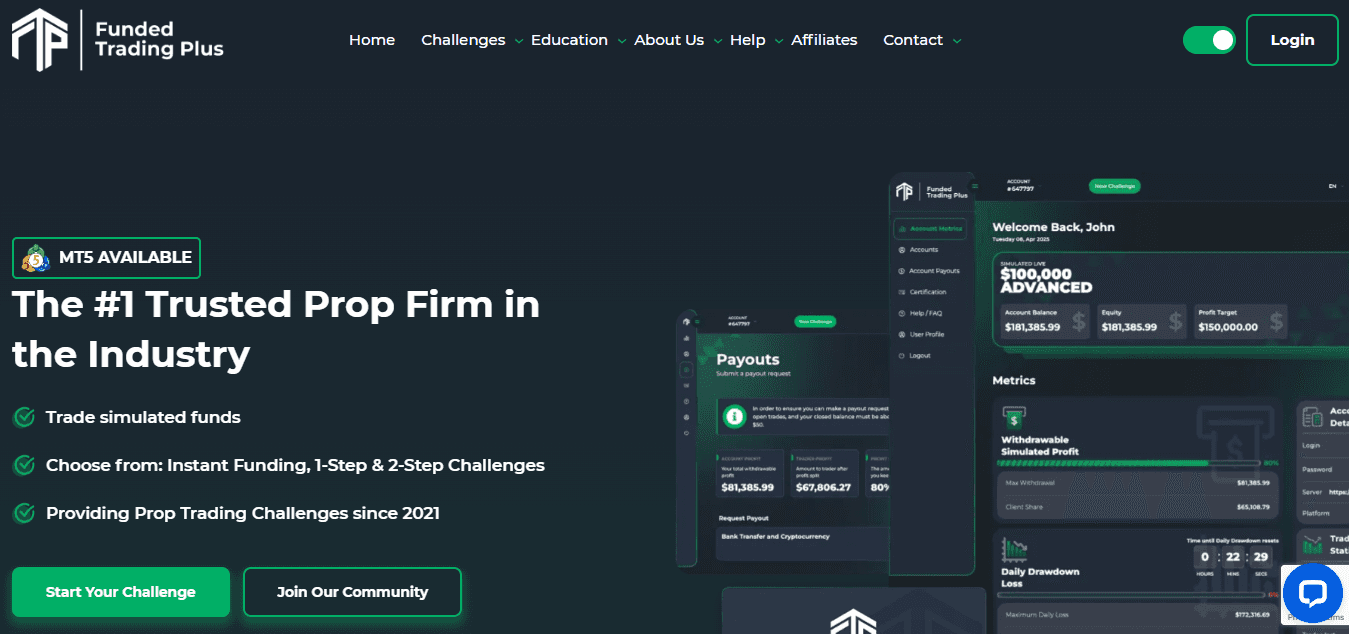
Funded Trading Plus offers multiple capital programs tailored to diverse preferences, with a direct-access route that bypasses all testing stages. This enables immediate access to resources, eliminating the need for earnings benchmarks or preliminary phases, allowing trading to commence under live conditions. The firm prioritizes equitable guidelines, flexible conditions, including event-driven and off-day positions, and earnings divisions that can scale to maximum levels, appealing to those seeking efficient and straightforward funding entry.
Key Features as a No Challenge Prop Firm
- Direct access program eliminating earnings goals and testing requirements
- Earnings divisions reaching up to 100%
- Permissive guidelines supporting event activities and off-day holdings
- Weekly gain withdrawals are available immediately upon starting
- Growth structure expanding resources up to $2,500,000 over time
9. AquaFunded
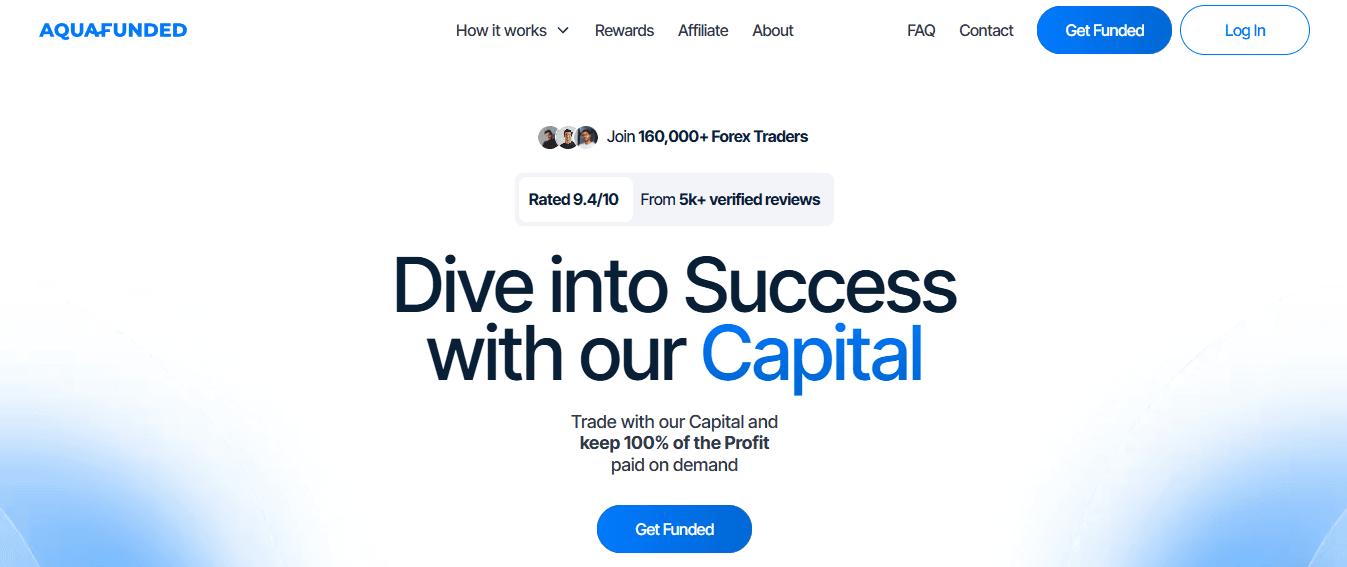
AquaFunded enables market participants to bypass standard verification through its prompt capital feature, delivering swift access to capital with no personal exposure to losses. The setup incorporates balanced risk controls, such as daily thresholds and overall equity limits, and is supported by strong earnings retention. Dedicated assistance provides ongoing guidance, making it a solid option for those prioritizing speed and simplicity in funded operations.
Key Features as a No Challenge Prop Firm
- Prompt capital pathway to avoid all verification steps
- Earnings retention up to 95% (with potential add-ons for higher)
- Structured risk framework featuring daily loss boundaries
- Gearing options reaching 1:50
- No fixed trading periods, with regular access opportunities
10. FundYourFX
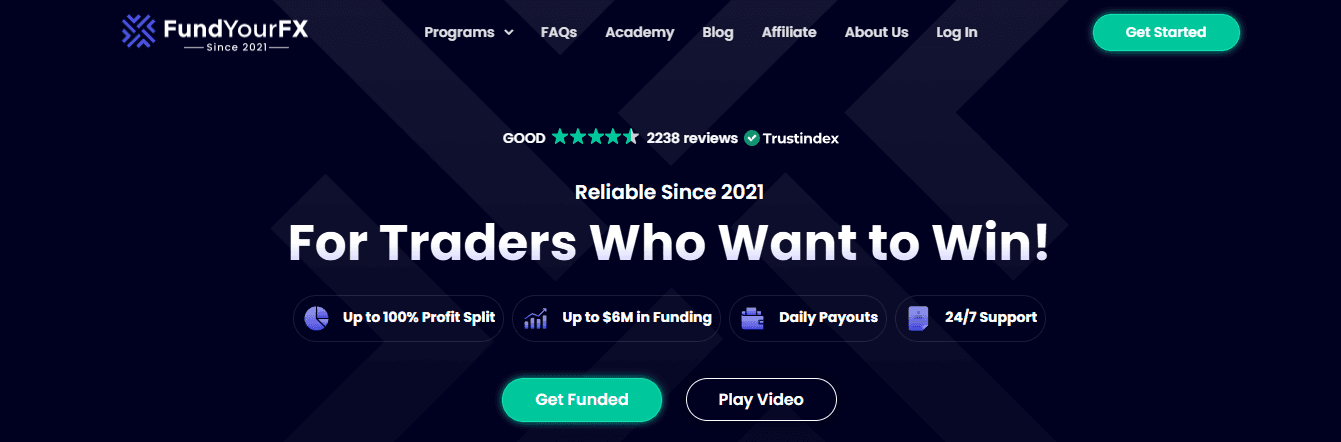
FundYourFX grants straightforward entry to operational accounts without conventional testing requirements, supporting substantial resource levels and competitive earnings shares. Traders face no responsibility for downturns, and the firm facilitates frequent withdrawals to maintain strong liquidity. This model suits those seeking an uncomplicated approach to managing real capital from the outset, with an emphasis on growth potential and platform compatibility.
Key Features as a No Challenge Prop Firm
- Immediate funded access, skipping demo or evaluation phases
- Earnings divisions up to 95%, expandable with portfolio increases
- Resource availability scaling to $3,000,000
- No personal liability for account losses
- Compatibility with popular platforms like MT4, MT5, and Match-Trader
11. Overview Funding Program (OFP)

Overview Funding Program (OFP) features a flexible, no-verification capital system that enables operators to begin with real resources immediately. It stands out for extensive personalization, the absence of mandatory earnings benchmarks, and no time pressure, allowing participants to proceed at their own pace. With support for numerous asset types and solid gearing, it accommodates a broad spectrum of approaches while providing varied withdrawal schedules and additional coaching resources.
Key Features as a No Challenge Prop Firm
- Immediate capital entry without earnings or duration mandates
- Adjustable starting balances from $5,000 to $300,000
- Earnings shares from 26% to 80%
- Gearing up to 1:100 covering forex, commodities, indices, digital currencies, and bonds
- Withdrawal flexibility, including on-demand, bi-weekly, or monthly processing
How to Choose the Right No Challenge Prop Firm For Your Trading Goals

Matching a no-challenge prop firm to your trading goals requires evaluating how its capital structure, risk boundaries, and payout mechanics align with your strategy's rhythm, instrument preferences, and income expectations. You're not just comparing advertised profit splits or maximum allocations. You're assessing whether their operational framework supports the way you actually trade, whether their withdrawal speed matches your cash flow needs, and whether their track record demonstrates they'll pay you consistently without inventing reasons to delay or deny. The right firm feels invisible during winning streaks and supportive during inevitable drawdowns, not like an obstacle course designed to trip you up.
Capital Allocation and Scaling Pathways
Starting capital should align with both your strategy's position-sizing requirements and your risk comfort level. A scalper trading micro futures might thrive with $25,000, executing dozens of small trades daily while keeping individual position risk minimal. A swing trader holding commodity positions for weeks needs substantially more, perhaps $100,000 or beyond, to diversify across multiple setups without over-leveraging any single trade. Undersized accounts force concentration that amplifies risk, while oversized allocations tempt you to take positions your strategy hasn't been tested against.
Examine how firms structure growth after initial performance. Some double your allocation at fixed profit thresholds, creating exponential expansion that rewards consistency. Others add linear increments regardless of percentage gains, which feels less responsive to actual performance quality. A trader who generates 15% returns in their first month demonstrates stronger capability than someone scraping 6%, yet many firms treat both identically in scaling decisions. Look for providers who recognize performance quality, not just milestone completion.
Profit Distribution and Withdrawal Mechanics
The split percentage matters less than the total amount reaching your account reliably. An 80% split with weekly payouts, processed within 24 hours, often yields more usable income than a 90% split with monthly cycles and five-day processing delays. Cash flow predictability affects everything from personal financial planning to your psychological state during trading. Knowing exactly when profits become accessible removes the uncertainty that breeds anxiety and poor decision-making.
Investigate minimum withdrawal thresholds and associated fees. Some firms require $500 minimums, forcing smaller accounts to accumulate profits before they can be accessed. Others permit withdrawals from the first dollar earned, giving you control over when to secure gains versus compound them in the account. Transaction fees ranging from $10 to $50 per withdrawal can significantly erode earnings for traders making frequent small withdrawals, while percentage-based fees disproportionately penalize larger payouts.
Risk Parameters That Match Your Trading Rhythm
Daily loss limits work well for active traders making multiple decisions per session, providing a circuit breaker against emotional spirals after bad trades. They create friction for position traders whose setups might show temporary unrealized losses before resolving profitably days later. A swing trader holding through a volatile announcement could hit a 3% daily limit even though their thesis remains intact and the position ultimately profits. Understand whether limits apply to realized losses only or include floating drawdowns on open positions.
Trailing drawdowns adjust as your account grows, protecting accumulated profits while allowing continued risk-taking. Static drawdowns remain fixed regardless of gains and become easier to manage as your account equity increases relative to the breach threshold. A $100,000 account with a $6,000 static drawdown faces the same dollar limit regardless of equity levels, whereas a trailing version would adjust upward with gains. Your preference depends on whether you value the psychological comfort of expanding boundaries or the simplicity of fixed thresholds.
Instrument Access and Platform Compatibility
Specialization matters more than breadth for most traders. A firm offering 10,000 instruments sounds impressive until you realize you only trade six currency pairs and three index futures. Verify they provide robust access to your specific markets with competitive spreads and reliable execution during your preferred trading hours. Exotic offerings mean nothing if the instruments you actually use suffer from poor liquidity or high costs.
Platform selection affects everything from order entry speed to analytical capabilities. MetaTrader dominates forex trading for good reasons, but futures traders often prefer specialized platforms with deeper depth-of-market visualization and order-flow tools. Confirm the firm's platform supports your required indicators, charting timeframes, and order types. Switching platforms to access capital creates an adaptation period during which execution quality declines as you rebuild muscle memory and workflow efficiency.
Operational Transparency and Payout History
Aggregated payout data reveals patterns that individual testimonials cannot. Look for firms publishing total amounts distributed, average payout size, and the number of funded traders receiving payments over extended periods. A firm showing $5 million in total payouts across 2,000 traders over 12 months demonstrates operational scale that a startup claiming similar terms cannot match. Volume creates stress tests that expose weaknesses in payment processing, customer support, and platform stability. Operational reliability separates legitimate providers from those optimizing for marketing over execution. Verification matters because promotional language costs nothing, while consistent payouts require functional infrastructure, adequate capitalization, and genuine commitment to trader success over short-term revenue extraction.
Examine how firms handle disputes and account reviews. Clear escalation procedures with defined response timeframes indicate mature operations. Vague language about "reviewing trades" or "investigating activity" without specific criteria or timelines suggests arbitrary enforcement that protects the firm's interests over yours. You want providers who take rule violations seriously and apply standards consistently, not selectively based on profitability.
Support Quality and Response Patterns
Test responsiveness before committing capital. Send pre-sale questions through their listed channels and measure response time, specificity, and helpfulness. A firm taking 48 hours to answer basic questions about their profit split will likely respond even slower when you're funded and facing urgent platform issues during active trades. Support quality predicts how they'll treat you when problems arise, not just during the sales process when they're trying to convert you. Community feedback provides context beyond official marketing. Search for the firm's name alongside terms like "withdrawal denied," "account closed," or "support issues" to surface negative experiences that won't appear in curated testimonials. Patterns matter more than individual complaints. Every firm faces occasional disputes, but recurring issues with similar root causes indicate structural problems rather than isolated incidents.
Most traders evaluate firms by comparing surface features, missing how operational details compound into dramatically different experiences. Someone choosing solely based on advertised splits and capital size might select a provider offering 90% splits on $200,000 accounts, only to discover that withdrawal processing takes three weeks, support responds in days rather than hours, and minor rule ambiguities are interpreted against traders. Meanwhile, another trader accepting 80% splits on $150,000 accounts with a firm offering 24-hour payouts and responsive support builds sustainable income faster despite seemingly worse terms. Platforms like AquaFutures demonstrate how operational excellence matters more than promotional promises. Their 100% profit retention on the first $15,000, combined with 24-hour payout guarantees backed by $500 penalties for delays, creates an environment where traders focus on execution rather than worrying about payment reliability. That subtle yet significant psychological shift improves decision quality by reducing the background anxiety of wondering whether your earnings will actually be credited to your account.
Geographic and Regulatory Considerations
Registration location affects legal recourse if disputes escalate beyond internal resolution. Firms operating from jurisdictions with established financial regulations provide stronger protections than those based in regions with minimal oversight. This doesn't mean offshore firms are inherently problematic, but it changes your options if serious conflicts arise. Understand what legal framework governs your agreement and where you'd need to pursue claims if necessary.
Payment processing infrastructure reveals operational maturity. Firms using established payment processors or banking relationships demonstrate financial stability that startups relying solely on cryptocurrency payments cannot match. Multiple withdrawal options, including wire transfers, digital payment services, and crypto, indicate robust systems that accommodate diverse trader preferences and geographic constraints.
Strategy Compatibility and Trading Restrictions
Automated trading permissions matter for algorithmic traders but create complexity for manual execution specialists. Confirm whether your approach requires features like expert advisors, API access, or co-location services. Some firms permit automation but require stragy disclosure and approval, adding friction to deployment. Others prohibit it entirely, forcing purely discretionary execution that might not suit your developed edge.
News trading restrictions appear frequently in prop firm agreements, ostensibly to prevent exploitation of execution delays during high-volatility events. These bans often lack precise definitions, creating gray areas in which legitimate trades around scheduled economic releases are interpreted as rule violations. If your strategy involves positioning ahead of known catalysts or trading immediate price reactions, verify the firm's stance explicitly rather than assuming standard event-driven approaches are acceptable.
The difference between finding a compatible firm and settling for a poor match shows up gradually, not immediately. Your first month might feel identical across providers, but by month three, the cumulative effect of faster payouts, responsive support, and appropriate risk parameters compounds into substantially different outcomes. One trader builds momentum and scales confidently, while another fights operational friction that erodes both profits and motivation. But even perfect alignment with a firm's terms means nothing if you can't access their best offers.
Unlock up to 50% off Your First Funded Account for Futures Trading
AquaFutures removes the waiting, the testing, and the upfront fees that keep skilled traders sidelined. You get instant access to simulated futures capital up to $450,000, keep 100% of your first $15,000 in profits, then 90% of everything after. No activation fees. No evaluation phases. No manufactured hoops designed to collect your money while delaying your funding. You trade real strategies under professional risk parameters from day one, with payouts processed within 24 hours; otherwise, the firm adds $500 to your withdrawal as compensation for the delay.
The economics favor you deliberately. Most prop firms profit from endless evaluation cycles, collecting fees from the 90% who fail challenges designed to maximize that failure rate. AquaFutures earns only when you succeed, through profit shares on winning trades. That alignment changes everything. Their support responds in under five minutes because your success funds their operations. Their payout guarantee exists because delayed payments destroy the trust that keeps profitable traders active. Their 6% profit targets remain achievable because they need you to trade consistently, not wash out in week one.
Over 118,000 traders have joined, and millions have been distributed in verified payouts. That volume creates infrastructure stress tests that expose weaknesses before they affect your trading. New firms promise similar terms but lack the operational depth to handle hundreds of simultaneous withdrawal requests or provide concurrent platform support during volatile market sessions. Scale matters when you're trusting someone else's systems with your livelihood. Ready to skip the audition and start trading real capital today? Explore AquaFutures options and claim up to 50% off your first funded account, plus access to rotating BOGO deals and weekly bonuses that compound your earning potential before you execute your first trade.
Related Reading
- Prop Firm Swing Trading
- Best Prop Firms for Stocks
- Prop Firms That Use MT5
- No Minimum Trading Days Prop Firm
- Prop Firms With Instant Funding
- One Phase Prop Firm
- Proprietary Trading Firms
- Best Funded Accounts UK
- Best Prop Firm in the World
- Cheapest Forex Funded Account
- Best Prop Firms That Allow EA
- Best UK Prop Firm
- Forex Prop Firms Accepting US Clients
- Best Forex Funded Prop Firms
- Best Funded Account Forex in UAE
