



15 Best Prop Firms in the USA Every Trader Should Know
Learn about the 15 best prop firms in the USA every trader should know for top opportunities, trading resources, and growth potential.

Consider this: you've mastered your trading strategy, thoroughly backtested it, and you're ready to trade seriously, but your personal capital is limited or you'd rather not risk it all. What is a funded account? It's the bridge between your skills and professional-level trading, where proprietary trading firms provide you with substantial capital to trade futures, forex, or other markets while you keep a significant portion of the profits. This guide breaks down how to evaluate and select the right prop firm in the USA, walks you through the evaluation process most firms use, and shows you proven methods to grow your trading career using someone else's money instead of your own.
That's where AquaFutures comes in, offering funded accounts for futures trading seeking access to real capital without traditional barriers. Their program lets you prove your trading ability through a straightforward evaluation, then trade with firm capital while keeping up to 90% of your profits, giving you the resources to scale your income and build a sustainable trading business. Whether you're an experienced trader looking to expand or someone ready to trade full-time without depleting personal savings, their approach removes the biggest obstacle most traders face: insufficient capital to make meaningful returns.
Summary
- Proprietary trading firms solve the capital barrier by providing traders with substantial buying power after they demonstrate consistent risk management through evaluations. Most challenges require 8-10% profit targets while maintaining strict loss limits, typically 5% daily and a maximum drawdown of 10%. The structure filters for discipline rather than prediction accuracy, since 90% of participants fail not because targets are unrealistic, but because emotional trading under hard boundaries exposes poor risk control that personal accounts allow traders to ignore.
- Profit splits of 80-90% create performance-based income without personal capital exposure, turning trading into a merit-based system rather than a wealth-preservation exercise. A trader generating steady 3% monthly returns on a $100,000 funded account earns $2,400 to $2,700 after splits with zero personal funds at risk. That same performance, self-funded, would require $100,000 in savings, which most traders lack, plus full downside exposure on every position. The model compresses the timeline from small account grinding to meaningful income by injecting capital at each performance milestone.
- The proprietary trading industry underwent massive consolidation between early 2024 and mid-2025, with most firms either shutting down, rebranding, or drastically altering business models according to market analysis. That shakeout left traders searching for operations with actual staying power, ones that could deliver on payout promises and maintain stable funding terms rather than running evaluation funnels designed to collect fees without ever funding accounts at scale. The survivors proved they had sustainable revenue models beyond challenge fees.
- Daily loss limits and maximum drawdown rules prevent account-ending blowups that destroy trading careers, forcing discipline that most traders resist building independently. Enforcement creates a feedback loop in which external boundaries become internalized risk management, since breach consequences are immediate and non-negotiable. Over time, traders stop testing limits because they've learned the cost, and that structure clarifies what sustainable performance actually looks like, not lucky streaks or home run predictions, but consistent small losses and managed winners.
- Platform infrastructure, real-time data feeds, and integrated risk monitoring tools provided by prop firms would cost thousands of dollars per month if purchased separately. For US traders competing in fast-moving markets, that technology eliminates friction in decision-making through features such as automatic position sizing based on volatility, millisecond data updates that reveal order-flow shifts, and server-side execution that maintains strategies even when home internet connectivity fails. These aren't luxuries but table stakes for serious trading that most individuals can't justify until already profitable.
- Funded accounts for futures trading address capital access friction by offering instant funding with 24-hour payouts and allowing traders to keep 100% of their first $15,000 in profits before any split applies, removing bureaucratic delays that slow the path from evaluation to actual income.
What is a Prop Firm, and How Does It Work?

A proprietary trading firm provides capital to traders who demonstrate consistent skill, enabling them to trade financial markets without risking their own funds. In exchange, the firm takes a percentage of profits, typically 10-20%, while the trader retains 80-90%. This model shifts the financial burden from the individual to the company, creating a performance-based partnership where both parties benefit from successful trades. The structure differs fundamentally from traditional brokerage accounts. When you open a standard trading account, you deposit your own money and absorb all losses. Prop firms reverse this dynamic by providing capital after you demonstrate your ability through an evaluation process, then sharing in the upside when you perform well.
The Evaluation Process
Most modern prop firms targeting retail traders begin with a paid challenge, a simulated trading environment designed to filter disciplined performers from impulsive gamblers. You pay a one-time fee, typically $100-$500, depending on account size, to access an evaluation account that mirrors live market conditions. The requirements are straightforward but strict. You must meet a profit target, typically 8-10% of the account balance, while adhering to hard risk limits. Daily loss caps typically range from 5% to 10%, meaning that if you lose that amount in a single session, the evaluation ends immediately. Maximum drawdown limits, usually 10% from your highest account balance, ensure you don't dig yourself into a hole chasing losses.
90% of traders fail these challenges, not because the targets are unrealistic, but because most people struggle with the emotional discipline required to trade within boundaries. The evaluation assesses whether you can follow a plan when real consequences are at play, even if the money isn't technically yours yet. Challenges come in different formats. One-step evaluations require a single profitable trading phase before funding. Two-step models add a verification phase to confirm consistency, not just a lucky streak. Some firms now offer instant funding with relaxed requirements but charge higher fees upfront, betting that most traders will still breach risk rules before generating significant profits.
From Evaluation to Funded Account
Pass the evaluation, and you receive access to a funded account with the firm's capital. Account sizes range from $25,000 to $200,000 or more, depending on the firm and the evaluation tier you purchased. You execute trades just as you did during the challenge, but now your profits translate into actual payouts. The profit split becomes active immediately. If your funded account generates $5,000 in profit and your agreement specifies an 80% split, you receive $4,000 while the firm keeps $1,000. Top-tier firms now offer 90% profit splits to attract skilled traders, recognizing that talent retention matters more than squeezing margins on every payout.
The same risk rules from your evaluation carry forward. Breach the daily loss limit or maximum drawdown, and the firm terminates your funded account. You face no personal liability beyond losing access to that capital, but you must purchase a new evaluation to start again. This structure protects the firm from catastrophic losses while giving you unlimited upside if you trade well.
Some firms operate entirely in simulation, paying you from their revenue generated by evaluation fees rather than actual market profits. Others use genuine live capital, placing their trades directly into financial markets. The distinction matters less than you might think if payouts are consistent, but understanding which model your firm uses helps set realistic expectations for scale and sustainability.
Why Firms Profit From This Model
Prop firms generate revenue from two sources. Evaluation fees create immediate income, and since most traders fail, these fees fund operations and payouts for successful traders. The firm also keeps a percentage of profits from funded accounts, creating a second revenue stream that grows as more traders succeed. The business model rewards genuine skill while filtering out inconsistency. A trader who passes evaluations and generates steady profits becomes a long-term asset, essentially an independent contractor producing returns the firm shares. A trader who fails evaluations contributes fee revenue without requiring capital allocation.
This creates an unusual alignment. The firm wants you to succeed once you're funded because your profits become their profits. But they also benefit from the reality that most people lack the discipline to pass evaluations, making the challenge phase a profitable filter that identifies the small percentage worth backing with real capital. Platforms like funded accounts for futures trading compress this entire cycle, offering instant funding with 24-hour payouts and no activation fees. Traders keep 100% of their first $15,000 in profits before any split applies, removing the friction that traditionally slows down the path from evaluation to meaningful income. When speed and simplicity replace bureaucratic delays, the focus shifts back to what actually matters: your trading performance.
What Separates Successful Traders
Passing an evaluation requires more than a profitable strategy. You need risk management systems that prevent emotional decisions when trades move against you. Many traders enter prop firm challenges with strategies that work in theory but collapse under the pressure of hard loss limits. Consistency matters more than occasional big wins. A trader who makes 2% daily for five consecutive days passes more reliably than one who makes 15% on day one, loses 4% on day two, and spends the rest of the week recovering. Prop firms design evaluations to reward steady, repeatable performance because that's what scales when managing larger capital.
The traders who struggle often lack preparation for the psychological shift that happens when rules become non-negotiable. In a personal account, you can hold a losing position indefinitely, hoping for recovery. In a prop firm evaluation, that same decision ends your attempt instantly if it breaches the daily loss threshold. The structure forces discipline that many traders intellectually understand but emotionally resist. But once you see how few traders actually apply that discipline consistently, the rationale for prop firms becomes clear.
Related Reading
- What Is a Funded Account
- Does Ftmo Offer Instant Funding
- How to Get a Funded Trading Account
- No Challenge Prop Firm
- Funding Traders Rules
- What Is a Prop Firm Account
- Synthetic Funded Account
- What is a Funded Firm
- One Step Prop Firm Challenge
- Trading Challenges
- Instant Funding Rules
- Prop Firm Ip Address Rule
- Halal Prop Firms
- Top 10 Prop Firms 2025
- Australia Prop Firm
- Cheapest Futures Prop Firm
- No Activation Fee Prop Firm
- Prop Firms That Allow Trade Copiers
- Best Prop Trading Firms
- Forex Prop Firms With Instant Funding
- Best Prop Firms For Forex
- Best Prop Firm To Start
- Best Instant Funded Prop Firm
- Best Prop Firms in UAE
Why Choose a Prop Firm for Trading in the USA?

American traders gravitate toward prop firms because the model solves a problem that personal capital can't: it removes the ceiling on what you can attempt without risking financial ruin. When you trade your own money, position sizes stay small, opportunities shrink, and every loss feels personal. A funded account flips that equation, giving you access to six-figure buying power while the firm absorbs downside risk. You focus on execution. They handle the capital. This isn't about avoiding responsibility. It's about separating skill from net worth. A trader with $5,000 in savings can't realistically trade ES futures at scale, no matter how sharp their strategy. But pass a $200 evaluation, and suddenly you're managing $100,000 in simulated capital with profit splits that turn consistent performance into real income. The barrier drops from "how much do I have?" to "can I trade well?"
Capital Access Without Personal Exposure
The practical difference shows up immediately in position sizing. Trading forex with $2,000 in personal capital limits you to micro lots and tight stop losses that can be triggered by normal market noise. A funded account starting at $50,000 lets you take positions that actually matter, with room to let trades breathe while still respecting risk parameters.
This matters more in the U.S. market structure, where futures contracts on indices like the Nasdaq require margin deposits that price out smaller traders. A single NQ contract demands roughly $17,000 in buying power at recent margin rates. Prop firms provide that access after a brief evaluation, turning what was previously a capital barrier into a performance test. You demonstrate you can manage risk, and the firm provides sufficient size to make the strategy viable.
The shift changes how you think about opportunity cost. When every trade risks your rent money, you hesitate. When you're trading firm capital within defined risk limits, you execute the strategy without emotional interference. The fear doesn't disappear, but it no longer distorts decisions because your personal finances remain intact regardless of the outcome.
The Profit Split as Performance Incentive
Keeping 80% to 90% of profits creates alignment that personal trading can't match. When you risk your own $10,000 and make $1,000, you keep everything but also absorb the full downside. With a funded account, you make that same $1,000, keep $800 to $900, and never touch your savings. The math favors the prop model once you pass the evaluation, especially as account sizes scale.
Top performers often graduate to larger accounts, sometimes reaching $200,000 or more in buying power with the same favorable splits. That scaling path doesn't exist when self-funding. You'd need to generate enough profit to both live on and reinvest for growth, a slow grind that most traders never escape. Prop firms compress that timeline by injecting capital at each performance milestone.
The structure rewards consistency over home runs. A trader generating steady 3% monthly returns on a $100,000 account earns $2,400 to $2,700 per month after splits, with no personal capital at risk. That same trader, self-funding, would need $100,000 saved, which most don't have, and would still face full exposure on every position. The prop model turns trading into a merit-based income stream rather than a wealth-preservation exercise.
Risk Management as Built-In Discipline
Daily loss limits and maximum drawdown rules feel restrictive until you realize they prevent the blow-ups that end trading careers. In a personal account, nothing stops you from revenge trading after a bad morning. You can double position sizes, ignore stops, and rationalize holding losers overnight. Prop firms cut that behavior off instantly. Breach the 5% daily limit, and the account will be locked. No second chances, no negotiation. That enforcement creates a feedback loop that most traders need but resist building. The rules aren't suggestions. They're hard stops that force you to walk away when emotions run hot. Over time, that external discipline becomes internal. You stop testing the limits because you've internalized the cost of breaking them.
The structure also clarifies what good trading actually looks like. It's not about catching the perfect entry or predicting market direction. It's about managing risk so well that you survive the inevitable losing streaks without breaching thresholds. Traders who pass evaluations consistently aren't necessarily more accurate in their predictions. They're just better at keeping losses small and letting winners run within the firm's boundaries.
Technology and Infrastructure You Wouldn't Build Alone
Prop firms provide execution platforms, data feeds, and risk-monitoring tools that would cost thousands of dollars per month if purchased separately. Real-time Level 2 data for equities, low-latency futures execution, and integrated charting with custom indicators are all included. For a U.S. trader trying to compete in fast-moving markets, that infrastructure matters as much as capital access. The technology eliminates friction that slows decision-making. When your platform integrates risk calculators that automatically size positions based on account balance and volatility, you spend less time on math and more time reading price action. When your data feed updates in milliseconds rather than seconds, you see order flow shifts that matter in momentum strategies. These aren't luxuries. They're table stakes for serious trading, and most individuals can't justify the expense until they're already profitable.
Some firms also offer server-side execution or virtual private servers that keep your strategies running even when your home internet drops. That reliability becomes critical if you're trading algorithmic systems or managing positions across multiple time zones. The firm handles the infrastructure complexity so you can focus entirely on the strategy. Most prop firms that operated in early 2024 had either shut down, rebranded, or drastically altered their business models by mid-2025. That consolidation left traders searching for firms with staying power, ones that could actually deliver on payout promises and maintain stable funding terms. The survivors proved they had real business models, not just evaluation funnels designed to collect fees without ever funding accounts at scale.
Most traders process payouts through traditional prop firms on weekly or monthly schedules, as that's the industry norm. As accounts grow and performance becomes consistent, waiting two weeks for withdrawals creates unnecessary friction. Platforms like funded accounts for futures trading compress that cycle to 24 hours, letting you access earnings immediately while keeping 100% of your first $15,000 in profits before any split applies. When speed replaces bureaucracy, trading starts feeling less like a gamble on whether the firm will actually pay and more like a performance-based career with predictable cash flow.
Community and Accountability That Scales Learning
Trading alone means your mistakes stay private, and so do your breakthroughs. Prop firms create networks where U.S. traders compare strategies, dissect losing trades, and share insights about market conditions specific to American hours. That collective intelligence accelerates learning in ways YouTube tutorials and trading books can't match.
The accountability piece matters more than most expect. When you're part of a funded trader community, your peers know when you're cutting corners or ignoring your plan. That social pressure reinforces discipline. You don't want to be the person who blew an account on a revenge trade when everyone else is posting consistent weekly gains. The environment cultivates professionalism simply by surrounding you with people who take the craft seriously.
Some firms host live trading rooms where funded traders call out entries and exits in real time. Watching someone manage a position through volatility, adjust stops as price moves, and exit at predetermined targets teaches execution in ways theory never could. You see the decision-making process, not just the result, and that transparency builds pattern recognition faster than solo screen time. But all of this assumes the firm you choose operates within legal boundaries that actually protect you.
Are Prop Firms Legal in the USA?

Yes, proprietary trading firms operate legally in the United States when structured correctly. The confusion stems from how they're regulated, not whether they're allowed. These firms avoid the full oversight brokers face because they neither manage client funds nor provide investment advice. Instead, they trade their own capital or simulated environments, then share profits with traders who pass evaluations. That structure keeps them outside the strictest regulatory frameworks while remaining compliant with U.S. law. The legality question matters because traders need to distinguish between legitimate operations and setups designed to collect evaluation fees without ever intending to fund accounts. Understanding the regulatory landscape helps you identify which firms operate with transparency and which exploit gray areas to avoid accountability.
How Prop Firms Stay Within Legal Boundaries
The business model centers on a critical distinction. Prop firms don't solicit or hold client deposits the way brokers do. You pay for an evaluation, essentially buying access to a performance test. Pass that test, and you trade with the firm's capital under a profit-sharing agreement. This structure sidesteps the registration requirements applicable to broker-dealers under the Securities and Exchange Commission and to commodity trading advisors under the Commodity Futures Trading Commission.
When a firm trades exclusively with its own capital, or provides simulated accounts that mirror live markets without executing real trades, it doesn't trigger the same regulatory obligations as entities that manage outside investor capital. The Volcker Rule, which restricts proprietary trading by banks that take deposits, doesn't apply to independent trading firms. That separation creates legal space for prop firms to operate without the compliance burden borne by traditional financial institutions.
The line blurs when firms enter advisory territory or begin handling funds in ways that resemble brokerage services. If a prop firm begins offering investment advice, managing pooled capital from multiple investors, or executing trades on behalf of clients rather than its own book, regulators take notice. Staying legal means staying within the boundaries of self-funded trading and profit-sharing partnerships.
Regulatory Bodies That Matter
The SEC governs securities markets, ensuring transparency and preventing fraud in stocks, options, and related instruments. The CFTC oversees futures, forex, and derivatives and enforces rules that protect market integrity. Both agencies have enforcement power, but they focus on entities that meet specific definitions under federal law. A prop firm that doesn't qualify as a broker-dealer, investment advisor, or commodity pool operator generally falls outside their direct jurisdiction.
That doesn't mean prop firms operate without oversight. If a firm engages in fraudulent practices, misrepresents its terms, or violates consumer protection laws, agencies such as the Federal Trade Commission can intervene. State-level regulators also monitor financial services, and firms operating across state lines must navigate a patchwork of requirements that vary by jurisdiction.
The regulatory environment shifts as the industry grows. Recent SEC rule changes have tightened exemptions for proprietary traders at large institutions, reflecting concerns about systemic risk. But these adjustments target firms connected to banking systems, not standalone prop firms serving retail traders. The distinction matters because it shows that regulators prioritize systemic exposure over individual trading partnerships.
U.S.-Based Firms vs. International Operators
American prop firms structure their operations around futures markets because those instruments trade on regulated exchanges such as the Chicago Mercantile Exchange. Futures contracts offer transparency, standardized terms, and regulatory oversight that satisfy U.S. compliance requirements. Many domestic firms avoid forex and contracts for differences entirely because those markets carry additional regulatory complexity for retail traders.
International firms face a tougher path when serving U.S. clients. The CFTC and the National Futures Association enforce strict rules on offshore entities that offer leveraged products to Americans. Some foreign firms simply block U.S. traders rather than navigate the compliance costs. Others partner with U.S.-regulated brokers to route trades through compliant channels, ensuring compliance with anti-money laundering standards and maintaining adequate capitalization.
The difference shows up in transparency. U.S.-based firms typically disclose their structure, explain how they handle capital, and operate with clear terms because they know regulators can reach them. Offshore firms that accept Americans without proper registration create risk for traders, not because the firm is inherently fraudulent, but because you have limited recourse if disputes arise. CBS News evaluated more than 20 companies to identify legitimate options for U.S. traders in 2025, underscoring the importance of vetting in a space where regulatory clarity remains incomplete.
Where Traders Face Real Risk
Legality doesn't guarantee fairness. Many prop firms operate within the law while maintaining terms that heavily favor the house. Opaque profit-sharing agreements, sudden rule changes mid-contract, and delayed payouts all fall outside regulatory violations but create friction for traders. The evaluation model places risk on the trader, who pays upfront fees with no guarantee of funding, even if they pass.
The challenge intensifies when firms operate in simulation without ever placing real trades. These setups pay traders from evaluation revenue rather than actual market profits, a sustainable model only if most traders fail. When a firm's business depends on high failure rates, the incentive to create passable but difficult evaluations becomes strong. That's legal, but it shifts the relationship from a partnership to something closer to a casino model.
Traders who breach risk rules face immediate account termination with no appeal process. That enforcement protects the firm but leaves traders without recourse when they believe a breach resulted from platform issues, data feed errors, or ambiguous rule interpretation. The legal structure gives firms broad latitude to define and enforce terms, and most traders accept those terms without the ability to negotiate.
Choosing Firms That Operate Transparently
Focus on firms that clearly disclose their funding model. Do they execute real trades or operate entirely in simulation? How do they generate revenue beyond evaluation fees? Firms willing to explain their structure signal confidence in their business model. Those who dodge questions or bury details in dense terms create unnecessary risk.
Check for regulatory partnerships. Firms that use U.S.-regulated brokers for execution, maintain transparent payout histories, and operate from verifiable business addresses demonstrate a commitment to compliance. Reviews from funded traders, not just evaluators, provide insight into whether the firm actually delivers on promises after you pass the challenge.
Look for firms that treat traders as partners rather than revenue sources. Profit splits that favor traders, realistic evaluation requirements, and fast payout cycles indicate a business model built on long-term relationships. Firms that keep 100% of your first $15,000 in profits before any split applies, offer 24-hour payouts, and eliminate activation fees, remove the friction that traditional models use to delay or reduce trader earnings. When a firm's success depends on your success rather than your failure, the incentives align in ways that matter more than any regulatory stamp. But knowing which firms operate legally and transparently only matters if you know which specific ones actually deliver on those promises.
15 Best Prop Firms in the SA Every Trader Should Know
The firms listed here represent the current landscape for U.S. traders seeking funded accounts, each with distinct structures, payout terms, and risk frameworks. Some prioritize instant access, others require multi-phase evaluations. Some focus exclusively on futures, while others span forex, crypto, and indices. What separates the best from the rest isn't marketing promises but verifiable payout histories, transparent rules, and business models that align firm success with trader performance. The list reflects firms that maintain consistent operations, clear terms, and reliable execution infrastructure.
1. AquaFutures
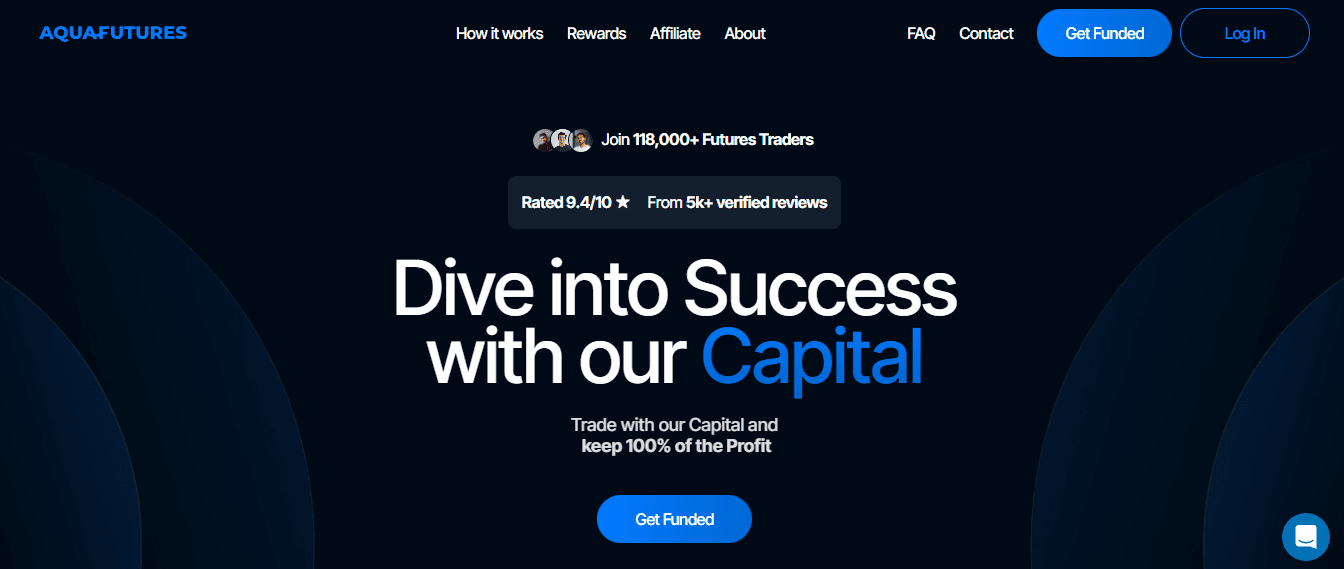
AquaFutures is a leading proprietary trading firm specializing in futures, offering instant access to funded accounts for skilled traders without requiring personal capital at risk. With a strong emphasis on empowering over 118,000 global participants through its capital, the platform enables trading in futures, forex, indices, metals, and crypto markets. Backed by a high satisfaction rating from thousands of verified users, it has distributed millions in rewards, highlighting its reliability for US-based traders seeking scalable opportunities in a regulated environment.
Key Features
- Provides instant funding options to bypass traditional evaluation hurdles and enable immediate account activation.
- Supports account sizes ranging from $25,000 to $150,000, with a maximum combined allocation up to $450,000.
- Features a 100% profit retention on the initial $15,000 earned, transitioning to a 90% split afterward.
- Offers one-step or multi-step challenges focused on risk management, with beginner accounts requiring 6-8% profit targets.
- Includes no time restrictions on trading periods in most programs for flexible strategy execution.
- Enforces drawdown modes such as end-of-day or trailing to maintain disciplined trading.
- Sets position limits scaled to account size, from 1 to 15 contracts, depending on the plan.
- Eliminates daily loss limits on professional-level accounts, providing greater operational flexibility.
- Integrates with ProjectX and Volumetrica platforms for efficient order execution.
- Ensures traders bear no liability for losses, as the firm covers all downside risks.
- Delivers 24/7 dedicated customer support through multiple channels, including chat, email, and social media.
- Contributes to charitable causes such as ocean cleanup and access to clean drinking water.
- Guarantees fast reward processing within 24 hours, with an additional $500 compensation if delayed.
Why Traders Choose It
Traders select AquaFutures for its trader-first model that combines high capital access with full profit retention on early earnings and a generous ongoing split, making it ideal for scaling strategies in the competitive US prop trading landscape. The instant funding feature appeals to those eager to skip lengthy evaluations, while robust risk protections and unlimited trading timelines reduce pressure, allowing focus on performance. Its proven payout system, with millions distributed and rapid processing guarantees, builds trust, especially among futures enthusiasts valuing quick rewards and no personal loss exposure. Positive user feedback underscores reliable support and transparent rules, positioning it as a preferred choice for consistent, liability-free trading growth.
2. E8 Markets

Maximum funding potential reaches $2.5 million after successful scaling, a ceiling that accommodates serious growth for consistent performers. The two-phase challenge structure requires 8% profit in phase one and 5% in phase two, targets that filter for discipline without demanding unrealistic returns. Profit splits start at 80%, and the firm allows holding positions over weekends, removing the forced exits that some platforms impose to limit exposure. Educational resources supplement the funding process, helping traders refine strategies and access capital. Payout processing is completed within days of the request, faster than firms operating on monthly cycles. The platform supports multiple execution environments, ensuring compatibility with existing workflows. For traders building long-term partnerships with a firm willing to scale capital aggressively, E8 Markets provides a clear progression path from initial funding to substantial allocations.
3. BrightFunded
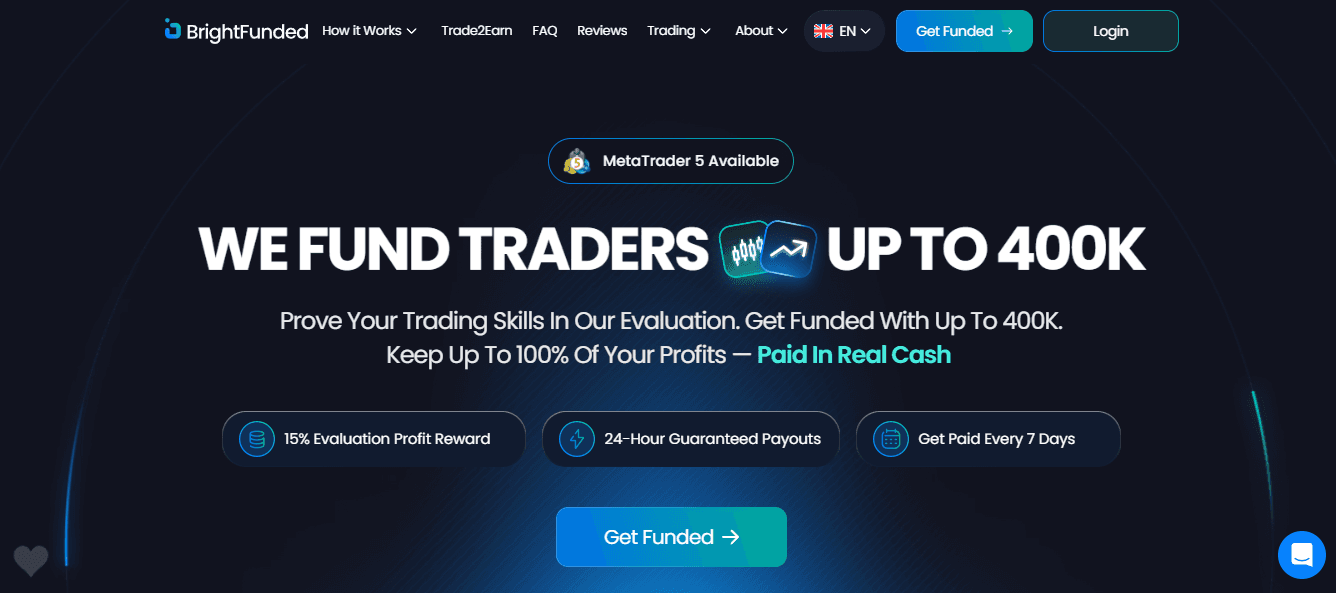
Single-phase evaluations with 10% profit targets simplify the path to funded status by eliminating the multi-step verification that adds time and complexity. The maximum allocation is €400,000 for qualified participants, with profit sharing starting at 80% and increasing based on performance. The firm imposes no time limits on challenges, removing countdown pressure and allowing traders to execute strategies at their own pace. News trading and automated strategies receive explicit permission, a policy that matters for algorithmic traders or those who capitalize on volatility spikes around economic releases. Bi-weekly payouts with minimal delays create a predictable cash flow once funded. The modern interface and transparent terms appeal to traders who value low barriers to entry and straightforward, hidden-restriction-free account management.
4. FundingPips
Integration with three platforms provides versatility for traders who prefer specific execution environments or charting tools. Maximum funding caps at $300,000, with profit retention up to 80% on successful accounts. The two-step challenge uses 8% and 5% profit goals, standard targets that test consistency without requiring outlier performance. Unlimited trading days during evaluation remove artificial time constraints that force rushed decisions. Expert advisors and high-frequency trading receive explicit support, accommodating automated strategies that some firms restrict. Withdrawal processing completes within 24 to 48 hours, among the fastest in the industry. For traders seeking efficient funding paths with clear guidelines and rapid access to earnings, FundingPips delivers on operational speed without sacrificing transparency.
5. The5ers

Over a decade of operation establishes credibility that newer firms lack, with a track record of paying traders through multiple market cycles. Maximum funding reaches $615,000, with profit splits ranging from 50% to 80% based on performance tiers. Multi-phase programs feature varying targets from 6% to 12%, offering flexibility for traders at different skill levels. Scaling plans reward consistency, gradually increasing capital access as traders demonstrate sustained profitability. The firm permits overnight and weekend positions, trusting traders to manage exposure across sessions without forced exits. Payouts occur every two weeks, providing regular income for funded participants. The emphasis on education alongside funding helps traders refine their skills and access capital, creating a development-focused environment that goes beyond simple profit-sharing agreements.
6. FundedNext
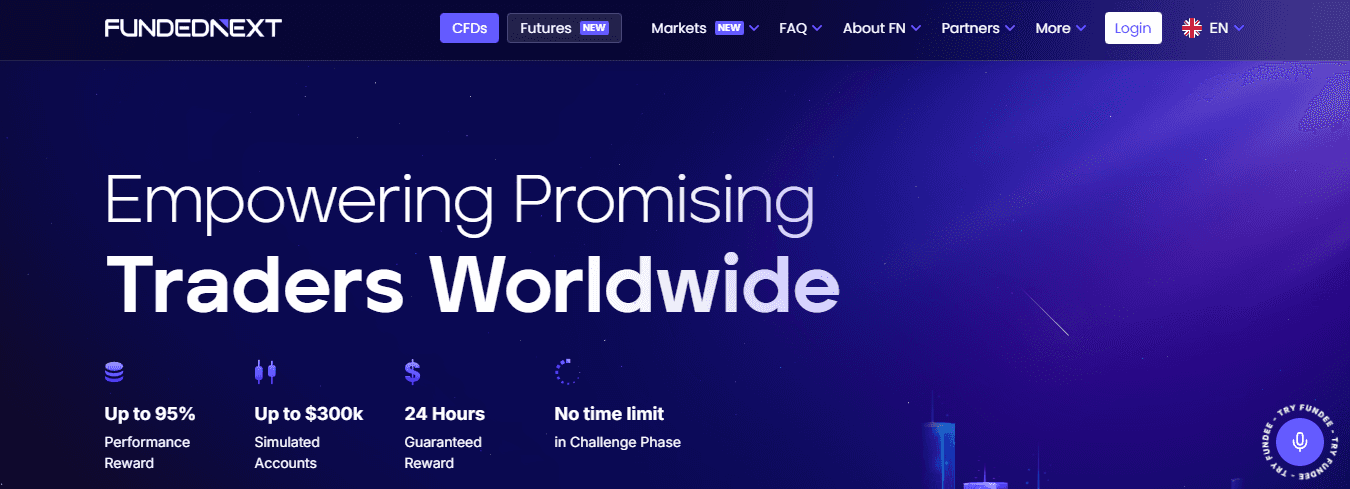
Profit shares reaching 90% for top performers position this firm among the most generous in profit sharing. One or two-phase challenges with 10% and 5% targets provide flexibility based on trader preference for speed versus verification. Removing mandatory minimum trading days eliminates arbitrary activity requirements, allowing performance to dictate progression rather than calendar obligations. Crypto deposits for funding appeals to traders operating in digital asset ecosystems who prefer to avoid traditional payment rails. Fast payouts are often completed within one day, compressing the cycle from profit generation to cash access. The maximum allocation is $300,000, sufficient for most retail strategies without requiring institutional-scale capital. The firm's rapid growth reflects trader satisfaction with terms that prioritize speed and flexibility over bureaucratic processes.
7. Alpha Capital
Four trading platforms provide broad compatibility, ensuring traders can use preferred tools without platform lock-in. Maximum funding is $400,000, with profit splits ranging from 80% to 90%, depending on the program selected. The two-phase evaluation uses standard profit objectives, and static drawdown rules support consistent trading by preventing the moving targets that trailing drawdowns create. Expert advisors are authorized to operate alongside automated strategies and discretionary trading. Payout processing typically completes within 48 hours, faster than weekly or monthly cycles that delay access to earnings. The structured evaluation process and professional-grade conditions attract traders who appreciate straightforward guidelines and reliable execution. For participants seeking solid infrastructure and fair terms, Alpha Capital delivers without unnecessary complexity.
8. Goat Funded Trader

A 95% profit retention rate for qualified accounts is among the highest in the industry, leaving traders with nearly all of the profits they generate. One or two-step challenges with realistic targets provide flexibility based on trader preference. Unlimited time in most evaluation phases removes pressure from artificial deadlines, allowing strategies to develop naturally. Weekend and news-event trading is permitted in full, eliminating the restrictions other firms impose to limit exposure. Fast withdrawals receive positive feedback from traders, with processing times that minimize delays between performance and payout. Maximum funding reaches $400,000, sufficient for scaling strategies without requiring multiple accounts. The engaging structure and flexible rules appeal to traders who value adaptability and high profit retention over rigid frameworks.
9. Maven

Budget-friendly entry points make this firm accessible to emerging traders and to those testing prop firm models without significant upfront investment. Maximum allocation is $200,000, with profit sharing starting at 80% and scaling based on performance. Multiple challenge types include one-step options, simplifying the path to funded status for traders who prefer speed. Trader-friendly drawdown calculations reduce the likelihood of rule breaches from normal market volatility. Support runs 24/7, and educational materials supplement the funding process, helping traders develop skills alongside capital access. Payout processing is efficient, with minimal issues, ensuring reliable cash flow for funded participants. For traders seeking cost-effective entry points with robust infrastructure, Maven offers clear terms with no hidden fees or complex requirements.
10. Finotive Funding

Proven payout history spanning years establishes trust that newer firms can't match, with millions in verified payouts demonstrating operational sustainability. Maximum funding reaches $1.4 million through scaling, accommodating substantial growth for consistent performers. Competitive profit splits with on-demand payout options offer flexibility to access earnings without waiting for scheduled cycles. Clear evaluation phases, free of hidden restrictions, create transparency that reduces disputes and confusion.
Weekly or on-demand payout requests give traders control over cash flow timing, a feature that matters when managing personal finances or reinvesting profits. Various strategies, including automated trading, receive explicit permission, ensuring compatibility with diverse approaches. The firm's commitment to transparency and long-term relationships attracts disciplined participants who value reliability over promotional gimmicks.
11. For Traders

Customizable challenges with no strict time limits allow traders to tailor evaluations to their strategies and schedules. Maximum allocations are $200,000, with profit splits of 80%-90% to rewards. Instant master account options in some programs provide immediate access to funded status for qualified participants. Free educational courses and tools supplement the funding process, creating a supportive environment that prioritizes skill development. The platform supports two execution environments for straightforward access, and reward processing runs smoothly for successful traders. The educational approach appeals to beginners and experienced traders alike, offering resources that improve performance while providing capital access.
12. FTMO

Years of operation and substantial payouts globally establish FTMO as a cornerstone in the proprietary trading space. According to CBS News, DNA Funded offers profit splits up to 90%, and FTMO matches or exceeds that standard with splits starting at 80% and scaling to 90% based on performance. Maximum funding reaches €400,000 through scaling, with compatibility across over 10 platforms, including MT4, MT5, and cTrader. The classic two-phase evaluation uses 10% and 5% profit targets, and strict yet transparent drawdown rules enforce risk control with no ambiguity.
Expert advisors, hedging, and overnight positions are permitted to accommodate diverse trading styles. Reliable payouts occur bi-weekly or on-demand after the initial period, providing predictable income for funded traders. The rigorous yet fair evaluation system filters for discipline, and the firm's proven track record makes it a go-to option for traders prioritizing stability over promotional offers.
13. FundedElite
Customizable challenges and high-reward structures create flexibility for traders with varying skill levels and preferences. Maximum funding reaches $400,000, with profit shares up to 95% in top programs. Multiple challenge formats, including one-step or two-step options, provide choice based on trader confidence and timeline preferences. The absence of time limits on evaluations in many accounts removes pressure from artificial deadlines, allowing strategies to develop naturally. Various strategies are subject to minimal restrictions, and payouts are processed swiftly, typically within a few days. The supportive environment and responsive support appeal to active traders who value adaptable rules and rapid progress. Clear dashboards and transparent terms reduce confusion, making the platform accessible for traders at different experience levels.
14. Breakout

Specialization in crypto proprietary trading sets Breakout apart from forex-focused competitors, offering deep liquidity and on-demand withdrawals for digital asset enthusiasts. Maximum allocations reach $200,000, with profit splits up to 90% and, in many cases, no payout caps. Single-step or fast evaluation processes compress timelines, enabling traders to be funded quickly without lengthy verification phases. Flexible trading, with no minimum or maximum time requirements, allows strategies to unfold naturally.
Tight spreads from tier-1 liquidity sources ensure competitive execution, and instant or daily profit withdrawals create immediate access to earnings. For cryptocurrency traders seeking funded accounts without traditional forex or futures restrictions, Breakout provides specialized infrastructure and terms tailored to digital asset markets.
15. ThinkCapital

Advanced platform infrastructure backed by established broker operations provides robust execution and risk management tools. Maximum funding potential reaches $600,000, with profit splits up to 90%. Structured multi-phase challenges feature clear objectives and flexible payout cycles, often weekly or biweekly. Comprehensive risk management tools integrate with the platform, helping traders maintain discipline as they scale positions.
Smooth processing with positive feedback on reliability creates trust among funded participants. The professional trading experience appeals to traders who value advanced tools and generous terms backed by solid infrastructure. For participants building substantial accounts, ThinkCapital delivers high capital access and reliable operations. But knowing which firms exist only matters if you understand how to match their structures to your actual trading goals.
Related Reading
- Best Funded Prop Firms
- Prop Firms That Use TradingView
- 1 Phase Prop Firm
- No Consistency Rule Prop Firm
- Prop Firms That Use Tradelocker
- Prop Firm Comparison
- How Do Prop Firms Work
- Regulated Prop Firms
- Prop Challenge
- The Cheapest Prop Firm
- Trading With Borrowed Capital
- Top Tradig Prop Firms
- Top Prop Company
- US-based Prop Firms
- Top 10 Prop Firms In The World
- Forex Prop Firms In The Us
- Best Prop Firm Forex
How to Choose the Best Prop Firm in the USA For Your Trading Goals
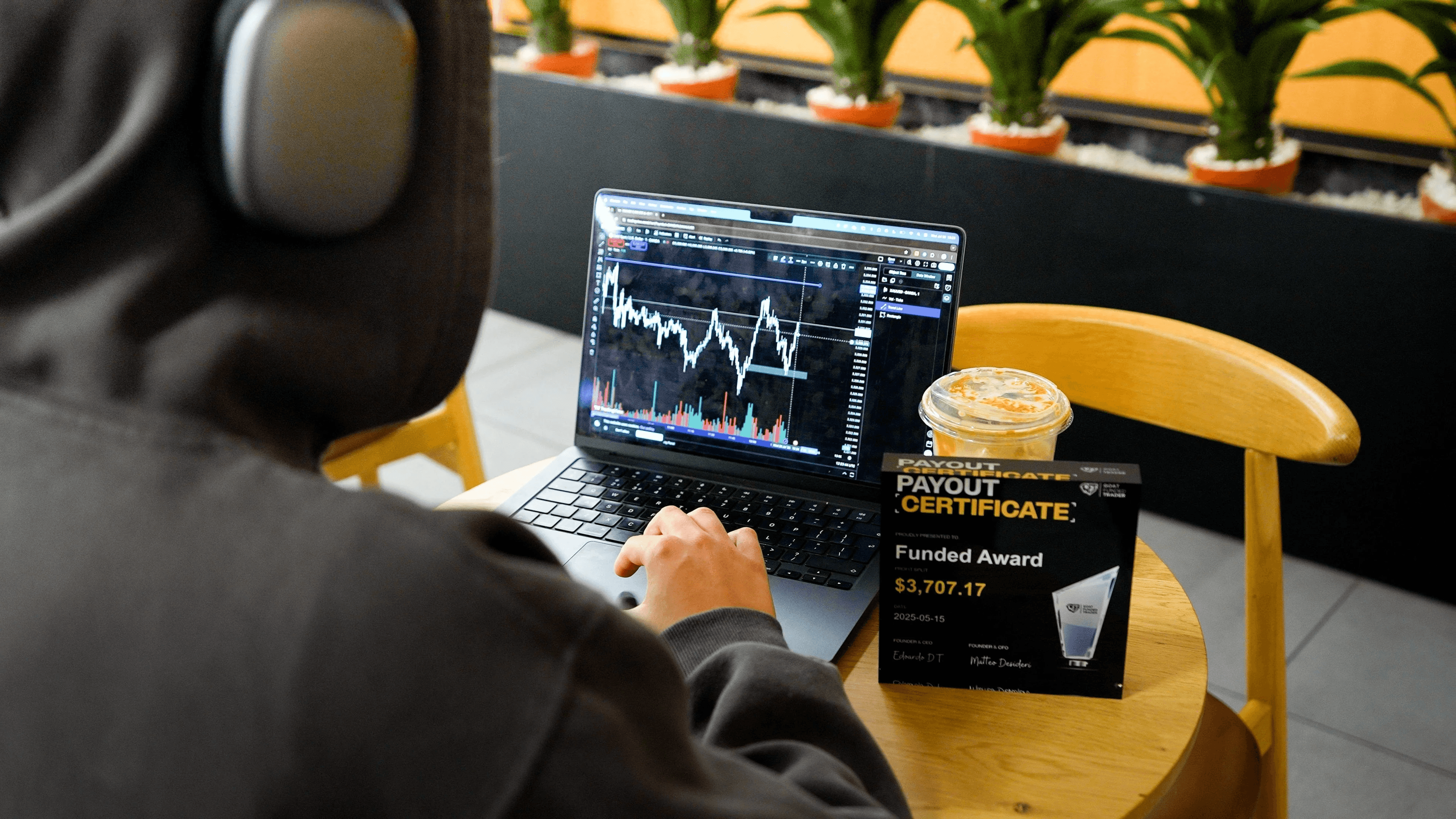
Matching a proprietary trading firm to your specific objectives requires analyzing how their evaluation structure, risk parameters, and payout mechanics align with your strategy, experience level, and income expectations. A scalper trading micro timeframes needs different drawdown flexibility than a swing trader holding positions overnight. Someone building supplemental income faces different priorities than a full-time trader replacing a salary. The firm you choose should amplify your strengths, not force you into a trading style that conflicts with proven methods.
Match Evaluation Targets to Your Historical Win Rate
Your past performance data indicates whether aggressive profit targets or conservative thresholds align with your approach. If you historically generate 2% monthly returns with minimal drawdown, an evaluation demanding 10% in 30 days forces you outside your statistical edge. You'll either overtrade to hit the number or fail repeatedly despite solid risk management. Calculate your average monthly return over the last twelve months. If it sits around 3%, target firms with 5-6% profit targets, leaving you room to execute normally. If you consistently deliver 8-10%, higher targets won't stress your system. The evaluation should test discipline, not demand outlier performance that your strategy never produced before. Firms like AquaFutures eliminate this mismatch entirely by offering instant funding without evaluation phases, letting you apply proven methods immediately rather than adjusting tactics to pass arbitrary tests.
Align Drawdown Rules With Your Position Holding Style
Daily loss limits punish traders who hold through intraday volatility but exit profitably by session close. If your edge comes from letting positions breathe through temporary adverse movement, a 5% daily cap creates false risk signals. You'll close winners early or skip valid setups because one losing trade already consumed half your daily allowance. Trailing drawdowns suit aggressive traders who scale in and out frequently, since the limit adjusts with your high-water mark. Static drawdowns work better for conservative approaches where you rarely draw down significantly from the starting balance. End-of-day calculations give swing traders the flexibility to manage intraday swings without prematurely terminating their accounts. Match the drawdown type to how your strategy actually behaves under normal conditions, not idealized backtests.
Prioritize Firms That Support Your Primary Instruments
Asset class restrictions kill strategies before you start trading. If your edge exists in crude oil futures but the firm only offers forex and indices, you're rebuilding from scratch. Execution quality varies dramatically across instruments as well. A firm with tight spreads on EUR/USD might have terrible fills on NQ during volatile sessions. Verify the firm offers your primary instruments with execution quality that matches your strategy's requirements. Check spreads, slippage during news events, and whether they restrict trading around economic releases. A firm specializing in futures with direct exchange routing serves you better than one offering 800 instruments with mediocre fills on the three you actually trade.
Evaluate Payout Speed Against Your Cash Flow Needs
Monthly payout cycles create cash flow gaps that matter when trading income covers living expenses. If you generate $5,000 in week one but wait 30 days for withdrawal, you're either drawing from savings or reducing position sizes to preserve capital. Bi-weekly schedules improve predictability, but 24-hour processing transforms trading into reliable income with immediate access. The difference compounds when scaling. A trader managing three funded accounts generating $15,000 per month faces different liquidity needs than someone managing one $50,000 account. Fast payouts let you reinvest profits, cover evaluation fees for additional accounts, or simply reduce financial stress that bleeds into trading decisions. Firms advertising "fast payouts" without defining timelines create ambiguity. Look for specific guarantees, not marketing language.
Assess Profit Split Structures Beyond the Headline Number
An 80% split sounds generous until you discover the firm deducts platform fees, inactivity charges, or withdrawal costs that reduce net retention. Some firms advertise 90% splits but cap monthly withdrawals, forcing you to leave capital in the account. Others front-load splits, giving you 90% on the first $10,000 and dropping to 70% thereafter. Calculate your effective split after all fees across realistic profit scenarios. If you generate $3,000 monthly, does the firm take 20% plus a $150 fee, or just 20%? Do they charge for inactive weeks? The math matters more as volume increases. A trader earning $50,000 annually loses $5,000 due to hidden fees that a clearer structure would avoid.
Test Platform Compatibility Before Committing
Your strategy depends on specific order types, charting tools, or execution speed that not every platform delivers. If you trade using volume profiles and the firm only offers basic candlestick charts, you're at a disadvantage from day one. Bracket orders, trailing stops, and one-cancels-other functionality matter when managing multiple positions simultaneously. Request a demo or verify that the platform supports your workflow before paying evaluation fees. Check execution speed during volatile periods, not just during slow Asian sessions. Confirm data feed updates in real time without lag, preventing missed entries or late exits. Platform limitations force strategy adjustments that erode edge, turning a winning approach into marginal performance because the tools don't align with your method.
Consider Scaling Potential If Building Long-Term Income
A firm capping funded accounts at $50,000 with no growth path limits your upside regardless of performance. If you consistently generate 5% monthly on that capital, you're stuck at $2,000 in monthly income even as your skill improves. Firms offering scaling plans that increase allocations after hitting profit milestones create runway for income growth without requiring multiple evaluations. Verify scaling terms clearly. Some firms promise growth but require re-evaluation at each tier, essentially charging you repeatedly for the same skill demonstration. Others scale automatically after consecutive profitable months, rewarding consistency without additional fees. The path from $50,000 to $200,000 in capital should reflect performance, not how many times you're willing to pay for new challenges.
Factor in Geographic and Regulatory Constraints
U.S. traders face restrictions that international participants avoid. Some firms block certain states due to regulatory complexity, and others limit instrument access for American accounts. Verify the firm accepts traders from your state before investing time in evaluation prep. Check whether they report earnings in ways that complicate tax filing or create unexpected liabilities. Firms that use U.S.-regulated brokers for execution have clearer legal standing than offshore entities with ambiguous structures. That clarity matters when disputes arise or if regulatory changes affect operations. A firm with transparent U.S. partnerships and verifiable business addresses signals stability that matters more than promotional offers.
Weigh Evaluation Costs Against Funding Speed
Paying $500 for a two-phase evaluation that takes 60 days costs more than the fee. You're also losing two months of potential funded trading income. Single-phase challenges compress timelines but often come with tighter profit targets, which increase failure rates. Instant funding eliminates waiting entirely but typically requires higher upfront costs. Calculate the true cost, including opportunity cost. If your strategy generates $2,000 monthly on a funded account, a 60-day evaluation delay costs $4,000 in foregone income plus the evaluation fee. A $1,000 instant funding option that gets you trading immediately breaks even in two weeks. The math shifts based on your confidence level and how much capital you're willing to risk upfront versus spreading across evaluation attempts.
Verify Support Responsiveness During Critical Moments
Platform issues, unclear rule interpretations, or payout delays require fast resolution. Firms offering email-only support with 48-hour response times leave you stuck when problems hit during active trading. Live chat or phone support during market hours is essential when you need immediate clarification on whether a specific trade violates the terms. Test support before funding. Ask detailed questions about drawdown calculations, position limits, or withdrawal procedures. Note response time and whether answers address your actual question or deflect with generic replies. Poor support signals operational issues that surface when you're funded and trying to withdraw significant profits. But understanding selection criteria matters only if you can access capital without the usual friction and delays.
Unlock up to 50% off Your First Funded Account for Futures Trading
Many traders in the USA face the same frustrations: lengthy evaluation processes that drag on, strict rules that limit flexibility, high entry costs, and uncertainty about getting real payouts. In a market full of options, finding a firm that offers fast access to funded futures accounts, simple and fair guidelines, and quick, reliable rewards can make all the difference.
That's where AquaFutures stands out as a strong choice among the best prop firms for US traders. It delivers fast, affordable access to funded futures trading, with instant funding options that let you skip traditional hurdles entirely. Whether you want to jump straight into a live account or grow through clear, performance-based scaling, AquaFutures keeps things straightforward. No unnecessary restrictions, no hidden catches. You keep 100% of your first $15,000 in profits, then enjoy a 90% split, with accounts scaling up to $450,000 in total. Thousands of traders trust it for transparent rules, 24/7 support, and payouts processed in as little as 24 hours (or they add a $500 bonus if delayed).
If you're tired of slow starts and complicated setups holding you back, AquaFutures makes it easier to focus on what matters: trading well and getting paid consistently. Ready to take the next step? Visit their site, explore the account sizes that fit your goals, and get funded today. Right now, you can grab up to 60% off challenges with codes like VALENTINE (limited time), plus other seasonal deals that pop up regularly. Don't miss out on unlocking your funded future and starting to trade with real capital.
Related Reading
- Prop Firm Swing Trading
- Best Prop Firms for Stocks
- Prop Firms That Use MT5
- No Minimum Trading Days Prop Firm
- Prop Firms With Instant Funding
- One Phase Prop Firm
- Proprietary Trading Firms
- Best Funded Accounts UK
- Best Prop Firm in the World
- Cheapest Forex Funded Account
- Best Prop Firms That Allow EA
- Best UK Prop Firm
- Forex Prop Firms Accepting US Clients
- Best Forex Funded Prop Firms
- Best Funded Account Forex in UAE
