



Prop Firm IP Address Rule Explained for Beginners
Prop Firm IP Address Rule explained for beginners: learn how to avoid costly violations and secure your trading account with AquaFutures' clear guidelines.

Traders who have passed rigorous prop firm evaluations may encounter unexpected access challenges when technical restrictions suddenly block entry from new locations. A simple change from a usual setup—whether at home, in a cafe, or while traveling—can trigger compliance issues that risk a trader's credentials. Following clear guidelines not only protects capital but also reinforces a steady trading record.
Many firms set inflexible location parameters that penalize legitimate trading activity, but transparent, flexible rules can provide a better alternative. Well-defined protocols help ensure that routine movements do not lead to costly violations, allowing traders to focus on performance rather than technical issues. Flexible access bolsters confidence by protecting earned capital from unexpected restrictions, while AquaFutures offers funded accounts for futures trading that equip traders with essential tools for risk management and security.
Summary
- Prop firms track IP addresses to prevent account sharing and verify that the trader who passed the evaluation is the same person executing trades with funded capital. Automated systems log every connection, comparing new data against historical baselines to detect deviations like sudden geographic jumps or simultaneous logins from different locations. This monitoring is designed to protect both the firm and legitimate traders from fraud, not to restrict where you can trade.
- IP address violations can result in consequences ranging from temporary payout freezes to permanent account termination, depending on severity and perceived intent. Minor flags may delay withdrawals for 48 to 72 hours while compliance teams review documentation, but serious violations, such as synchronized trading across linked IPs, result in immediate closure with no appeal. What surprises most traders is the speed: you can trade successfully for months and then be terminated within 24 hours of a detected violation.
- Most IP flags arise from innocent mistakes rather than deliberate fraud. Logging in from multiple devices simultaneously, using public Wi-Fi networks, or traveling without notifying the firm all produce the same data signatures as account sharing and collusion. Free VPNs that rotate servers constantly make your location appear to jump between countries unpredictably, which monitoring algorithms interpret as deliberate location masking.
- Maintaining compliance requires building consistent habits around device use and network connections. Sticking to personal devices, using a stable home internet connection rather than shared networks, and logging out before switching between devices prevent overlapping sessions that trigger automated alerts. Traders who respond to compliance notifications within hours with specific documentation, such as flight confirmations or hotel bookings, have cases resolved significantly faster than those who delay or provide vague explanations.
- Geographic consistency matters more to automated monitoring systems than most traders realize until something goes wrong. When your account shows regular activity from the same IP range, using the same device during predictable hours, the system builds confidence in your legitimacy. Sudden deviations stand out more clearly, making it easier to explain genuine changes when they occur because they're rare exceptions rather than constant noise that erodes your baseline stability score.
- Platforms that treat IP policies as protective safeguards rather than enforcement traps make verification easier and build stronger relationships with traders. AquaFutures addresses this through 24/7 support, responsiveness, and clear communication channels that help traders navigate location changes or network issues before they escalate into frozen payouts or account restrictions.
What is the Prop Firm IP Address Rule, and Why Does It Exist?

Prop firms track the IP addresses used to access trading accounts to ensure consistency in both location and device. This rule is in place to prevent account sharing, confirm your identity, and protect both parties from fraud. It's not about stopping at the point where someone trades; it's about ensuring that the person who passed the evaluation is the same one executing trades with funded capital. For those interested, our funded accounts for futures trading provide a great opportunity to trade with confidence.
Your IP address serves as a digital fingerprint, indicating your approximate location each time you log in. When you connect to a trading platform from your home network in Chicago, the system records that connection. If the next login shows up from Manila just twelve hours later without a good reason, alarms go off.
This technology not only records your location; it also builds a behavioral profile over time. Consistent patterns show legitimacy, while erratic shifts suggest something else entirely.
Most traders don’t think about their internet connection until it becomes a problem. You might switch from Wi‑Fi to mobile data while traveling, or log in from a coffee shop during a business trip, and suddenly your account gets flagged. The system isn't punishing movement; it's spotting differences from your usual behavior. Firms check IP data against device fingerprints, login timestamps, and trading behavior to tell apart innocent changes from deliberate manipulation.
How do automated systems monitor IP addresses?
Automated systems log every connection attempt and compare new data against historical records. If an account usually connects from Dallas and suddenly shows activity from Lagos, the platform triggers a review.
Some firms allow minor variations, like switching between home and office networks within the same city. Others demand near-perfect stability, treating any geographic jump as a red flag. The strictness of these policies depends on the firm's risk tolerance and its commitment to evaluation integrity.
What happens when accounts share IP addresses?
When two separate accounts have the same or very similar IP addresses, it raises immediate suspicion of collusion. This could mean that a single skilled trader is passing on challenges for several clients, or that someone is reselling funded accounts after completing evaluations.
Firms address this issue by flagging accounts that share IP addresses, especially when trade execution patterns appear synchronized. If both accounts open the same positions within seconds of each other, it is hard to dismiss this as a coincidence.
It’s essential to consider options when looking into funded accounts for futures trading to ensure compliance with trading regulations.
How do VPS and VPNs affect IP tracking?
The usage of VPS and VPNs adds another layer of complexity to IP tracking. Some firms offer virtual private servers because they provide stable, consistent IP addresses that don’t change, unlike residential connections. Others ban VPNs completely, seeing them as tools to mask true locations.
The critical factor is transparency. If you're using a VPS in New York while being in Toronto and you disclosed this during registration, most firms won’t penalize you. However, if you hide that information, you’re inviting potential trouble.
Why is account sharing a serious issue in prop trading?
Account sharing goes against the core principle of prop trading: you demonstrate your skills, the firm provides capital to trade, and profits are shared based on your performance. When traders hire others to pass tests or manage funded accounts on their behalf, it violates that agreement. The firm ends up giving money to someone they never verified, and the person who actually trades has no accountability. IP tracking is critical for identifying these schemes before they grow larger.
What security concerns arise from unauthorized access?
Security concerns go beyond fraud prevention. Unauthorized access to trading accounts can occur when credentials are compromised, and unusual IP activity often serves as an early warning sign. If an account suddenly logs in from a country the user has never visited, it is likely not them.
Companies use IP monitoring to detect issues early. This helps protect both the user's capital and the company's reputation. According to Larus (2024), IP address abuse directly impacts network security, so monitoring is essential for platforms that handle financial transactions.
How does the rule impact copy trading?
The rule also addresses copy trading, where multiple accounts follow the same strategy simultaneously. Traders sign up for signal services or automated bots and then make the same trades in several funded accounts for futures trading. Companies do not allow this practice because it undermines individual skill, reducing it to a matter of paying for a subscription. By analyzing IP data, trade times, and position sizes, platforms can identify when accounts are working together, even if they have different names.
What challenges do rigid IP policies create for travelers?
Rigid IP policies create friction for real traders who travel frequently or manage accounts from multiple locations. It is important that funded capital stays accessible, even when a person goes on vacation or moves for work. The best companies understand this issue and add flexibility to their enforcement plans. They might request travel notifications, accept documents such as flight itineraries, and distinguish between suspicious patterns and routine activities.
How does communication affect trader trust?
What separates protective measures from punitive bureaucracy is effective communication. When firms treat IP rules as gotcha clauses that aim to deny payouts, traders lose trust. On the other hand, when they see these policies as helpful safeguards that benefit everyone and provide clear ways to stay compliant, the relationship gets stronger.
Platforms like AquaFutures emphasize transparency in their IP guidelines. They offer 24/7 support to help traders manage location changes without risking their accounts. The goal is not to trap you with technical violations, but to keep an environment where skill determines success.
What adjustments can traders make to avoid issues?
Traders using mobile data often face more IP variability than those with fixed broadband. This can lead to false positives. Switching to a dedicated VPS helps address this issue by anchoring the connection to a single, stable IP address. This small change removes uncertainty and helps keep accounts in good standing.
Firms that clearly explain these options, instead of hiding them in dense terms of service, build greater loyalty among their clients.
What are the consequences of violating IP rules?
Most traders do not realize until it's too late that breaking IP rules has consequences that extend beyond a single account suspension.
What Happens When You Violate the IP Address Rule?
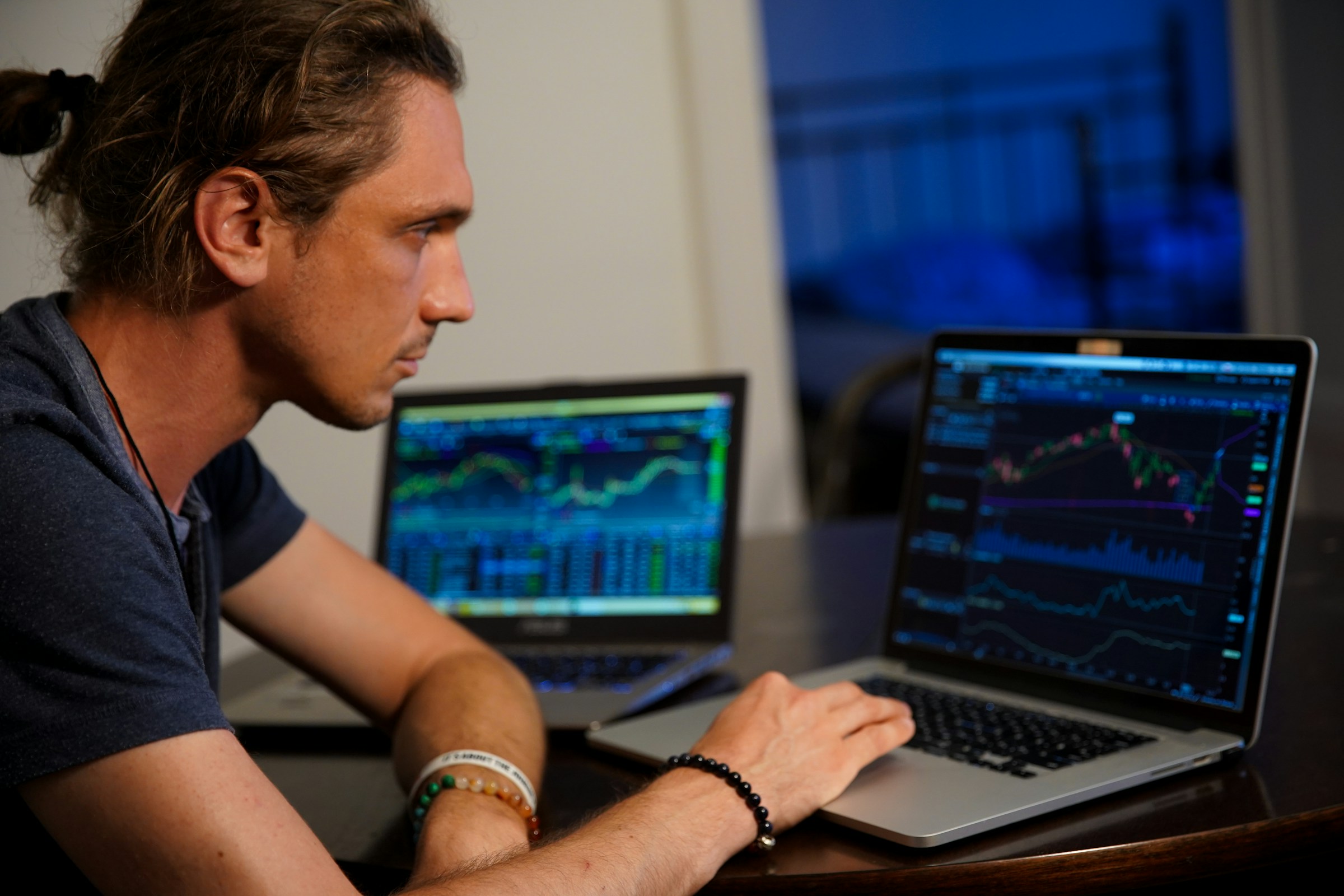
Violating the IP address rule triggers a cascade of responses, starting with automated flags. This can result in permanent account closure, depending on the severity of the violation and the individual's intent. The consequences can range from temporary payout freezes while compliance teams investigate to lifetime bans that follow you across multiple platforms.
This is particularly harsh because many traders don't realize they've crossed a line until their profits are already locked. Our funded accounts for futures trading help you trade confidently while minimizing risks associated with account violations.
Prop firm systems run continuous scans that compare each login against your historical baseline. When your account suddenly connects from Berlin after months of consistent Chicago logins, the platform doesn't wait for an explanation. It flags the account immediately and restricts critical functions before you even realize there's a problem.
Payout requests freeze first. A user submits a withdrawal, expecting to receive funds within days. Instead, they get a generic "under review" message. While trading capabilities might remain active temporarily, upgrades to larger account sizes get blocked. The system prioritizes containment over convenience and assumes guilt until the user proves otherwise.
This automated response exists because manual reviews can't scale effectively. Firms process thousands of logins daily across hundreds of accounts; they rely on algorithms to catch anomalies in real time and route flagged cases to human reviewers. The problem arises when algorithms cannot distinguish between a trader on vacation and someone deliberately masking their location. Both appear identical in the raw data.
What happens once you are flagged?
Once flagged, individuals will receive an email or dashboard notification requesting clarification. These messages usually explain the problem without directly blaming anyone.
For example, "We noticed login activity from multiple geographic locations" may sound neutral, but it’s really saying, "explain yourself or face consequences."
The firm wants documentation to support your claims. Providing proof of travel, like flight confirmations or hotel bookings, is important if you logged in from another country. Also, screenshots of your VPN settings or VPS configurations can help if you are using those tools correctly. The key is to respond quickly with specific details instead of vague explanations.
For example, saying, "I was traveling" is not enough. Instead, saying, "I was in London from March 3-10 for a conference; here's my itinerary," is much better.
How quickly are issues resolved?
Most firms aim to resolve valid cases within 48 to 72 hours if you give solid evidence right away. If you wait too long to respond or provide incomplete information, the review process can take weeks. Compliance teams handle many cases simultaneously, so yours won't be prioritized unless you make it easier for them to prioritize it.
Even small flags can cause big problems. Payouts may remain in pending status for days or even weeks while reviewers assess risks.
If you need those funds for living expenses or to reinvest in trading tools, the delay adds more stress. Some traders report they've waited over a month to resolve issues that began after they switched internet providers.
Accounts that are in "under review" status often can't access opportunities to scale up. You might meet your profit target and qualify for a bigger account, but the upgrade will be blocked until the IP issue is resolved. This slows down your momentum at the worst possible time, when you're trading well and ready to increase position sizes.
What are the long-term consequences of violations?
Frustration grows when people are stuck without clear timelines. Companies rarely commit to specific resolution dates, which keeps traders constantly checking their email and refreshing their dashboards. This uncertainty significantly affects trading psychology, making it difficult to focus on execution when funding is uncertain.
Serious violations, such as clear evidence of account sharing or synchronized trading from the same linked IP addresses, usually result in immediate termination. The company shuts down the account, forfeits any profits, and cancels future access. For most platforms, there is no way to appeal. Once a company decides that the rules were intentionally broken, its decision is final.
Termination occurs when trading patterns indicate intentional fraud rather than innocent mistakes. For example, if two accounts with different names log in from the same IP address within minutes of each other and execute the same trades, this can trigger automatic closure.
The company views this situation as evidence of collusion, whether it involves one trader managing multiple accounts or a group coordinating strategies.
What are the implications for your reputation?
According to CookieYes, IP addresses are considered personal data under the GDPR. This means companies must handle this information carefully while still using it to ensure compliance. Violations can lead to penalties of up to €20 million or 4% of annual global turnover. This is why platforms take IP tracking very seriously: they must balance trader privacy with fraud prevention while adhering to strict rules.
What surprises traders the most is the speed of enforcement. You might trade successfully for months, but could get terminated within 24 hours of a detected violation. The firm doesn’t wait for you to fix the problem or explain. They take quick action to protect their money and reputation, leaving you confused about what just happened.
Even a single account loss can affect you across the industry. Some firms share compliance data informally or through official blacklists, making it harder to join other platforms. Your name, email, or payment details might get flagged across the industry, blocking future applications even if you’ve learned from the mistake.
How do violations affect your standing in trading communities?
Repeated flags hurt your reputation in trading communities. Prop trading is a smaller world than it seems. Traders discuss firms on forums and Discord servers, quickly making compliance issues known. Once people find out that you got banned for IP violations, other traders will question your honesty, and firms will be more doubtful about your applications.
These lasting effects show why firms value IP consistency. A single serious breach doesn't just end your relationship with one provider; it complicates your entire funded trading career. You might have to prove that you've changed or start over with new credentials, which could lead to further violations if discovered.
What happens if you are reinstated?
Some firms allow reinstatement after a waiting period, usually six months to a year, if the violation wasn't serious. To be reinstated, you'll need to reapply, pass evaluations again, and demonstrate that you've resolved the issues that led to the original flag. Expect close monitoring; your new account will likely be subject to stricter scrutiny and less tolerance for unusual activity.
Other platforms impose permanent bans with no exceptions, seeing IP violations as breaches of trust that cannot be fixed. Once you're out, you're out. This reality highlights the importance of choosing the right firm from the start.
Platforms like AquaFutures focus on clear communication about IP policies and provide 24/7 support to help traders address location changes before they lead to violations. When firms view these rules as protective measures that support compliance rather than as obstacles to denying payouts, the relationship can become more collaborative.
How can firms support traders during compliance issues?
The difference between firms that help traders with compliance issues and those that misuse rules becomes clear when something goes wrong. Traders need a partner who answers questions, accepts reasonable documentation, and distinguishes between honest mistakes and deliberate fraud.
This support system is more important than many traders think until they need help. Understanding the consequences is only part of the story. The real question is how firms find out about these violations in the first place.
Related Reading
- What Is a Funded Account
- Does Ftmo Offer Instant Funding
- How to Get a Funded Trading Account
- No Challenge Prop Firm
- Funding Traders Rules
- What Is a Prop Firm Account
- Synthetic Funded Account
- What is a Funded Firm
- One Step Prop Firm Challenge
- Trading Challenges
- Instant Funding Rules
- Halal Prop Firms
- Top 10 Prop Firms 2025
- Australia Prop Firm
- Cheapest Futures Prop Firm
- No Activation Fee Prop Firm
- Prop Firms In Usa
- Prop Firms That Allow Trade Copiers
- Best Prop Trading Firms
- Forex Prop Firms With Instant Funding
- Best Prop Firms For Forex
- Best Prop Firm To Start
- Best Instant Funded Prop Firm
- Best Prop Firms in UAE
How Do Prop Firms Track IP Activity?

Prop firms capture digital footprints through layered surveillance that works quietly in the background. This system records every connection point between users and the platform, enabling continuous monitoring rather than a single snapshot. Over weeks and months, it builds a behavioral profile, comparing each new login against established patterns. The system looks for geographic consistency, device stability, and timing that matches human behavior from real locations.
How is your IP address monitored during activities?
Every time a user interacts with a firm's infrastructure, whether by signing into the trader dashboard, launching the platform, or requesting a payout, the system records their IP address. This process does more than track the IP address; it also generates a unique identifier derived from hardware details, operating system information, and browser configuration. These digital markers work together like layers in a fingerprint, creating a signature that is difficult to replicate even if someone steals your password.
What happens with unusual login patterns?
The collection of login data happens automatically. No human watches individual logins in real time. Instead, servers store this information in databases, which algorithms constantly update.
If a user often connects from Boston using the same laptop and home network, that sets their standard. If there are sudden changes to that pattern, such as a login from Singapore twelve hours later, automated alerts are triggered before anyone manually reviews the account.
Advanced software handles the heavy lifting, processing thousands of data points from hundreds of accounts simultaneously. These platforms look for patterns that would overwhelm human reviewers.
They can identify when multiple accounts share the same IP address, suggesting one person controls several profiles. They also notice when a single account logs in from very different locations within an impossible timeframe, which can indicate either credential theft or intentional location masking.
How do real-time systems enhance security?
Real-time analysis enables systems to update continuously rather than only during weekly checks. According to TradeTech Solutions (2024), automated risk detection tools that use IP monitoring help prop firms stop millions of dollars in possible fraud each year by finding linked abuse networks before they grow.
This technology analyzes IP data alongside trade execution patterns to identify matched order placements across connected accounts. For example, if five different trader profiles take the same positions within seconds and all five are logged in from the same data center IP range, it suggests copy trading.
What do firms think about VPS connections?
VPS usage is clear in trading systems. Virtual private servers typically use data center IP ranges, distinct from residential addresses. Algorithms can spot these patterns quickly.
Some firms allow VPS connections because they offer stable, consistent IP addresses, which eliminates issues with mobile networks or shared Wi‑Fi. However, other firms view data center IPs as a warning. They think traders use them to hide their actual locations or to run automated strategies that break the rules.
What triggers alerts on multiple IP addresses?
Certain behaviors may appear on compliance dashboards. When multiple IP addresses use the same account within a short period, it may indicate unauthorized access or account sharing. For instance, if an account logs in from Miami at 9 AM and then from London at 11 AM on the same day, the system flags this activity.
It is not that international travel is prohibited; rather, the timeline is inconsistent with physical reality. Traveling across the Atlantic, clearing customs, and settling into a new location within two hours is simply impossible.
What concerns arise from shared IP addresses?
The same IP address showing up on different accounts raises several concerns. For example, you might have more than one funded account, which many companies do not allow.
Another possibility is that you are in a trading group where one talented member passes their evaluations for others and then shares their login information. In both cases, this goes against the basic principle that each account should reflect a single approved trader, showcasing their own talent.
How do VPNs complicate compliance?
VPN and proxy usage add complexity because these tools deliberately hide users' real location. Traders use them for legitimate reasons, such as protecting privacy on public networks or accessing platforms while traveling in countries with restricted internet access. However, these tools can also enable fraud; for example, someone in the UK can make it appear they are connecting from New York.
A trader banned from one firm can easily hide their identity and reapply to another. While the technology itself isn't inherently suspicious, unexplained or inconsistent VPN use may warrant closer examination. According to TradeInformer (2024), firms are increasingly using IP analysis and trade-timestamp correlation to identify copy-trading networks, in which participants may use VPNs to hide their collaboration.
What happens when anomalies are detected?
When patterns cross predefined thresholds, the algorithm does not immediately terminate your account. Instead, it forwards your profile to a risk management team for manual review. You will usually receive a notification via email or in your trader dashboard. This message will be written in a neutral tone but will ask for an explanation.
For example, it may say, "We've detected login activity from multiple geographic regions. Please confirm your recent travel or network changes."
How can traders clarify discrepancies?
This review stage separates protective measures from punitive bureaucracy. Firms that communicate clearly and accept reasonable documentation resolve most cases quickly. Providing proof of a business trip, screenshots of your VPN settings, or confirmation that you switched from home broadband to a mobile hotspot can be enough. Simple evidence that explains the deviation usually clears the flag within 48 to 72 hours.
The process can become frustrating when firms treat every unusual situation as fraud until they are proven wrong, or when they require excessive documentation for small changes. For example, switching internet providers shouldn't need three forms of ID and utility bills. Similarly, logging in from your office network across town shouldn't freeze your payouts for a week. Platforms like AquaFutures recognize this tension and build flexibility into their enforcement.
They offer 24/7 support to help traders address location changes before they become compliance issues. When firms see IP tracking as a safe way to help you comply, rather than a trap to catch mistakes, the relationship changes from being against you to being a team effort.
How can traders avoid compliance issues?
Traders who respond quickly with specific details usually do better than those who ignore notifications or give vague explanations. Simply saying “I was traveling” does not help the compliance team assess risk.
On the other hand, saying, “I was in Austin for a conference from April 12-15; here’s my hotel confirmation and return flight,” provides clear information for the team to verify against flagged logins.
Even traders who follow all the rules can inadvertently violate them due to unforeseen errors.
Related Reading
- Best Funded Prop Firms
- Prop Firms That Use TradingView
- 1 Phase Prop Firm
- No Consistency Rule Prop Firm
- Prop Firms That Use Tradelocker
- Prop Firm Comparison
- How Do Prop Firms Work
- Regulated Prop Firms
- Prop Challenge
- The Cheapest Prop Firm
- Trading With Borrowed Capital
- Top Tradig Prop Firms
- Top Prop Company
- US-based Prop Firms
- Top 10 Prop Firms In The World
- Forex Prop Firms In The Us
- Best Prop Firm Forex
What are the Common Mistakes That Trigger IP Flag?

Most violations happen because traders don't recognize how sensitive automated systems are to connection patterns. You're not trying to cheat, but your daily habits produce the same data signatures as fraud. The 15 common trading mistakes happen because the system can't understand intent. It only sees behavior, and when yours deviates from your usual pattern without context, it raises flags immediately.
For example, opening a trading platform on your laptop while checking positions on your phone creates overlapping sessions. This situation can appear to be two people accessing the same account. Even though the trader is the same person, multitasking, the system records different IP addresses when the phone uses cellular data and the laptop connects via home Wi-Fi. That short overlap, when both devices ping the server simultaneously, appears to be an account-sharing pattern that compliance algorithms closely monitor.
What happens if you forget to log out from one device?
The problem gets worse when a user forgets to log out of one device before using another. For example, if your laptop remains connected while you open the mobile app during your commute, it can cause issues. The firm's monitoring tools can detect simultaneous logins from different networks, but they can't determine whether you're switching devices or if someone else is trying to access your account.
According to research shared by Raul Junco, whose insights on event-driven systems have received 1,824 likes from industry experts, modern platforms keep track of session statuses in real time. This makes accessing accounts simultaneously one of the quickest ways to trigger automatic alerts.
How do public networks impact IP detection?
Coffee shops, airports, and hotels assign users the same IP address, hiding individual connections behind a single point. If another trader at the same Starbucks logs into their account while you’re checking yours, the system captures two different accounts using the platform from the same IP addresses within minutes. This situation shows collusion in raw data.
Public networks pose additional risk due to their instability. As users move through a terminal or change tables at a café, the connection may switch between access points, causing multiple IP address changes in a short time. What appears to be smooth browsing to users looks erratic to compliance teams due to frequent location changes. The firm cannot determine whether you are actually moving around or using complex techniques to hide coordinated trading.
Why is using free VPNs risky for trading?
Free virtual private networks often rotate servers to handle traffic volume. This makes it appear that your location is jumping between countries unpredictably.
One hour you might connect from Germany, then the next hour from Singapore, and back to the Netherlands, all while you’re sitting at your desk in Denver. Tools used by prop firms view these quick location changes as attempts to hide your real location, a common tactic in fraud schemes.
Budget VPS providers face similar stability issues. Their servers share IP addresses among many users. This means that your trading account might show the same connection point as many other users.
If any of those users violates the rules on another platform and their IP is blacklisted across the industry, your account will be affected as well. Even though you did nothing wrong, the shared servers link you to someone else’s misconduct.
What are the implications of sudden IP changes?
Sudden IP changes from international travel trigger automatic alerts because the system doesn't understand the cause. You arrive in Tokyo for a business trip, connect to the hotel Wi‑Fi, and log in to check your positions. The platform sees your account, which has only connected from Seattle for six months, suddenly accessing it from Japan. Without warning, it flags credential theft or unauthorized access instead of recognizing your legitimate travel.
The time it takes from detection to resolution creates real problems. Your account may be flagged while you're in the air or adjusting to a new time zone. By the time you read the compliance email, your payouts are already frozen. Now, you're managing a verification process from abroad, potentially facing delays in support responses due to time zone differences, while trying to keep up with your trading routine.
What if a friend logs in to check your account?
Allowing a friend to log in from their device to check your positions, or asking a family member to close a trade while you're unavailable, permanently adds their IP address to your account history. The system doesn't distinguish between brief, innocent access and ongoing account sharing. It detects a new connection associated with your credentials and flags it as a potential violation.
This problem worsens if the other person’s IP address is already associated with their trading accounts at different firms. As a result, your profile shows a connection to another trader's trading activity, which can create the impression of coordinated trading or account farming. Even if you never trade at the same time or share strategies, a connection in data can raise suspicion that takes weeks to sort out.
How does frequent connection hopping affect your account?
Regularly switching between home Wi‑Fi, mobile data, and workplace internet causes small but repeated changes to your IP address that accumulate over time. Each switch looks like a change in location. While individual changes may seem harmless, the overall pattern of instability can appear erratic or indicate manipulated access.
The algorithm doesn’t evaluate each switch individually; it considers your overall consistency score. Often changing networks lowers that score.
Traders working from co-working spaces face this issue even more. One day, you might use the building's shared Wi-Fi. Next, you switch to your phone's hotspot when the network slows, then connect via a router on a different floor the following week.
Each change reduces your baseline stability, making it harder for the system to figure out what 'normal' is for your account.
What should you do when you get flagged?
Prop firms send emails or dashboard notifications when they notice unusual IP activity. This gives you a short time to explain and provide evidence. If you ignore these messages or respond days later, it can mean either that you don’t know about the issue, implying that someone else might be accessing your account, or that you are delaying because you don’t have a good explanation. Either way, this works against you.
The compliance team handles multiple cases simultaneously. They focus on traders who respond quickly with clear documentation. If you reply with 'Sorry, just saw this' a week after the initial alert, your case will go to the back of the queue. In the meantime, your payouts will remain frozen, upgrades will be blocked, and this delay will be added to your compliance record, increasing the likelihood that future issues will escalate.
How do supportive firms help with IP issues?
Firms that treat these policies as protective measures instead of gotcha clauses make it easier to verify information. Platforms like AquaFutures focus on 24/7 support, responsiveness, and clear communication. This method helps traders resolve IP issues before their accounts are frozen or payouts are delayed.
When traders can speak with someone immediately to explain a travel issue or a network change, the problems go away. You can clearly see the difference between a firm that sees rules as traps and one that views them as protections the moment something raises a flag.
Understanding what causes alerts is just part of the challenge.
To completely avoid them, you need to do more than just be aware.
How to Stay Compliant and Trade Without Worries

Staying compliant with prop firm rules, especially about IP addresses and network stability, makes trading easier and much less stressful. Most problems stem from simple mistakes, such as using public Wi-Fi, traveling without advance notice, or connecting to different networks that can trigger security alerts. By building smart habits, traders can safeguard their accounts, avoid unnecessary checks, and focus on what really matters: trading for profit.
For all trading activities, use devices that you own and control. Sharing your computer, tablet, or phone, even for a little while, with family or friends can create mixed hardware fingerprints that look suspicious to the firm's monitoring systems. Prop firms track device identifiers to prevent account sharing or unauthorized access, which violates policies on multi-user setups.
Why should you use dedicated equipment?
Using dedicated equipment builds a clean, consistent profile that matches what’s expected for individual trader responsibility. This separation is important because device fingerprints stay in system logs long after someone else has used your hardware. For example, if your spouse checks their email on your laptop and then you log in to your trading account an hour later, the platform detects two distinct user patterns on the same device within a short period. This overlap can look like the exact signature of account-sharing schemes, where multiple people take turns accessing funded capital.
How can you maintain a steady internet connection?
A steady, personal internet connection is one of the best ways to create a reliable online presence. Using public Wi‑Fi, shared networks, or frequently switching between hotspots can make your IP address look jumpy, raising red flags during routine checks.
Prop firms want uniformity because it shows you are the only one using the account.
Instead, choose your home broadband or a dedicated mobile data tether. This creates a steady pattern that reduces scrutiny and helps trading sessions go more smoothly.
Over time, this kind of consistency builds trust with the firm. The system learns your usual behavior, making legitimate variations, like sometimes working from a different place, easier to check when you give context.
What should you avoid while using a VPN?
Avoid free VPN services; they often automatically rotate IP addresses and appear to jump between locations. This can disrupt verification processes and may even result in temporary suspensions. When choosing a VPN for security or travel, select a paid provider that offers a dedicated or static IP option. Always keep logs handy for transparency.
How do you inform your property firm about your VPN?
It is advisable to inform your property firm in advance if you plan to use a VPN. Reputable firms value proactive communication because it helps them whitelist or note your setup to prevent false alarms. The difference between a VPN that makes people suspicious and one that works well often depends on whether you told them about it first or let the system find it during an automated scan.
What evidence should you prepare for your location?
Prepare a folder with supporting evidence in case there are questions about your location or setup. Items like travel itineraries, ID copies, utility bills, and internet provider statements can quickly resolve inquiries. Having these ready speeds up responses and prevents delays in payouts or account access.
This level of preparedness demonstrates a commitment to transparency, a core value in the prop trading industry. When compliance teams receive immediate, specific documentation rather than vague explanations days later, they can close cases faster.
This efficiency helps restore full account functionality without prolonged freezes, allowing you to resolve issues before they worsen.
How can you avoid issues with simultaneous logins?
Always end your session on one device before starting a new session on another. Logging in simultaneously from multiple locations can appear to be shared access, violating rules that maintain exclusive control.
Making this a habit helps prevent misunderstandings in login logs and supports a spotless trading history. The extra five seconds to click "log out" can save you from the trouble of explaining why your account seemed active on two devices at once, especially if those devices were on different networks.
Automated systems cannot distinguish between your multitasking and someone else using your account without your permission.
What to do if you receive a notification?
If you receive a notification about unusual connection activity, respond promptly and politely with explanations or evidence. Acting fast often resolves issues and demonstrates your commitment to compliance. Waiting too long can extend restrictions, so view these notifications as opportunities to improve your standing.
Traders who respond within hours rather than days have their cases prioritized. Compliance teams handle many reviews simultaneously, and your prompt response demonstrates that you take the issue seriously.
A quick message with attached documents, such as flight confirmation, hotel booking, or a screenshot of VPN settings, can move your case to the front of the line and often clear flags before they affect payouts or upgrades.
How does consistency affect your trading?
Being consistent in your habits, like when you log in, how you use the network, and your trading patterns, helps automated systems see you as low-risk and dependable. Prop firms value predictability because it shows professionalism.
Sticking to a routine reduces unexpected alerts and helps you trade with greater composure. When an account shows regular activity between 8 AM and 4 PM Eastern Time, consistently from the same IP range and using the same device, the system gains confidence in the trader's honesty. Sudden changes to that pattern become more obvious, making it easier to explain real changes when they happen, since they are rare exceptions, not constant noise.
What should you do before traveling?
Send a quick heads-up to your prop firm about any upcoming trips or location changes. A short message with your travel dates gives context for any IP shifts. Many firms value this courtesy and can note your account accordingly to handle temporary variations smoothly.
Back up this communication with proof, such as flight bookings or hotel confirmations, and any follow-up questions will not be an issue. This proactive step transforms what could be a compliance crisis into a routine notation in your account file. The firm recognizes that you're communicating openly, which builds trust and often results in your account being monitored less aggressively during your travel period, as they already know what to expect.
Why is ongoing communication with your firm important?
Most traders handle compliance reactively, rushing to explain flags once they appear. Those who treat compliance as an ongoing conversation with their firm, by providing brief travel notices, quick responses to alerts, and clear documentation, rarely face long restrictions.
As things get more complicated and traders manage larger accounts or multiple positions across different markets, that trust becomes very important. Firms that view compliance as a partnership rather than just enforcement typically resolve problems faster and with less friction.
How can platforms help with IP issues?
Platforms like AquaFutures focus on 24/7 support, responsiveness, and clear communication channels. This helps traders fix IP issues before their accounts get frozen or payouts are put on hold. When traders can quickly contact someone to explain a travel situation or network change, the problems go away. Solutions that put trader support first, rather than bureaucratic obstacles, make compliance feel like a safeguard they control rather than a trap waiting to catch them.
How to protect your IP address and connection?
Treat your IP address and connection as key parts of your trading identity. Protect them with the same care you give your strategies and money. These simple practices can make compliance feel easy, allowing you to focus on execution rather than worrying about whether your next login will trigger a review.
Yet, compliance alone won't help you get the most out of your trading if you're not starting with the right funding partner.
Related Reading
- Prop Firm Swing Trading
- Best Prop Firms for Stocks
- Prop Firms That Use MT5
- No Minimum Trading Days Prop Firm
- Prop Firms With Instant Funding
- One Phase Prop Firm
- Proprietary Trading Firms
- Best Funded Accounts UK
- Best Prop Firm in the World
- Cheapest Forex Funded Account
- Best Prop Firms That Allow EA
- Best UK Prop Firm
- Forex Prop Firms Accepting US Clients
- Best Forex Funded Prop Firms
- Best Funded Account Forex in UAE
Unlock up to 50% off Your First Funded Account for Futures Trading
Dealing with strict IP rules can feel frustrating, especially when starting out. You want to focus on trading instead of worrying about flags, delays, or extra steps. AquaFutures stands out as a friendly option for beginners in futures prop trading. Many traders choose AquaFutures because our approach reduces common problems, such as restrictive IP policies that slow things down.
We prioritize a supportive environment with 24/7 help. If anything unusual happens, such as traveling or quickly switching devices, our team is quick to resolve it without long delays or frozen payouts.
At AquaFutures, we keep things simple and clear so you can trade with confidence. Our programs give you fast access to funded futures accounts up to $450K with straightforward rules and no hidden restrictions that could trip you up. You can rely on real payouts. Whether you choose instant funding to skip lengthy checks or demonstrate your skills with our affordable, one-step evaluation, the focus remains on rewarding consistent trading without overcomplicating your setup.
Join over 100,000 futures traders who trust AquaFutures for honest rules, fast support, and real capital to grow with. Ready to move past IP concerns and start trading with funded futures accounts? Check out our options today, get funded, and unlock up to 50% off your first account, plus new BOGO deals and bonuses added every week.
