



Is Futures Trading Gambling? All You Need to Know in 2026
Is futures trading gambling? Learn where speculation ends and strategy begins, with key risks, leverage, and what beginners should know.

You've probably heard someone say that futures trading is just gambling with a fancy name. This comparison troubles many aspiring traders who want to enter the market but fear they're simply placing bets on price movements with no real edge or strategy. The truth is more nuanced, and understanding the difference between calculated risk management and pure chance can transform how you approach the markets. This article will help you clearly distinguish skilled futures trading from gambling and trade confidently by examining what separates professional traders from casino goers, exploring how strategy and analysis replace luck, and showing you practical ways to build a disciplined trading approach.
AquaFutures offers funded accounts for futures trading that support your journey toward becoming a skilled trader rather than a gambler. Their approach focuses on helping you develop proper risk management techniques, systematic strategies, and the psychological discipline that professional traders rely on daily. When you trade with capital that rewards consistency and penalises reckless behaviour, you naturally shift away from the gambling mindset and toward the analytical framework that produces long-term success.
Summary
- Futures trading operates through standardised contracts on regulated exchanges with CFTC oversight, clearinghouse guarantees, and transparent price discovery mechanisms that let traders analyse supply-demand fundamentals, economic data, and technical patterns to identify high-probability setups.
- Research shows that 90% of futures traders lose money, often because they overextend accounts through excessive leverage or skip disciplined risk management. The same leverage that amplifies a modest favourable price move into outsized percentage returns works symmetrically on losses.
- Exchanges adjust margin requirements without warning during volatility spikes, forcing traders to deposit additional collateral precisely when losses have already drained available funds. After silver recently crashed 28%, CME hiked margin requirements from 11% to 15%, catching overleveraged accounts with no reserves and triggering forced liquidations that deepened the price decline.
- Effective position sizing limits exposure to 1-2% of account capital per trade by calculating exact dollar risk before entry, measuring the distance from entry to technical stop level, then dividing maximum dollar risk by that distance and the contract multiplier. This quantitative process filters impulsive decisions and ensures that even a string of losses won't destroy the account.
- Illiquid futures contracts with thin order books turn planned exits into expensive nightmares when bid-ask spreads widen dramatically during overnight sessions or around major news events. Traders who focus on high-volume instruments like E-mini equity indexes during regular U.S. session hours ensure tight spreads and reliable fills.
AquaFutures offers funded accounts for futures trading that provide simulated capital up to $450K through structured evaluations with defined profit targets and compliance oversight, letting traders demonstrate skill without risking personal savings while keeping 100% of the first $15K in profits with payouts within 24 hours.
Table of Contents
- What is Futures Trading, and How Does It Work?
- How Do Traders Make Money Trading Futures?
- Is Futures Trading Gambling?
- How to Start Futures Trading
- Risks of Trading Futures You Should Know
- How to Mitigate The Risks of Trading Futures and Avoid Gambling
- Unlock up to 50% off Your First Funded Account for Futures Trading
What is Futures Trading, and How Does It Work?
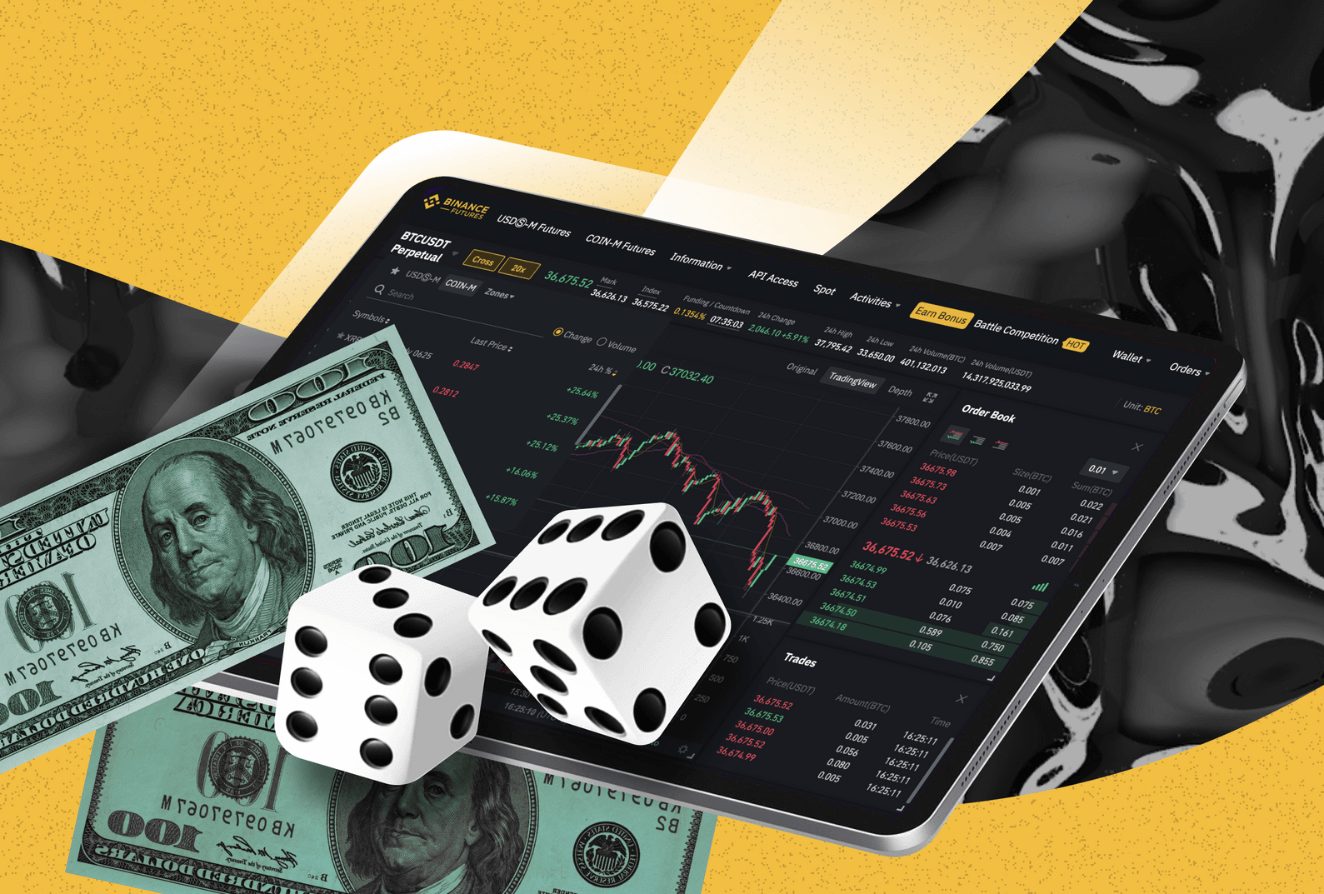
Futures trading operates through standardised agreements that bind two parties to exchange an asset at a predetermined price on a specific future date. These contracts cover commodities like crude oil and wheat, financial instruments such as stock indexes and Treasury bonds, and even currencies. Unlike buying stocks outright, you're committing to a transaction that settles later, which creates opportunities to profit from price movements without ever owning the underlying asset. The standardisation enforced by exchanges means every contract specifies exact quantities, quality grades, delivery locations, and expiration dates, leaving only the price open to negotiation through live bidding.
How Exchanges Facilitate the Market
Regulated exchanges like the Chicago Mercantile Exchange act as the central marketplace where buyers and sellers connect electronically in real time. The exchange standardises every detail except price, which creates deep liquidity because traders know exactly what they're getting. A clearinghouse steps between every transaction, becoming the buyer to each seller and the seller to each buyer, eliminating the risk that your counterparty might default. This setup allows you to trade nearly 24 hours a day during active weeks, responding instantly to global news events across time zones. The clearinghouse guarantees performance even if one side fails, protecting the entire system from cascading failures.
Margin Requirements and Leverage Mechanics
You post an initial margin, typically 5 to 15 per cent of the contract's full value, as a good-faith deposit to open your position. This creates leverage, meaning you control a large notional value with relatively modest capital. For instance, a single E-mini S&P 500 contract might represent $250,000 in market exposure while requiring just $12,500 upfront.
If the market moves against you, your account must maintain a minimum maintenance margin level. Falling below it triggers a margin call, requiring you to deposit additional funds immediately or face forced liquidation of your position. While leverage amplifies potential gains, it magnifies losses just as fast, and those losses can exceed your original deposit during volatile swings.
Daily Settlement Through Mark-to-Market
Each trading day closes with the exchange establishing an official settlement price based on closing activity. Your open positions are then revalued against this price, with gains credited and losses debited directly to your account in cash. This daily adjustment, called marking to market, prevents losses from accumulating invisibly over weeks or months.
It enforces discipline by settling profits and losses incrementally rather than waiting until expiration, protecting both the clearinghouse and other participants from any single trader building up unmanageable debt. The process keeps accounts aligned with current market realities, ensuring the system remains stable even during sharp price moves.
Who Trades Futures and Why
Hedgers use futures to lock in prices and shield themselves from unfavourable market shifts. A farmer might sell corn futures months before harvest to guarantee revenue regardless of what prices do later, turning uncertainty into a predictable cash flow. According to Charles Schwab, a single corn futures contract represents 5,000 bushels, which shows how these instruments handle commercial-scale transactions efficiently. Speculators enter purely to profit from price movements, providing the liquidity that allows hedgers to find counterparties quickly. Both groups operate under CFTC oversight that enforces fair practices, customer protections, and transparency across the market.
How Do Traders Make Money Trading Futures?

Traders generate profits in futures by correctly anticipating price direction and using contracts to capture those moves. You open a position based on your forecast, and as the market shifts in your favour, the contract's value changes accordingly. When you close that position, the difference between entry and exit prices becomes your realised gain or loss, amplified by the contract's multiplier and the leverage built into the margin system.
Profiting From Rising Markets With Long Positions
You buy a futures contract when your analysis signals upward momentum, locking in today's price with the expectation that the market will climb. As prices advance, the contract appreciates in value, and you sell it back at the higher level to pocket the spread. This directional bet converts bullish forecasts into measurable returns, scaled by the contract's point value. Pairing longs with solid technical patterns or economic releases that support upward movement increases the probability of success. Monitoring daily mark-to-market adjustments lets you lock in incremental profits or exit early if momentum reverses, turning directional insight into consistent gains without holding through drawdowns.
Capturing Declines Through Short Positions
You sell a futures contract first when expecting prices to fall, agreeing to deliver at today's higher price. As the market drops, you buy back the same contract at the lower level to close the position, securing the difference as profit. This flexibility to profit from bearish moves without owning the underlying asset sets futures apart from traditional stock investing. Effective short trading demands precise timing based on inventory reports or trend reversals, ensuring the anticipated decline materialises before costs erode your edge. Daily settlement mechanics credit gains immediately to your account, allowing you to compound successes across multiple moves while managing the unlimited risk potential through strict stop levels.
Harnessing Leverage to Amplify Returns
Futures require only a fraction of the full contract value as initial margin, a performance deposit that lets you control large notional positions with limited capital. A modest favourable price move can therefore deliver outsized percentage returns relative to the margin posted, turning small market shifts into meaningful account growth.
While leverage boosts profit potential dramatically, it works symmetrically on losses, so experienced traders size positions conservatively and maintain adequate buffer funds to meet variation margin calls. 90% of day traders lose money, often because they overextend accounts or skip disciplined risk management. Focusing on high-probability setups and using tools like micro contracts for finer control helps you harness this feature responsibly, scaling earnings without overextending your accounts.
Validating Performance Through Professional Risk Oversight
Most traders assume capital is the barrier to proving their edge. What if the real obstacle is finding a structure that rewards skill without risking your own funds first? Programs like AquaFutures shift the burden by providing simulated capital of up to $450K with instant funding options, allowing you to demonstrate proficiency through structured evaluations with defined profit targets and compliance oversight.
You execute the same directional and leverage strategies, but the firm absorbs the downside while you keep profit splits, including 100% of the first $15K and fast payouts within 24 hours. This model validates trading as a performance-based skill rather than a gamble with personal savings, rewarding disciplined execution through a framework that mirrors professional risk management.
Managing Risk to Sustain Profitability
Every profitable approach hinges on predefined risk rules that limit losses per trade to a small percentage of total capital, typically using stop-loss orders and position sizing. This discipline ensures that a string of winning trades outweighs inevitable setbacks, protecting the account balance so gains can compound over time. Traders also incorporate ongoing review of performance metrics and adjust strategies based on changing volatility or economic conditions, treating risk control as the foundation rather than an afterthought to maintain the emotional steadiness needed to stay in the game long enough for their edge to deliver consistent net profits.
Related Reading
- Best Futures Trading Platform for Beginners
- Is Trading A Good Career
- Why Trade Futures Instead Of Options
- How To Start Futures Trading
- What Is Leverage in Futures Trading
- What Is Crypto Futures Trading
- How To Become A Professional Trader
- How To Make Money Trading Stocks
- Is Trading Futures Profitable
Is Futures Trading Gambling?

Futures trading lets you shape outcomes through analysis, planning, and disciplined execution rather than leaving results to pure chance. While both involve risk and can trigger similar emotional responses, futures contracts operate within regulated frameworks that reward skill-based decision-making, whereas gambling sets odds in favour of the house, with no way to tilt the odds through research or strategy. The difference matters because it determines whether you're building a repeatable edge or simply hoping luck breaks your way.
Structure Separates Trading from Wagering
Futures contracts trade on regulated exchanges under strict CFTC oversight that enforces transparency, fair pricing, and anti-manipulation rules. Every agreement specifies exact quantities, expiration dates, and settlement terms, creating standardised instruments that participants can analyse using economic data, technical patterns, and supply-demand fundamentals. This structure gives traders tools to identify high-probability setups based on inventory reports, interest rate shifts, or seasonal trends rather than rolling dice on outcomes they cannot influence. Casinos and lotteries, by contrast, lock in a mathematical edge that ensures the house wins over time, with rules designed to prevent players from gaining any statistical advantage regardless of how much they study past results.
Skill Builds An Edge That Chance Cannot
You craft personal trading rules around entry signals, profit targets, and market conditions that let you develop a repeatable process, something no slot machine or roulette wheel permits. Research from technical indicators, fundamental analysis, and order flow data helps you identify moments when probabilities favour a directional move, turning forecasts into measurable positions.
Differentiating Skill-Based Speculation from Systematic Analysis
According to the Kambi Sports Betting Trends Report 2025, 88% of pre-match Bet Builders on the most recent Super Bowl contained a player prop, reflecting how even skill-based wagering still depends heavily on unpredictable human performance rather than market forces you can model. Futures traders, however, analyse macroeconomic releases, weather patterns affecting crops, or central bank policy shifts to inform their decisions, building an edge that compounds with experience rather than facing fixed odds that never improve.
Risk Management Turns Uncertainty into Strategy
Effective futures trading demands predefined stop-loss levels, position sizing to a small percentage of capital, and clear risk-reward ratios before every trade. These controls limit downside while letting profitable positions run, directly countering the all-or-nothing dynamic of gambling, where you either win or lose the entire stake with no middle ground. Traders who follow disciplined rules avoid revenge trading or oversized bets that amplify losses, building resilience over time by treating short-term volatility as part of a longer-term plan. The same CFTC study showing median losses of $100 to $200 per event also revealed that those who persist with structured approaches show clearer patterns of improvement, a trajectory impossible in games of pure chance where past performance never influences future odds.
Proving Skill Without Risking Personal Capital
Many traders struggle to demonstrate their edge because they lack sufficient capital to withstand drawdowns while their strategy matures. Proprietary trading programs like AquaFutures shift this burden by providing simulated capital up to $450K through structured evaluations with defined profit targets and compliance oversight. You execute the same directional and risk management strategies, but the firm absorbs downside while you keep profit splits, including 100% of the first $15K and fast payouts within 24 hours. This model validates trading as a performance-based skill rather than a gamble with personal savings, rewarding disciplined execution through a framework that mirrors professional risk management, separating those who treat futures as a strategic tool from those who approach it like a lottery ticket.
Regulation Reinforces Legitimacy Over Speculation
Futures markets operate with clear reporting requirements, margin rules, and dispute resolution mechanisms that protect participants and promote market integrity. This oversight contrasts sharply with unregulated or loosely supervised gambling venues where operators control every variable, and participants have no recourse when outcomes feel unfair. The transparency enforced by exchanges and clearinghouses ensures that price discovery reflects genuine supply and demand rather than arbitrary house rules, giving traders confidence that their analysis can translate into consistent results when applied correctly.
Reinforcing Market Integrity and Risk Accountability
Such safeguards encourage responsible trading rather than unchecked speculation, reinforcing futures as a legitimate financial instrument that serves both hedgers managing commercial risk and speculators providing liquidity. But knowing the difference between skill and chance only matters if you can actually apply it when real money is on the line.
Related Reading
- Futures Trading For Beginners
- Can You Day Trade Futures Without 25k
- Forex Vs Futures
- Stocks Vs Options Vs Futures
- Benefits Of Trading Futures
- Gold Futures Trading Strategy
- How Does Futures Trading Work
- Trading Gold Futures
- Day Trading Futures Strategies
- Futures Trading Basics
- Best Indicators For Futures Trading
- Futures Trading Guide
How to Start Futures Trading

Opening a futures account requires more than filling out forms. You need to prove financial suitability by disclosing adequate capital, trading experience, and risk tolerance, because brokers are legally responsible for approving unsuitable participants. You can start with a $500 minimum account balance, but that figure represents the floor, not the threshold for sustainable trading. Real preparation means understanding margin mechanics, contract specifications, and the psychological demands of daily mark-to-market settlement before transferring a single dollar. Most traders skip this phase and impulsively fund accounts, then face margin calls within weeks because they underestimate how leverage compounds small mistakes into account-ending losses.
Selecting a Broker That Matches Your Strategy
Commission structures vary wildly across futures brokers, with some charging per-contract fees while others bundle data feeds and platform access into monthly subscriptions. You want transparent pricing, reliable execution during volatile periods, and access to the specific contracts you plan to trade, whether that's E-mini equity indexes, agricultural commodities, or currency pairs.
Regulatory compliance through NFA membership protects your funds, but you also need to verify the platform's order types, charting tools, and whether it supports micro contracts for smaller position sizing. Reading independent reviews and testing demo accounts reveals execution speed and interface usability before committing capital, because switching brokers mid-strategy disrupts momentum and creates unnecessary friction.
Funding Your Account Beyond Minimum Requirements
Depositing just enough to meet initial margin leaves zero buffer for adverse price swings, turning every trade into a potential margin call. Smart traders fund accounts with three to five times the minimum contract requirement, creating room to withstand drawdowns while their edge plays out over multiple positions.
Wire transfers settle faster than ACH for time-sensitive opportunities, and keeping extra liquidity outside the trading account prevents forced exits during temporary volatility spikes. Many traders struggle to prove their edge because undercapitalization forces them to exit winning strategies prematurely, never allowing their skill to compound across enough trades to overcome natural variance.
Democratizing Institutional-Grade Capital Access
Programs like AquaFutures eliminate the capital barrier entirely by providing simulated funding up to $450K through structured evaluations with defined profit targets and compliance oversight. You execute the same directional strategies and risk management rules, but the firm absorbs downside while you keep profit splits, including 100% of the first $15K and payouts within 24 hours. This model lets you demonstrate trading skill without risking personal savings, rewarding disciplined execution through a framework that mirrors professional risk management, and separating those who treat futures as a strategic tool from those who approach it like a lottery ticket.
Practising with Simulated Environments First
Paper trading replicates live market conditions without financial risk, letting you test entry signals, position sizing, and emotional responses to drawdowns before real capital enters the picture. Most reputable brokers offer demo platforms with realistic fills and margin calculations, though slippage and order rejection happen more frequently in live markets than simulators suggest.
Track performance metrics over at least 50 trades to identify whether your edge holds across different volatility regimes, then transition to micro contracts that limit dollar risk per tick while preserving full market exposure. Traders who skip this rehearsal phase often discover their strategy works on paper but fails under the psychological pressure of watching real account balances fluctuate tick by tick.
Building a Trading Plan That Survives Contact
Your plan must define exact entry criteria, stop-loss levels, profit targets, and position size limits before opening any trade, turning subjective hunches into repeatable rules. Incorporate technical indicators, such as moving averages or support zones, alongside fundamental catalysts, such as inventory reports or interest rate decisions, to create multiple confirmation layers that filter out low-probability setups.
Limiting risk to 1 per cent of total capital per trade ensures that even a string of losses won't destroy your account, while documenting every decision in a trade journal reveals patterns in both winning and losing sequences. The traders who succeed long-term treat their plan as a living framework, adjusting rules based on performance data rather than emotions triggered by recent wins or losses.
Risks of Trading Futures You Should Know

Futures expose you to losses that can exceed your initial deposit, a reality that separates these instruments from most stock positions, where your maximum loss stops at zero. The standardised contracts and daily settlement mechanics create specific failure modes that punish undercapitalization, poor timing, and emotional decision-making faster than almost any other market structure. Understanding these dangers before placing a trade determines whether you build resilience or watch your account evaporate during the first volatility spike.
Sudden Margin Increases Trap Overleveraged Accounts
Exchanges adjust margin requirements without warning when volatility surges or prices swing dramatically, forcing you to deposit additional collateral precisely when your account may already be bleeding. After silver crashed 28 per cent recently, CME hiked margin requirements from 11 to 15 per cent, catching traders who had stretched their capital across multiple positions with no reserves left to meet the new threshold.
Mitigating Margin Volatility and Liquidity Cascades
These increases arrive at the worst possible moment, after sharp declines when losses have already drained available funds, creating a cascade where forced liquidations deepen price crashes as participants scramble to satisfy margin calls. Maintaining cash reserves three to five times the minimum requirement protects against this scenario, but many traders enter positions assuming today's margin levels will hold, only to discover the rules changed overnight while markets moved against them.
Extreme Volatility Compounds Leverage Into Account-Ending Moves
Futures prices react violently to unexpected economic data, geopolitical shocks, or supply disruptions, turning minor forecast errors into catastrophic losses when leverage magnifies every tick. A single adverse move of two or three per cent in the underlying asset can wipe out 20 to 30 per cent of your margin deposit within hours, leaving no time to adjust strategy or add protective stops.
Industry research shows that 90% of futures traders lose money, often because they underestimate how quickly volatility converts small position sizes into unmanageable risk during periods of market stress. The daily mark-to-market settlement means these losses hit your account immediately, draining equity before you can react and forcing exits at the worst possible prices when panic dominates order flow.
Illiquid Contracts Turn Exits Into Expensive Nightmares
Not every futures contract trades with deep volume throughout the day. Longer-dated expirations or niche commodities often have thin order books, with the bid-ask spread widening dramatically, making it impossible to exit at your planned price. You place a market order expecting a quick fill, only to watch execution occur several ticks away from the last quoted price, eroding profits or deepening losses through slippage that never appears in backtests.
During overnight sessions or around major news events, liquidity evaporates entirely, leaving you stuck in a position while prices swing wildly with no counterparty willing to take the other side at reasonable levels. This risk intensifies when you need to close urgently, such as when margin calls arrive, or stop-loss levels get breached, turning what should be a defensive exit into a costly forced sale.
Rollover Mechanics Introduce Hidden Costs and Timing Pressure
Every futures contract expires on a fixed date, requiring you to either close the position, roll into the next contract month, or accept delivery of the underlying asset. The price difference between the expiring contract and the new one, known as contango or backwardation, can add unexpected costs that weren't part of your original trade thesis, subtly eroding returns over multiple roll cycles.
Mitigating Structural Friction and Capital Constraints
Missing the optimal rollover window forces you to transact during low-liquidity periods when spreads widen, or worse, leaves you holding a contract into its final days when institutional players have already exited, and price behaviour becomes erratic. Traders who focus solely on directional moves often overlook these structural details until they face delivery notices or discover that their strategy's edge has disappeared into rollover friction that has compounded over months.
Most traders assume capital is the only barrier to proving their edge under these conditions. Programs like AquaFutures shift the burden by providing simulated capital of up to $450K through structured evaluations with defined profit targets and compliance oversight, allowing you to demonstrate skill without risking personal funds to margin calls or volatility spikes.
Transitioning From Speculative Risk to Strategic Execution
You execute the same directional strategies and risk management rules, but the firm absorbs downside while you keep profit splits, including 100% of the first $15K and payouts within 24 hours. This model validates trading as a performance-based skill rather than a gamble with personal savings, rewarding disciplined execution through a framework that mirrors professional risk management, separating those who treat futures as a strategic tool from those who approach it like a lottery ticket.
How to Mitigate The Risks of Trading Futures and Avoid Gambling

Protection starts with math, not intuition. You calculate exact dollar risk before entering any position, using your stop distance multiplied by the contract's point value to determine whether the trade fits within your predetermined threshold. This forces you to reject setups that look tempting but exceed your capital constraints, filtering impulsive decisions through a quantitative lens that removes emotion from the equation.
Enforce Position Limits That Survive Volatility Spikes
According to HighStrike Trading, limiting exposure to 1-2 per cent of account capital per trade lays the foundation for controlling leverage's outsized impact. You measure the distance from entry to your technical stop level, then divide your maximum dollar risk by that distance and the contract multiplier to determine how many contracts you can hold. This calculation becomes automatic after a few trades, turning position sizing from guesswork into a repeatable process that adapts as your account grows or shrinks. When traders skip this step, they end up holding three contracts when their capital only supports one, transforming a manageable two per cent pullback into an account-threatening eight per cent loss that triggers margin calls before they can react.
Institutional Guardrails and Performance Incentives
Platforms like AquaFutures build these guardrails directly into their funded programs, capping position sizes between 1 and 10 contracts depending on the account tier and enforcing maximum drawdown thresholds of 3 to 4 per cent, calculated end-of-day or on a trailing basis. You execute the same directional strategies, but the firm absorbs downside while you keep 100 per cent of the first $15,000 in profits and 90 per cent thereafter, with payouts arriving within 24 hours and unlimited trading periods that reward disciplined execution rather than punishing learning curves.
Deploy Stop-Loss Orders at Logical Technical Boundaries
Automatic exit instructions placed at support zones, moving average levels, or volatility-adjusted distances can cap damage whenever the market moves against you. These orders execute instantly during sudden economic releases or geopolitical shocks, closing positions before a manageable loss becomes catastrophic.
Pairing them with a minimum 1:2 risk-reward ratio ensures that two winning trades offset three losing ones, tilting probabilities in your favour over time. Back-testing these levels across different volatility regimes shows whether your stops align with real price behaviour or are merely arbitrary round numbers that get hit repeatedly without protecting capital.
Maintain Cash Reserves That Absorb Overnight Gaps
Keeping account equity at least three times the minimum maintenance margin creates breathing room when exchanges hike requirements or prices gap against you during closed hours. Setting a personal daily loss limit around 1 per cent of equity acts as a circuit breaker, halting trading after a predetermined drawdown and preserving capital for the next session.
This combination prevents the forced liquidations that occur when traders stretch every dollar across multiple positions, leaving nothing in reserve when volatility strikes. Monitoring margin requirements each morning and adjusting position size downward as equity shrinks reinforces accountability, shifting focus from aggressive recovery attempts to steady preservation that keeps you in the game long enough for your edge to materialise.
Concentrate on Liquid Instruments During Peak Hours
Trading high-volume contracts like E-mini equity indexes, major currency pairs, or benchmark energy products during regular U.S. session hours ensures tight bid-ask spreads and reliable fills even when prices swing. Avoiding thinly traded or distant-month expirations unless specifically required keeps execution costs predictable, preventing the slippage that turns planned profits into break-even exits or small losses into larger ones. Reviewing volume and open-interest data before each session confirms that your chosen instrument supports the intended trade size without moving the market against you simply because you entered an order.
Related Reading
- Futures Trading Tips
- Spot Trading Vs Futures Trading
- Best Coin For Futures Trading
- Futures Trading Risk Management
- Futures vs. CFD
- Futures Trading Patterns
- Best App For Futures Trading
- Best Crypto Futures Trading Platform
- Best Futures Trading Software
Unlock up to 50% off Your First Funded Account for Futures Trading
That discipline, the kind most traders never discuss, is consistency under pressure. You can memorise every risk management rule, calculate position sizes perfectly, and design flawless entry criteria, but none of it matters if you abandon the plan after three losing trades or double your position size chasing yesterday's missed opportunity.
Bridging the Psychological Gap in Execution
The gap between knowing what to do and executing it when your account balance fluctuates separates traders who build sustainable careers from those who cycle through blown accounts, wondering why their edge disappeared. Structured programs remove the psychological burden of risking personal savings while you prove your ability to follow rules under real market conditions. AquaFutures provides simulated capital of up to $450K with instant funding options, letting you demonstrate proficiency through clear profit targets and compliance oversight, rather than gambling your rent money on whether you can stay disciplined during a drawdown.
Monetising Professional Discipline and Consistency
You keep 100% of the first $15K in profits and receive payouts within 24 hours, shifting the focus from survival to performance while the firm absorbs downside risk. This structure validates trading as a repeatable skill rather than a high-stakes bet, rewarding consistency through a framework that mirrors how professional desks operate. Ready to separate skill from chance? Explore AquaFutures today and unlock up to 50% off your first funded account, plus rotating BOGO deals and weekly bonuses designed to give you the capital and structure that turn disciplined execution into measurable results.
