



The Ultimate Futures Trading Guide for New Traders in 2026
Futures trading guide for new traders in 2026. Learn contracts, margin, risk, and simple steps before placing your first trade.

The futures market moves fast, and choosing the best futures trading platform for beginners can mean the difference between building real trading skills or burning through capital before you understand how contracts actually work. You're not just picking software. You're selecting the environment where you'll learn position sizing, manage margin requirements, interpret price action, and develop the discipline that separates profitable traders from those who quit after their first margin call. This guide walks you through everything from understanding contract specifications and leverage mechanics to selecting brokers, reading charts, and building a trading plan that protects your account while you gain experience in 2026 markets.
What if you could practice real futures trading strategies without risking your own money while you learn? AquaFutures offers funded accounts that let you trade actual futures contracts with their capital, keeping a share of the profits you generate. Instead of wondering whether you can afford another losing trade while learning order types and stop placement, you focus on execution and strategy development.
Summary
- Futures trading volume hit a record 28.1 million contracts daily in 2025, according to CME Group, proving retail participation now drives substantial market activity alongside institutional flow. Modern platforms eliminated the gatekeeping that once reserved futures for institutional desks, making market access available to anyone over 18 with an approved brokerage account.
- Micro E-mini futures changed capital requirements by delivering full market exposure at one-tenth the contract size of standard instruments. Day-trading margins on these products often range from $40 to $100 per contract, with some brokers offering $50 intraday margins on micro futures. This design lets traders control meaningful positions without tying up thousands in margin, turning futures into a scalable training ground where execution and risk management get refined before moving to larger sizes.
- Proper position sizing keeps risk per trade at 1 to 2% of total capital, which means a $1,000 account supports only $10 to $20 of risk per position. Accounts funded below this threshold leave no room for normal drawdowns or learning curves, turning every mistake into a potential account killer. The math works when traders build a buffer that absorbs losses while developing consistency, not when they start with barely enough to cover a single contract's margin requirement.
- Traders who spread attention across multiple markets rarely develop expertise in any of them. The S&P 500, crude oil, gold, and natural gas all move differently in response to distinct economic drivers, trading sessions, and volatility patterns. Focusing on one market builds pattern recognition faster because traders learn how that market responds to Federal Reserve announcements, earnings reports, or geopolitical events, rather than constantly relearning new market behaviors.
- Putting personal money into leveraged futures positions creates emotional pressure that distorts every decision. A $2,000 account feels massive when it represents months of savings, turning routine drawdowns into panic and causing traders to exit winning trades early or hold losers too long, hoping for recovery.
- CFTC analysis tracked over 36,000 distinct retail accounts in futures markets, confirming that everyday participants engage alongside institutions. Successful participants master risk management before committing capital by understanding contract specifications, calculating position size relative to account balance, and defining maximum loss per trade before entry.
Funded accounts for futures trading address the capital constraint by providing simulated accounts in which traders can demonstrate their edge without risking personal funds, keeping a share of the profits they generate while adhering to clear daily loss limits and drawdown thresholds.
What Is Futures Trading, and How Does It Work?
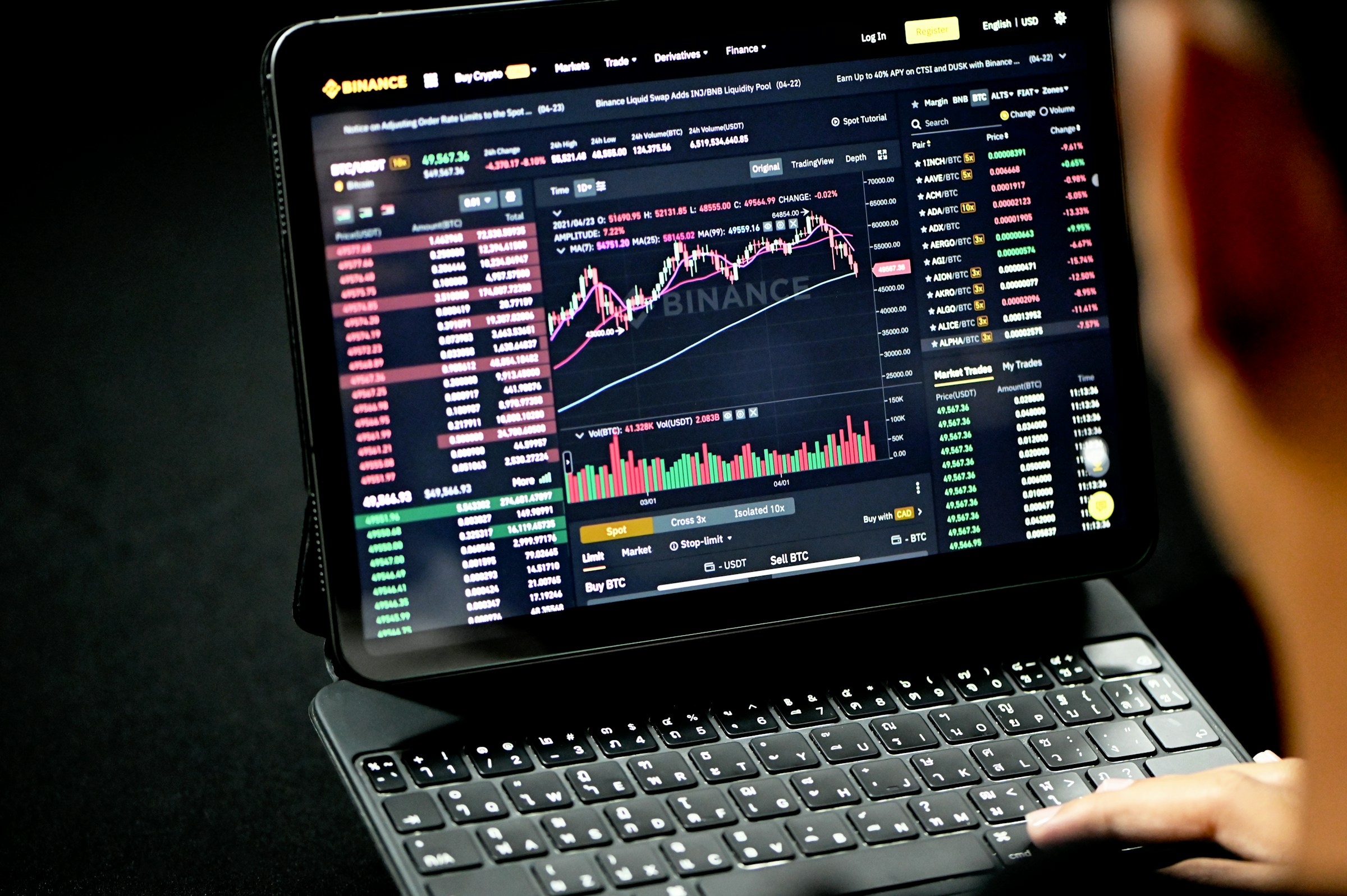
Futures trading lets you buy or sell a contract that locks in the price of an asset for delivery or settlement at a future date. You're not purchasing oil barrels or gold bars today. You're speculating on where the price will move before the contract expires.
- If you believe crude oil will rise, you buy a contract.
- If you expect it to fall, you sell one.
Profit or loss comes from the difference between your entry and exit price.
Contracts Built for Speed and Certainty
Every futures contract has two sides:
- A buyer agrees to purchase at a fixed price
- A seller agreeing to deliver or settle
Most traders never hold contracts until expiration. They close positions early and collect gains or absorb losses based on market movement. This structure exists because businesses need price certainty while traders want exposure to volatility.
A wheat farmer locks in harvest prices months ahead. A trader profits from the price swings in between. Reuters reported that Brent crude futures volumes surged above 1 million lots daily amid heightened geopolitical tensions in 2026.
Market Infrastructure and Trading Liquidity
Futures markets operate through exchanges like CME Group, which standardize contracts and manage transactions. This creates transparency and liquidity. Prices move continuously during trading hours, reacting instantly to economic news, inflation reports, earnings data, geopolitical events, and central bank decisions.
According to CME Group's 2026 report, average daily trading volume hit a record 28.1 million contracts in 2025, showing how heavily institutions and retail traders rely on futures across stocks, commodities, crypto, forex, and interest rates.
Why Leverage Changes Everything
Futures trading uses leverage, meaning you can control larger positions with less capital. Instead of paying the full value of a contract upfront, you post a margin. This setup increases both opportunity and risk because even small price changes produce significant gains or losses. A trader with strong risk management gains meaningful market exposure without tying up massive capital. This efficiency explains why futures markets attract institutions, proprietary firms, and experienced retail traders seeking higher capital efficiency compared to traditional investing.
Margin acts as a security deposit required to open and maintain a futures position. Exchanges set minimum margin requirements, and brokers enforce them to ensure traders have enough funds to cover losses. If losses exceed the required level, traders receive a margin call and must deposit more funds. This system protects market integrity. Unlike unsecured speculation, futures trading operates within a structured framework in which exchanges continuously monitor risk, keeping markets liquid and stable even during extreme volatility.
Capital Accessibility and Risk Mitigation
The traditional barrier to futures trading has always been capital. Learning order types, stop placement, and position sizing while risking your own money creates pressure that distorts decision-making.
Platforms like AquaFutures shift that dynamic by offering funded accounts in which traders use simulated capital of up to $450K, keeping a share of the profits they generate. Instead of wondering whether you can afford another losing trade while learning, you focus on execution and strategy development. Their structure gives you room to make beginner mistakes without personal financial exposure, building confidence and a track record before scaling up.
But knowing how futures work doesn't answer the question that stops most people from starting.
Can Anyone Trade Futures?

Anyone over 18 with an approved brokerage account can trade futures. No finance degree, institutional affiliation, or six-figure capital requirement stands between you and market access. The barrier isn't permission anymore; it's preparation and discipline.
Modern platforms eliminated the gatekeeping that once reserved futures for institutional desks. You complete an online application, verify your identity, demonstrate basic financial understanding, and fund an account. Many brokers accept deposits starting around $100, though actual trading capital depends on margin requirements for specific contracts. The CME Group reported a record average daily volume of 28.1 million contracts in 2025, underscoring that retail participation now drives substantial market activity alongside institutional flow.
What Stops Most People Isn't Eligibility
Watching profitable moves happen without participation destroys momentum fast. One week of hesitation turns into months of missed opportunities when traders believe futures belong exclusively to finance professionals. Accounts stay stagnant, inflation keeps eroding idle capital, and every major move in oil, indexes, gold, or crypto becomes another reminder of money left on the table.
That cycle repeats constantly among retail traders who never move beyond basic investing, not because they lack access but because they underestimate how accessible futures have become through micro contracts and lower capital requirements.
Learn Futures Without Risking Personal Capital
The real friction isn't opening an account. It's risking personal capital while learning contract specifications, margin dynamics, and position sizing under live market pressure. Most traders hesitate because early mistakes feel expensive, and building confidence through small wins takes longer when every loss comes directly from savings.
Platforms like funded accounts for futures trading shift that dynamic by offering simulated capital of up to $450K, allowing traders to focus on execution and strategy development without personal financial exposure during the learning curve. Instead of wondering whether you can afford another losing trade, you build a track record and confidence before scaling up with real funds.
Who Actually Participates
Retail traders, small business owners hedging commodity exposure, independent investors seeking diversification, and active day traders all participate daily. A CFTC analysis tracked over 36,000 distinct retail accounts in futures markets, confirming that everyday participants engage alongside institutions.
Exchanges designed micro contracts specifically for this audience, reducing notional value and margin requirements without sacrificing liquidity or price discovery. The diversity enhances market efficiency and creates opportunities for those who prepare thoroughly rather than jump in impulsively.
Master Risk Before Trading Capital
Successful participants master risk management before committing capital. They understand contract specifications, calculate position size relative to account balance, and define maximum loss per trade before entry. Structured approaches with defined risk parameters consistently outperform impulsive styles driven by headlines or emotion. Discipline separates profitable traders from those who burn through accounts quickly, regardless of market knowledge or technical skill.
But knowing you qualify and understanding how to manage risk still leaves one question unanswered.
Related Reading
- Best Futures Trading Platform for Beginners
- Is Trading A Good Career
- Why Trade Futures Instead Of Options
- Is Futures Trading Gambling
- How To Start Futures Trading
- What Is Leverage in Futures Trading
- What Is Crypto Futures Trading
- How To Become A Professional Trader
How Much Money Do You Need to Start Futures Trading?

The biggest myth in futures trading says massive capital is required before placing a single trade. That belief keeps thousands of traders stuck watching markets move every day without participating. Meanwhile, retail traders with smaller accounts actively trade stock indexes, gold, oil, forex, and crypto futures using micro contracts built specifically for lower capital requirements.
Real data completely continuously proves this belief to be incorrect. CME Group reported that Micro E-mini Equity Index futures have traded more than 3 billion contracts since launch, driven heavily by retail traders using smaller accounts. This proves that futures trading no longer revolves around large institutional accounts. The real barrier comes from poor education, weak risk management, and misunderstanding how margin works.
The Common Belief That Holds Traders Back
Most assume futures trading requires $25,000 or more to begin, mirroring equity day trading restrictions and deterring potential participants who view it as an elite activity. This perception persists because outdated comparisons to stock accounts overshadow the actual mechanics of futures markets.
The belief is incorrect because futures do not require a federal minimum account balance, unlike the PDT rule. Micro contracts and intraday margins allow entry with as little as $100, while performance-based margins replace borrowed funds. CFTC data on retail accounts show that most participants operate well below the $20,000 required margin, with the median around $3,840, confirming that everyday traders actively engage without massive starting capital.
Broker Minimums Vary Widely
Some brokers impose no minimum deposit, while others require $500 to open an account. NinjaTrader reports $500 as a common minimum capital requirement for futures trading, but this represents a broker policy choice rather than a market rule. The flexibility exists because futures operate on performance bonds tied to specific contracts, not portfolio-wide equity requirements like the pattern day trader rule in stocks. You fund enough to cover the margin on your chosen position, then add more as you scale into additional contracts or larger sizes.
Micro Contracts Changed the Game
Micro E-mini futures such as MES, MNQ, and MCL deliver full market exposure at one-tenth the contract size of standard instruments. Day trading margins on these products often run $40 to $100 per contract, with Ironbeam offering $50 intraday margins on micro futures at competitive brokers.
This design lets you control meaningful positions without tying up thousands in margin, turning futures into a scalable training ground where you refine execution and risk management before moving to larger sizes. The liquidity matches standard contracts, so you're not sacrificing fill quality or price discovery for the lower capital requirement.
Risk Management Sets the Real Floor
Starting with $500 sounds accessible until you realize a single poorly sized trade can erase 20% of your account in minutes. Proper position sizing keeps risk per trade at 1 to 2% of total capital, which means a $1,000 account supports $10 to $20 of risk per position.
That constraint forces discipline around stop placement, contract selection, and the number of simultaneous trades you can carry. Accounts funded below this threshold leave no room for normal drawdowns or learning curves, turning every mistake into a potential account killer. The math works when you build a buffer that absorbs losses while you develop consistency.
Capital Leverage and Performance-Based Rewards
Most traders hesitate because they compare futures to stock accounts and assume they need $25,000 to avoid restrictions. That barrier doesn't exist here. The real question isn't whether you can open an account with a few hundred dollars, but whether you've built the skills to protect that capital once you start taking live positions.
Programs like funded accounts for futures trading remove the capital constraint entirely by providing simulated accounts up to $450K, letting skilled traders prove their edge without risking personal funds. The 6% profit target and 100% split on the first $15K reward execution over wealth, shifting the focus from how much you deposit to how well you manage what you control.
How to Start Futures Trading as a Beginner

That missing piece is understanding the actual process. Futures trading works through structured steps that transform theoretical knowledge into executable skill. Beginners who follow a clear progression learn faster and protect capital better than traders who jump into live markets unprepared.
Choose a Futures Broker With Educational Support
The broker's decision determines everything that follows. Strong brokers provide transparent fee structures, reliable execution platforms, educational resources, and responsive customer support, rather than flashy marketing promises.
Schwab explained that futures margin requirements typically range from 2% to 12% of a contract’s total value, making broker selection critical because margin policies vary significantly across firms. Beginners benefit most from brokers that offer paper-trading simulators, live educational webinars, and clear documentation of contract specifications. The right broker becomes a learning partner instead of just an order execution service.
Start With One Liquid Market
Traders who spread attention across multiple markets rarely develop expertise in any of them. The S&P 500, crude oil, gold, and natural gas all move differently in response to distinct economic drivers, trading sessions, and volatility patterns. Micro E-mini S&P 500 futures attract beginners because they provide strong liquidity, tight bid-ask spreads, and clear reactions to economic news.
Focusing on one market accelerates pattern recognition. Traders learn how that specific market responds to Federal Reserve announcements, earnings reports, or geopolitical events, rather than constantly relearning new market behaviors.
Build a Simple Strategy With Clear Rules
A beginner strategy needs clarity over complexity. Define exact entry conditions, stop loss placement, profit targets, and position size before clicking buy or sell. Trend continuation setups work well because they align with market momentum rather than fighting it. Support and resistance levels provide natural reference points for entries and exits.
The goal at this stage is not to maximize profits but to develop consistency and emotional discipline. Traders who execute the same strategy repeatedly learn what works under different market conditions instead of randomly switching approaches after every losing trade.
Practice in a Simulated Environment First
Paper trading exposes weaknesses without financial consequences. Traders test strategies, learn platform mechanics, and experience emotional responses to winning and losing streaks before risking real capital. The best traders treat simulation seriously by using realistic position sizes and following the same rules they plan to use in live trading.
Random clicking and oversized positions create bad habits that carry into funded accounts later. Strong preparation involves practicing with the same discipline required in real market conditions, not treating the simulator like a video game.
Most traders who skip simulation blow through their first live account within weeks because they underestimate how emotions change when real money is at risk. But what happens when you're ready to trade with real capital but still lack the funds to execute your strategy properly?
Related Reading
- Futures Trading For Beginners
- Can You Day Trade Futures Without 25k
- Forex Vs Futures
- Stocks Vs Options Vs Futures
- Benefits Of Trading Futures
- Gold Futures Trading Strategy
- How Does Futures Trading Work
- Trading Gold Futures
- Day Trading Futures Strategies
- Futures Trading Basics
- Best Indicators For Futures Trading
- Futures Trading Guide
How AquaFutures Helps Beginners Trade the Futures Market Safely

The problem isn't that beginners lack ambition or intelligence. It's that they enter futures markets with personal capital at risk, no enforced boundaries, and unclear frameworks that turn small mistakes into catastrophic losses. Most funded account programs solve this by:
- Removing personal financial exposure
- Building automatic risk controls directly into every account
- Creating evaluation systems that reward consistency over reckless speculation
You trade with the firm's capital, follow clear daily loss limits and drawdown thresholds, and keep the majority of your profits without risking your savings.
Zero Personal Capital at Risk
Putting your own money into leveraged futures positions creates emotional pressure that distorts every decision. A $2,000 account feels massive when it represents months of savings, turning routine drawdowns into panic and causing you to exit winning trades early or hold losers too long, hoping for recovery.
AquaFutures eliminates this pressure by providing funded accounts ranging from $25,000 to $450,000, where you trade with the firm's simulated capital and bear no liability for losses. You pay a one-time evaluation fee, prove your consistency within predefined rules, and then execute your strategy without the paralysis that comes from risking rent money on a single ES contract.
Automatic Risk Enforcement That Prevents Blowups
Beginners often ignore position limits or convince themselves that a single oversized trade will recover yesterday's losses, allowing a single bad decision to erase weeks of disciplined work. According to AquaFutures Trading Parameters, accounts enforce a 5% maximum daily loss limit alongside overall drawdown thresholds between 3% and 4%, with the platform automatically monitoring every position and pausing trading the moment a breach occurs.
This isn't an optional discipline you promise yourself each morning. It's structural protection that stops emotional escalation before it destroys your account, teaching you to size positions conservatively and manage risk proactively rather than reactively.
Scalable Contract Limits That Match Your Development
Small personal accounts trap you in positions too tiny to generate meaningful returns or teach real market dynamics, while jumping straight to standard contracts with inadequate capital invites margin calls and forced liquidations.
AquaFutures structures contract limits by account tier, starting at 1 contract for $25,000 accounts and scaling to 10 contracts for $450,000 tiers, letting you begin with micro E-mini futures on liquid instruments like ES or NQ and expand naturally as you demonstrate consistency. You experience actual market exposure without the personal capital constraints that force most beginners into underfunded positions or reckless overleveraging.
Support When Markets Don't Wait for Business Hours
Platform issues, rule clarifications, and execution questions surface during overnight sessions and weekend prep when most brokers operate skeleton crews or automated ticketing systems that promise responses within 48 hours.
AquaFutures provides 24/7 dedicated support through live channels that resolve technical setups, explain drawdown calculations, and guide you through challenges in real time, ensuring you never miss a trading opportunity or make a costly mistake because you couldn't reach someone who actually understands futures markets. The difference between asking a question at 2 AM and getting an answer immediately versus waiting until Monday morning often determines whether you stay on track or deviate into undisciplined decisions.
Fast Payouts That Turn Performance Into Income
Waiting three weeks for a withdrawal request to process, or worse, facing arbitrary denials that force you to re-trade the same profits multiple times, destroys trust and cash flow for traders trying to build sustainable income.
AquaFutures guarantees weekly payouts with 24-hour processing, backed by a $500 penalty if they miss the deadline, while maintaining a no-denial policy that delivers 100% of your first $15,000 in profits directly to your account. You keep 90% of profits beyond that threshold, creating a transparent link between disciplined execution and reliable rewards without the games or delays that plague other funding programs.
Related Reading
- Futures Trading Tips
- Spot Trading Vs Futures Trading
- Best Coin For Futures Trading
- Futures Trading Risk Management
- Futures vs. CFD
- Futures Trading Patterns
- Best App For Futures Trading
- Best Crypto Futures Trading Platform
- Best Futures Trading Software
Unlock up to 50% off Your First Funded Account for Futures Trading
AquaFutures gives traders the framework and capital to execute disciplined futures strategies without risking personal savings. Evaluation accounts start with no time limits, letting traders prove consistency without the pressure that forces reckless decisions. Funded opportunities scale up to $450,000, with transparent drawdown rules and payout structures that reward patience over gambling.
Ready to move beyond simulated practice and underfunded accounts? Explore funded account options and get up to 50% off your first evaluation, plus weekly BOGO deals and bonuses to help you build consistent trading income. Your skill matters more than your starting capital when the right structure removes the barriers keeping you stuck.
