



How to Start Futures Trading: A Beginner's Learning Guide
How to start futures trading for beginners. Learn the basics, choose a broker, manage risk, and place your first trade. Read the guide.
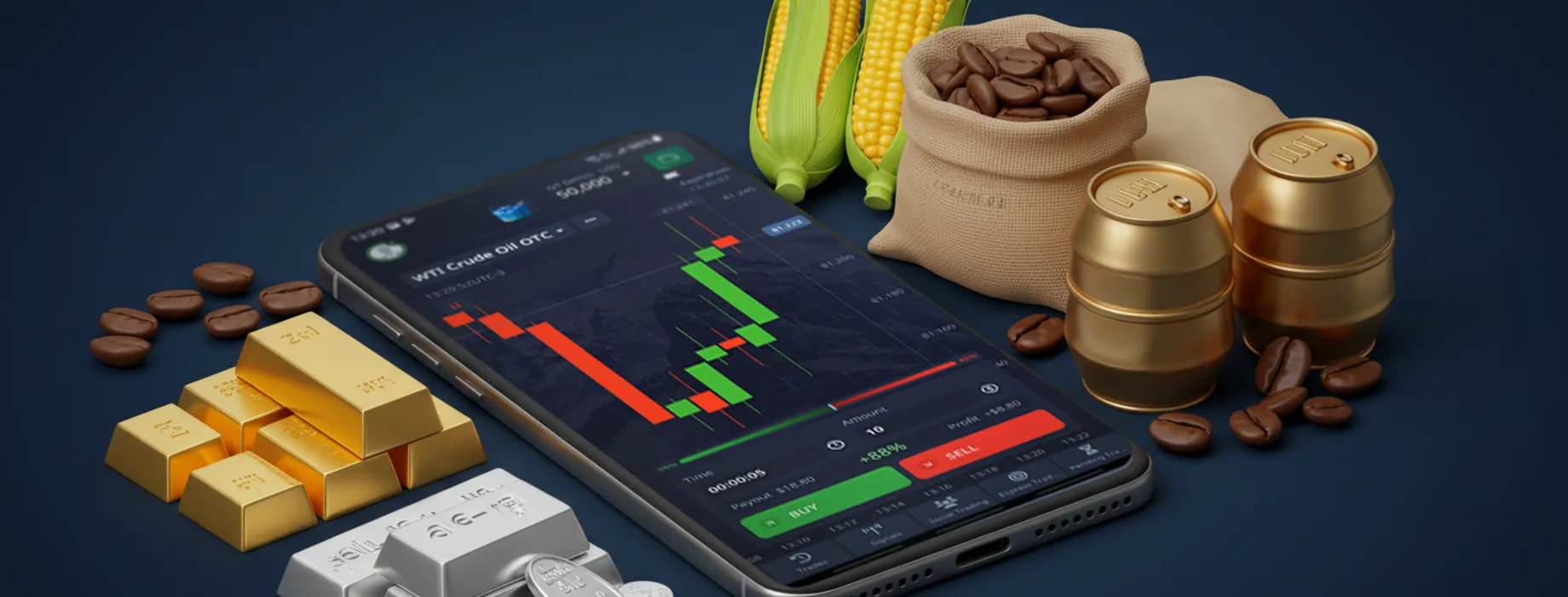
Picture this: you're watching the commodities market tick up and down, knowing that somewhere out there, traders are making real money on those moves while you're stuck wondering where to even begin. The gap between curiosity and action feels enormous when you're trying to figure out account requirements, contract sizes, margin rules, and finding the best futures trading platform for beginners that won't overwhelm you with complexity. This guide cuts through the noise to help you confidently execute your first futures trade with a clear strategy, minimized risks, and excitement for ongoing profits.
What if you could skip the years of building up trading capital and instead focus purely on developing your skills? AquaFutures offers funded accounts for futures trading, giving you access to real capital while you learn the ropes of market analysis, position sizing, and risk management. Instead of risking your own savings while you're still learning entry and exit strategies, you get the chance to trade with professional backing, allowing you to concentrate on building the discipline and knowledge that separate successful traders from those who flame out in their first month.
Summary
- Futures trading operates on standardized contracts where exchanges define every detail except price, including contract size, expiration dates, quality grades, and delivery locations. This standardization creates deep liquidity, allowing traders to enter or exit positions in seconds without negotiating custom terms.
- Margin requirements typically range from 3 to 12 percent of a contract's notional value, creating significant leverage that can rapidly amplify both gains and losses. Daily mark-to-market adjustments credit gains and debit losses in real time, meaning adverse price moves can drain accounts faster than many beginners expect.
- Over 29.32 billion futures contracts were traded globally in 2023, according to the Futures Industry Association, reflecting the scale and accessibility these instruments now offer across commodities, equity indices, currencies, metals, and cryptocurrencies. The 23-hour trading window on most futures markets allows immediate response to international news that stocks or bonds might miss until the next session.
- Most futures trading platforms require a minimum deposit of $2,000 to $5,000 to open an account, creating a capital hurdle that forces beginners to either delay starting or trade undercapitalized during the steepest part of their learning curve. When you add monthly platform fees, real-time data subscriptions, and exchange access charges, break-even points climb before placing a single trade.
- Execution speed matters more than feature lists when choosing a platform, because delays of even a few hundred milliseconds can cost better fills on every trade during volatile conditions. Testing order placement during active market hours reveals whether a platform truly delivers the responsiveness promised by marketing materials.
AquaFutures addresses the capital barrier by providing funded accounts for futures trading with simulated capital of up to $450,000, allowing traders to develop skills on live markets without risking personal savings during the learning phase, while keeping 100% of the first $15,000 in profits and receiving payouts within 24 hours.
What is Futures Trading, and How Does It Work?

Futures trading lets you agree today on the price for something you'll buy or sell later, whether that's crude oil, corn, stock indexes, or currencies. You're not buying the asset itself when you open the position. You're entering a binding contract with standardized terms, managed through a regulated exchange, and backed by a clearinghouse that guarantees both sides of the deal.
Most traders never take delivery of the underlying asset; they close out before expiration by taking the opposite position, locking in gains or losses based on how prices moved since they entered.
How Contracts Get Priced and Traded
Exchanges set every detail except price. According to Charles Schwab, a single corn futures contract represents 5,000 bushels, with quality grades and delivery locations already defined. Only the price fluctuates, determined by continuous electronic bidding where buyers and sellers meet.
This standardization creates deep liquidity, so you can enter or exit positions quickly without negotiating custom terms or worrying whether someone will honor the agreement. The clearinghouse steps in as the counterparty to every trade, eliminating direct risk between participants and allowing anyone with a brokerage account to participate.
Margin and Leverage Mechanics
You don't pay the full contract value upfront. Instead, you post margin, typically 3 to 12 percent of the notional amount, which acts as a performance bond rather than a down payment. That structure gives you significant leverage, allowing you to control large positions with relatively modest capital.
Each day, your account is marked to market:
- Gains are credited to your balance
- Losses are debited from it
- If your equity falls below the maintenance margin threshold, you will receive a margin call requiring additional funds.
This daily settlement prevents unpaid obligations from accumulating, but it also means adverse price moves can drain your account faster than you expect.
Bridging the Capital Gap for Aspiring Traders
The challenge for many aspiring traders isn't understanding leverage; it's accessing enough capital to trade meaningfully while learning without risking personal savings.
Most beginners face a tough choice:
- Risk their own money during the steepest part of the learning curve
- Sit on the sidelines watching opportunities pass
Funded accounts for futures trading solve this by providing simulated capital, letting you trade with professional backing while you build the discipline and risk management skills that separate consistent performers from those who burn out in their first few months.
Who Trades and Why
Hedgers lock in prices to stabilize their businesses. A wheat farmer shorts futures to protect against falling crop prices at harvest, while a bakery chain buys contracts to guard against rising flour costs. Speculators, ranging from individual traders to hedge funds, enter the market purely to profit from anticipated price swings, without any interest in physical delivery.
Their activity adds liquidity and depth, helping hedgers execute large orders efficiently while sharpening price discovery across global markets. Futures markets operate 23 hours per day, allowing traders to respond immediately to international news that stocks or bonds might miss until the next session.
Settlement: Cash or Physical
Contracts settle either by physical delivery or by cash payment, depending on the final price difference. Most financial futures, like stock indexes, settle in cash; there's no way to deliver the S&P 500, so the exchange simply transfers the net gain or loss. Commodity contracts often allow physical delivery, but over 90 percent close out before expiration through offsetting trades.
Clearinghouses oversee the entire process, ensuring accuracy and timeliness while aligning final values precisely with market conditions at expiration, so no party can walk away from their obligation.
But knowing how settlement works doesn't prepare you for what happens when a contract moves against you overnight, or when margin calls arrive faster than you expected.
Related Reading
- Best Futures Trading Platform for Beginners
- Is Trading A Good Career
- Why Trade Futures Instead Of Options
- Is Futures Trading Gambling
- What Is Leverage in Futures Trading
- What Is Crypto Futures Trading
- How To Become A Professional Trader
- How To Make Money Trading Stocks
- Is Trading Futures Profitable
What are the Key Elements of Futures Contracts?

Every futures contract shares six standardized components that define the agreement, eliminate ambiguity, and create the liquidity needed for rapid execution. These elements, underlying asset, contract size, expiration date, settlement method, tick size, and margin requirements, are set by the exchange before any trade occurs.
Only the price fluctuates, determined by continuous bidding where buyers and sellers meet. Understanding these building blocks helps you calculate risk, choose appropriate positions, and avoid surprises when managing open trades.
Underlying Asset
The underlying asset anchors the entire contract, specifying exactly what you're agreeing to exchange. It can be a physical commodity, such as crude oil, gold, or wheat, or a financial instrument, such as a stock index, currency pair, or Treasury bond. Exchanges define quality standards, acceptable substitutes, and delivery locations to prevent disputes.
A crude oil contract might require West Texas Intermediate grade delivered at Cushing, Oklahoma, while a corn contract specifies No. 2 Yellow at approved warehouses. This precision ensures every participant trades under identical terms, whether hedging production costs or speculating on price direction.
Contract Size
Contract size fixes the quantity of the underlying asset covered by one agreement, creating a uniform trading unit. One E-mini S&P 500 contract represents $50 times the index value, while a gold contract covers 100 troy ounces. This standardization lets you calculate exposure instantly and compare positions across markets.
Larger contracts suit institutional hedgers managing substantial risk, but many exchanges offer mini- or micro-versions to accommodate retail traders with smaller accounts. The flexibility broadens participation without fragmenting liquidity, since all contracts for a given asset still settle against the same underlying price.
Expiration Date
Every contract includes a final trading day, after which it must be settled and ceases to exist. Exchanges publish expiration calendars months in advance, often following monthly or quarterly cycles that vary by asset class. Holding a position past this deadline triggers automatic settlement procedures, either through physical delivery or cash adjustment.
Most traders roll contracts forward before expiration, closing the near-term position and opening an identical one in the next cycle to maintain exposure. This finite lifespan creates urgency and forces active management, distinguishing futures from perpetual instruments and adding time sensitivity to every decision.
Settlement Method and Tick Size
Settlement defines how the contract resolves: physical delivery of the asset or a cash payment reflecting the final price difference. Financial futures like stock indexes settle in cash because there's no way to deliver "the Nasdaq 100." Commodity contracts allow physical delivery, but over 90 percent close out through offsetting trades before expiration.
Tick size, the smallest allowable price increment, governs how quotes move and determines the dollar value of each fluctuation. An E-mini S&P 500 tick equals 0.25 index points worth $12.50, while crude oil moves in one-cent increments valued at $10 per contract. These rules standardize profit and loss calculations, prevent erratic pricing, and support orderly execution across all participants.
Margin Requirements
Margin is the amount of funds you must deposit to open and hold a position, typically 3 to 12 percent of the contract's notional value. Initial margin gets you into the trade; maintenance margin sets the minimum balance before you receive a call for additional funds. Some contracts require as little as 5% margin, amplifying both potential returns and losses through significant leverage.
Daily mark-to-market adjustments credit gains and debit losses in real time, so adverse moves can drain your account faster than you expect. This system protects the clearinghouse by ensuring obligations never accumulate unpaid, but it demands disciplined risk management and sufficient capital reserves to weather volatility without forced liquidation.
The real test isn't memorizing these elements; it's managing them under pressure when prices move against you, and margin calls arrive in the middle of the night.
What Assets Can Be Traded Using Futures?

Futures contracts now span nearly every major asset class, from agricultural staples and energy benchmarks to equity indexes, currencies, precious metals, interest rates, and even cryptocurrencies. This breadth lets traders hedge specific exposures, speculate on directional moves, or diversify without tying up capital in physical holdings.
The standardization and deep liquidity across these markets make it possible to enter and exit positions quickly, whether you're protecting a business from price swings or capturing short-term opportunities that traditional stock portfolios can't access.
Agricultural Commodities
Farmers lock in selling prices months before harvest by shorting corn, soybean, or wheat futures, removing the risk that a bumper crop floods the market and crushes margins. Food manufacturers do the opposite, buying contracts to cap ingredient costs when droughts or export disruptions threaten supply.
Speculators study USDA crop reports, weather patterns, and shifts in global demand to profit from volatility that physical markets can't absorb as efficiently. Electronic trading on platforms like CME Globex runs nearly around the clock, delivering liquidity and transparent pricing that spot grain elevators rarely match, which is why agricultural futures remain a cornerstone for risk management across the entire food supply chain.
Energy Products
Crude oil, natural gas, gasoline, and heating oil futures let producers and consumers fix prices against geopolitical shocks, inventory surprises, or seasonal demand spikes. An airline hedges jet fuel exposure to stabilize operating budgets, while a refinery buys crude contracts to guarantee input costs months ahead. Traders flock to energy markets for high volatility and leverage, often controlling hundreds of thousands of dollars in notional value with margin deposits of under 10%.
According to the Futures Industry Association, over 29.32 billion futures contracts were traded globally in 2023, reflecting the scale and accessibility these instruments now offer. That depth means positions can be entered or exited in seconds, giving both commercial hedgers and retail speculators real-time price discovery that physical pipelines and storage terminals cannot provide.
Metals
Gold and silver futures serve as inflation hedges and safe-haven plays during market stress, while copper and platinum track industrial demand and economic health. Miners sell forward to lock in revenue, jewelers buy to secure raw materials, and portfolio managers layer in precious metals to offset equity risk. Standardized contract sizes, tight bid-ask spreads, and cash or physical settlement options make these markets efficient for day traders and long-term holders alike.
The clear macroeconomic signals embedded in metals prices, whether rising gold during uncertainty or falling copper in a slowdown, turn these contracts into practical tools for expressing views on the broader economy without the complexity of owning physical bars or navigating storage logistics.
Equity Indices and Currencies
Index futures on the S&P 500, Nasdaq-100, or Russell 2000 deliver pure equity exposure through a single contract that trades nearly 24 hours and settles in cash. Portfolio managers hedge broad market risk without liquidating hundreds of individual stock positions, while speculators bet on the overall direction using micro contracts accessible to smaller accounts.
Currency futures let importers and exporters lock exchange rates to protect profit margins on international deals, eliminating counterparty default worries through centralized clearing. The regulated structure and transparent pricing give these instruments an edge over spot forex for anyone wanting standardized sizes and the discipline of futures-style margining, turning macro views into executable trades without the friction of physical currency exchange.
Leveraging Funded Capital for Rapid Market Scaling
Most aspiring traders see the range of futures markets and wonder how to participate meaningfully without risking personal savings during the learning phase. That tension between wanting exposure and needing capital creates a bottleneck that keeps many on the sidelines.
Funded accounts for futures trading solve this by providing simulated capital up to $450,000, letting you trade energy, metals, indices, or currencies with professional backing while you build the discipline and pattern recognition that separate consistent performers from those who flame out. The 100% profit split on your first $15,000 and 24-hour payouts mean your skill converts to real rewards faster than saving up enough personal capital to trade at scale, removing the barrier that stops most people before they ever place their first order.
Interest Rates and Cryptocurrencies
Treasury and Eurodollar futures let banks, bond funds, and mortgage lenders hedge yield-curve shifts and Fed policy moves with precision across short, medium, and long maturities. The enormous notional volumes in these markets reflect their role as the backbone of fixed-income risk management, offering cash settlement and liquidity even during volatile rate environments.
Accessing Crypto Markets Through Regulated Futures Contracts
Cryptocurrency futures on Bitcoin, Ether, Solana, and XRP give institutions and retail traders exposure without the headaches of custody, sidestepping wallet security and exchange hacks while still capturing price discovery. Regulated futures exchanges provide transparency, margin offsets, and nearly round-the-clock access that spot crypto markets often lack, turning volatile digital assets into tradable instruments with the familiar mechanics of standardized contracts and clearinghouse guarantees.
The variety of futures markets means you can align trades with your expertise, whether that's tracking energy inventories, reading Fed minutes, or studying blockchain adoption. But knowing which assets exist is only the beginning; the real question is how you actually get started when every market demands different capital, different hours, and different risk controls.
How to Start Futures Trading

Starting futures trading means opening a brokerage account designed for derivatives, funding it to meet margin requirements, and executing your first contract through a platform that connects you to regulated exchanges.
You'll need to demonstrate financial suitability, understand the mechanics of leverage that amplify both gains and losses, and commit to monitoring positions daily, since mark-to-market adjustments can trigger margin calls faster than you expect. The process isn't complicated, but it demands preparation because once you're live, price moves won't wait for you to catch up.
Open an Approved Futures Trading Account
Brokers require you to complete an application that verifies your experience level, risk tolerance, and financial capacity before granting futures trading privileges. This isn't a formality. Regulators mandate these checks because leverage can wipe out accounts in hours if mismanaged, and firms need assurance that you understand what you're signing up for.
A $500 minimum account balance gets you started, though that figure barely covers margin on micro contracts and leaves no cushion for adverse moves. Most experienced traders suggest funding with at least three to five times the initial margin requirement to absorb volatility without immediate pressure. Choose a broker that offers robust charting tools, real-time data feeds, and access to the specific contracts you plan to trade, whether that's crude oil, E-mini S&P 500, or gold.
Build Your Strategy Before Placing a Trade
A written trading plan removes emotion from execution by defining your entry signals, exit rules, position sizing, and maximum loss per trade before you risk a dollar. Decide whether you'll follow technical patterns like breakouts and moving average crossovers, or base decisions on fundamental factors such as inventory reports and Fed announcements. Test your approach using historical data or a demo account until you see consistent results across different market conditions.
Many beginners skip this step, eager to capture the next big move, only to discover that gut-feeling trades produce random outcomes. Your plan should specify which contracts you'll trade, what time frames you'll monitor, and how much capital you'll risk on each position, typically one to two percent of your total account to prevent a single bad trade from ending your run.
Flipping the Traditional Trading Risk Model
The traditional path asks you to risk personal savings while you learn, which means every mistake costs real money during the phase when mistakes happen most. Funded accounts for futures trading flip that model by providing simulated capital up to $450,000, letting you execute real strategies on live markets without depleting your own funds.
The 100% profit split on your first $15,000 and 24-hour payouts mean your skill converts to tangible rewards faster than saving up enough personal capital to trade at scale, removing the barrier that keeps most aspiring traders stuck in perpetual preparation mode.
Execute Your First Position With Tight Risk Controls
Place a small trade, one or two micro contracts, to experience how order types work and how quickly prices can move against you. Always enter a stop-loss order simultaneously with your entry, setting a predefined exit point that limits your maximum loss if the market reverses.
Futures contracts control $50,000 to $100,000 or more in underlying assets, so even micro versions carry meaningful exposure. Watch how your account balance fluctuates with each tick, and resist the urge to override your stop-loss when emotions flare. Keep a trading journal that records your rationale, entry price, exit price, and what you learned from each trade, because patterns in your decision-making only become visible when you review them systematically over weeks and months.
Scale Gradually as Consistency Emerges
Increase position size only after proving profitability over at least 30 trades with your initial small contracts. Consistency matters more than occasional big wins, because sustainable trading relies on repeatable processes rather than lucky guesses. Many traders see a few successful trades and immediately double their risk, only to give back all their gains when the next losing streak arrives.
Track your win rate, average gain per winner, and average loss per loser to calculate whether your edge justifies larger positions. If your plan works at one contract, it should work at two, but never jump from micro to standard contracts without demonstrating control at every intermediate step.
But choosing the right platform to execute all this makes the difference between smooth execution and constant frustration when seconds matter most.
Related Reading
- Futures Trading For Beginners
- Can You Day Trade Futures Without 25k
- Forex Vs Futures
- Stocks Vs Options Vs Futures
- Benefits Of Trading Futures
- Gold Futures Trading Strategy
- How Does Futures Trading Work
- Trading Gold Futures
- Day Trading Futures Strategies
- Futures Trading Basics
- Best Indicators For Futures Trading
- Futures Trading Guide
10 Futures Trading Platforms for Beginners to Start
Futures trading platforms provide beginners with essential tools to explore leveraged contracts on commodities, stock indices, currencies, and more while minimizing common entry hurdles.
These platforms stand out for their simulated trading modes, educational resources, intuitive interfaces, and competitive pricing structures that let new traders practice strategies without risking significant capital right away. Selecting the right one helps newcomers focus on learning market dynamics, risk management, and order execution rather than wrestling with overly complex software.
1. NinjaTrader
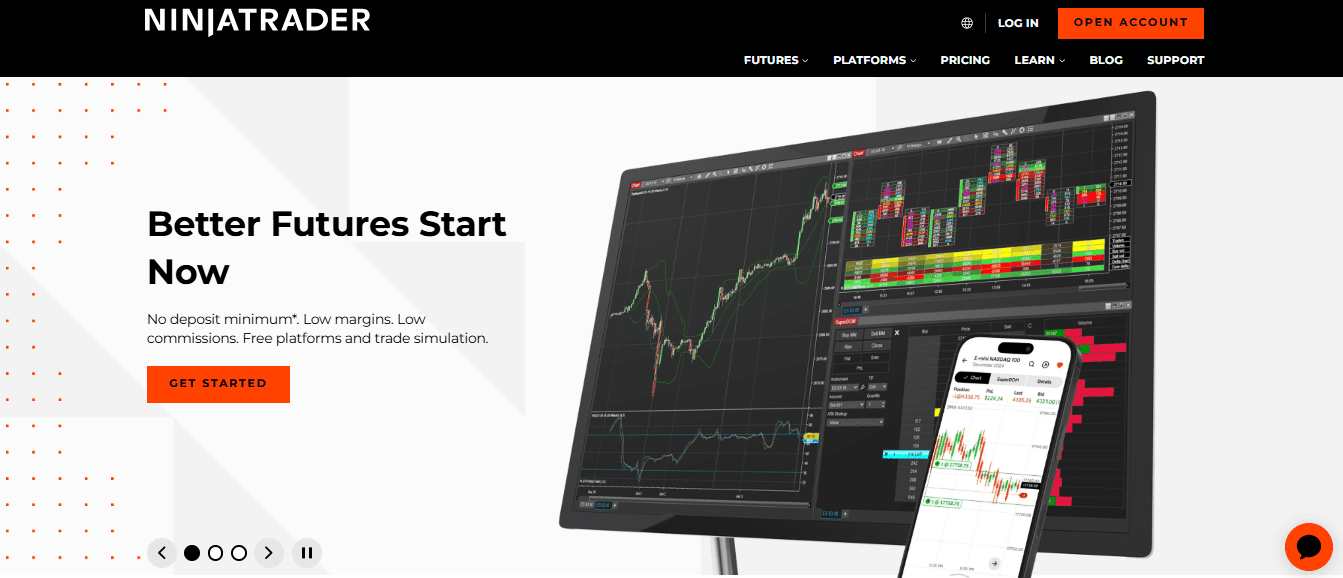
NinjaTrader stands out as a dedicated futures trading solution that balances sophisticated analysis with beginner-friendly practice environments. It equips new traders with robust charting and simulation capabilities to build skills in a realistic market setting before moving to live accounts.
7 Features for Beginners
- Simulated trading account that mirrors live market conditions for risk-free practice.
- Highly customizable charts with dozens of technical indicators and drawing tools.
- Multiple commission plans, including a free option with pay-per-trade pricing.
- Access to over 100 futures products across major exchanges.
- Seamless integration across desktop, web, and mobile platforms.
- Direct chart trading for quick order placement without switching screens.
- 24/5 dedicated customer support to assist during market hours.
Pros
- Excellent charting and analysis tools at competitive rates.
- Strong simulated trading support to learn without financial risk.
- Flexible pricing that scales with trading volume.
- Broad futures market coverage for diversification practice.
Cons
- Market data subscriptions add extra costs for most contracts.
- The interface may feel overwhelming for absolute novices at first.
Accessibility
- Full desktop, web, and mobile app availability for trading on any device.
- No minimum account balance required to open an account.
- Free demo accounts are available immediately upon sign-up.
2. Interactive Brokers

Interactive Brokers delivers professional-grade access to global futures markets at low costs, making it suitable for beginners who value education and scalability as they grow. Its platform supports a wide range of order types and tools while offering resources to help new users understand complex derivatives.
7 Features for Beginners
- Tiered and fixed commission structures with some of the lowest rates available.
- An extensive selection of futures contracts from major global exchanges.
- Advanced yet customizable Trader Workstation platform with guided tutorials.
- Paper trading simulation for practicing strategies in real time.
- Mobile app with full trading functionality and real-time data.
- Automation tools and algorithms that simplify repetitive tasks.
- Comprehensive educational library covering futures basics and risk management.
Pros
- Extremely low commissions and volume-based discounts.
- Global market access beyond U.S. exchanges.
- Robust simulation and backtesting features for learning.
- Scalable platform that grows with trader experience.
Cons
- The Trader Workstation interface can feel intimidating initially.
- Navigation and setup require time to master.
Accessibility
- Desktop Trader Workstation, web portal, and fully featured mobile app.
- No minimum deposit to open an account.
- Instant demo access and straightforward online application process.
3. TradeStation

TradeStation offers powerful execution speeds and advanced tools wrapped in a platform that supports demo trading, helping beginners test futures strategies safely. Its focus on automation and multi-asset support provides a solid foundation for learning to trade at a professional level.
7 Features for Beginners
- Demo account for simulated futures trading with real market data.
- Advanced charting, backtesting, and strategy automation capabilities.
- Competitive commissions that decrease as trading volume increases.
- Support for stocks, options, and futures in one integrated platform.
- Free market data for non-professional users.
- Customizable workspaces and order types tailored to futures.
- Robust desktop platform with mobile app companion.
Pros
- Top-tier execution speed and reliability.
- Strong automation and backtesting for strategy development.
- No account minimum with flexible pricing.
- Multi-asset environment for broader learning opportunities.
Cons
- Steep learning curve for new users.
- Customer service can be slower during peak times.
Accessibility
- Primary desktop focus with dedicated mobile app and web access.
- Zero minimum to open an account.
- Easy demo signup and quick funding options.
4. E*TRADE

E*TRADE earns recognition for its strong educational resources and user-friendly platforms, making it ideal for beginners seeking clear guidance on futures trading concepts such as risk, expiration, and margin. Its simulated trading and intuitive tools reduce the intimidation factor of starting out.
7 Features for Beginners
- An extensive futures-specific educational portal with articles and videos.
- Simulated trading account for hands-on practice.
- User-friendly Power E*TRADE platform with award-winning ease of use.
- Free CME Group data access for non-professionals.
- Integrated research and margin requirement explanations.
- Mobile app supporting full futures trading and charting.
- Clear guidance on order types and risk management.
Pros
- Outstanding educational content tailored to future newcomers.
- Intuitive platforms that prioritize simplicity.
- Simulated trading to build confidence.
- Reliable data and research support.
Cons
- No international futures access.
- Commissions are higher than those of some specialized brokers.
Accessibility
- Desktop, web, and mobile app (Power E*TRADE) options.
- No account minimum required.
- Quick online account opening with educational onboarding.
5. Charles Schwab (thinkorswim)

Charles Schwab’s thinkorswim platform delivers powerful futures trading tools in a customizable environment supported by extensive beginner tutorials and paper trading. It appeals to new traders seeking professional features, built-in learning resources, and mobile flexibility.
7 Features for Beginners
- PaperMoney simulated trading mode for futures practice.
- Dedicated Futures Trader tab with customizable ladders and charts.
- Comprehensive tutorials and videos specifically for futures on thinkorswim.
- Real-time futures data, watchlists, and technical analysis tools.
- Mobile and web versions of thinkorswim for on-the-go access.
- Risk management and position analysis tools are integrated.
- Pre-built futures watchlists and educational courses.
Pros
- Excellent paper trading and tutorial resources.
- Highly customizable interface for futures-specific workflows.
- Strong mobile and web platform parity.
- No account minimum with reliable execution.
Cons
- The platform has many features that can overwhelm new users initially.
- Slightly higher commissions compared to some futures specialists.
Accessibility
- Full desktop, web, and mobile thinkorswim apps.
- Zero minimum deposit to open a futures-enabled account.
- Straightforward approval process with built-in learning paths.
6. Tradovate

Tradovate functions as a cloud-based futures trading solution built specifically for derivatives, offering straightforward access without heavy software installations. New traders benefit from its device-agnostic design and practice environments that replicate live conditions to develop execution skills gradually.
7 Features for Beginners
- Cloud-based platform accessible directly from any web browser or mobile device with no downloads needed.
- Simulated trading mode for risk-free strategy testing with real-time market data.
- Flexible pricing tiers, including a free pay-per-trade option and membership plans that lower commissions.
- Support for micro and standard futures contracts across major U.S. exchanges.
- Integrated charting tools with customizable indicators and order entry directly on charts.
- Market replay functionality to review past sessions and refine approaches.
- Basic educational videos and platform tutorials focused on futures mechanics.
Pros
- Highly portable setup ideal for learning on the go without hardware limitations.
- Competitive commission structures that scale affordably for low-volume starters.
- No platform licensing fees on most plans, keeping initial costs minimal.
- Quick order execution in a lightweight interface.
Cons
- Customer support responsiveness can vary, and feedback can be mixed.
- Charting depth may feel basic compared to more advanced desktop tools.
- Limited asset classes outside pure futures trading.
Accessibility
- Full web and mobile access with seamless synchronization across devices.
- No minimum account funding required on the free plan.
- Immediate demo signup available for instant practice.
7. AMP Futures

AMP Futures serves as a low-cost futures specialist, connecting traders to numerous third-party platforms, allowing beginners to select tools that match their comfort level. Its emphasis on competitive margins and multiple data feeds supports gradual entry into leveraged markets with controlled risk.
7 Features for Beginners
- Extremely low per-contract commissions with no hidden routing or platform fees for many setups.
- Access to over 50 trading platforms, including free versions of popular tools like TradingView and Quantower.
- Free demo accounts with live market data for unlimited practice.
- Low day-trading margins on micro contracts to reduce capital requirements.
- Multiple data feed options (CQG, Rithmic, etc.) for reliable quotes.
- Dedicated 24/5 customer support during trading sessions.
- Educational video library covering platform usage and basic futures concepts.
Pros
- Among the lowest overall trading costs for active or occasional futures practice.
- A broad range of platform choices lets beginners experiment with different interfaces.
- Strong focus on execution speed and transparency in fees.
- No inactivity fees on most accounts.
Cons
- An overwhelming variety of platforms may initially confuse absolute newcomers.
- A primary focus on futures means less integrated education in a broader market context.
- Some advanced platforms require separate learning time.
Accessibility
- Desktop, web, and mobile options, depending on the chosen platform integration.
- Low or no minimum deposit to open an account.
- Quick online application with free demo access.
8. Optimus Futures

Optimus Futures operates as a dedicated futures broker offering professional-grade tools with supportive onboarding for those new to derivatives. Its native platform and low-margin structures help beginners focus on skill-building with realistic but affordable market exposure.
7 Features for Beginners
- Optimus Flow native platform with intuitive order management and charting.
- Unlimited paper trading simulation for strategy development.
- Very low day-trading margins, especially on micro futures contracts.
- Educational resources, including guides, videos, and personalized support.
- Integration with third-party tools like TradingView for familiar charting.
- Transparent and competitive commission rates with no hidden fees.
- Pre-built analysis setups and watchlists to simplify starting out.
Pros
- Excellent low-margin requirements that make futures accessible with smaller accounts.
- Responsive customer service tailored to new trader questions.
- Strong combination of native and integrated platform options.
- Focusing on futures allows streamlined learning without distractions.
Cons
- The interface on some tools can appear dense or professional-grade at first.
- Minimum deposit required for live accounts (typically around $500).
- Limited to futures and options on futures rather than multi-asset trading.
Accessibility
- Desktop-focused native platform with mobile and web companion access.
- Straightforward account opening with a demo available immediately.
- Funding options that support gradual account growth.
9. tastytrade

tastytrade provides a modern, education-forward environment designed for active traders, including those exploring futures for the first time. Its straightforward interface and live content help demystify complex concepts like margin and volatility.
7 Features for Beginners
- User-friendly desktop and mobile platforms with clear futures trading workflows.
- Paper trading simulation integrated for practice without financial risk.
- Competitive low commissions on futures contracts with volume discounts.
- An extensive video library and daily live market commentary for learning.
- Customizable charting and quick order entry tools.
- Risk analysis tools that visualize potential outcomes.
- Community-oriented approach with accessible explanations of strategies.
Pros
- Engaging educational content through videos and live shows tailored to derivatives.
- Clean, modern interface that reduces intimidation for new users.
- Low overall trading costs, suitable for gradually building volume.
- Strong mobile experience for on-the-go practice.
Cons
- The platform may prioritize options alongside futures, requiring focus adjustment.
- Customer service can experience delays during high-activity periods.
- Less emphasis on deep backtesting compared to some specialized tools.
Accessibility
- Robust desktop, web, and mobile applications with consistent features.
- No account minimum to get started.
- Easy demo access and quick onboarding process.
10. Webull

Webull delivers a sleek, mobile-first platform that has expanded into futures, appealing to beginners comfortable with stock trading who want to extend into derivatives. Its low fees and intuitive design support a smooth transition into leveraged markets.
7 Features for Beginners
- Modern desktop and mobile apps with clean futures trading sections.
- Simulated trading environment for testing strategies in real conditions.
- Low commission rates on futures contracts.
- Extended hours data and basic charting indicators included.
- Educational articles and in-app resources on market basics.
- Quick order placement with visual risk tools.
- No account minimum or inactivity fees.
Pros
- Contemporary interface familiar to users of retail trading apps.
- Affordable entry with low fees and margin requirements for micros.
- Strong mobile functionality for learning anywhere.
- Multi-asset exposure that allows gradual futures introduction.
Cons
- Futures product selection is more limited than that of dedicated brokers.
- Some advanced analysis tools may require third-party additions.
- Platform still evolving in full futures depth.
Accessibility
- Excellent desktop, web, and mobile parity for flexible use.
- Zero minimum deposit required.
- Fast digital account approval and instant demo availability.
Excellent low-margin requirements make futures accessible to smaller accounts, reducing the capital barrier that keeps many beginners out. Responsive customer service tailored to new
Related Reading
- Futures Trading Tips
- Spot Trading Vs Futures Trading
- Best Coin For Futures Trading
- Futures Trading Risk Management
- Futures vs. CFD
- Futures Trading Patterns
- Best App For Futures Trading
- Best Crypto Futures Trading Platform
- Best Futures Trading Software
How to Choose the Right Futures Trading Platform

Start by testing execution speed under real conditions, not just reviewing feature lists or reading marketing claims. Open a demo account and place multiple orders during active market hours, paying attention to how quickly your entries fill and whether slippage occurs when volatility spikes.
A platform that looks impressive in screenshots but lags by even a few hundred milliseconds can cost you better fills on every trade, turning theoretical edge into actual losses before you recognize the pattern.
Match Interface Complexity to Your Current Skill Level
Beginners often choose platforms designed for professional traders, then spend weeks wrestling with features they don't need rather than learning market structure. If you're still figuring out how stop-loss orders work, you don't need customizable DOM ladders or volume profile overlays cluttering your screen.
Start with clean interfaces that prioritize order entry, basic charting, and position monitoring. You can always migrate to advanced tools once you've proven consistent profitability with simple setups. The reverse rarely works; aspiring traders who start with overwhelming software usually abandon futures altogether before discovering whether they have any edge.
Evaluate Total Cost Beyond Per-Contract Commissions
Most platforms require a minimum deposit of $2,000 to $5,000 to open an account, a barrier that forces many beginners to either delay starting or trade undercapitalized. Add monthly platform fees, real-time data subscriptions, and exchange access charges, and your break-even point climbs before you place a single trade.
Calculate how many winning trades you need each month just to cover overhead, because those fixed costs compound losses during inevitable learning curves. Some brokers bundle data feeds and waive platform fees for active traders, shifting economics in your favor as volume increases rather than punishing you for starting small.
Confirm Regulatory Oversight and Fund Segregation
Verify that your broker operates under CFTC and NFA jurisdiction, not just because regulation sounds responsible, but because these bodies enforce segregated account rules that protect your capital if the firm collapses. Check whether the platform discloses its clearing relationships and how client funds flow between your account and the exchange.
Transparency here signals operational maturity, while vague explanations about "partner networks" or offshore structures should trigger immediate skepticism. Security breaches and broker failures happen often enough that due diligence isn't paranoia; it's basic risk management before you deposit anything.
Accelerating Consistency Through Instant Funding and Profit Retention
Most traders assume they need to fund accounts with thousands of dollars to gain meaningful experience, locking them into risking personal savings during the steepest part of the learning curve. Funded accounts for futures trading solve this by providing simulated capital up to $450,000, letting you trade live markets without depleting your own funds while keeping 100 percent of profits from the first $15,000 earned.
The instant funding and 24-hour payouts mean your skill translates into tangible rewards faster than saving up enough personal capital to trade at scale, removing the barrier that keeps most people from ever developing consistency.
Test Customer Support During Market Hours
Call or message support with a specific question about margin requirements or order types during active trading hours, not during quiet periods when response times look artificially fast. Quality brokers staff knowledgeable representatives who answer futures-specific questions without transferring you between departments or reading from generic scripts.
If you can't reach someone quickly when markets are moving, you'll face the same delays when a real problem threatens an open position. 90 percent of traders fail within their first year, often because they lack the support infrastructure to navigate early mistakes before those errors become expensive patterns.
Unlock up to 50% off Your First Funded Account for Futures Trading

The old model forced you to choose between risking personal savings or waiting years to build enough capital to trade futures meaningfully. That tension kept talented traders on the sidelines, watching opportunities pass while accumulating theoretical knowledge that never converted to real market experience. AquaFutures removes that barrier by letting you trade with simulated capital of up to $450,000 while keeping 100% of your first $15,000 in profits and 90% thereafter. You focus on execution and risk management. The firm absorbs the losses.
Streamlining the Path to Scalable Funding
Getting started takes minutes, not months. Choose instant funding to skip evaluations entirely and begin trading immediately, or select a one-step challenge with straightforward profit targets like 6% on select accounts. Account sizes range from $25,000 to $150,000, with the potential to scale to $450,000 as you demonstrate consistency.
No time limits, no hidden rules, and flexible options, including plans with no daily loss limits, mean you learn at your own pace without artificial pressure that forces mistakes. The 24-hour payout window turns your skill into tangible rewards faster than any traditional path where you'd need to save, risk, and recover repeatedly before seeing meaningful returns.
Accessing Community Support and Professional-Grade Infrastructure
Support arrives exactly when you need it. Live chat, Discord, email, and social channels connect you to help around the clock, while AquaTV live trading shows and a community of over 190,000 traders provide context and perspective that isolated learning never delivers. Advanced platforms like ProjectX and Volumetrica give you professional-grade tools without the enterprise price tags that keep most beginners locked into inferior software.
The reward guarantee adds certainty to a process that usually feels opaque and unpredictable. If you're ready to move past hesitation and start trading futures with real capital backing your decisions, explore the account options at AquaFutures and unlock up to 50% off your first funded account, plus surprise BOGO deals and bonuses updated weekly.
