



Spot Trading vs Futures Trading: Which Should You Trade?
Spot trading vs futures trading: compare ownership, leverage, risk, and strategy to decide which market fits your goals. Learn more.

You're standing at a crossroads in your trading journey, wondering whether to stick with the straightforward nature of spot trading or venture into the leveraged world of futures contracts. The choice between buying assets outright and trading derivatives can shape your entire approach to the markets, affecting everything from your capital requirements to your profit potential and risk exposure. This article breaks down the core differences between spot and futures trading, examining market mechanics, margin requirements, settlement processes, and trading strategies so you can align your choice with your financial goals and comfort level with volatility.
Understanding these trading styles becomes even more practical when you have the right resources to test your approach. AquaFutures offers funded accounts for futures trading, giving you access to capital to explore futures strategies without putting your own money at immediate risk. This setup helps you decide whether the flexibility and leverage of futures suit your trading personality better than spot markets, so you can build confidence in your chosen path with real market conditions and professional support.
Summary
- Futures trading compressed learning timelines through margin requirements and contract expirations that force immediate accountability. Research published in the Journal of Behavioral Finance shows that traders who follow strict risk management rules significantly outperform emotional traders over time, and futures markets reward that discipline immediately, while spot markets delay the consequences for months.
- CME Group reported record average daily trading volume of 28.1 million contracts in 2025, demonstrating how institutional and retail traders rely on futures markets for consistent liquidity across stocks, commodities, currencies, and interest rates. That volume creates tighter spreads, faster fills, and reduced slippage during volatile periods.
- Only about 13% of day traders stay consistently profitable over six months, with just 1% succeeding long-term over five years. Mastering trading starts with accepting that sustainable results come from building skill over time through compressed feedback loops that expose weaknesses immediately, not from passive holding patterns that hide poor habits behind ownership psychology.
- Futures markets eliminate the pattern day trader rule that restricts stock traders with accounts under $25,000 to three intraday trades per week. Futures traders face no such limits and execute as many trades as their strategy requires, regardless of account size. That freedom accelerates skill development because traders learn through repetition rather than forced patience, removing regulatory friction that slows spot traders.
- Global trade flows are expected to surge past $35 trillion in 2025, according to the UN Conference on Trade and Development (UNCTAD), driving volatility across commodities, indices, and forex markets. Futures traders capture movement in both directions with equal ease in long and short positions, while spot traders must wait for bullish conditions to return, since sideways or bearish markets eliminate profit opportunities unless they exit entirely.
Funded accounts for futures trading provide simulated capital up to $450K, where skilled traders earn real rewards (100% of the first $15K in profits and 90% thereafter) without risking personal funds, addressing the capital constraint that prevents most traders from scaling positions or diversifying across multiple contracts, regardless of proven strategies.
What Is Spot Trading, and How Does It Work?
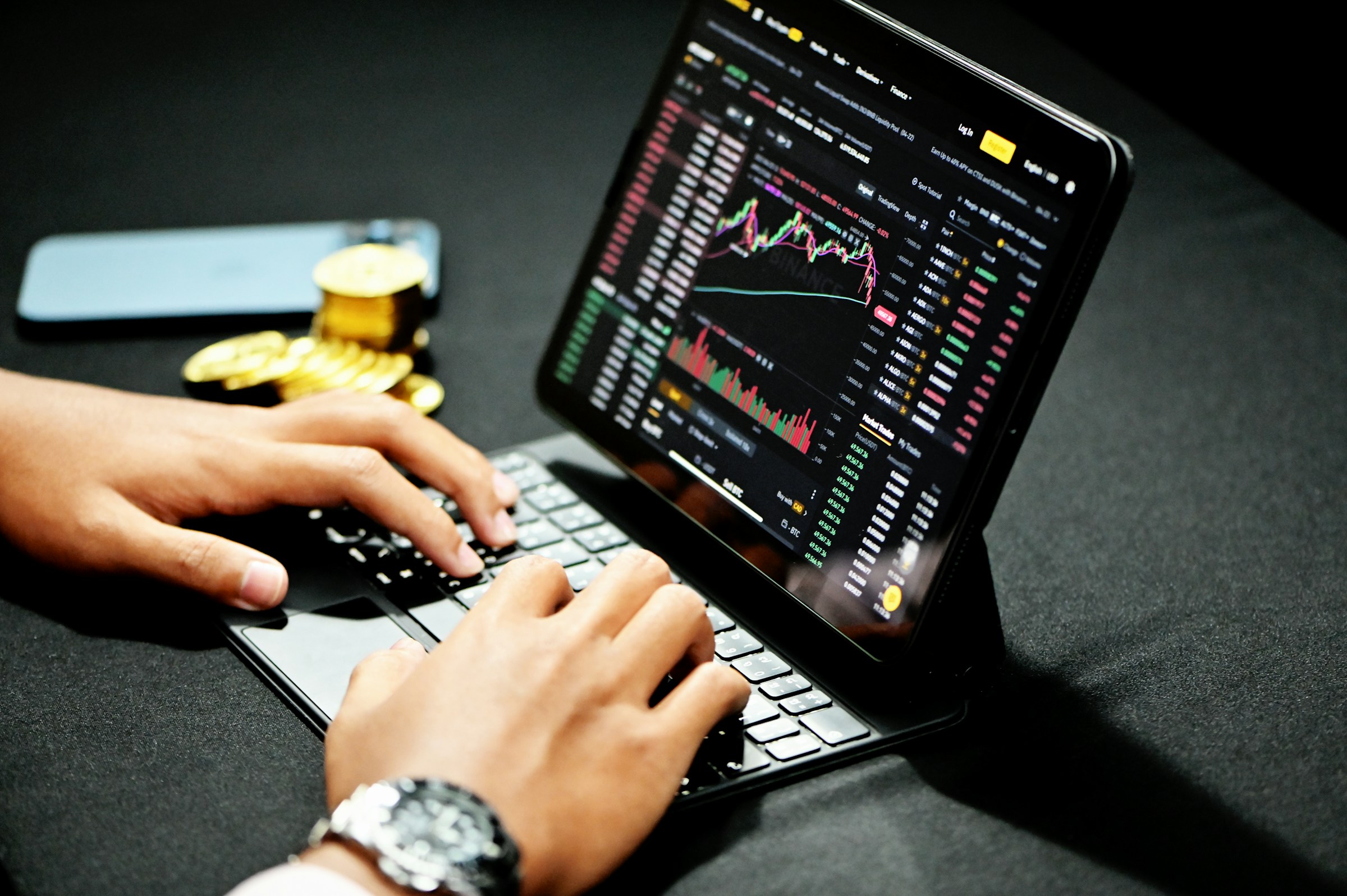
Spot trading executes the purchase or sale of an asset at its prevailing market price with near-instant delivery. You agree on terms in real time, the transaction settles quickly, and the asset moves into your account or wallet. No expiration dates, no rollover fees, no derivative mechanics. You own it outright, ready to use, store, or sell whenever you choose.
This method stands out because settlement occurs quickly. For crypto, that means seconds. For traditional assets such as currencies or stocks, settlement follows the Bookmap Blog's description of the T+2 settlement period, which is two business days after the trade date. Either way, you gain full ownership without waiting weeks or navigating complex contract structures.
Why Spot Trading Appeals to Traders
The simplicity draws people in. Watching prices move every second while trying to decide when to buy or sell creates intense pressure, and one wrong entry can wipe out all gains quickly. Confusing trading terms make the process feel harder and more intimidating. Spot trading removes layers of complexity by offering direct market exposure without leverage multipliers or contract expirations. You pay the current price, receive the asset, and manage it on your terms.
Ownership brings flexibility. You can transfer assets, use them as collateral, or hold them long-term without platform restrictions. The absence of leverage reduces the chance of total account wipeouts from amplified moves, which matters when sharp price fluctuations mean positions can lose value quickly if markets move against you. Full capital commitment means losses directly reduce holdings, so disciplined position sizing becomes essential rather than optional.
How the Spot Price Works
The spot price reflects the exact value at which an asset trades for immediate delivery, driven purely by current supply and demand. It updates in real time on liquid markets, giving you an accurate snapshot for decisions. High-volume markets adjust prices constantly as new orders arrive, creating a fast-moving decision environment with tight spreads and efficient execution.
Liquidity plays a critical role here. Platforms handle matching automatically through the order book, so you focus on strategy rather than manual coordination. Both newcomers and experienced participants value transparency because direct market exposure aligns positions with actual economic realities rather than derivative mechanics.
Real Outcomes and What Separates Success from Failure
Markets reward preparation and patience, not shortcuts. Sharp price fluctuations demand strict risk management and consistent monitoring. Track performance, secure holdings, and plan exits in line with goals. Practice on small sizes before scaling up, and implement disciplined position sizing to separate successful participants from the rest.
Gauging Long-Term Viability Within the Realities of Spot Trading
The truth is, most traders underestimate how hard it is to stay profitable. Only about 13% of day traders stay consistently profitable over six months, with just 1% succeeding long-term over five years. That reality check proves that spot markets demand education, practice, and emotional discipline. Mastering spot trading starts with accepting that sustainable results come from building skill over time, not chasing quick wins.
But spot trading represents just one side of the market equation, and the real question becomes whether the constraints of full capital commitment and zero leverage actually serve your goals better than the alternative.
Related Reading
- Best Futures Trading Platform for Beginners
- Is Trading A Good Career
- Why Trade Futures Instead Of Options
- Is Futures Trading Gambling
- How To Start Futures Trading
- What Is Leverage in Futures Trading
- What Is Crypto Futures Trading
- How To Become A Professional Trader
What Is Futures Trading, and How Does It Work?
Futures trading locks in a price today for a transaction that happens later. You agree to buy or sell an underlying asset (oil, gold, stock indexes, currencies, or agricultural products) at a set price on a specific future date through a standardized contract on a regulated exchange. Unlike spot trading, where you own the asset immediately, futures give you exposure to price movement without taking physical possession until expiration, and most traders close positions before that date through offsetting trades.
According to the Futures Industry Association, global futures and options trading volume reached 137.3 billion contracts in 2023, marking one of the highest trading activity levels ever recorded.
Standardized Contracts Define Every Detail
Exchanges set exact specifications for each futures contract, including quantity, quality, expiration date, and settlement method. Charles Schwab notes that a single corn futures contract represents 5,000 bushels, while crude oil contracts cover 1,000 barrels. This standardization creates liquidity because every participant trades on identical terms, and buyers and sellers match instantly through centralized order books.
Cash settlement pays the price difference in money at expiration, while physical settlement requires actual delivery of the commodity, though fewer than 2% of contracts reach that stage.
CME Group reported a record average daily trading volume of 28.1 million contracts in 2025, showing how heavily futures markets are used across stocks, commodities, crypto, forex, and interest rates.
Margin Amplifies Both Opportunity and Risk
Futures operate on margin, which acts as a performance bond rather than full payment. Initial margin opens the position (typically 3% to 12% of contract value), while maintenance margin keeps it active. If your account balance drops below the maintenance threshold due to adverse price movement, the broker issues a margin call demanding immediate funds to avoid forced liquidation.
A 10:1 leverage ratio controls $100,000 of exposure with $10,000 in margin, so a 5% favorable move generates a 50% return on committed capital, but a 5% loss in the wrong direction erases half your margin deposit. This amplification separates disciplined traders from those who underestimate how quickly small price swings destroy accounts.
Daily Mark-to-Market Settlement Creates Real-Time Accountability
Exchanges settle gains and losses daily through mark-to-market adjustments that credit or debit your account based on closing prices. If you hold a long crude oil position and prices rise $2 per barrel, your account receives that profit immediately, even though the contract hasn't expired. The next day, if prices drop $3, you lose that amount overnight.
This daily reckoning forces constant monitoring and prevents losses from accumulating invisibly until expiration, but it also means you need sufficient margin to weather normal volatility without triggering liquidation during temporary drawdowns.
Scaling Performance Potential via Risk-Transfer Capital Models
Many traders with proven strategies still face a capital constraint that limits their ability to scale positions or diversify across multiple contracts. Funded accounts for futures trading solve this by providing access to simulated capital (up to $450K) where skilled traders earn real rewards based on performance without risking personal funds.
The risk-transfer model ("Your skill, our risk") lets traders focus on execution and strategy refinement rather than account size, with 100% profit splits on the first $15K and 24-hour payouts that reflect operational reliability, both of which are missing from traditional prop firms.
Execution Requires Precision and Discipline
Choose a regulated broker that supports futures, complete approval processes, and requires a sufficient margin. Select the contract based on your market view (long if you expect prices to rise, short if you anticipate declines), then place the order using market execution for instant fills or limit orders for specific entry prices. Monitor the position daily as gains and losses settle in real time, adjust margin as needed, set stop-loss levels to cap downside risk, and exit or roll before expiration to align with your strategy.
Analyzing Decisive Exit Requirements and Strategic Portfolio Suitability
Expiration forces action, so traders either close positions, roll to new contracts with later dates, or prepare for settlement, and this time-bound nature demands decisive exits rather than passive holding.
But knowing how futures work doesn't answer whether they belong in your portfolio, especially when capital constraints, leverage risks, and emotional discipline determine who survives and who gets liquidated within weeks.
Which Is Better for Beginner Traders: Spot or Futures Trading?

Futures trading serves serious beginners better because it builds disciplined habits faster, provides superior liquidity, and creates measurable feedback loops that expose weaknesses immediately rather than hiding them behind passive holding patterns. Spot trading may seem safer on the surface, but that perceived safety allows undisciplined behavior to persist unchecked, delaying the development of professional trading skills. The question isn't about risk tolerance alone. It's about which market structure forces accountability early enough to matter.
Spot Trading Hides Poor Habits Behind Ownership
Owning an asset outright creates psychological permission to ignore exit rules. Beginners holding losing spot positions rationalize the decision by saying "I'll wait for it to recover" or "I'm investing long-term now." That mental flexibility destroys consistency.
The absence of expiration dates or margin pressure means traders avoid confronting mistakes directly. Losses sit quietly in portfolios while traders convince themselves that patience equals discipline. It doesn't. Patience without structure is just avoidance, wearing a respectable mask.
Slow Feedback Limits Growth
The feedback loop in spot markets arrives too slowly for skill development. A beginner buying $1,000 worth of an asset needs weeks or months to see whether the decision was sound. During that waiting period, there is no pressure to refine entry timing, position sizing, or risk management.
The market doesn't punish hesitation or reward precision quickly enough to shape better behavior. Traders drift through months making the same mistakes because consequences feel distant and abstract.
Futures Markets Compress Learning Timelines
Futures trading forces immediate accountability through margin requirements and contract expirations. Every position demands upfront decisions about stop losses, position sizing, and capital allocation before the trade goes live. That structure eliminates the option to "figure it out later" or hold indefinitely.
Beginners learn within days whether their strategy works because leverage magnifies both good and bad execution. The market provides clear, fast feedback that either validates the approach or exposes the flaw.
Faster Lessons Through Discipline
That compressed timeline builds professional habits faster. Traders following strict risk management rules significantly outperform emotional traders over time, according to research published in the Journal of Behavioral Finance. Futures markets reward that discipline immediately.
A trader risking 1% per trade with tight stops survives volatile sessions while learning what works. A trader who ignores position limits receives margin calls within hours, creating painful but educational consequences that spot markets delay for months.
Leverage With Risk Control
Many beginners fear leverage because they've seen others lose money quickly. The real danger isn't leverage itself. It's using leverage without respecting downside protection. Professional traders treat margin as a tool for capital efficiency, not a license to oversize positions.
Beginners who approach futures with the same 1-2% risk-per-trade rules used in spot markets gain efficiency without reckless exposure. They control larger positions with less capital while maintaining strict loss limits, accelerating growth without gambling.
Why Liquidity Determines Execution Quality
Execution quality separates profitable traders from frustrated ones. CME Group reported a record average daily trading volume of 28.1 million contracts in 2025, demonstrating how institutional and retail traders rely on futures markets for consistent liquidity across stocks, commodities, currencies, and interest rates.
That volume creates tighter spreads, faster fills, and reduced slippage during volatile periods. Beginners entering and exiting positions experience cleaner pricing because of massive institutional flow, which stabilizes order books.
Better Execution in Liquid Markets
Thin spot markets punish beginners with unpredictable execution. A $500 market order in a low-volume altcoin might fill 3% above the displayed price during sudden volatility. That slippage erodes profits silently, trade after trade, without the beginner understanding why results don't match expectations.
Highly liquid futures contracts eliminate most of that friction. The E-mini S&P 500 or crude oil futures absorb large orders without meaningful price disruption, giving beginners the same execution quality professionals receive.
Funded Capital for Skilled Traders
Skilled traders deserve access to substantial capital and fair compensation structures that reward performance rather than punishing it with restrictive terms or delayed payouts. Programs like funded accounts for futures trading address this by providing traders with simulated capital up to $450K, allowing them to trade futures markets without risking personal funds while earning real rewards based on execution quality.
That model shifts risk from the trader while maintaining professional accountability through performance metrics, creating a path to professional trading careers that spot markets can't replicate for beginners with limited capital. But understanding which market type suits beginners better only matters if you know exactly how they differ in mechanics, costs, and strategic applications.
Spot Trading vs Futures Trading: Key Differences Compared

The mechanics separate these markets more than most traders realize. Spot trading delivers the asset to your account right now. Futures trading gives you a contract that expires later, usually without ever transferring the underlying commodity or currency. That structural difference ripples through every aspect of how you enter, manage, and exit positions.
Settlement Timing and Delivery
Spot transactions close within seconds for cryptocurrencies or one to two business days for traditional assets. You click buy, the asset appears in your wallet or brokerage account, and the transaction completes. No future obligations exist beyond that moment.
Futures contracts settle weeks or months in the future on predetermined expiration dates. Most traders close positions before expiration through offsetting trades, capturing profit or loss from price movements without ever touching the physical asset. Less than 2% of futures contracts result in actual delivery because traders focus on speculation and hedging rather than ownership.
Ownership and Asset Control
Spot markets grant complete ownership upon settlement. You hold the actual Bitcoin, barrel of oil, or share of stock. You can transfer it, stake it, store it in cold wallets, or sell it to someone else without restrictions.
Futures contracts represent agreements, not ownership. You control exposure to price movements without possessing the asset itself. This keeps capital flexible but removes direct control over the physical or digital item, which matters if you want to use the asset for purposes beyond trading.
Leverage and Capital Requirements
Spot trading demands full upfront payment. If you want $10,000 worth of Bitcoin, you deposit $10,000. Your position size never exceeds available funds, and no borrowed exposure amplifies your risk.
Futures trading uses margin requirements that allow large contract values to be held with small capital deposits. Platforms offer up to 100x leverage, meaning $1,000 in margin can control $100,000 in exposure. Daily mark-to-market adjustments settle gains and losses immediately, triggering margin calls if your account drops below maintenance thresholds.
Trading Direction and Flexibility
Spot trading primarily supports long positions where profits come from rising prices. You buy assets you expect to appreciate and hold them directly. Short selling exists in some spot markets but requires borrowing shares or assets, adding complexity and cost.
Futures trading permits both long and short positions with equal ease. You profit from price increases or decreases without owning the asset, creating opportunities in any market condition. Hedgers use this flexibility to protect existing positions, while speculators capitalize on directional moves in either direction.
Pricing Mechanisms
Spot prices reflect real-time supply and demand and update continuously in response to current market conditions. This transparency provides an accurate snapshot of immediate asset value with no time decay or interest rate adjustments.
Futures prices incorporate the spot price, along with factors such as time to expiration, interest rates, storage costs, and market expectations. The relationship creates contango (futures trading above spot) or backwardation (futures trading below spot), with prices converging to spot at expiration. Understanding this basis matters because it affects roll costs when positions are extended beyond contract expiration.
The market you choose shapes everything from capital efficiency to risk exposure, but knowing the differences only helps if you understand which structure fits your actual trading goals.
Related Reading
- Futures Trading For Beginners
- Can You Day Trade Futures Without 25k
- Forex Vs Futures
- Stocks Vs Options Vs Futures
- Benefits Of Trading Futures
- Gold Futures Trading Strategy
- How Does Futures Trading Work
- Trading Gold Futures
- Day Trading Futures Strategies
- Futures Trading Basics
- Best Indicators For Futures Trading
- Futures Trading Guide
Which Market Should You Trade
Your trading market choice comes down to what you want to control: ownership or opportunity.
- Spot markets suit traders who value simplicity, direct asset ownership, and slower-paced decisions.
- Futures markets suit traders who prioritize capital efficiency, directional flexibility, and professional-grade scalability.
Capital Efficiency Determines Access
Spot trading locks capital into single positions. To build meaningful exposure across multiple markets, you need substantial personal funds. A trader wanting $100,000 in exposure to gold, crude oil, and the S&P 500 simultaneously must deposit the full amount upfront. That requirement excludes most traders before they start.
Futures trading multiplies purchasing power through margin. The same $100,000 controls positions worth $500,000 or more, depending on the contract and broker requirements. Micro contracts further reduce barriers, allowing traders to access professional markets with accounts under $10,000. This structure transforms trading from a capital-intensive hobby into a scalable skill.
Directional Flexibility Creates More Opportunities
Spot markets reward patience during bullish trends. Traders buy assets, hold through volatility, and exit when prices rise. Sideways or bearish markets eliminate profit opportunities unless you exit entirely. That limitation forces traders to sit idle during large portions of market cycles.
Futures markets eliminate that constraint. Short positions profit from falling prices just as easily as long positions profit from rising prices. Combined with leverage, this flexibility creates opportunities regardless of market direction. According to UN Trade and Development (UNCTAD), global trade flows are expected to surge past $35 trillion in 2025, driving volatility across commodities, indices, and forex markets, where futures traders capture movement in both directions while spot traders wait for bullish conditions to return.
Professional Traders Choose Futures for Speed and Liquidity
Spot markets work well for long-term investors who measure success in months or years. Futures markets attract active traders who measure success in days, hours, or minutes. Deep liquidity in contracts such as the E-mini S&P 500 and Nasdaq futures ensures tight spreads and fast execution, with no slippage concerns. Traders enter and exit positions cleanly, even during volatile sessions.
Futures markets also remove regulatory friction that slows spot traders. The pattern day trader rule restricts stock traders with accounts under $25,000 to three intraday trades per week. Futures traders face no such limits. They execute as many trades as their strategy requires, regardless of account size. That freedom accelerates skill development because traders learn through repetition rather than forced patience.
Scaling Without Personal Capital
Most traders struggle not because they lack skill, but because they lack capital to express that skill at scale. Personal savings cap position sizes, restrict diversification, and amplify the emotional weight of every loss. AquaFutures eliminates that barrier by providing funded accounts up to $450,000 where traders keep 100% of the first $15,000 in profits and 90% thereafter, with no personal liability for losses. Instant funding options remove waiting periods, while 24-hour payouts backed by a $500 guarantee ensure traders access their earnings immediately. This structure converts consistent execution into reliable income without risking personal capital or waiting months to scale.
But knowing which market fits your goals only matters if you understand how to enter that market without draining your savings first.
Unlock up to 50% off Your First Funded Account for Futures Trading
The difference between spot and futures trading ultimately comes down to access to capital and risk structure. Spot trading limits you by your account size, while futures trading opens larger opportunities but traditionally exposes your personal savings to leverage risk. AquaFutures removes both barriers by providing funded accounts up to $450,000 with zero personal liability, letting you keep 100% of your first $15,000 in profits and 90% thereafter. You trade with professional capital, face clear rules that match real market standards, and receive payouts in 24 hours backed by a $500 guarantee.
Stop waiting for your account to grow or risking what you cannot afford to lose. Visit AquaFutures now, choose your funded account starting from $25,000 at a one-time fee as low as $50, and start trading futures markets with the capital and support structure serious traders deserve. Your next payout is already waiting.
Related Reading
- Futures Trading Tips
- Best Coin For Futures Trading
- Futures Trading Risk Management
- Futures vs. CFD
- Futures Trading Patterns
- Best App For Futures Trading
- Best Crypto Futures Trading Platform
- Best Futures Trading Software
