



15 Best Crypto Futures Trading Platforms for Traders in 2026
Compare the best crypto futures trading platforms for 2026 by fees, leverage, liquidity, security, and tools. Find your fit.

You've decided to trade crypto futures, but choosing the right platform feels overwhelming when you're just starting out. With countless exchanges offering leverage trading, perpetual contracts, and margin requirements that vary wildly, finding the best Futures trading platform for beginners becomes a genuine challenge. This article cuts through the noise to help you pick the best crypto futures platform and trade more safely, easily, and profitably by comparing features, fees, security measures, and user experiences across leading platforms.
What if you could practice futures trading strategies without risking your own capital while still keeping the profits you earn? AquaFutures offers funded accounts for futures trading, giving you access to trading capital once you demonstrate consistent skills. This approach lets you focus on developing your trading techniques with proper risk management and position sizing, all while building confidence on a quality platform that supports your growth as a trader.
Table of Contents
- What is Futures Trading, and Why Do Traders Use Futures Contracts in Crypto Markets?
- Are Crypto Futures Suitable for Beginners?
- What Makes a Crypto Coin Suitable for Futures Trading?
- 15 Best Crypto Futures Trading Platforms for Traders in 2026
- How to Choose the Best Crypto Futures Trading Platforms for Your Goals
- How AquaFutures Helps Traders Start Trading Crypto Futures Safely
- Unlock up to 50% off Your First Funded Account for Futures Trading
Summary
- Futures trading now represents over half of all cryptocurrency trading volume, reflecting how central these leveraged instruments have become to serious market participants. The structure lets traders control substantial positions with minimal margin deposits, profit from falling prices through short positions, and hedge portfolio exposure without triggering taxable events or forced exits.
- Approximately 75% of traders lose money in perpetual futures trading, but that statistic reflects participants who skip education and risk management rather than structural flaws in the instruments themselves. Beginners who survive their first three months treat futures as skill-building infrastructure, starting with 2x or 5x leverage on micro contracts and controlled risk per trade.
- Liquidity depth separates tradable coins from account killers in futures markets. Bitcoin and Ethereum maintain billions in daily volume and tight spreads under 0.02% even during volatile sessions, ensuring orders fill at expected prices when markets move violently. Lower-cap altcoins might show dramatic percentage moves, but spreads widen exactly when precision matters most, turning calculated setups into guesswork.
- Binance Futures processes over $50 billion in derivatives trades daily as of 2026, creating order book depth that absorbs sudden selling without cascading liquidations. Platforms like MEXC and Hyperliquid challenge established exchanges through zero-fee structures on select pairs, saving high-volume traders $2,000 to $3,000 annually compared to standard fee platforms.
- Platform selection requires matching leverage systems, liquidity depth, and fee structures to your specific trading frequency and risk profile. Maker-taker models reward liquidity providers with rebates around negative 0.01% while charging takers 0.05% or more, making flat-fee platforms more cost-effective for market order users despite fewer rebate opportunities.
AquaFutures offers funded accounts for futures trading with simulated capital up to $450,000, allowing traders to prove consistency through evaluation before accessing firm backing, while keeping 100% of initial profits and receiving payouts within 24 hours, addressing the capital constraints that limit position sizing for skilled traders who read markets correctly.
What is Futures Trading, and Why Do Traders Use Futures Contracts in Crypto Markets?
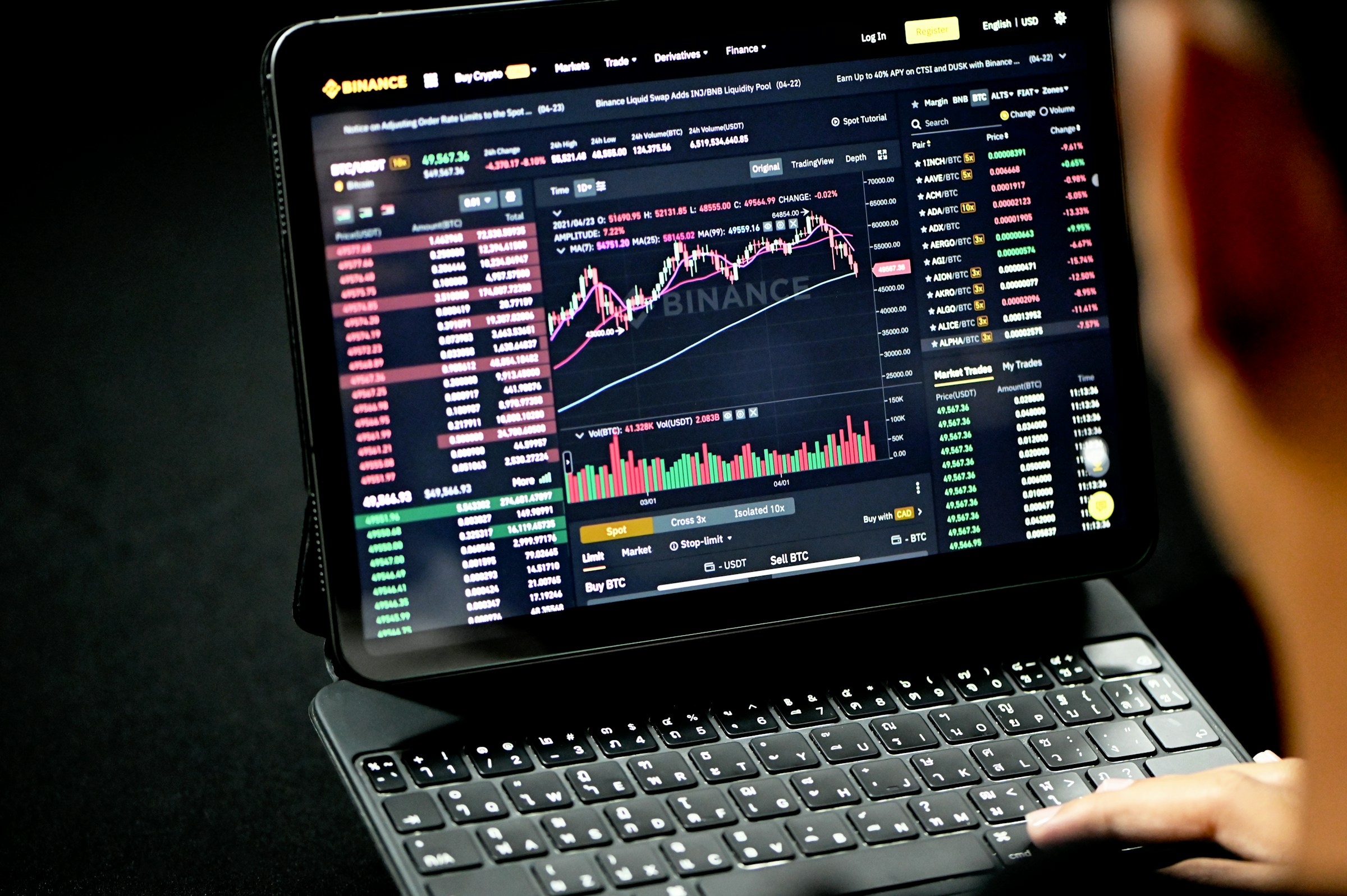
Futures trading lets you control cryptocurrency positions without owning the actual asset, profiting from price movements in either direction while using only a fraction of the capital required for spot purchases. Traders use futures contracts to amplify returns through leverage, hedge existing holdings against downturns, or speculate on market swings without dealing with wallets, private keys, or custody headaches.
Futures now account for more than half of all cryptocurrency trading volume, reflecting how central these instruments have become to serious market participants. Crypto derivatives processed nearly $86 trillion in volume during 2025, according to Yahoo Finance, underscoring how central these tools have become for price discovery and professional activity.
How Futures Contracts Actually Work
A futures contract represents a binding agreement to exchange the price difference in a cryptocurrency at a future date, or continuously for perpetuals that never expire. You post margin as collateral, the exchange tracks gains and losses in real time, and settlement happens in cash rather than through asset delivery.
This structure isolates pure directional exposure while eliminating the operational friction that slows down spot trading. When Bitcoin climbs $2,000, your long position captures that move dollar-for-dollar without requiring you to secure, transfer, or store any Bitcoin.
Why Leverage Matters for Capital Efficiency
Leverage transforms modest deposits into substantial market control, letting you direct a $50,000 position with just $2,500 in margin at 20x. This capital efficiency attracts traders seeking outsized results from smaller accounts, turning accurate forecasts into meaningful profits that would otherwise require prohibitive upfront capital.
The mechanism cuts both ways.
- Adverse moves drain margin just as quickly, and positions liquidate automatically when collateral falls below maintenance thresholds.
- Beginners often see leverage as a profit accelerator without grasping how it equally accelerates losses, a gap that wipes accounts within minutes during sharp reversals.
Profiting When Prices Fall
Short positions flip the typical buy-low-sell-high sequence, letting you sell high first and buy back lower when markets decline. Crypto's frequent corrections make this tool essential for active participants who refuse to sit idle during bearish phases. You capture falling prices as direct gains without borrowing assets or navigating complex lending protocols.
Portfolio managers layer shorts against long spot holdings, neutralizing risk during uncertain periods and locking in value without triggering taxable events or forced exits. The symmetry between longs and shorts ensures every market condition offers actionable opportunities for those who read momentum correctly.
Hedging, Arbitrage, and Basis Strategies
Institutions use futures to offset portfolio exposure, shorting contracts against spot positions so losses in one cancel gains in the other, and volatility becomes manageable rather than catastrophic.
- Arbitrage traders exploit price gaps between exchanges or between futures and spot markets, simultaneously buying low in one venue and selling high in another, locking in spreads with minimal directional risk.
- Basis trading captures the premium or discount between futures pricing and current spot levels, often with hedged exposure that isolates the spread itself as the profit source. These strategies add liquidity and efficiency to the ecosystem while providing steady returns for participants who monitor discrepancies closely and execute with precision.
Funded Futures Trading Accounts
Capital constraints shouldn't determine who gets to trade futures with skill and discipline, yet most traders risk their own funds while learning expensive lessons about leverage and liquidation.
Platforms like AquaFutures shift that risk away by providing funded accounts up to $450K once you demonstrate a consistent strategy through evaluation, letting you keep 100% of initial profits and access payouts within 24 hours. This approach transforms futures trading from a capital-intensive gamble into a skill-based opportunity where your edge, not your account size, determines results.
Related Reading
- Best Futures Trading Platform for Beginners
- Is Trading A Good Career
- Why Trade Futures Instead Of Options
- Is Futures Trading Gambling
- How To Start Futures Trading
- What Is Leverage in Futures Trading
- What Is Crypto Futures Trading
- How To Become A Professional Trader
Are Crypto Futures Suitable for Beginners?

Crypto futures suit beginners who approach them as a structured learning system, not a fast-profit scheme.
- You gain access to leverage, short-selling, and hedging tools unavailable in spot markets, but only if you start with small positions, controlled risk, and disciplined study.
- The traders who survive their first three months treat futures as skill-building infrastructure, not speculation, and that mindset determines whether you compound experience or burn through capital before understanding why.
According to Yahoo Finance, CME Group reported record crypto derivatives activity with average daily notional volume reaching approximately $12 billion in 2025, up 139% from the prior year, reflecting growing participation, including newer traders adopting structured products.
The Learning Curve Builds Market Instincts Faster Than Spot Trading
Futures force you to understand margin requirements, liquidation thresholds, and funding rates from day one. You can't ignore these mechanics like you might with spot holdings because the market will liquidate your position if you do. Demo accounts and micro contracts let you test strategies with fractional Bitcoin exposure, turning abstract concepts into muscle memory without risking meaningful capital.
This compressed education creates traders who instinctively read volatility signals and manage position sizes, skills that spot-only participants often lack until a bear market teaches them the hard way.
Leverage Turns Limited Capital Into Real Market Participation
Platforms offer control over sizable positions with minimal margin deposits, freeing up funds that spot traders lock up entirely. You start with 2x or 5x leverage on micro contracts, controlling $10,000 in Bitcoin exposure with $2,000 in margin, and adjust ratios as competence grows.
This efficiency means your $5,000 learning budget stretches across dozens of trades instead of three or four spot purchases, accelerating pattern recognition without requiring the six-figure accounts that traditional futures demand. The key is to treat leverage as a capital-efficiency tool, not a profit multiplier, because the latter mindset leads directly to liquidations that erase progress.
Bidirectional Trading Removes the One-Way Limitation
Spot markets trap you in long-only positions, turning corrections into forced holding periods where you watch unrealized gains evaporate. Futures let you short during downtrends and hedge core holdings when technical signals warn of pullbacks, transforming market uncertainty into practice opportunities.
According to MetaMask, 75% of traders lose money in perpetual futures trading, but that statistic reflects participants who skip education and risk management, not the structure itself. You practice going long in uptrends and short in corrections, building confidence that spot holders never develop because they experience half the market's movements.
Funded Accounts Reduce Trading Risk
Prop firms like AquaFutures shift the capital risk equation by providing funded accounts up to $450K once you demonstrate a consistent strategy through evaluation phases. Most beginners risk their savings learning position sizing and stop-loss discipline, often quitting after early liquidations destroy confidence.
Funded account models let you prove competence with simulated capital first, then trade with firm backing while keeping 100% of initial profits and accessing payouts within 24 hours, turning the expensive trial-and-error phase into a structured skill assessment instead of a capital destruction process.
Risk Controls Enforce the Discipline, Spot Markets Don't Require
Exchanges provide stop-loss orders, take-profit automation, and real-time margin monitoring that prevent emotional decisions from destroying accounts. You set 1% risk-per-trade limits before entering positions, not during drawdowns when fear overrides logic, and the platform enforces those rules automatically.
This framework transforms potential wipeouts into controlled losses that teach without ending your trading career, a protection spot holders lack until they've already lost more than they planned. Funding rate transparency shows you the cost of holding leveraged positions overnight, adding another layer of forced awareness that builds sustainable habits.
What Makes a Crypto Coin Suitable for Futures Trading?

Liquidity separates tradable coins from account killers. The right coin for futures combines deep order books, consistent volume across time zones, and institutional participation that prevents wild swings triggered by single orders. Volatility matters, but only when paired with enough market depth to absorb your entries and exits without slippage eating your edge.
Liquidity Depth Determines Real Execution Quality
When you place a market order on a thin coin, the price moves before your position fills. That gap between expected price and actual fill turns calculated setups into guesswork. BTC and ETH remain the best for liquidity and execution quality because their daily volume of billions creates tight spreads and stable fills even during volatile sessions. Lower-cap altcoins might show dramatic percentage moves, but the spreads widen exactly when you need precision most.
According to CoinGecko, Bitcoin and Ethereum perpetual futures routinely account for the overwhelming majority of derivatives volume. On leading platforms, BTCUSDT and ETHUSDT pairs dominate daily activity, with billions in notional turnover, far outpacing altcoin contracts that suffer from thin books and a higher risk of manipulation. This concentration proves experienced traders stick to liquid majors for consistent results.
Open Interest Signals Where Real Capital Commits
High open interest reflects sustained positions from traders willing to hold through funding cycles and volatility. This commitment builds predictable support and resistance zones because large players defend their levels. Coins with shallow open interest see random spikes as small orders trigger cascading liquidations, creating price action that looks tradable but behaves chaotically. You want markets where technical patterns hold because enough capital respects those levels.
Volume Consistency Beats Sporadic Spikes
A coin that trades $50 million daily at 3 AM and $500 million at noon creates two different markets in the same contract. Consistent 24-hour volume means your strategy works regardless of when you execute. Futures traders rely on technical setups, and those setups break down when volume disappears for hours, leaving you vulnerable to stop hunts during thin periods. The majors maintain depth around the clock because global participation never fully sleeps.
Established Price History Builds Tradable Patterns
New coins lack the tested support and resistance zones that give futures traders reference points. Bitcoin and Ethereum carry years of price memory, institutional positioning data, and correlation patterns with traditional markets. That history lets you build conviction around entries because you understand how the asset behaves under different conditions. Narrative-driven altcoins pump on hype and collapse without warning, offering no reliable framework for risk management.
Most traders chase volatility because big moves appear to be big opportunities. Capital constraints make that chase worse because limited funds push traders toward coins that promise faster returns but deliver faster liquidations. When you trade with proper backing, you focus on execution quality over headline moves, choosing coins where your edge compounds rather than those where luck decides outcomes.
But liquidity and volume mean nothing if the platform executing your trades goes offline during the next flash crash.
Related Reading
- Futures Trading For Beginners
- Can You Day Trade Futures Without 25k
- Forex Vs Futures
- Stocks Vs Options Vs Futures
- Benefits Of Trading Futures
- Gold Futures Trading Strategy
- How Does Futures Trading Work
- Trading Gold Futures
- Day Trading Futures Strategies
- Futures Trading Basics
- Best Indicators For Futures Trading
- Futures Trading Guide
15 Best Crypto Futures Trading Platforms for Traders in 2026

The platforms dominating crypto futures in 2026 share common traits:
- Deep liquidity that prevents slippage during volatility
- Execution speeds measured in milliseconds rather than seconds
- Risk tools that protect capital when markets turn violent
Binance serves 275 million users worldwide as of 2026, processing billions in daily derivatives volume, while newer entrants like Hyperliquid and MEXC challenge the old guard with zero-fee structures and decentralized transparency. The right platform depends less on reputation and more on how its specific features align with your trading style, capital constraints, and risk tolerance.
1. Binance Futures
Binance Futures remains a dominant force in 2026, with unmatched trading volume and a comprehensive derivatives ecosystem catering to both retail and professional traders. It processes billions in daily volume across hundreds of perpetual and delivery contracts, offering seamless integration with spot markets and advanced hedging and speculation tools. The platform excels at delivering tight spreads and rapid order execution, helping address slippage during high-volatility periods common in crypto markets.
Key features:
- Up to 125x leverage on major pairs for amplified exposure.
- Deep liquidity with over $50 billion in daily derivatives volume.
- Advanced charting with TradingView integration and custom indicators.
- Multiple order types, including stop-loss, take-profit, and trailing stops.
- Unified margin account for seamless spot-to-futures transfers.
- Copy trading and trading bots for automated strategies.
- An insurance fund and a robust liquidation engine to protect against extreme volatility.
Best for: High-volume traders and scalpers needing superior liquidity and variety.
Pros:
- Exceptional depth reduces slippage
- Low base fees with VIP discounts
- Broad altcoin futures selection
- Strong API support
Cons: Restricted in several jurisdictions, including the US, for full futures; the interface can overwhelm beginners initially.
Accessibility:
- Global access with restrictions in select countries
- Mobile app and web platform available
- With KYC for full features
2. Bybit
Bybit has solidified its reputation as a derivatives specialist in 2026, focusing on intuitive design, fast execution, and innovative tools that appeal to active futures traders. It offers extensive perpetual contracts with competitive risk management, helping users navigate liquidation risks and funding rate volatility effectively.
Key features:
- Up to 100x+ leverage with flexible isolated and cross-margin modes.
- High-speed matching engine for minimal latency in volatile conditions.
- Advanced order types and one-click trading options.
- Copy trading leaderboards and performance-based rankings.
- Comprehensive risk tools, including position calculators and alerts.
- Insurance fund and transparent funding rate mechanisms.
- Integrated demo mode for risk-free practice.
Best for: Derivatives enthusiasts seeking a modern UI and social/copy trading elements.
Pros:
- Clean, fast interface
- Strong liquidity on majors and alts
- Excellent mobile experience
- Reliable uptime
Cons: Past security incidents require vigilance; unavailable in the US and some other regions.
Accessibility:
- Web and mobile apps
- Restricted in certain countries
- Straightforward registration with optional KYC
3. OKX
OKX stands out in 2026 for its professional-grade tools and unified trading account system, enabling efficient management across spot, margin, and futures without constant transfers. It prioritizes advanced traders while offering features that mitigate common pain points, such as fragmented portfolios and slow executions.
Key features:
- Up to 125x leverage with portfolio margin options.
- Unified account for cross-product efficiency.
- Professional charting, API access, and algorithmic trading support.
- Wide range of perpetual and delivery contracts.
- Strong risk management with margin call alerts and auto-deleveraging.
- Copy trading and bot marketplace.
- High daily volume ensures tight spreads.
Best for: Experienced traders wanting advanced analytics and multi-asset strategies.
Pros:
- Excellent liquidity and volume
- Innovative features like unified margin
- Global reach in 160+ countries
Cons:
- Steeper learning curve for novices
- Some regional product limitations.
Accessibility:
- Available worldwide with variations
- Robust web, mobile
- API platforms
4. Bitget
By 2026, Bitget had grown significantly into a versatile platform that blends futures trading with leading copy trading and automation, making sophisticated strategies accessible. It addresses beginner challenges through educational tools and social features while supporting high-leverage trading.
Key features:
- Up to 125x leverage on perpetual futures.
- Market-leading copy trading for futures strategies.
- Trading bots and grid strategies for automation.
- Over 600 futures pairs with USDT and coin-margined options.
- Competitive fees with BGB token discounts.
- Unified wallet and strong mobile UX.
- Risk protection fund and transparent reserves.
Best for: Beginners to intermediates interested in copy trading and automated futures.
Pros:
- User-friendly with social elements
- Low fees
- Good asset variety
- Reliable execution
Cons:
- Less liquidity than the top two on some obscure pairs
- Regional restrictions, including the US
Accessibility:
- Mobile-first design
- Global but with blocks in select areas
- Easy onboarding
5. KuCoin
KuCoin delivers a broad futures offering in 2026 with competitive fees and altcoin focus, serving traders seeking variety beyond major pairs. Its tools help solve discovery and cost issues for emerging token futures.
Key features:
- Up to 100x leverage across extensive pairs.
- Low maker/taker fees with KCS discounts.
- Advanced charting and API integration.
- Futures copy trading and bots.
- Isolated/cross margin and risk calculators.
- High number of altcoin perpetuals.
- Mobile app with full feature support.
Best for: Altcoin futures traders and cost-conscious users.
Pros:
- Wide selection of lesser-known assets
- Affordable fees
- Intuitive for various experience levels
Cons:
- Variable liquidity on low-volume pairs
- Occasional interface clutter
Accessibility:
- Global availability with KYC options
- Strong web and app platforms
6. MEXC
MEXC has emerged as a top contender in 2026 for futures traders prioritizing ultra-low fees and exceptionally high leverage, making it ideal for maximizing capital efficiency in volatile markets. The platform supports a vast array of perpetual contracts, helping address pain points like limited altcoin exposure and high trading costs that erode profits over time, while offering robust tools to manage risk during rapid price swings.
Key features:
- Up to 500x leverage on select major pairs for aggressive positioning.
- Zero maker fees on many futures contracts with very low taker rates.
- Over 600 perpetual pairs, including extensive altcoins and meme tokens.
- Fast execution engine with minimal slippage even in turbulent conditions.
- Isolated and cross-margin modes with advanced position calculators.
- Built-in trading bots and copy trading options.
- Demo trading mode and comprehensive risk management alerts.
Best for: Cost-conscious traders and those seeking high-leverage opportunities on a wide variety of assets.
Pros:
- Extremely competitive fees boost long-term profitability
- Massive contract selection solves discovery issues
- User-friendly for various skill levels
- Strong liquidity on popular pairs
Cons:
- Newer platform reputation compared to veterans requires extra due diligence
- Occasional limitations in certain regions
- Higher leverage increases liquidation risks if mismanaged
Accessibility:
- Global access with few restrictions
- Intuitive web and mobile apps
- Quick registration with tiered KYC for enhanced limits
7. Gate.io
Gate.io delivers a powerful futures ecosystem in 2026, excelling in altcoin perpetuals and advanced order execution, catering to traders hunting opportunities beyond major cryptocurrencies. Its focus on depth for smaller tokens and flexible risk tools effectively addresses challenges such as poor liquidity in niche assets and insufficient customization for complex strategies.
Key features:
- Up to 125x leverage across hundreds of USDT and coin-margined contracts.
- An extensive selection of over 600 futures pairs with early listings.
- Advanced order types, including TWAP, iceberg, and trailing stops.
- Copy trading and automated bot marketplace.
- Robust risk controls like partial position closing and MMR-linked stops.
- Competitive maker/taker fees with VIP tier reductions.
- Integrated demo environment for strategy testing.
Best for: Altcoin futures specialists and traders who need diverse contract options and sophisticated execution tools.
Pros:
- Outstanding variety for emerging tokens
- Strong depth on long-tail assets
- Feature-rich platform supports professional needs
- Reliable performance
Cons:
- The interface may feel dense for absolute beginners
- Variable liquidity on ultra-low volume pairs
- Regional availability varies
Accessibility:
- Widely available globally
- Full-featured mobile and web platforms
- Straightforward onboarding with optional advanced verification
8. Crypto.com
Crypto.com provides a polished, all-in-one derivatives experience in 2026, seamlessly integrating futures trading into its broader ecosystem for users who value convenience and regulatory compliance. It addresses fragmentation pain points by offering unified access to spot, margin, and futures, along with a mobile-first design that supports on-the-go trading without compromising tools.
Key features:
- Up to 50x+ leverage on major perpetual contracts like BTC and ETH.
- Deep liquidity pools supported by institutional-grade infrastructure.
- Intuitive mobile app with full features and functionality.
- Risk management suite including alerts and position limits.
- Integration with staking and other ecosystem rewards.
- Advanced charting and API access for automation.
- Transparent funding rates and insurance mechanisms.
Best for: Mobile traders and those preferring a regulated, ecosystem-integrated platform for futures alongside other crypto activities.
Pros:
- Sleek and reliable mobile experience
- Strong security and compliance focus
- Good liquidity on core assets
- Additional perks through the app ecosystem
Cons:
- Lower maximum leverage than pure derivatives specialists
- Fewer altcoin futures options
- Fees can be higher for non-VIP users
Accessibility:
- Available in numerous regions with strong U.S. compliance options
- Excellent native apps for iOS and Android
- User-friendly registration process
9. Kraken
Kraken stands as a secure and trustworthy choice for futures trading in 2026, emphasizing regulatory adherence and professional-grade tools that appeal to risk-averse traders. Its platform helps mitigate concerns around platform safety, unexpected downtime, and opaque practices through transparent operations and robust safeguards.
Key features:
- Competitive leverage up to 50x on key perpetual and delivery contracts.
- High security standards, a proven track record, and insurance options.
- Advanced pro trading interface with customizable charting.
- Wide range of order types and risk management features.
- Strong liquidity on major pairs with low slippage.
- Educational resources and demo capabilities.
- Multi-asset support, including traditional finance integrations.
Best for: Security-focused traders and institutional or experienced users prioritizing compliance and reliability.
Pros:
- Excellent reputation for safety and uptime
- Competitive fees on pro tier; transparent reserves and operations
- Suitable for regulated environments
Cons:
- More limited leverage compared to offshore platforms
- Fewer exotic altcoin futures
- Steeper entry for casual beginners
Accessibility:
- Available in many countries, including a strong U.S. presence
- Professional web platform and mobile support
- Thorough KYC for full access
10. BTSE
BTSE offers a versatile and innovative futures trading environment in 2026, combining high leverage with user-centric design and multi-asset flexibility for both retail and advanced participants. It addresses common issues such as rigid margin systems and limited strategy support with customizable tools and efficient order matching.
Key features:
- High leverage options up to 100x+ on perpetual contracts.
- Support for diverse margin types and portfolio margining.
- Advanced trading tools, including algorithmic order execution.
- Competitive fee structure with volume-based discounts.
- Strong API and bot integration for automated futures strategies.
- Transparent risk engine and insurance fund.
- Multi-currency settlement options for flexibility.
Best for: Versatile traders seeking a balanced platform with strong technical capabilities and innovation in derivatives.
Pros:
- Flexible margin and settlement features reduce capital lockup
- Solid liquidity and execution speed
- Modern interface
- Good for cross-asset hedging
Cons:
- Smaller overall volume than market leaders on some pairs
- Less brand recognition in certain markets
- Regional restrictions apply
Accessibility:
- Global reach with licensing in key jurisdictions
- Accessible via web and API
- Efficient signup with progressive verification levels
11. Hyperliquid
Hyperliquid became a leading decentralized perpetual futures platform in 2026, delivering high-speed on-chain trading with deep liquidity and transparency that appeals to traders seeking non-custodial alternatives. Its custom L1 blockchain architecture effectively addresses common pain points, including counterparty risk, slow execution during volatility spikes, and limited transparency into order books on centralized venues.
Key features:
- Up to 100x leverage on major perpetual contracts with an efficient risk engine.
- Fully on-chain order book ensuring true transparency and no custody risk.
- Sub-second execution speeds even during high market stress.
- Deep liquidity pools dominate decentralized perps volume.
- Low trading fees with tiered discounts via native token staking.
- Mobile and API support for flexible trading access.
- Integrated staking and prediction market features for expanded utility.
Best for: Advanced DeFi-native traders prioritizing decentralization, speed, and on-chain transparency in perpetual futures.
Pros:
- Non-custodial security reduces platform risk
- Exceptional execution and liquidity for a DEX
- Innovative features like prediction markets
- No KYC for core trading
Cons:
- Steeper learning curve for beginners unfamiliar with wallets
- Limited fiat on-ramps compared to CEXs
- Potential gas or network fees in volatile conditions
Accessibility:
- Wallet-based access with no mandatory KYC
- Available globally via web and app interfaces
- Best experienced with compatible crypto wallets
12. dYdX
dYdX continues to excel in 2026 as a decentralized perpetuals powerhouse on its dedicated chain, offering professional-grade tools and competitive conditions for serious futures traders. The platform tackles fragmentation and custody concerns through non-custodial design while providing deep liquidity and advanced order functionality.
Key features:
- Up to 25x+ leverage on a wide range of perpetual markets.
- Fully decentralized infrastructure with on-chain settlement.
- Advanced trading interface including limit, stop, and bracket orders.
- Strong liquidity and open interest across major pairs.
- Zero or very low fees on select markets with volume incentives.
- Cross-platform access including mobile and API.
- Community governance and token utility for fee reductions.
Best for: Experienced decentralized traders seeking professional perpetuals tools without centralized custody.
Pros:
- High transparency and security through DeFi model
- Robust liquidity for major assets
- Feature-rich for sophisticated strategies
- Expanding U.S. accessibility efforts
Cons:
- Lower maximum leverage than some CEX competitors
- Requires wallet management
- Perpetuals may face regulatory nuances in certain regions
Accessibility:
- Wallet-connected access with no full KYC in many cases
- Gobal availability
- Desktop, mobile, and API platforms supported.
13. Deribit
Deribit maintains its position as a premier derivatives venue in 2026, specializing in Bitcoin and Ethereum futures alongside its renowned options market. It serves institutional and professional traders with high-precision tools that solve precision and risk management needs in high-stakes environments.
Key features:
- Up to 50x leverage on BTC and ETH perpetual futures.
- Institutional-grade infrastructure with proven liquidity depth.
- Advanced order types and portfolio margining options.
- Seamless integration between futures and options for hedging.
- Transparent insurance fund and risk controls.
- Competitive maker/taker fees with volume tiers.
- API excellence for algorithmic and high-frequency trading.
Best for: Professional and institutional traders focusing on BTC/ETH derivatives with options strategies.
Pros:
- Exceptional depth and reliability for core crypto pairs
- Strong risk management heritage
- Precise execution
- Trusted by large players
Cons:
- More limited altcoin futures selection
- Higher barriers for retail beginners
- Primarily appeals to experienced users
Accessibility:
- Available to global traders with KYC requirements for full access
- Professional web platform and mobile app
- API-heavy for automation
14. BitMEX
BitMEX remains a veteran player in 2026, known for its pioneering role in crypto perpetual futures, offering robust leverage and contract innovation for experienced traders. Its focus on efficiency and specialized instruments helps address needs for precise position sizing and long-term hedging in volatile markets.
Key features:
- High leverage options on flagship perpetual and quarterly contracts.
- Innovative contract types, including inverse and quanto futures.
- Powerful trading engine with low-latency execution.
- Comprehensive risk management and liquidation transparency.
- API support for custom automated strategies.
- Established insurance fund mechanisms.
- Focused selection of high-volume trading pairs.
Best for: Seasoned traders comfortable with advanced contract mechanics and high-leverage perpetuals.
Pros:
- Proven track record in derivatives
- Flexible contract designs for hedging
- Strong liquidity on majors
- Efficient for large positions
Cons:
- Interface feels dated compared to modern platforms
- Limited beginner-friendly tools
- Regional access restrictions
Accessibility:
- Web-based platform with API emphasis
- Available in permitted jurisdictions
- Requires verification for higher limits
15. BingX
BingX rounds out the list in 2026 as a versatile futures platform combining competitive features with strong copy trading and social elements, making sophisticated futures strategies more accessible. It effectively mitigates challenges such as novices' strategy development and inconsistent performance through community-driven tools and reliable execution.
Key features:
- Up to 125x leverage across extensive perpetual contracts.
- Leading copy trading system for futures positions.
- User-friendly interface with advanced charting options.
- Trading bots and an automation marketplace.
- Competitive fees with token-based discounts.
- Robust risk tools, including calculators and alerts.
- Multi-asset support with good altcoin coverage.
Best for: Intermediate traders interested in copy trading and social futures alongside self-directed strategies.
Pros:
- Excellent social and copy features lower the barrier to complex trading
- Solid variety and execution
- Balanced for growth-oriented users
Cons:
- Liquidity trails top-tier platforms on some pairs
- Newer reputation in some markets
- Standard regional limitations
Accessibility:
- Global web and mobile apps
- Straightforward registration with KYC tiers
- Intuitive for various experience levels
How to Choose the Best Crypto Futures Trading Platforms for Your Goals

The platform you choose shapes every trade you make, from execution speed during volatile swings to the capital you keep after fees compound over hundreds of positions. Your goals determine which features matter most.
- A scalper needs sub-millisecond fills and maker rebates.
- A swing trader prioritizes transparency in funding rates and cross-margin flexibility.
- A beginner building confidence, values, demo accounts, and educational resources, with more than 125x leverage options.
Misalignment here doesn't just cost convenience, it erodes profitability through avoidable friction.
Match Leverage and Margin Systems to Your Risk Profile
Available leverage should reflect your experience level and position sizing discipline, not marketing promises. Platforms offering 100x or 125x leverage attract attention, but those multipliers can accelerate liquidations for traders who are still learning to read funding rates or manage stop placement under pressure.
If you're testing strategies or building consistency, 10x to 20x provides enough capital efficiency without turning a 5% adverse move into a total loss. Experienced traders using tight stops and scalping micro moves benefit from higher ratios, but only when paired with isolated margin modes that contain risk to individual positions rather than threatening entire account balances.
Cross vs. Isolated Margin Risk
Cross-margin systems let unrealized gains from one contract offset losses in another, smoothing equity curves during correlated moves across BTC and ETH pairs. Isolated margin locks collateral per trade, preventing one bad position from cascading into forced exits elsewhere.
Platforms that offer both modes, with clear toggling and real-time margin calculators, give you control over risk containment as market conditions shift. Trading fees typically range from 0.1% to 0.5% per transaction, a spread that compounds quickly for active traders cycling through dozens of positions weekly.
Prioritize Liquidity Depth Over Advertised Pair Count
Order book depth determines whether your 50 BTC perpetual market order fills at the price you see or slips 0.3% against you during a volatility spike. Platforms with billions in daily volume and tight bid-ask spreads (often under 0.02% on major pairs) execute large trades without moving the market.
Thin books cause partial fills, forcing you to chase price or accept worse entries that invalidate your setup before the trade even starts. Check real-time open interest and 24-hour volume on your preferred contracts, not just the total number of listed pairs, because 200 available markets mean nothing if only five have reliable liquidity during your trading hours.
Evaluate Fee Structures Against Your Trading Frequency
Maker-taker models reward liquidity providers with rebates (often negative fees, around-0.01%) while charging takers 0.05% or more for removing liquidity. Scalpers and market makers benefit from posting limit orders that collect rebates on every fill, turning fee drag into a small profit center over thousands of trades.
Market order users and momentum traders pay taker fees repeatedly, making flat-fee or zero-fee platforms (like MEXC or Hyperliquid on select pairs) more cost-effective despite fewer rebate opportunities. VIP tiers reduce rates for high-volume participants, but thresholds often require $10 million to $50 million in monthly volume, putting those discounts out of reach for most retail traders.
Funding Rate Costs
Funding rates on perpetual contracts add another layer of cost, charging longs or shorts every eight hours based on market sentiment and leverage demand.
- Platforms with transparent funding rate histories let you anticipate costs before entering multi-day positions
- Opaque or highly variable rates create unexpected drag, turning profitable setups into losers.
Calculate total costs (trading fees plus estimated funding over your typical hold period) across platforms using your actual trade frequency and position sizes, not hypothetical scenarios, because a 0.02% fee difference compounds into thousands of dollars annually for active participants.
Prop Funding for Scale
Most traders choose platforms assuming their personal capital limits their potential. Skilled participants can access significantly larger positions without risking their own funds through prop firm funding models. AquaFutures provides traders with simulated capital up to $450,000 through straightforward one-step evaluations or instant funding options, shifting risk away from personal accounts while maintaining 100% of initial profits (often up to $15,000) before moving to a 90% split.
This structure lets consistent traders scale position sizes and capture larger absolute gains from the same percentage moves, all while benefiting from 24-hour payouts and no activation fees that plague traditional prop models.
How AquaFutures Helps Traders Start Trading Crypto Futures Safely
AquaFutures removes personal capital from the equation entirely. Instead of risking your own savings on leveraged positions while you're still learning execution discipline, you trade with firm capital. That means zero liability for losses, immediate access to meaningful position sizes, and the freedom to develop skills without the emotional weight of watching your rent money evaporate during a volatile session.
Trading Without Personal Capital Risk
The fundamental shift happens when you stop trading your own money. AquaFutures provides access to up to $450,000 in firm capital, which means your personal bank account stays untouched regardless of how a trade resolves. This structure eliminates the psychological pressure that causes beginners to exit winning positions too early or hold losing trades too long out of fear. You execute based on strategy, not survival instinct, because the downside belongs to the firm.
Built-In Risk Controls That Enforce Discipline
Every funded account comes with hard limits: daily loss caps, maximum drawdown thresholds (trailing or end-of-day), and position size restrictions. These aren't suggestions. They're automated guardrails that prevent the single catastrophic mistake that destroys most beginner accounts.
When you can't override risk parameters during a moment of frustration or overconfidence, you're forced to develop the patience and consistency that separate traders who scale from those who blow up repeatedly. The platform absorbs losses within those boundaries, so you learn proper risk management without paying tuition in personal capital.
Fast Access and Transparent Profit Splits
Traditional prop firms stack evaluation phases that delay live trading for weeks or months. AquaFutures offers a one-step challenge with clear targets or instant funding options starting at $25k, which means you're trading real market conditions almost immediately.
Once funded, you keep 100% of profits up to $15,000, then 90% ongoing, with 24-hour payout guarantees backed by a $500 penalty if the firm delays. That structure rewards skill directly and removes the payout anxiety that plagues other funding models.
Professional Tools and Round-the-Clock Support
Access to platforms like Volumetrica and ProjectX gives you institutional-grade execution tools from day one, while 24/7 support ensures technical issues or margin questions get resolved during volatile Asian or European sessions when most U.S.-based help desks are offline. This combination removes the friction points where beginners typically get stuck:
- Confusing interfaces, delayed responses during critical moments, or
- Platform limitations that prevent proper order management
You focus on reading price action and managing positions, not troubleshooting software. But getting funded is only the beginning if you want to maximize what these platforms offer.
Related Reading
- Futures Trading Tips
- Spot Trading Vs Futures Trading
- Best Coin For Futures Trading
- Futures Trading Risk Management
- Futures vs. CF
- Futures Trading Patterns
- Best App For Futures Trading
- Best Futures Trading Software
Unlock up to 50% off Your First Funded Account for Futures Trading
You've reviewed the top platforms, tested their interfaces, and maybe even turned a few winning trades. The problem isn't finding a capable crypto futures exchange anymore. The problem is that your edge stays trapped inside a small account, forcing you to trade cautiously when you could be compounding aggressively. Skilled traders hit this ceiling constantly: you read the market correctly, your timing is sharp, but position sizes stay modest because risking personal savings on leveraged contracts feels different than managing firm capital.
Trade Bigger Without Personal Risk
AquaFutures removes that ceiling entirely. You prove consistency once through a straightforward evaluation (or skip it with instant funding), then trade crypto perpetuals and futures contracts using simulated capital up to $450,000. No profit targets on select plans, no time limits, and transparent risk parameters that let you focus on execution instead of worrying about blowing up your savings. You keep 100% of your first $15,000 in profits, then take home 90% after that, with weekly withdrawals processed in 24 hours or we add $500 to your payout.
Start Funded Trading Today
Stop letting capital constraints dictate your strategy. Click here to explore account sizes starting at $25k and use code AQUA for 60% off your challenge fee. No credit card required to review options, instant access after signup, and the same platforms you already trust, just with the backing to trade them properly.
