



How to Make Money Trading Stocks in 2026: 6 Easy Steps
How to make money trading stocks in 2026 with 6 easy steps, from choosing stocks to managing risk. Read the guide now.

Picture this: you've opened a brokerage account, watched countless YouTube videos about stock market strategies, and maybe even made a few trades that went nowhere. The dream of generating consistent income from trading stocks feels possible, yet the path from Best Futures Trading Platform for Beginners to profitable trader remains frustratingly unclear. This article breaks down the exact six steps you need to start trading stocks profitably in 2026, showing you how to transform a modest account into reliable monthly returns while managing risk intelligently.
That's where AquaFutures changes the game for aspiring traders. Instead of risking your own capital while you're still learning the ropes, their funded accounts for futures trading give you access to real trading capital once you demonstrate your skills. You keep a significant portion of the profits you generate, which means you can focus on mastering profitable trading techniques without the fear of depleting your personal savings.
Summary
- Stock trading involves buying and selling company shares across short timeframes to profit from price movements, demanding constant attention as prices fluctuate by the minute based on earnings reports, economic data, and market psychology. Unlike passive investors who hold positions for decades, traders execute multiple transactions weekly or even daily, accepting higher risk in exchange for faster results.
- Over rolling 20-year periods, the S&P 500 has never produced a negative return, according to historical analysis, demonstrating that time smooths out market chaos and allows compound growth from profitable businesses to outweigh temporary setbacks. This safety net only works if you stay invested long enough for the pattern to play out, as pulling money after a bad year or chasing hot sectors during rallies destroys the compounding effect that makes stock ownership reliable.
- Index funds that track the S&P 500 or the total market outperform most individual stock pickers, with only 10% of active funds beating market benchmarks over long periods. Even professional fund managers struggle to beat these benchmarks consistently because markets price in most available information faster than individuals can act on it.
- Automatically reinvesting dividends transforms quarterly cash into new shares that generate their own dividends next quarter, accelerating growth without requiring fresh capital from your paycheck. A $10,000 position earning 3% annually in dividends becomes $13,439 after ten years with reinvestment, compared to $13,000 if you pocket the cash.
- According to market research, behavioral failures cause 90% of traders to lose money, reflecting errors in discipline, preparation, and emotional control rather than analytical shortcomings. Allocating too much capital to a single trade transforms normal market volatility into account-threatening losses: a 30% position declines by 15%, wiping out nearly 5% of total capital in a single move.
Platforms like AquaFutures address the capital constraint that limits most traders by providing funded accounts up to $450,000 with built-in risk parameters, where skilled traders prove their strategies through simulated performance and then access the firm's capital while keeping 100% of the first $15,000 in profits and 90% thereafter with payouts delivered in 24 hours.
What is Stock Trading, and How Does It Work?

Stock trading means buying and selling company shares across short timeframes to profit from price movements rather than waiting years for businesses to grow. You're betting on momentum, news cycles, and market psychology rather than on corporate fundamentals.
The goal is simple:
- Purchase at one price
- Sell at a higher price
- Pocket the difference before the next shift erases your advantage
This approach demands constant attention because prices fluctuate by the minute in response to earnings reports, economic data, or even a CEO's offhand comment. Traders monitor charts, set entry and exit points, and execute multiple transactions weekly or even daily. Unlike passive investors who hold positions for decades, traders treat stocks as vehicles for immediate gains, accepting higher risk in exchange for faster results.
How the Stock Market Facilitates Trading
The stock market operates as a regulated network connecting buyers and sellers through electronic exchanges that match orders in milliseconds. When a company first issues shares during an initial public offering, it raises capital directly from investors. After that, those shares circulate among traders on secondary markets where prices adjust continuously based on supply and demand.
Exchanges enforce trading hours, disclosure rules, and settlement procedures to maintain fairness. Real-time quotes display bid prices (what buyers offer) and ask prices (what sellers demand), with transactions executing when these figures align. This infrastructure turns abstract ownership stakes into liquid assets you can trade from a laptop.
Brokers Connect You to the Market
You can't access exchanges directly, so brokers serve as licensed intermediaries that execute your orders and hold your account. They provide platforms with research tools, real-time data feeds, and order entry systems that make trading feel seamless. Without them, individual participation in large-scale markets would remain impractical.
Modern brokers charge minimal commissions or none at all, earning revenue through payment-for-order-flow and premium services instead. They also ensure compliance with regulations and maintain records for tax reporting. This setup removes technical barriers, letting you focus on strategy rather than logistics.
Why Prices Move (and Why That Matters)
Stock prices shift when collective investor sentiment changes, driven by corporate earnings announcements, industry trends, interest rate adjustments, or geopolitical events. Higher demand pushes values upward while excess supply drags them lower, creating the volatility that traders exploit. A single quarterly report can trigger double-digit swings within hours if results surprise analysts.
Many beginners experience significant discouragement from these fluctuations. One trader reported a 15% initial drop that took three years to recover, while another watched a 6.3% decline within their first month. Emotional reactions during these moments often worsen outcomes, turning temporary dips into permanent losses when panic overrides patience. Understanding that prices reflect perception as much as reality helps you anticipate moves rather than simply react to them.
Related Reading
- Best Futures Trading Platform for Beginners
- Is Trading A Good Career
- Why Trade Futures Instead Of Options
- Is Futures Trading Gambling
- How To Start Futures Trading
- What Is Leverage in Futures Trading
- What Is Crypto Futures Trading
- How To Become A Professional Trader
- Is Trading Futures Profitable
How Do I Know Which Stocks to Buy to Make Money?

You identify profitable stocks by focusing on companies with growing revenue, healthy cash flow, reasonable debt levels, and prices that don't demand perfection. This approach replaces guessing with a repeatable process that aligns your choices with businesses actually improving over time. The goal isn't finding hidden gems or timing the perfect entry, but selecting companies where the odds favor steady progress, rather than relying on luck.
Start With Companies You Already Understand
Pick businesses whose products, services, and revenue models make immediate sense to you. When you understand how a company earns money, who pays for it, and why customers keep coming back, you spot strengths and weaknesses faster than any financial ratio can reveal. A retailer expanding into profitable new markets tells a clearer story than a tech firm burning cash on vague promises.
This familiarity builds confidence during inevitable price drops. According to Schwab, 70% of stocks move with the market, meaning even solid companies fall when broader sentiment sours. If you trust the underlying business, temporary declines feel less like disasters and more like noise you can ignore while fundamentals continue to improve.
Look for Consistent Financial Improvement
Examine whether revenue and earnings have grown steadily over the past three to five years rather than spiking once and then stalling. Companies that compound profits year after year demonstrate pricing power, operational discipline, and customer loyalty that short-term winners rarely sustain. Cash flow matters more than accounting profits because it shows whether the business actually generates money or just shuffles numbers on paper.
Check the balance sheet for manageable debt levels relative to assets and earnings. Overleveraged companies struggle when interest rates rise or sales slow, turning small setbacks into existential threats. Businesses with clean balance sheets survive downturns and capitalize on opportunities competitors can't afford.
Avoid Overpaying Even for Great Businesses
Compare the stock's current price to its earnings, book value, and historical averages using price-to-earnings or price-to-sales ratios. A quality company trading at sky-high multiples leaves little room for error, meaning any disappointment triggers sharp declines that erase years of gains. Fair or attractive valuations give you a margin of safety where the business can stumble without destroying your returns.
The S&P 500 has returned approximately 10% annually over the long term, a benchmark that reflects diversified exposure to profitable companies bought at reasonable prices. Individual stocks trading at premiums far above that baseline rarely justify the extra risk unless growth accelerates dramatically, which happens less often than investors hope.
Consider Broader Economic and Industry Trends
Evaluate whether the company operates in a growing sector or faces headwinds like regulatory pressure, shifting consumer habits, or technological disruption. Even well-managed businesses suffer when larger forces work against them. A retailer losing ground to e-commerce or an energy firm facing carbon restrictions faces challenges that strong leadership alone cannot overcome.
Monitor interest rates, inflation, and employment trends because they shape consumer spending and borrowing costs. Rising rates hurt companies carrying heavy debt or relying on cheap capital to fund expansion. Understanding these dynamics helps you avoid sectors poised to struggle regardless of individual company quality.
Skill-Based Access to Capital
Traditional stock trading demands constant research, significant capital to build diversified positions, and the emotional discipline to hold through volatility. Platforms like AquaFutures offer an alternative path for skilled traders to access substantial funding by demonstrating their ability rather than risking personal savings.
You prove your strategy works, they provide the capital, and you keep the rewards without needing massive upfront investment or waiting years to accumulate enough for meaningful positions.
Spread Risk Across Multiple Positions
Allocate capital across different industries, company sizes, and geographic regions instead of concentrating everything in a handful of names. This habit cushions your portfolio when one sector hits unexpected trouble, letting other holdings offset the damage. Diversification doesn't eliminate risk, but it prevents single mistakes from derailing your entire plan.
Size positions so no individual stock dominates your account. When one holding represents 30% or more of your portfolio, its movements dictate your results regardless of how the other stocks perform. Keeping allocations balanced gives you smoother progress and reduces the temptation to panic-sell during normal market swings.
Is Stock Investing Safe for Beginners?

Stock investing carries real risk, but it's not the casino gamble many newcomers fear. When you buy shares of established companies or diversified funds and hold them through market cycles, historical patterns show you're far more likely to build wealth than lose it. The danger lies not in the market itself but in misunderstanding how volatility works and reacting emotionally when prices temporarily drop.
Short-term swings can feel brutal. Many beginners report feeling overwhelmed when they watch their first position fall 6% in a month or sit underwater for years after an unlucky entry point. That discomfort pushes people toward panic selling, locking in losses that patient holders eventually recoup. The key difference between safe and reckless investing isn't the stocks you choose but whether your strategy accounts for inevitable turbulence without forcing you to bail out.
The Math Behind Long-Term Safety
According to Larry Swedroe's analysis, over rolling 20-year periods, the S&P 500 has never produced a negative return. That doesn't mean every year climbs higher or that decade-long stretches can't disappoint. It means time smooths out the chaos, letting compound growth from profitable businesses outweigh temporary setbacks. Beginners who grasp this timeline avoid the trap of judging success by monthly account statements.
This safety net only works if you stay invested long enough for the pattern to play out. Pulling money after a bad year or chasing hot sectors during rallies destroys the compounding effect that makes stock ownership reliable. The market rewards patience, not prediction.
Why Broad Exposure Beats Individual Bets
Spreading capital across hundreds of companies through index funds removes the risk that one bad earnings report or leadership scandal wipes out your savings. When a single stock tanks, diversified holders barely notice because gains elsewhere offset the damage. This structure turns stock investing from a gamble on specific businesses into a bet on overall economic growth, which has trended upward across decades despite wars, recessions, and crises.
Concentrated positions in a few names amplify both wins and losses, creating volatility that beginners rarely handle well emotionally. You might pick a winner, but you'll also pick losers, and without diversification, the losers hurt too much to recover from comfortably. Keeping allocations balanced across sectors and company sizes gives you smoother progress and fewer sleepless nights.
Capital Access and Risk Mitigation
Traditional stock investing demands enough personal capital to build meaningful diversification without overexposing yourself to any single position. Platforms like AquaFutures shift that dynamic entirely. Skilled traders access substantial funding by demonstrating ability rather than risking years of savings, with the firm absorbing market risk while you keep the rewards. Your expertise matters more than your bank balance, letting you trade with real capital and fast payouts without the emotional weight of gambling your rent money.
Starting Small Removes the Fear Factor
You don't need thousands to begin. Many brokerages let you invest fractional shares or small monthly amounts into diversified funds, giving you real exposure without the pressure of committing large sums before you understand how markets move. This gradual entry builds confidence as you watch small positions grow, teaching you to tolerate normal fluctuations without the stakes feeling overwhelming.
The real safety comes from matching your approach to your timeline and temperament. If you need the money in two years, stocks aren't safe, no matter how diversified you get. If you can leave it untouched for a decade or more, the odds shift heavily in your favor, and the risks that scare beginners become manageable noise rather than existential threats.
6 Easy Steps to Make Money Trading Stocks in 2026

1. Open the Right Accounts for Your Tax Situation
Your account structure determines how much of your profit you actually keep after taxes take their share. Start with employer-sponsored retirement plans like 401(k)s, especially when your company matches contributions, because that's free money doubling your initial investment before the market does anything. From there, layer in Roth or traditional IRAs depending on whether you expect higher tax rates now or in retirement.
Tax-advantaged accounts shelter gains from immediate taxation, letting your returns compound without annual haircuts from capital gains taxes. Once you've maxed out those limits, funnel the remaining capital into a standard taxable brokerage account for flexibility. This tiered approach keeps more dollars working for you rather than for the IRS, a difference that grows exponentially over decades.
2. Default to Index Funds Over Stock Picking
Buying individual stocks feels exciting, but most people who try it underperform simple index funds that track the S&P 500 or the total market. These funds bundle hundreds of companies into a single purchase, giving you instant diversification without requiring you to research balance sheets or predict earnings. When one business stumbles, the other 499 keep your portfolio moving forward.
Even professional fund managers struggle to consistently beat market benchmarks, with only 10% of active funds outperforming over long periods. That's not because experts lack skill but because markets price in most available information faster than individuals can act on it. Index funds accept this reality and capture overall growth at minimal cost.
Stock picking demands constant monitoring, deep sector knowledge, and emotional discipline that most beginners don't yet possess. Funds remove those barriers while delivering competitive returns that beat the majority of hands-on strategies. You're not settling for mediocrity; you're choosing efficiency.
3. Commit to Holding Through Market Cycles
The buy-and-hold method turns volatility from a threat into background noise you can ignore. Select quality investments, then leave them alone through recessions, rallies, and everything in between. This patience lets compound growth do the heavy lifting while avoiding the transaction costs and tax hits that frequent trading triggers.
Selling during downturns locks in losses that patient holders recover within months or years. Buying during euphoric rallies often means overpaying for assets about to correct. Staying put removes the temptation to make either mistake, keeping you invested when it matters most. Markets reward participants who show up consistently, not those who jump in and out chasing headlines.
The longer your money stays deployed, the more time profitable companies have to grow earnings and return value to shareholders. That's not theory but arithmetic, the same force that turns modest monthly contributions into six-figure portfolios over working careers.
4. Reinvest Dividends to Accelerate Compounding
Dividend-paying stocks and funds distribute portions of company profits directly to shareholders, creating income streams that either supplement your budget or fuel additional purchases. Automatically reinvesting those payments, a setting most brokers enable with one click, transforms quarterly cash into new shares that generate their own dividends next quarter.
This compounding loop accelerates growth without requiring fresh capital from your paycheck. A $10,000 position earning 3% annually in dividends becomes $13,439 after ten years with reinvestment, compared to $13,000 if you pocket the cash. That $439 difference grows exponentially as your account balance climbs.
Frequent traders miss these payouts entirely because dividends require holding shares through specific record dates. Long-term holders collect them passively, turning ownership into a dual engine of price appreciation and recurring income. In 2026's environment of elevated interest rates, dividend-focused strategies offer tangible returns even when stock prices stagnate.
5. Allocate a Small Slice to Targeted Bets
If broad funds feel too passive and you want exposure to specific trends, carve out 10 to 15 percent of your portfolio for individual stocks or sector-focused ETFs. This controlled allocation lets you explore artificial intelligence, renewable energy, or commodities without risking your core holdings. Thorough research remains essential because concentrated positions amplify both wins and losses.
Sector ETFs provide a middle ground, giving you thematic exposure while spreading risk across multiple companies. An AI-focused fund captures the sector's upside without betting everything on one chipmaker's quarterly results. Even experienced traders who've refined strategies over two decades emphasize risk management as the difference between sustainable profits and account-destroying losses.
Capital Empowerment and Risk Containment
Traditional stock trading requires enough personal capital to build these diversified positions without overextending yourself financially. Platforms like AquaFutures shift that dynamic entirely. Skilled traders access substantial funding by demonstrating ability through simulated performance rather than risking years of personal savings.
You prove your strategy works, they provide up to $450K in capital, and you keep 100% of the initial profits, with payouts within 24 hours. Your expertise matters more than your bank balance, letting you trade on a real scale and earn fast rewards without the emotional weight of gambling with rent money.
Keep speculative bets contained so a single mistake doesn't derail your broader plan. The goal is upside participation with downside protection, not swinging for home runs that leave you broke when they miss.
6. Use Dollar-Cost Averaging to Remove Timing Pressure
Dollar-cost averaging means investing fixed amounts at regular intervals regardless of whether prices rise or fall. This method removes the impossible task of predicting market tops and bottoms, replacing anxiety with automation. You buy more shares when prices drop and fewer when they climb, naturally lowering your average cost over time.
This approach counters emotional mistakes that destroy returns, such as panic-selling during corrections or chasing rallies near their peaks. By committing to consistent participation, you stay invested through both downturns and recoveries, capturing long-term growth without second-guessing every fluctuation. In 2026's environment of economic uncertainty and rapid news cycles, this discipline helps maintain steady exposure.
Statistical Advantage and Psychological Resilience
Lump-sum investing outperforms dollar-cost averaging in many historical scenarios because markets trend upward more often than not. But that statistical edge assumes perfect emotional control during volatility, a trait most beginners lack. Dollar-cost averaging trades some potential upside for psychological comfort and reduced regret, making it easier to stick with your plan when headlines scream disaster.
Related Reading
- Futures Trading For Beginners
- Can You Day Trade Futures Without 25k
- Forex Vs Futures
- Stocks Vs Options Vs Futures
- Benefits Of Trading Futures
- Gold Futures Trading Strategy
- How Does Futures Trading Work
- Trading Gold Futures
- Day Trading Futures Strategies
- Futures Trading Basics
- Best Indicators For Futures Trading
- Futures Trading Guide
Common Mistakes Traders Make When Investing in Stocks, and How to Address Them
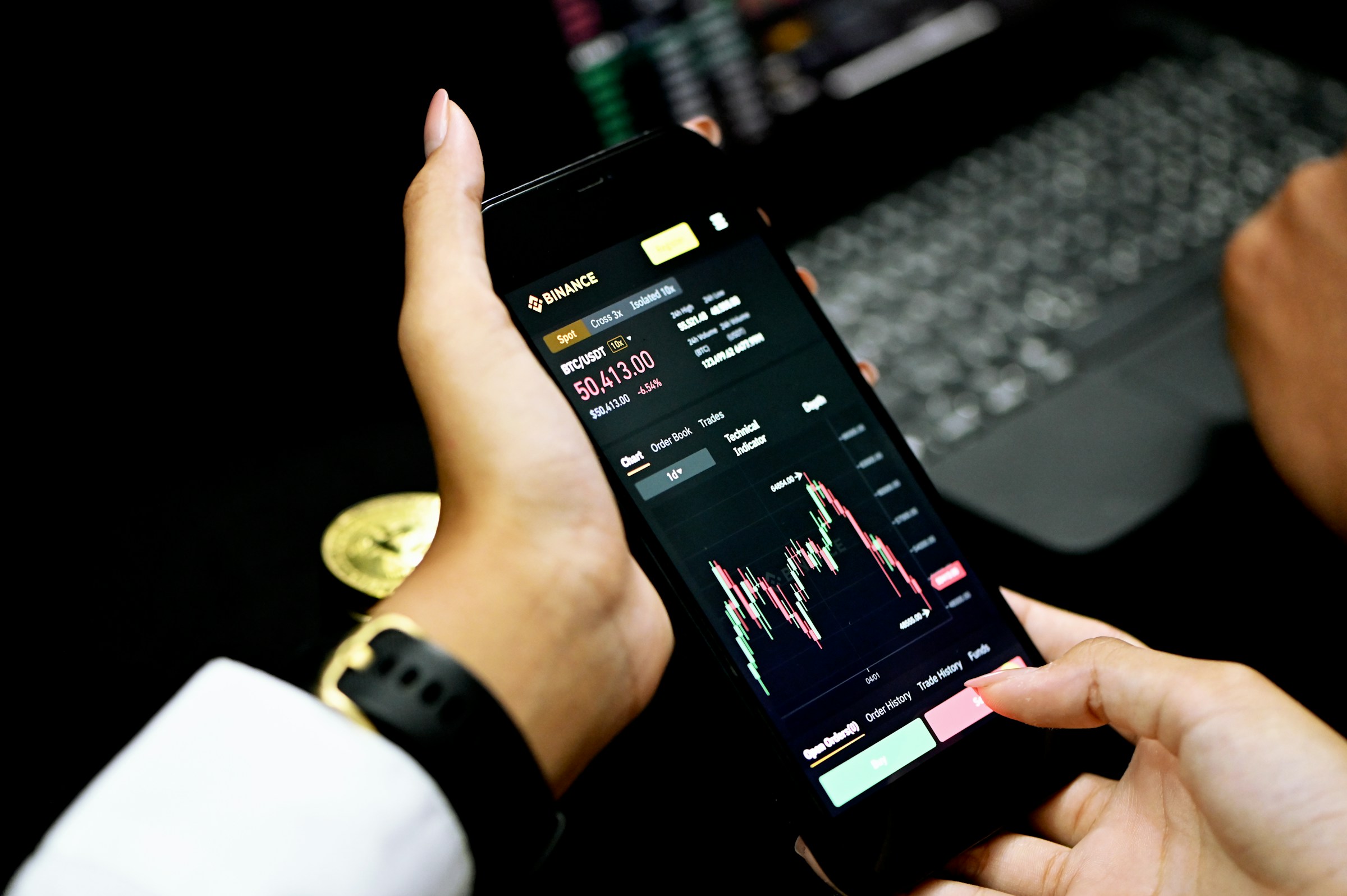
Traders repeatedly sabotage their own accounts through predictable errors that have little to do with market knowledge and everything to do with discipline, preparation, and emotional control. According to Stock Market Mistakes to Avoid in 2025, 90% of traders lose money, a statistic that reflects behavioral failures more than analytical shortcomings. These mistakes compound over time, turning winning strategies into losing accounts and eroding both capital and confidence.
Chasing Performance Without Understanding Why Prices Move
Jumping into stocks because they surged 20% last week or appeared on a trending list ignores the fundamental question of whether that momentum reflects genuine business improvement or temporary hype. You're buying enthusiasm, not value, and when sentiment shifts, those gains evaporate faster than they appeared. This reactive approach leaves you holding overpriced positions with no clear exit strategy when the narrative changes.
Build a checklist that defines your entry criteria before you ever see a ticker symbol.
- Revenue growth
- Reasonable valuation multiples
- Competitive advantages
- Clear catalysts should all align before you commit capital
If a stock fails even one criterion, walk away regardless of how exciting the chart looks.
Ignoring Position Sizing and Risk Limits
Allocating too much capital to a single trade transforms normal market volatility into account-threatening losses. When one position represents 30% of your portfolio, a 15% decline wipes out nearly 5% of your total capital in a single move, creating psychological damage that leads to worse decisions afterward. This concentration turns manageable setbacks into emotional crises that override rational planning.
Risk Management and Capital Scaling
Limit each trade to one or two percent of your total account value and enforce strict stop-loss orders based on technical levels or volatility measures. Traditional stock trading requires substantial personal capital to build diversified positions while maintaining these risk controls across multiple holdings.
Platforms like AquaFutures shift that dynamic entirely by providing funded accounts up to $450,000 with built-in risk parameters, including daily loss limits and maximum drawdown protections. Skilled traders prove their strategies through simulated performance, then access the firm's capital while keeping 100% of the first $15,000 in profits and 90% thereafter, with payouts delivered in 24 hours.
Trading Without Clear Entry and Exit Plans
Operating on instinct or vague hunches instead of predefined rules yields inconsistent results, making it impossible to learn what actually works. You enter positions based on feelings, hold them based on hope, and exit based on fear, turning trading into an emotional rollercoaster rather than a systematic process. Without documented criteria, every decision becomes a fresh gamble disconnected from any coherent strategy.
Write down your exact entry triggers, profit targets, and stop-loss levels before placing any order. Review every closed trade in a journal to identify patterns in what worked and what failed, then refine your rules based on evidence rather than memory or emotion.
Overtrading to Force Activity
Executing trades simply to stay busy or chase every market fluctuation inflates costs through commissions, spreads, and taxes while preventing quality setups from fully developing. This hyperactivity also creates mental fatigue that degrades decision quality, turning trading into exhausting work that delivers diminishing returns. Most profitable opportunities require patience, not constant action.
Set a maximum number of trades per week, and execute only when setups fully meet your documented criteria. Emphasize quality over quantity by letting winning positions run according to your plan rather than cutting them short to book quick gains.
Neglecting to Diversify Across Sectors and Asset Classes
Concentrating capital in three tech stocks or one hot sector leaves your portfolio vulnerable to sharp declines when that specific area underperforms, amplifying volatility far beyond what most traders can psychologically handle. This lack of spread turns diversified market growth into concentrated risk that moves entirely with one industry's fortunes. A single regulatory change or earnings disappointment can trigger cascading losses across correlated positions.
Spread investments across different sectors, company sizes, and asset classes using exchange-traded funds or a balanced mix of individual holdings. Periodic rebalancing prevents any single position from dominating your risk profile and ensures you participate in multiple growth opportunities simultaneously.
Related Reading
- Futures Trading Tips
- Spot Trading Vs Futures Trading
- Best Coin For Futures Trading
- Futures Trading Risk Management
- Futures vs. CFD
- Futures Trading Patterns
- Best App For Futures Trading
- Best Crypto Futures Trading Platform
- Best Futures Trading Software
Unlock up to 50% off Your First Funded Account for Futures Trading
You've built the strategy, learned to spot opportunities, and developed the discipline to manage risk. The six steps work, but here's the constraint most traders hit: scaling profitable trades requires capital most people don't have sitting idle. You can execute flawlessly on a $5,000 account and still earn less than minimum wage per hour of research and monitoring. The math simply doesn't reward small accounts the way it does larger ones.
AquaFutures removes that ceiling entirely. Instead of risking personal savings or waiting years to accumulate enough capital for meaningful positions, you prove your ability through simulated performance and gain access to funded accounts up to $450,000. You keep 100% of your first $15,000 in profits and 90% thereafter, with payouts delivered in 24 hours.
Professional Capital and Performance Incentives
The firm absorbs the market risk while you apply the exact strategies you've refined, now amplified with professional-level capital. Your skill matters more than your bank balance, and consistent execution gets rewarded immediately rather than after decades of compounding modest returns.
Ready to turn strategy into income? Explore AquaFutures account options and unlock up to 50% off your first funded account, plus surprise BOGO deals and weekly bonuses that accelerate your path from learning to earning.
