



10 Best Indicators For Futures Trading You Should Know
Best indicators for futures trading can help spot trends, momentum, volume, and volatility. See 10 tools traders use.
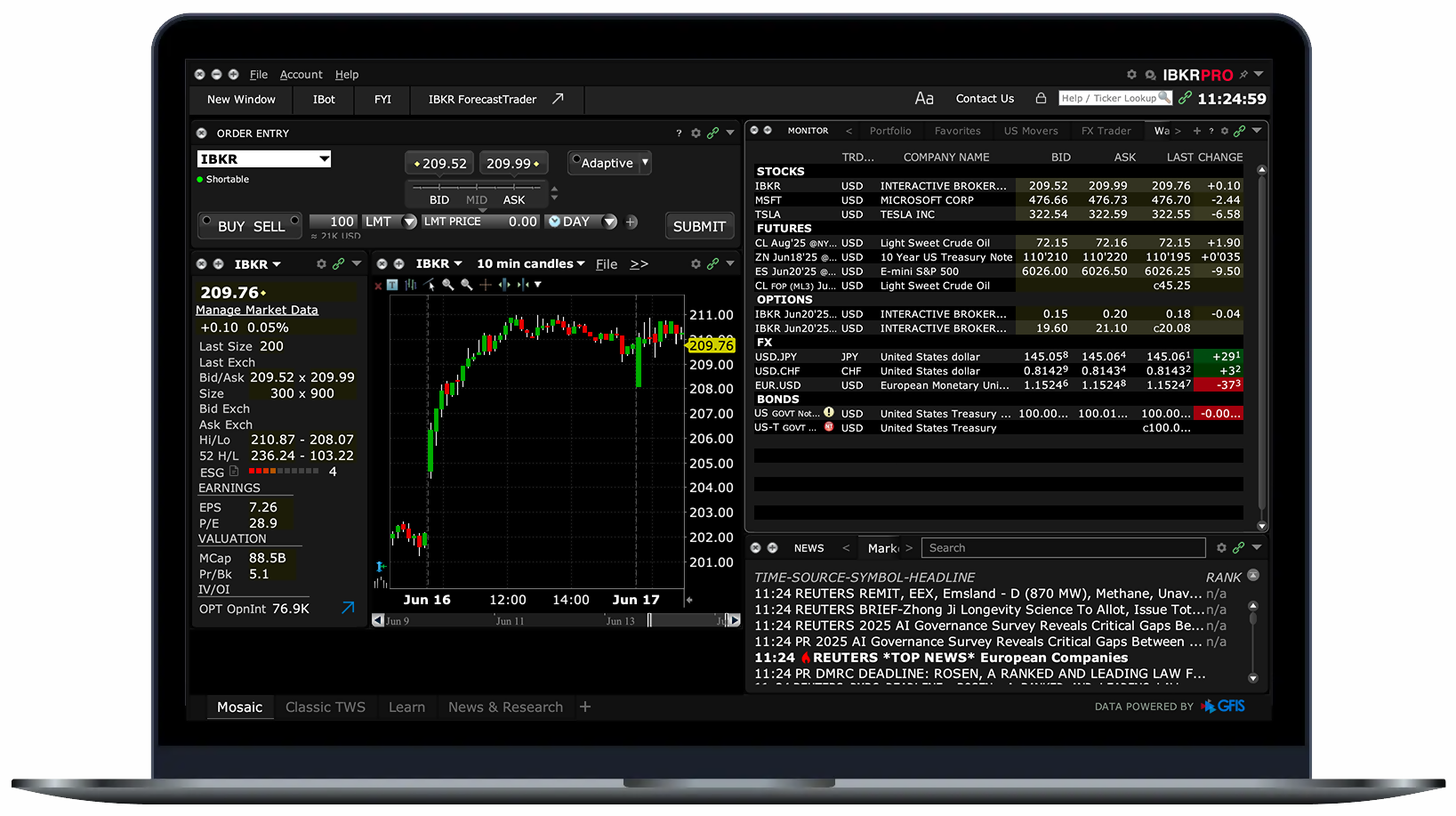
Picture this: you're staring at your trading screen, watching price action unfold in real time, but you can't tell whether to enter or exit a position. Many traders, especially those starting out on the best futures trading platform for beginners, struggle to decode market signals and miss profitable opportunities simply because they lack a solid grasp of technical indicators. This article cuts through the noise and shows you exactly which 10 indicators matter most, how to read them accurately, and how to combine them for high probability setups that can transform your trading results from guesswork into consistent wins.
Once you've identified the right indicators and learned to spot winning patterns, the next challenge becomes accessing enough capital to make your edge work for you. AquaFutures offers funded accounts for futures trading, giving you the buying power to trade with confidence while you refine your indicator-based strategies and build your track record. Instead of risking your own savings while you master moving averages, volume analysis, and momentum oscillators, you can apply your newly learned skills with professional-level capital backing your decisions.
Table of Contents
- What are Technical Indicators, and How Do They Work?
- What Do Traders Use Indicators For?
- Can You Combine Indicators for Better Accuracy in Futures Trading?
- 10 Best Indicators For Futures Trading You Should Know
- How to Combine Indicators for Better Signals
- How to Choose the Right Indicators for Your Trading Style
- Unlock up to 50% off Your First Funded Account for Futures Trading
Summary
- Over 70% of traders use technical indicators in their strategies, making them foundational tools rather than optional extras in futures markets. These mathematical calculations convert complex price and volume data into visual signals that help interpret trends, momentum shifts, and timing without claiming to forecast the future with certainty.
- Combining indicators across categories (trend, momentum, volatility, volume) improves trade quality by filtering out noise and confirming signals before committing capital. Single indicators produce conflicting messages during choppy markets or volatility spikes, trapping traders in losing positions, while layered readings demand alignment across independent measurements before entry.
- Your trading rhythm determines which indicators deliver reliable signals and which create confusion. Scalpers watching one-minute charts need instant feedback from fast-reacting tools, while swing traders holding positions across days require slower filters that ignore intraday noise.
- Default indicator periods suit general use but rarely match specific asset volatility or preferred timeframes. A 14-period RSI might lag on a five-minute chart where price moves rapidly, while a 9-period version reacts faster to intraday shifts without triggering constant whipsaws.
- Effective setups limit charts to at most three indicators to avoid paralysis and maintain speed during fast-moving sessions. Pairing two momentum oscillators restates the same information twice and adds clutter without fresh insight, but matching an exponential moving average with RSI and VWAP delivers three distinct perspectives on direction, speed, and institutional participation.
AquaFutures offers funded accounts for futures trading with up to $450,000 in capital, letting traders apply customized indicator strategies without personal risk while working toward the 6% profit target required for weekly payouts at 100% of the first $15,000.
What are Technical Indicators, and How Do They Work?

Technical indicators are mathematical calculations based on historical price, volume, and related market data that help traders interpret market behavior and spot potential opportunities. These tools convert complex information into simple visual signals on charts, aiding decisions on trends, momentum shifts, price swings, and trade timing without claiming to forecast the future with certainty. Over 70% of traders use technical indicators in their trading strategies, making them foundational tools rather than optional extras.
Trend Following Indicators
Trend following indicators smooth out price action to reveal the dominant market direction, whether prices are generally climbing, declining, or stuck in a sideways range. They allow traders to align their positions with the broader flow, hold winning trades longer, and identify possible reversals. Moving averages, MACD, and the Ichimoku Cloud are common examples, often used together for stronger confirmation. These indicators perform best in clear directional markets but can produce unreliable signals during choppy, range-bound conditions.
Momentum Indicators
Momentum indicators assess the speed and magnitude of price changes to indicate whether buying or selling pressure is gaining or losing strength. They highlight overbought or oversold levels and early hints of slowing trends or upcoming reversals. Popular ones are the Relative Strength Index (RSI), Stochastic Oscillator, and MACD. Traders rely on them to time entries during pullbacks or prepare for shifts, though they work even better alongside trend tools to avoid premature signals.
Volatility Indicators
Volatility indicators measure the degree of price movement over time, revealing when markets are likely to expand with bigger swings or contract into quieter periods. In volatile arenas like futures, they guide risk decisions such as stop-loss placement and position sizing. Leading examples include Bollinger Bands and Average True Range (ATR). These tools help traders recognize changing conditions and balance opportunity against greater risk exposure.
Volume-Based Indicators
Volume-based indicators track trading activity levels to confirm the conviction behind price moves. Rising volume often validates a breakout or trend, while fading volume may signal weakness or a temporary shift. They strengthen signals from other indicators and pinpoint price zones likely to act as future support or resistance. Key tools in this group include On-Balance Volume (OBV) and similar volume-weighted measures that reveal whether institutional money is flowing in or out.
What Do Traders Use Indicators For?

Indicators transform raw market data into decision-making tools that help traders spot opportunities, manage risk, and execute with greater consistency. They cut through the emotional noise by providing objective signals on trend direction, momentum strength, and optimal entry and exit timing. In fast-moving futures markets, where a single misjudged position can erase weeks of gains, indicators act as a systematic filter between impulse and strategy.
Revealing When Trends Gain or Lose Control
Trend indicators show whether the market is climbing, falling, or moving sideways, allowing traders to position themselves with the dominant flow rather than against it. Moving averages and trend lines plot recent price action to clarify the broader bias at a glance. When you align trades with the prevailing direction, you raise the probability of sustained gains and avoid the premature losses that come from fighting the current.
The challenge isn't just identifying a trend. It's recognizing when that trend is running out of steam. Momentum indicators measure how forcefully buyers or sellers are driving price action, revealing whether the current move is accelerating or fading. Readings above or below key levels, combined with divergences from price, flag when a trend may be losing conviction.
Timing Entries and Protecting Capital
Indicators highlight specific moments when conditions align for a favorable setup. Crossovers, threshold breaches, and divergences signal when to enter and when to step aside. These tools turn vague price patterns into actionable opportunities, helping traders lock in profits at logical points and exit before signals weaken or reverse. Over many trades, this precision compounds into more consistent results.
Volatility Management and Capital Preservation
Volatility indicators quantify how widely prices are swinging, guiding decisions on position size and stop-loss placement. In choppy conditions, they prevent oversized bets that expose accounts to unnecessary risk. By clarifying risk parameters, these tools support long-term account stability and keep drawdowns in check.
For traders aiming for a specific profit target, such as the 6% threshold required to qualify for funding on platforms like AquaFutures, managing volatility isn't optional. It's the difference between reaching that first $15,000 payout and watching a promising streak evaporate in a single volatile session.
Confirming Breakouts and Filtering False Moves
Combining trend and volume indicators adds extra validation to potential breakouts or reversals. When price surges with rising volume or momentum shifts at key support or resistance, traders gain greater confidence in the setup. This confirmation step filters out false moves that trap inexperienced participants, leading to higher success rates and fewer frustrating whipsaws.
No single indicator guarantees results, and they work best when integrated with sound risk management and a well-tested trading plan. Applied thoughtfully, they become reliable allies in a trader's overall approach, turning market noise into clarity and emotional reactions into disciplined decisions.
Related Reading
- Best Futures Trading Platform for Beginners
- Is Trading A Good Career
- Why Trade Futures Instead Of Options
- Is Futures Trading Gambling
- How To Start Futures Trading
- What Is Leverage in Futures Trading
- What Is Crypto Futures Trading
- How To Become A Professional Trader
Can You Combine Indicators for Better Accuracy in Futures Trading?
Yes, combining indicators from different categories improves trade quality by filtering noise and confirming signals before you commit capital. The approach works because each tool measures a distinct market dimension (trend, momentum, volatility, volume), so layered readings reduce false alarms that single indicators produce during choppy or transitional conditions. Combining indicators, time frames, and filters to identify high-probability trade setups helps traders avoid premature entries and exit weak positions before they deteriorate.
Why Single Indicators Struggle in Volatile Futures Markets
Relying on just one measure, such as a moving average or momentum oscillator, frequently triggers false entries during the choppy or ranging conditions typical in futures. These tools can lag behind sudden price shifts or ignore volume clues, leaving traders exposed to whipsaws that eat into accounts. This shortcoming stands out in leveraged environments where even small missteps compound quickly. Without extra layers of insight, decisions rest on incomplete pictures, which helps explain why so many retail futures traders see net losses over time.
How Combining Indicators Builds Stronger Confirmation
Pairing indicators that examine separate market aspects lets signals reinforce one another, filtering out weaker or random moves. A trend reading backed by rising momentum, for example, raises confidence before you pull the trigger on a position. The result is not perfect accuracy but noticeably better trade quality. Traders who adopt this approach often report fewer false alarms and a clearer sense of when conditions truly line up in their favor.
Picking Indicators From Distinct Categories
The smartest combinations draw from different groups (trend, momentum, volatility, or volume), so each adds fresh information rather than repeating the same message. One tool might highlight direction while another checks speed or participation, giving a well-rounded view without overlap. This category-based thinking fits futures trading especially well, where rapid moves and high leverage demand quick yet balanced analysis. Limiting the mix avoids clutter and keeps focus on what actually matters for each setup.
Tested Combinations That Work Well for Futures
Common effective pairs include exponential moving averages with the relative strength index to confirm both direction and strength, or the moving average convergence divergence paired with Bollinger Bands to catch volatility expansions in index or energy futures. Adding a volume-based filter, such as VWAP, can further validate breakouts. These setups shine because they complement one another in real market conditions. They help time entries during trends or reversals while reducing the guesswork that single indicators often leave behind.
Putting Combined Strategies to the Test
Backtesting a new multi-indicator mix on historical futures data lets you measure its performance across different market phases and contract types. Fine-tune settings to match your preferred time frames, always watching for realistic results rather than curve-fitted perfection. Live demo testing then confirms whether the approach holds up under actual conditions. This step builds discipline and helps ensure the strategy supports consistent decision-making over the long run.
Steering Clear of Overloading Your Charts
Keep the total to two or three indicators at most so your analysis stays clear and fast. Let price action remain the primary guide, using the tools only to confirm rather than override what the chart is already showing. Staying disciplined this way prevents confusion and pairs naturally with solid risk rules. The focus stays on quality over quantity, helping turn indicator insights into steadier results in futures trading.
Related Reading
- Futures Trading For Beginners
- Can You Day Trade Futures Without 25k
- Forex Vs Futures
- Stocks Vs Options Vs Futures
- Benefits Of Trading Futures
- Gold Futures Trading Strategy
- How Does Futures Trading Work
- Trading Gold Futures
- Day Trading Futures Strategies
- Futures Trading Basics
- Futures Trading Guide
10 Best Indicators For Futures Trading You Should Know

Futures traders rely on technical indicators to interpret price action, momentum shifts, and volatility patterns across contracts ranging from stock indexes to commodities and currencies. These tools do not guarantee profits but provide structured ways to spot trends, flag potential reversals, and manage risk more effectively. Whether day trading or swing trading, the right indicators can sharpen timing and boost confidence when combined thoughtfully.
1. Moving Averages (SMA and EMA)
Moving averages calculate average prices over chosen periods to reveal the broader market direction while cutting through short-term noise. The simple moving average treats all periods equally, whereas the exponential version places greater emphasis on recent prices, enabling faster reactions to fresh developments. In futures markets, they serve as foundational tools for trend analysis.
When to Use It
Apply moving averages when the market shows clear directional movement, not sideways chop. They shine during sustained uptrends or downtrends, confirming bias or highlighting dynamic support and resistance levels that price respects.
How to Use It
Plot a shorter average like the 9-period EMA alongside a longer one, such as the 21-period EMA, and watch for crossovers that signal entry opportunities in the trend direction. Traders also trail stops below rising averages in uptrends or exit when price closes decisively below them to protect gains.
2. Relative Strength Index (RSI)
The RSI evaluates the speed and size of recent price changes on a 0-to-100 scale to gauge whether momentum has grown too strong or too weak. Readings above 70 often point to overbought territory, while those below 30 suggest oversold conditions. It helps traders anticipate exhaustion in extended moves without predicting exact reversal points.
When to Use It
Turn to the RSI after prolonged rallies or sell-offs in futures contracts where momentum may be fading. It is especially useful in range-bound or volatile sessions to spot hidden divergences that signal potential shifts.
How to Use It
Monitor for bullish divergence when price records a new low, but the RSI forms a higher low, hinting at weakening downside pressure. Combine it with trend filters by avoiding long entries when the RSI stays above 70 or by confirming uptrends when it holds above 50.
3. MACD (Moving Average Convergence Divergence)
The MACD tracks the gap between two exponential moving averages to reveal changes in momentum and potential trend reversals. It features the MACD line, a signal line for smoothing, and a histogram that illustrates the distance between them. This setup provides visual cues to acceleration or deceleration in price behavior.
When to Use It
Deploy the MACD during pullbacks within a larger trend or at suspected reversal zones. It works well for confirming the start of new momentum phases once the market has stabilized after sharp moves.
How to Use It
Look for the MACD line to cross above the signal line as a bullish cue for long positions, or below it for shorts. Zero-line crosses can validate trend starts, while divergences between price highs and MACD readings signal weakening conviction.
4. Bollinger Bands
Bollinger Bands wrap a middle simple moving average with two outer lines set at standard deviation levels to map volatility expansion and contraction. The bands widen during active swings and narrow during quiet periods. This visual framework highlights whether prices sit at extremes relative to recent behavior.
When to Use It
Use Bollinger Bands in low-volatility environments, where a squeeze signals an impending breakout, or in strong trends, where price rides the upper or lower band. They suit mean-reversion tactics after extreme touches.
How to Use It
Prepare for breakouts when the bands tighten dramatically and await confirmation with volume or another momentum tool. In trending phases, treat band walks as continuation signals while using touches of the outer bands to flag overextended conditions for potential counter-trades.
5. Volume Profile and VWAP
Volume Profile displays horizontal bars showing traded volume at specific price levels, while VWAP computes a volume-weighted average price throughout the session. Together, they uncover high-interest zones where significant activity has occurred and reveal fair-value benchmarks. These volume-centric tools expose institutional footprints that pure price charts often miss.
When to Use It
Rely on them during intraday sessions when pinpointing support and resistance based on actual trading activity matters most. They excel around key market opens or after news events that alter participation levels.
How to Use It
Identify the point-of-control or value-area edges on the Volume Profile as magnets for price reactions, and set limit orders near them. Track price relative to VWAP for mean-reversion setups when it strays far away or for trend confirmation when it acts as dynamic support in rising markets.
6. Stochastic Oscillator
The Stochastic Oscillator compares a futures contract’s closing price to its recent high-low range over a chosen period, typically 14, to highlight momentum extremes. It features two lines: the faster %K and the smoother %D (a moving average of %K). Readings range from 0 to 100, with values above 80 indicating overbought conditions and below 20 signaling oversold territory.
When to Use It
Employ the Stochastic in range-bound or short-term setups where momentum shifts occur frequently. It performs best near key support or resistance levels after extended moves, helping spot potential reversals before price confirms them.
How to Use It
Watch for %K crossing above %D in oversold zones for bullish entries or below %D in overbought zones for bearish signals. Confirm with divergences when price makes new extremes, but the oscillator does not, to increase reliability, and always align with the broader trend.
7. ATR (Average True Range)
The Average True Range quantifies market volatility by averaging the greatest distance between highs, lows, and prior closes over a set number of periods, commonly 14. It ignores direction entirely and focuses solely on how much the price typically moves, helping traders gauge current activity levels.
When to Use It
Use ATR during any trading session to adapt to changing conditions, especially around news events or in volatile contracts like crude oil or equity index futures. Rising ATR values warn of expanding movement, while falling readings suggest quieter periods with fewer opportunities.
How to Use It
Set stop-loss distances at 1 to 2 times the current ATR to give trades breathing room without premature exits. Adjust position sizes based on volatility—higher ATR calls for smaller lots—and project profit targets using multiples of ATR for realistic expectations.
8. Fibonacci Retracements
Fibonacci Retracements draw horizontal levels at key percentages, 23.6%, 38.2%, 50%, 61.8%, and 78.6% between a significant swing high and low. These ratios stem from mathematical relationships and often mark zones where price pauses, reverses, or finds temporary support and resistance after strong moves.
When to Use It
Apply Fibonacci tools after clear impulsive moves in trending futures markets, such as rallies in gold or pullbacks in Nasdaq futures. They work well for planning entries during corrections within the dominant direction rather than in choppy, directionless action.
How to Use It
Draw the tool from recent swing points and watch for price reactions at the 38.2% or 61.8% levels. Combine them with candlestick patterns or other indicators, such as MACD, for confirmation, placing limit orders near these zones and setting stops just beyond them.
9. Ichimoku Cloud
The Ichimoku Cloud is an all-in-one system featuring multiple lines that display trend direction, momentum, and future support or resistance areas. Its standout element is the “cloud,” formed by two leading spans projected forward, offering a visual map of market equilibrium and potential shifts at a glance.
When to Use It
Turn to Ichimoku in trending environments where quick assessment of overall bias matters most. It excels for swing or position trading across various futures, providing forward-looking zones that help filter noise during sustained moves.
How to Use It
Trade in the direction of the price relative to the cloud, above for bullish bias, below for bearish. Look for the conversion line crossing the baseline as an early signal, and use cloud thickness to gauge trend conviction: thicker clouds indicate stronger momentum.
10. ADX (Average Directional Index)
The ADX measures the strength of a trend on a 0-to-100 scale, regardless of its direction. Readings above 25 generally signal a strong trend, while values below 20 point to weak or sideways conditions. It pairs with +DI and -DI lines to add directional context.
When to Use It
Consult the ADX before committing to breakouts or trend-following setups to avoid low-probability trades in choppy markets. It proves valuable across time frames for confirming whether momentum can sustain a move in futures such as currencies or energy.
How to Use It
Enter trades only when ADX rises above 25 and aligns with price action or DI crossovers. Monitor the ADX for a decline to exit or tighten stops as trends lose steam, using it primarily as a filter rather than a standalone signal generator. But owning a toolkit full of sharp instruments means nothing if you don't know which ones to use together or when they cancel each other out.
How to Combine Indicators for Better Signals

Experienced traders rarely depend on a single technical tool for decisions. Pairing two or three complementary indicators from separate categories filters out unreliable alerts, sharpens timing, and builds higher-confidence setups. This balanced method reveals the full market story by blending direction, strength, and participation signals without cluttering the chart.
Blending Trend and Momentum Tools
Moving averages smooth price action to reveal the dominant direction, showing whether buyers or sellers control the broader move. The relative strength index gauges the pace of recent gains or losses to highlight overbought or oversold conditions within that flow.
When price holds above a rising moving average, and the RSI climbs above neutral levels without extremes, the setup gains solid backing for continuation trades. This duo cuts down on premature entries by demanding momentum alignment with the established path, leading to fewer whipsaws in trending markets.
Pairing Volatility and Mean Reversion Signals
Bollinger Bands plot standard deviation bands around a central average to highlight periods of expanding or contracting volatility. The stochastic oscillator compares the latest close to its recent range, pinpointing exhaustion points where reversals may develop.
A squeeze followed by price tagging the outer band while the stochastic reaches extreme readings often flags high-probability bounces in sideways conditions. The combination sharpens reversal timing by confirming volatility extremes with momentum exhaustion, avoiding traps during low-conviction moves.
Merging Volume and Trend Analysis
The volume-weighted average price factors in actual trading activity to reflect the true average price at which most shares changed hands. The moving average convergence divergence tracks the gap between two smoothed averages to detect shifts in underlying power.
Price crossing above the VWAP line at the same time the MACD histogram expands positively confirms strong participation behind the advance. This pairing dismisses low-volume drifts and validates genuine momentum shifts, delivering cleaner entries rooted in real market involvement.
Indicator Diversification and Structural Precision
Most traders stack indicators hoping for extra confirmation, only to discover they've layered tools that measure the same dimension three different ways. When all your signals derive from price alone (moving averages, MACD, RSI), they echo rather than verify. No single indicator can give you perfect buy or sell signals every time, which is why selecting varied categories (trend, momentum, volume, volatility) creates independent checks that catch what one tool misses.
For traders aiming for a 6% profit target to qualify for funding on platforms like AquaFutures, this precision matters. Hitting that threshold consistently requires filtering out the marginal trades that look promising but lack structural support, so every position contributes to steady progress rather than erratic swings that delay your path to that first $15,000 payout at 100% profit split.
Keeping Setups Simple and Actionable
Limit your chart to two or three indicators so you avoid paralysis and maintain speed during fast-moving sessions. More tools don't equal better decisions. They cause confusion when signals conflict or lag behind price action that has already moved. Test any combination on historical futures data to measure its performance across trending, ranging, and volatile periods, adjusting settings to match your preferred time frames without curve-fitting until the results look flawless. But knowing which tools to combine only solves half the problem if you ignore how your own trading rhythm shapes which setups actually work for you.
Related Reading
- Futures Trading Tips
- Spot Trading Vs Futures Trading
- Best Coin For Futures Trading
- Futures Trading Risk Management
- Futures vs. CFD
- Futures Trading Patterns
- Best App For Futures Trading
- Best Crypto Futures Trading Platform
- Best Futures Trading Software
How to Choose the Right Indicators for Your Trading Style

Your trading rhythm determines which indicators deliver reliable signals and which ones create confusion. A scalper watching one-minute charts needs instant feedback from fast-reacting tools, while a swing trader holding positions across days requires slower filters that ignore intraday noise. The mismatch happens when you adopt someone else's setup without considering whether your time horizon, risk tolerance, and execution speed align with those tools. Start by defining how long you typically hold trades and how much screen time you can dedicate to monitoring positions, then select indicators that operate at your natural pace.
Define Your Trading Style and Time Horizon First
Every trader operates differently, whether executing rapid scalps on one-minute charts or holding swing positions across several days. Scalpers require fast-reacting tools that capture micro-moves, while position traders favor slower signals that filter out daily noise over weeks or months. This foundational step eliminates mismatched indicators that either lag behind your entries or flood the chart with irrelevant alerts. By anchoring selections to your exact style, you create a focused toolkit that respects your holding periods and emotional bandwidth for monitoring trades.
Match Indicators to the Market Conditions You Trade Most
Trending markets reward directional tools that highlight sustained moves, whereas ranging or choppy sessions call for oscillators that flag exhaustion points. Volatility spikes benefit from bands or range measures that adapt to expansion and contraction phases common in your chosen assets. Understanding these recurring environments prevents reliance on tools that perform poorly in your primary setups. The result is a selection process that generates relevant signals only when conditions align with your edge, boosting win rates without constant chart adjustments.
Select Indicators by Their Core Function and Category
Trend tools reveal overall direction, momentum oscillators measure speed and exhaustion, volatility indicators expose range boundaries, and volume measures confirm participation strength. Choosing one primary tool from each relevant category ensures fresh perspectives rather than repeated price-derived data. This structured categorization avoids overlap and builds layered confirmation that strengthens your style-specific decisions. Traders gain a complete market picture, direction, plus conviction, without the confusion of redundant readings that dilute focus during live sessions.
Customize Indicator Settings to Your Exact Parameters
Default periods rarely suit every style or asset, so adjusting look-back lengths or thresholds fine-tunes sensitivity for your timeframe and volatility profile. Shorter settings heighten responsiveness for active intraday work, while extended periods smooth signals for multi-day holds. Thoughtful customization transforms standard formulas into personalized filters that reduce false triggers and improve timing precision. The outcome is indicators that behave predictably within your workflow, supporting repeatable rules instead of guesswork.
Validate Your Choices Through Rigorous Backtesting
Historical testing across varied market regimes reveals how selected indicators perform under the exact conditions of your style, exposing weaknesses before real capital enters the picture. Demo forward-testing then confirms live behavior and psychological fit during actual sessions. This evidence-based refinement process separates hype from proven value, allowing iterative tweaks that sharpen the edge over time. Traders build unshakeable confidence knowing their toolkit has been stress-tested against the realities of their preferred markets and timeframes.
Keep Your Indicator Count Minimal for Maximum Clarity
Limiting the chart to two or three complementary tools prevents conflicting signals and decision fatigue that often arise from visual clutter. Excess layers create analysis paralysis, especially when markets move quickly within your chosen style. A lean setup sharpens focus on genuine confluences and keeps price action as the ultimate authority. Simplicity preserves mental energy for execution and risk management, ensuring every indicator serves a distinct, high-value role in your overall strategy.
Capital Access and Risk-Free Scaling
Once your indicators are dialed in to match your trading style perfectly, consider taking them live in a funded futures environment where personal risk stays off the table. AquaFutures operates as a proprietary trading firm that delivers instant funding to futures traders, allowing participants to trade with the firm’s capital of up to $450,000 across Futures, Forex, Indices, Metals, and Crypto markets, with no liability for any losses.
The platform features advanced tools through ProjectX and Volumetrica, offers 100 percent of the first $15,000 in profits to the trader and 90 percent thereafter, provides unlimited trading periods with no hidden rules or time limits, and guarantees payouts within 24 hours. With 24/7 dedicated support and free educational live trading shows via AquaTV, AquaFutures gives you the capital and infrastructure to test and scale your style-specific indicator strategies immediately.
Unlock up to 50% off Your First Funded Account for Futures Trading
Mastering the best indicators for futures trading means nothing if you're grinding $2,000 accounts where even a solid 10% gain nets $200 before commissions. You've learned to stack Volume Profile with MACD, to time entries using RSI divergences, and to manage risk with ATR-based stops, but your capital limits what those skills can actually earn. The gap between knowing what works and earning meaningful income isn't about strategy. It's about access to size.
Simulated Capital and Performance-Based Scaling
AquaFutures removes that barrier by funding your trading with up to $450,000 in simulated capital while you keep the majority of profits you generate. You pay a one-time or low monthly fee, trade futures on platforms like ProjectX and Volumetrica using the exact indicator setups you've tested, follow clear risk parameters, and withdraw 100% of your first $15,000 in profits, then 90% ongoing. Payouts arrive within 24 hours, or they add $500, with zero activation fees, no time limits on trading periods, and 24/7 support. You bear zero liability for losses because the firm assumes the risk while you apply your proven methods consistently. Ready to trade your refined indicator strategies with real size and weekly payouts? Explore AquaFutures account options today to get funded fast and start scaling your edge. Unlock up to 50% off your first funded account, plus weekly surprise BOGO deals and bonuses.
