



How Does Futures Trading Work? All You Need to Know in 2026
How does futures trading work? See how futures contracts, leverage, margins, and risk work before you start trading in 2026.
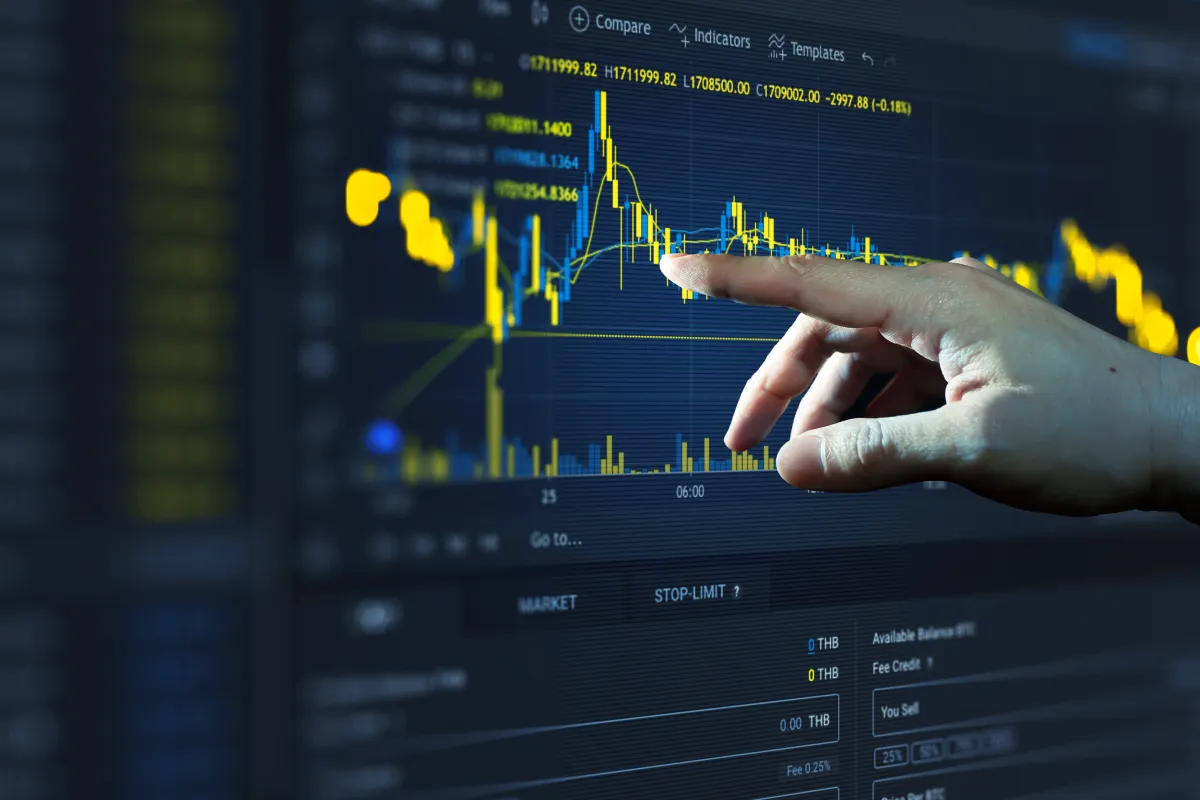
Futures trading can feel like a maze of margin requirements, contract specifications, and leverage ratios that leave most beginners staring at their screens, wondering where to start. You've probably heard stories about traders making impressive gains or catastrophic losses, but understanding how futures contracts actually work, from initial margin to settlement dates, remains frustratingly unclear. This article breaks down the mechanics of futures trading into digestible steps, showing you exactly how contracts function, what moves prices, and how to identify genuine opportunities while protecting your capital as you begin your journey in 2026.
Once you understand how futures trading works, the next challenge becomes finding enough capital to practice your strategies without risking your savings. AquaFutures offers funded accounts for futures trading, providing you with the buying power to trade real markets while limiting your personal financial exposure.
Table of Contents
- What is Futures Trading, and What Assets Can Be Traded Using Futures?
- How Does Futures Trading Work?
- Is Futures Trading Suitable for Beginners?
- How to Start Futures Trading
- How to Become a Profitable Futures Trader
- Unlock up to 50% off Your First Funded Account for Futures Trading
Summary
- Futures trading involves standardized, exchange-traded contracts that obligate buyers and sellers to transact a specific asset at a predetermined price on a set future date. These derivative instruments trade on regulated platforms such as CME, COMEX, NYMEX, and CBOT, and participants use them either to hedge against adverse price movements or to speculate on anticipated price shifts.
- Futures markets operate 23+ hours per day, enabling participants to react to overnight news and global economic shifts outside traditional stock market hours. This extended access matters when geopolitical announcements or earnings surprises hit during Asian or European sessions, creating opportunities or risks that cannot wait until the New York opening bell.
- Optimus Futures reports that 90% of futures traders lose money, often because they underestimate how quickly leverage can turn a small mistake into a margin call. Approaching positions with strict sizing rules and stop-loss orders turns leverage into a manageable feature rather than a hidden danger, allowing traders to treat each trade as a calculated business decision that protects the account while learning.
- Micro-sized contracts require far less capital than standard ones, with some brokers allowing traders to start with as little as $50 per micro contract, according to Optimus Futures. This lower barrier makes it possible to gain live market experience without committing large sums upfront, reducing the emotional pressure that makes beginners worry about survival instead of focusing on what each outcome teaches.
- Profitable futures trading strategies for 2025 include trend following, breakout trading, and mean reversion approaches that traders can backtest against historical data to confirm an edge before risking capital. Documenting the strategy in writing and reviewing it regularly turns random trading into a repeatable process that withstands emotional pressure, while regular performance audits (reviewing win rates, risk-reward ratios, and adherence to the plan) identify areas for refinement and prevent complacency.
AquaFutures addresses this by providing instant funding of up to $450,000 for futures trading, allowing participants to execute disciplined strategies across CME, COMEX, NYMEX, and CBOT exchanges while keeping 100% of the first $15,000 in profits and operating under clear drawdown rules, with no personal liability for losses.
What is Futures Trading, and What Assets Can Be Traded Using Futures?

Futures trading involves standardized, exchange-traded contracts that obligate buyers and sellers to transact a specific asset at a predetermined price on a set future date. These derivative instruments derive their value from underlying assets ranging from agricultural commodities to financial benchmarks, and they trade on regulated platforms like CME, COMEX, NYMEX, and CBOT. Market participants use futures either to hedge against adverse price movements or to speculate on anticipated shifts, with leverage amplifying both potential gains and losses through margin requirements that control positions far larger than the capital deposited.
Agricultural Commodity Futures
Farmers and food processors rely on agricultural futures to lock in prices months before harvest or processing seasons arrive. A single corn contract represents 5,000 bushels, establishing clear quantity and quality standards that eliminate ambiguity in commercial transactions. A wheat producer facing uncertain fall prices might sell futures contracts in spring to guarantee revenue regardless of market declines, while a cereal manufacturer buys contracts to cap ingredient costs against potential supply disruptions. Most positions close through offsetting trades before expiration rather than physical delivery, giving commercial users flexibility without the logistics of moving actual grain.
Energy Futures
- Crude oil
- Natural gas
- Gasoline
- Heating oil contracts
Reflect global supply dynamics shaped by geopolitical events and seasonal demand patterns. Airlines use fuel futures to stabilize operating expenses during peak travel periods, buying contracts that cap jet fuel costs even if crude prices spike unexpectedly. Energy producers take the opposite position, selling futures to protect revenue when oversupply threatens margins. Cash settlement or offsetting trades typically replace physical delivery, allowing efficient risk management without handling barrels or pipeline capacity.
Metal Futures
Precious metals like gold and silver serve as inflation hedges, while industrial metals such as copper and aluminum help manufacturers secure raw material costs. Jewelers buy gold futures to protect against price surges that would erode profit margins, and electronics firms lock in copper prices to stabilize production budgets across quarterly cycles. Contracts often feature cash settlement options, though some permit physical delivery under strict exchange-certified quality guidelines that ensure consistency across all market participants.
Equity Index Futures
These contracts track broad benchmarks, including the S&P 500, Nasdaq-100, and Russell 2000, offering exposure to overall market direction without owning individual shares. Portfolio managers sell index futures to shield equity holdings from expected downturns, with gains offsetting portfolio losses during corrections. Futures markets operate 23+ hours per day, enabling participants to react to overnight news and global economic shifts outside traditional stock market hours. This extended access matters when geopolitical announcements or earnings surprises hit during Asian or European sessions, creating opportunities or risks that can't wait until the New York opening bell.
Bridging Theoretical Expertise With Institutional Capital Access
Understanding contract specifications, margin requirements, and settlement procedures prepares you for live market conditions, but applying that knowledge requires capital that most new traders don't have. AquaFutures provides funded accounts up to $450,000 for futures trading, allowing you to practice these strategies across the CME, COMEX, NYMEX, and CBOT exchanges while keeping 100% of your first $15,000 in profits. This removes the barrier between theoretical understanding and real execution, giving you the buying power to trade actual contracts without risking personal savings as you build experience across different asset classes. The mechanics make sense on paper, but how these contracts actually move through exchanges and clearinghouses reveals why futures markets function differently than anything else you've encountered.
Related Reading
- Best Futures Trading Platform for Beginners
- Is Trading A Good Career
- Why Trade Futures Instead Of Options
- Is Futures Trading Gambling
- How To Start Futures Trading
- What Is Leverage in Futures Trading
- What Is Crypto Futures Trading
- How To Become A Professional Trader
How Does Futures Trading Work?

Traders enter a futures position by agreeing to either buy or sell the contract through a regulated marketplace, where bids and offers determine the current price in real time. The exchange matches orders electronically and guarantees performance, enabling participants to open or close positions with ease at any point before expiration. Price discovery happens continuously through competitive bidding, and the contract's value fluctuates with the underlying market.
Understanding Long and Short Positions
A long position means the trader buys a futures contract in anticipation of rising prices, profiting if the market moves higher by the time the position closes or expires. Conversely, a short position involves selling a contract first, expecting prices to decline, allowing the seller to buy it back later at a lower price for a gain. Both sides remain obligated until the trade offsets or settles, creating balanced risk exposure regardless of market direction. This symmetry lets you profit from downturns just as easily as rallies, provided you read momentum correctly.
Margin and Daily Settlement
Futures require only an initial margin deposit (typically a small percentage of the contract's full notional value) as collateral to open a position. This low entry barrier creates leverage, letting traders control large exposures with limited capital. At the close of each trading session, the exchange recalculates the value of every open position based on the day's settlement price and credits or debits the trader's account accordingly. Gains add to available funds immediately, while losses reduce them and may trigger additional margin requirements. The process keeps the market solvent and ensures both parties maintain sufficient collateral throughout the contract's life.
Expiration and Rollover Decisions
As expiration approaches, traders must decide whether to close the position early, roll it into a later-dated contract, or allow it to settle. Most contracts never reach physical delivery because participants offset before the final date. Settlement occurs either through cash payment of the price difference or, for certain commodities, by actual delivery of the asset at the agreed terms. Rollover lets traders maintain exposure by shifting from the expiring contract to the next active month, preserving directional bets without interruption.
Decoupling Market Education From Personal Financial Risk
The traditional path asks you to risk personal capital while you learn these mechanics under live market pressure. AquaFutures provides funded accounts up to $450,000, allowing you to execute long and short positions across the CME, COMEX, NYMEX, and CBOT exchanges while keeping 100% of your first $15,000 in profits. This removes the need to fund margin accounts from savings, giving you the buying power to practice rollover strategies and daily settlement cycles without financial exposure as you build competence.
WTI Crude Oil Example
Consider the popular WTI Crude Oil futures contract (symbol CL) traded on CME Group. One standard contract represents 1,000 barrels of oil, with prices quoted in dollars per barrel and a minimum price fluctuation (tick) of $0.01, worth $10 per contract. A trader who expects rising oil prices buys (goes long) one contract at $70 per barrel. Later, the price climbs to $72. The $2 increase equals 200 ticks, generating a $2,000 profit per contract ($2 × 1,000 barrels) before fees, assuming the position is closed by selling an offsetting contract.
If the price instead falls to $68, the same trader would face a $2,000 loss, illustrating how daily mark-to-market works and why proper risk controls, such as stop-loss orders, matter. Yet understanding the mechanics is only half the equation when volatility can erase weeks of gains in a single session.
Is Futures Trading Suitable for Beginners?
Futures trading is often described as far too complex and risky for anyone just starting out, deterring many curious newcomers. Yet the picture looks different today, thanks to smaller contract options and structured learning paths that lower the barriers without removing the need for care.
CME Group’s micro futures products, for instance, have made professional-level markets accessible with reduced capital needs. A 2024 CFTC study of thousands of retail futures traders found that while most incur modest net losses, typically $100 to $200 per trading event, many focus on micro contracts with low margins, showing that informed newcomers have a practical entry point to learn without catastrophic risk.
Beginners Who Build Market Knowledge Before Risking Capital
Studying contract specifications, margin mechanics, and tick movements transforms abstract concepts into tools you can actually use. When you understand why a single point shift translates to real dollars, you stop guessing and start reading price action with logic instead of hope. Focusing on regulated exchange resources keeps you clear of the traps that catch unprepared traders, building confidence that comes from knowing what you're doing rather than wishing for luck.
Those Ready to Face Leverage With Clear Rules
Futures amplify both wins and losses through built-in leverage, which means grasping the difference between initial and maintenance margins isn't optional. 90% of futures traders lose money, often because they underestimate how quickly leverage can turn a small mistake into a margin call. Approaching positions with strict sizing rules and stop-loss orders turns leverage into a manageable feature instead of a hidden danger, letting you treat each trade as a calculated business decision that protects your account while you learn.
Individuals Who Start Small Using Micro Contracts and Simulations
Micro-sized contracts require far less capital than standard ones, allowing you to test strategies without exposing large sums to market swings. Paper trading platforms let you practice order types and market flow in real-time conditions, building familiarity before committing actual funds. This measured approach reduces the emotional pressure that makes beginners worry about survival rather than focusing on what each outcome teaches, and, over time, consistent small-scale practice builds the habits that separate short-lived attempts from those who gradually scale up with growing skill.
Transitioning From Personal Risk to Institutional Execution
The traditional path asks you to fund margin accounts with personal savings while you learn these lessons under live market pressure. AquaFutures provides funded accounts up to $450,000 for futures trading, allowing you to execute positions across the CME, COMEX, NYMEX, and CBOT exchanges while keeping 100% of your first $15,000 in profits. This removes the barrier between theoretical understanding and real execution, giving you the buying power to practice rollover strategies and daily settlement cycles without financial exposure as you build competence.
Aspiring Participants Seeking Real Diversification Opportunities
Futures offer exposure beyond stocks, from equity indexes to commodities, helping spread risk in ways traditional accounts cannot match. When added thoughtfully after education, these contracts can smooth portfolio swings during different economic cycles. The key lies in viewing futures as one piece of a broader strategy rather than an all-or-nothing bet, keeping the focus on long-term growth while appreciating the transparency and equal access that regulated futures markets provide to every participant.
Related Reading
- Futures Trading For Beginners
- Can You Day Trade Futures Without 25k
- Forex Vs Futures
- Stocks Vs Options Vs Futures
- Benefits Of Trading Futures
- Gold Futures Trading Strategy
- Trading Gold Futures
- Day Trading Futures Strategies
- Futures Trading Basics
- Best Indicators For Futures Trading
- Futures Trading Guide
How to Start Futures Trading

Starting futures trading requires opening a brokerage account that offers futures access, funding it to meet margin requirements, and placing your first order through the platform's execution interface. Most brokers approve accounts within 48 hours once you complete their futures agreement and demonstrate basic financial suitability. The real work happens before that first click, when you decide which contract to trade, what size position matches your risk tolerance, and how you'll exit if the market moves against you.
Open an Approved Futures Account
Futures brokers ask different questions than stock platforms because leverage changes the risk profile. They'll verify your trading experience, income level, and understanding of margin mechanics through a brief questionnaire that determines approval status. Most platforms require a $500 minimum deposit to activate futures trading privileges, though this amount only covers initial margin for the smallest contracts.
Choose a firm that offers transparent commission structures, reliable execution during volatile sessions, and educational resources that explain contract specifications without marketing fluff. Your account setup also includes linking a bank account for deposits and enabling real-time data feeds, which some brokers bundle at no extra cost, while others charge a monthly subscription.
Fund With Enough Margin for Your First Contract
Initial margin represents the performance bond the exchange requires to open a position, typically ranging from a few hundred dollars for micro contracts to thousands for standard-sized ones. Traders can start with $50 per micro contract, allowing them to gain live market experience without committing large sums upfront.
Maintenance margin sits slightly lower, triggering a call only if your account dips below that threshold due to adverse price movement. Deposit enough to handle normal intraday swings without constant worry, leaving room for a few losing trades as you calibrate your strategy. Underfunded accounts force premature exits when temporary drawdowns hit, turning recoverable positions into realized losses before the market has time to reverse.
Empowering Skill Acquisition via Institutional Capital Support
The traditional path asks you to risk personal savings while you learn position sizing and margin mechanics under live pressure. AquaFutures provides funded accounts up to $450,000 for futures trading, allowing you to execute positions across the CME, COMEX, NYMEX, and CBOT exchanges while keeping 100% of your first $15,000 in profits. This removes the capital barrier between understanding contract specs and actually trading them, giving you the buying power to practice rollover strategies and daily settlement cycles without financial exposure as you build competence.
Choose One Liquid Contract to Master First
New traders often spread attention across multiple markets, diluting focus and missing the patterns that repeat within a single contract. Pick an actively traded future like E-mini S&P 500 or crude oil, where tight bid-ask spreads reduce slippage and high volume ensures fills at quoted prices.
- Study its typical daily range
- Session-specific behavior
- Its reactions to economic releases or geopolitical headlines
Familiarity breeds confidence, letting you recognize when price action deviates from normal patterns and when it simply reflects routine noise. Mastering one contract builds transferable skills faster than superficially sampling ten different markets.
Execute Your First Trade With Defined Risk
- Place a small position.
- One or two micro contracts.
- Immediately set a stop-loss order that caps potential loss at a predetermined dollar amount.
This forces you to calculate risk before profit, a habit that separates disciplined traders from those who hope the market will forgive mistakes. Use limit orders when possible to control entry price, avoiding market orders that can slip during fast moves. Watch how the contract behaves through a full session, noting when volume peaks and how quickly your stop would trigger if hit. The goal isn't to make money on trade one, it's to prove you can follow your plan under real conditions without panic or impulsive adjustments.
Track Every Decision in a Trading Journal
- Record entry price
- Exit price
- Position size
- Reasoning
- Emotional state for each trade in a simple spreadsheet or dedicated journal app
Over time, patterns emerge showing which setups work for your style and which consistently drain capital. Reviewing past trades reveals whether losses stem from poor entries, late exits, or position sizes that amplify stress beyond rational decision-making. This feedback loop accelerates learning because you're analyzing your own behavior instead of copying generic advice that may not fit your risk tolerance or schedule. Consistency in journaling builds consistency in execution, turning random attempts into a repeatable process you can refine month after month.
How to Become a Profitable Futures Trader

Becoming a profitable futures trader requires more than market timing or luck. It demands structured learning, ironclad discipline, and relentless risk control in a leveraged environment where most participants lose money over time. Futures contracts let traders speculate on or hedge price movements in assets ranging from stock indices and commodities to currencies and beyond, all through standardized agreements traded on regulated exchanges. Consistent profitability emerges only when traders treat the process like a professional business, focusing on repeatable edges rather than emotional reactions or get-rich-quick hopes.
Acquire Comprehensive Knowledge of Futures Trading Basics
Futures contracts are standardized, exchange-traded agreements to buy or sell a specific asset at a set price on a future date, with details covering quantity, quality, and settlement clearly defined upfront. Mastering contract specifications, margin requirements, expiration cycles, and how leverage amplifies both gains and losses builds the foundation every serious trader needs to navigate volatility without unnecessary surprises.
This foundational understanding extends to:
- Market mechanics
- Including how open interest
- Volume
- Economic events influence price action across different asset classes
Without it, even the sharpest strategy fails because traders cannot accurately assess real risks or opportunities in live conditions.
Formulate a Detailed Trading Strategy
A winning futures trading strategy clearly defines entry rules, exit criteria, position sizing, and preferred market conditions based on tested patterns rather than gut feelings. Profitable futures trading strategies for 2025 include trend following, breakout trading, and mean reversion approaches that traders can backtest against historical data to confirm an edge before risking capital. Documenting the strategy in writing and reviewing it regularly turns random trading into a repeatable process that withstands emotional pressure. Backtesting the rules against historical data confirms whether the approach has an edge before real capital enters the picture.
Master Risk Management Techniques
Effective risk management limits exposure on every trade, typically to no more than one or two percent of total account equity, to protect against the inevitable string of losing trades that even top performers endure. Setting hard stop-loss levels, using appropriate position sizes, and avoiding over-leveraging keep drawdowns manageable and preserve capital for future opportunities. Advanced techniques include trailing stops, diversification across uncorrelated markets, and daily loss limits that force a trader to step away when conditions deteriorate. These rules separate survivors from those who blow up accounts, ensuring longevity in a market designed with built-in leverage.
Strengthen Your Trading Mindset and Discipline
Trading psychology determines long-term success more than any indicator because fear and greed drive most retail losses. Developing emotional control through routines such as pre-market preparation and post-trade reviews helps traders execute their plan flawlessly even during high-stress periods. Maintaining a detached, process-oriented mindset means accepting losses as business expenses and focusing solely on following rules. Journaling every trade with detailed reasoning builds self-awareness and prevents repeated mistakes that erode profitability.
Practice Thoroughly With Simulation Accounts
Paper trading or demo accounts allow traders to test strategies in real-time market conditions without financial risk, revealing flaws in execution or psychology before real money is on the line. Consistent profitability in simulation over several months provides the confidence needed to transition to live trading at a small size. Gradually scaling from micro contracts to larger positions while maintaining the exact same rules bridges the gap between theory and live performance. This deliberate practice hones timing, order execution, and adaptability across varying market regimes.
Choose Reliable Platforms and Brokers
Selecting a futures broker with low commissions, fast execution, robust order types, and strong regulatory compliance directly impacts net profitability and trade quality. Advanced charting tools, reliable data feeds, and mobile access ensure traders can monitor and adjust positions efficiently regardless of location. Evaluating platform features against personal trading style, such as support for automated strategies or deep liquidity in chosen contracts, prevents costly slippage or downtime. A reputable broker also provides educational resources and clear margin policies that align with the trader's risk framework.
Commit to Ongoing Learning and Performance Review
Markets evolve constantly, so profitable traders treat education as a lifelong pursuit through courses, market analysis, and peer discussion. Regular performance audits (reviewing win rates, risk-reward ratios, and adherence to the plan) identify areas for refinement and prevent complacency. Adapting strategies to changing volatility or new economic drivers while preserving core risk rules keeps the edge sharp. This iterative process, combined with patience, separates those who achieve sustained profitability from those who quit early.
Maximizing Strategic Scale Through Instant Institutional Funding
Most traders face capital constraints that limit their ability to apply proven strategies at a meaningful size, even after mastering these principles. AquaFutures provides instant funding for futures traders, supplying up to $450,000 in firm capital so participants can execute disciplined strategies across CME, COMEX, NYMEX, and CBOT exchanges while keeping 100% of profits on the first $15,000 earned and 90% thereafter.
Traders face no liability for losses, operate under clear drawdown rules with options for standard or pro accounts, and benefit from unlimited trading periods with no profit targets in most models. This model perfectly complements the disciplined, risk-focused approach described here by removing capital constraints and emphasizing execution over personal financial exposure. The principles make sense, but the real question is whether you can access the capital needed to put them into practice without risking everything you've saved.
Related Reading
- Futures Trading Tips
- Spot Trading Vs Futures Trading
- Best Coin For Futures Trading
- Futures Trading Risk Management
- Futures vs. CFD
- Futures Trading Patterns
- Best App For Futures Trading
- Best Crypto Futures Trading Platform
- Best Futures Trading Software
Unlock up to 50% off Your First Funded Account for Futures Trading
You understand how futures contracts work, what margin means, and why leverage demands respect. The gap between knowledge and execution closes when you stop risking personal savings and start trading with firm capital designed to support your growth. AquaFutures removes that barrier by offering up to 50% off your first funded account, giving you instant access to capital up to $450,000 so you can apply everything you've learned without the financial exposure that sidelines most new traders. Choose your account size starting at $25,000, $50,000, $100,000, or $150,000, then decide whether to skip the evaluation entirely and receive instant funding or complete a straightforward one-step challenge with a 6% profit target.
Funded Capital and Performance Incentives
Either path leads to the same outcome: you trade real futures contracts on CME, COMEX, NYMEX, and CBOT exchanges using platforms like ProjectX integrated with TradingView, keeping 100% of your first $15,000 in profits and 90% beyond that.
- Clear daily loss limits, transparent drawdown rules, and position sizing that scales with your account keep risk manageable while you build consistency.
- Request payouts on demand within 24 hours, hold up to three funded accounts simultaneously, and benefit from weekly or bi-weekly reward cycles that recognize steady execution.
Over 190,000 traders trust the model because it prioritizes your skill over your savings, turning theoretical understanding into live market experience without the capital constraints that delay most careers. Ready to move from understanding futures trading to actually doing it with funded capital? Explore account options and claim your discount today at AquaFutures.
