



Is Trading Futures Profitable? A Realistic Guide for 2026
Is trading futures profitable? Get a realistic guide to leverage, risk, and strategy to decide whether futures trading fits you.

You've probably heard the stories: traders making thousands in a single day, others losing their entire accounts just as fast. When evaluating the best futures trading platform for beginners, the real question isn't whether futures can be profitable, but whether you can develop the skills, discipline, and strategy to consistently extract profits from these leveraged markets. This article cuts through the noise to show you exactly what it takes to profit from futures trading in 2026, complete with realistic return expectations, proven risk management techniques, and actionable strategies that work whether you're just starting or refining your approach.
Building your trading skills requires capital, but many beginners face a challenge: risking personal funds while still learning can be costly. AquaFutures offers funded accounts for futures trading, giving you access to substantial trading capital without putting your own money at risk during the learning curve.
Table of Contents
- What is Futures Trading, and How Does It Work?
- Is Trading Futures Profitable?
- How Much Money Can You Make Trading Futures Realistically?
- Key Factors Influencing Futures Trading Profitability
- How to Become a Profitable Futures Trader
- Unlock up to 50% off Your First Funded Account for Futures Trading
Summary
- Futures trading operates on margin, typically requiring just 3 to 12 percent of a contract's total value as a performance deposit, creating leverage that cuts both ways. A 5 percent adverse move on a position leveraged 10-to-1 wipes out your entire deposit, which explains why undercapitalized traders often exit the market before their strategies have time to prove themselves.
- Regulatory data shows only about 40 percent of retail futures traders reach break-even or better, with the median participant recording deficits between one hundred and two hundred dollars per set of trades. The gap between winners and losers comes down to skill refinement, position sizing, and emotional control rather than market secrets or lucky streaks.
- Consistent performers with proven strategies and disciplined risk management often target monthly returns of 2 to 8 percent on their trading capital. Beginners typically face modest losses or breakeven results during the first six to twelve months as they pay tuition in the form of screen time and small setbacks. Breaking even by month six represents real progress, and occasional profitable weeks signal that habits are taking root even if the account balance stays flat.
- Risking more than two percent of your account on any single trade accelerates the path to ruin, because a string of five or six losers in a row can cut your buying power in half before you've learned what went wrong. Slippage and commissions carve into gross returns in ways that seem trivial per trade but compound into significant drags over hundreds of executions.
- U.S. futures gains qualify for a blended tax rate under Section 1256, with 60 percent taxed at the long-term capital gains rate regardless of holding period and 40 percent at the short-term rate. This structure often results in a lower effective tax burden than that of ordinary stock or option trading.
Funded accounts for futures trading address the capital barrier by providing simulated capital of up to $450,000, allowing traders to prove consistency and earn real payouts based on performance while the firm absorbs losses during the learning curve.
What is Futures Trading, and How Does It Work?
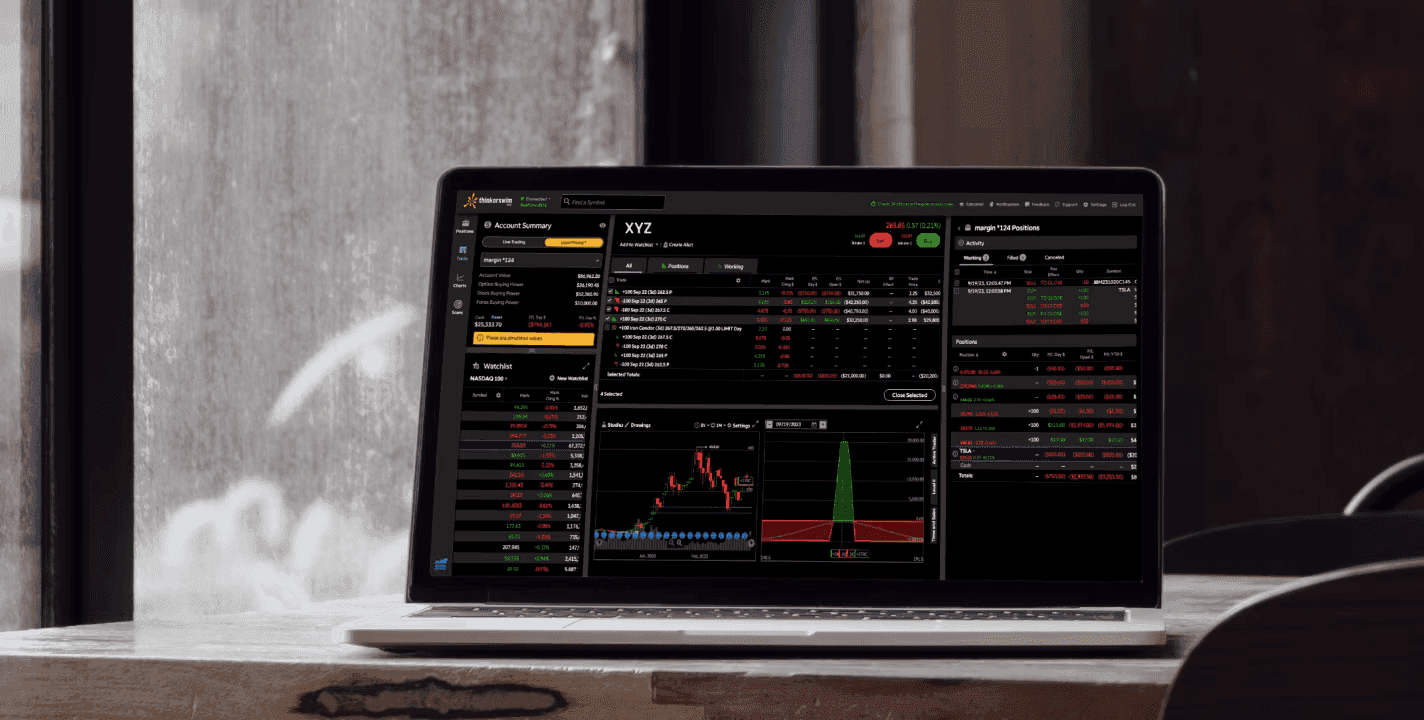
Futures trading lets you buy or sell an asset at a predetermined price on a specified future date, creating a binding contract between two parties through a regulated exchange. You can trade anything from crude oil and wheat to stock indexes and currencies without ever owning the physical commodity. The exchange standardizes contract sizes, quality specifications, and delivery terms, leaving only the price open to negotiation through continuous bidding, creating transparent, liquid markets that anyone with a brokerage account can access.
The Mechanics of Entering and Exiting Positions
When you go long, you agree to purchase the underlying asset later, betting that prices will rise. Going short commits you to deliver that asset, profiting if prices fall. Most traders never hold contracts to expiration, instead closing positions by taking the opposite trade and capturing the price difference as profit or loss. A single corn futures contract represents 5,000 bushels, illustrating how standardized quantities allow seamless transfers of massive obligations without physical handovers in most cases.
How Margin Amplifies Both Opportunity and Risk
Futures operate on margin, typically requiring just 3 to 12 percent of a contract's total value as a performance deposit rather than full payment upfront. This leverage means you control substantial exposure with modest capital, but it cuts both ways. If the market moves against you, daily mark-to-market settlement debits your account immediately, and falling below the maintenance margin threshold triggers a margin call demanding additional funds or forced liquidation. The math is unforgiving: a 5 percent adverse move on a position leveraged 10-to-1 wipes out your entire deposit, which explains why undercapitalized traders often exit the market before their strategies have time to prove themselves.
Capital Funding and Risk Mitigation
The traditional path asks beginners to risk personal savings while still mastering contract specifications, margin calculations, and the psychological pressure of daily settlements. Platforms like funded accounts for futures trading shift that burden by providing simulated capital up to $450,000, allowing you to build consistency and earn real payouts based on performance rather than gambling your own money during the steep learning curve. This approach transforms leverage from a potential account killer into a tool you can learn to wield with proper support and adequate capital backing.
Cash Settlement Versus Physical Delivery
Over 90 percent of futures contracts close before expiration through offsetting trades, never requiring actual delivery of barrels, bushels, or currency. Cash-settled contracts, common for stock indexes and financial products, simply transfer the net monetary difference based on the final settlement price. Physical delivery does occur in commodity markets where producers and consumers need the actual goods, but clearinghouses oversee every detail to ensure specifications match exactly what the contract promised, protecting both parties while keeping the process efficient and standardized.
Is Trading Futures Profitable?

Experienced participants can generate meaningful returns, but regulatory data shows the majority of retail traders face net losses. The median participant records deficits between one hundred and two hundred dollars per set of trades, and only about 40 percent reach break-even or better. Profitability hinges on skill, discipline, and sound money management rather than luck or market timing alone.
The Leverage Trap Most Traders Fall Into
Futures contracts require only a fraction of the full contract value as initial margin, often under 10 percent, allowing you to control large positions with modest capital. Correct price forecasts can therefore produce outsized percentage returns compared with unleveraged stock investments. The same leverage magnifies losses when markets move against a position, sometimes forcing you to deposit additional funds or exit at a disadvantage. Small daily price fluctuations can quickly erode or wipe out margin, turning what seems like a limited-risk setup into a high-stakes commitment. 90% of day traders lose money, and leverage is often the accelerant that turns small mistakes into account-ending disasters.
Why Emotional Decisions Compound Losses
High volatility driven by economic releases, geopolitical events, and supply shifts demands constant attention and rapid decision-making. Many retail traders underestimate these forces and hold positions too long or enter without a tested edge. Fear of missing out drives impulsive entries, and revenge trading after losses compounds mistakes. Without strict rules for position sizing and stop losses, even brief unfavorable streaks can lead to account blowouts that end trading careers prematurely.
Leveraging Funded Capital to Navigate the Learning Curve
The traditional path asks beginners to risk personal savings while still mastering contract specifications, margin calculations, and the psychological pressure of daily settlements. Platforms like funded accounts for futures trading shift that burden by providing simulated capital up to $450,000, allowing you to build consistency and earn real payouts based on performance rather than gambling your own money during the steep learning curve. This approach transforms leverage from a potential account killer into a tool you can learn to wield with proper support and adequate capital backing.
Building the Foundation for Consistent Gains
Profitable futures trading requires months or years of education in technical analysis, fundamental drivers, and platform mechanics before risking real capital. Paper trading and back-testing strategies help develop realistic expectations and refine approaches without financial harm. Disciplined risk management, limiting each trade to 1 percent or less of total capital and maintaining a positive expectancy over hundreds of trades, separates consistent winners from the crowd. Continuous review of performance and adaptation to changing market regimes further support long-term viability.
Tax Advantages and Diversification Benefits
U.S. futures gains qualify for a blended tax rate under Section 1256, with 60 percent taxed at the long-term capital-gains rate regardless of holding period and 40 percent at the short-term rate. This structure often results in a lower effective tax burden than ordinary stock or options trading. Futures span dozens of uncorrelated asset classes, enabling traders to spread exposure beyond equities and reduce portfolio volatility during broad market declines. Hedgers such as producers or consumers use futures to lock in prices and stabilize cash flows, turning potential losses from adverse price moves into predictable outcomes.
Related Reading
- Best Futures Trading Platform for Beginners
- Is Trading A Good Career
- Why Trade Futures Instead Of Options
- Is Futures Trading Gambling
- How To Start Futures Trading
- What Is Leverage in Futures Trading
- What Is Crypto Futures Trading
- How To Become A Professional Trader
How Much Money Can You Make Trading Futures Realistically?

Many picture futures trading as an exciting route to quick financial gains thanks to built-in leverage and round-the-clock markets. In reality, the numbers tell a more grounded story: success comes from steady skill-building and smart habits, not overnight windfalls. A 2024 analysis by the Commodity Futures Trading Commission shows that retail traders in futures typically lose money overall, with the median trader facing small net losses of roughly $100 to $200 per trading period. The encouraging part is that those who stick with disciplined approaches and treat trading like a serious business can steadily join the smaller group that builds a reliable income, often starting modestly and growing it over time into something that truly supports their goals.
The True Performance of Retail Futures Traders
Retail futures traders, as a group, face an uphill battle, with most ending up with losses rather than steady profits. The same CFTC study of over 36,000 individual traders from 2021 to 2022 found that about 60 percent sit below break-even, and the overall results skew toward bigger losses for some participants. Many try only a handful of trades; the median trader completes just four short events, each lasting around four days, before stepping back.
This pattern shows why hype around easy money falls short. Casual traders often dip in with micro contracts on low margins, chase quick moves, and exit after early setbacks. The data highlights that persistence alone does not guarantee gains, but it does separate those who learn and refine their process from those who do not.
Key Factors Determining Your Earnings
Your potential returns hinge on a mix of personal capital, experience level, risk controls, and market conditions rather than any single magic formula. Larger accounts allow bigger position sizes without over-leveraging, while strong risk management, such as limiting each trade to 1 percent or less of total capital, helps protect against the inevitable drawdowns that wipe out underprepared traders. External elements like volatility, commissions, and slippage also play a big role in what actually lands in your account. Experienced traders who adapt strategies to current conditions and keep costs low tend to see more consistent results over months and years. In short, earnings reflect how well you balance opportunity with protection.
What Beginners Can Realistically Expect
New traders should prepare for modest or even negative results in the early months while they focus on learning the ropes without big financial pressure. Most beginners start small with micro E-mini contracts, aiming to master one or two markets and simple setups, which often means breaking even or accepting small losses as tuition for building confidence. The first year often involves far more screen time than profit, yet this phase lays the foundation for later success. By tracking every trade and reviewing what works, many move from consistent small losses to occasional breakeven months, setting the stage for gradual income growth once habits solidify.
Pathways for Experienced Traders to Earn More
Traders with a few years of consistent practice and proven edge can target monthly figures that make a real difference, often in the low thousands once they scale responsibly. Theoretical models for E-mini S&P 500 futures, for instance, show that a 60 percent win rate paired with a solid 1:3 risk-reward ratio might require just six well-placed trades a month to reach around $5,000 in gross profit, assuming careful execution and no major surprises from fees. At this stage, many shift toward swing or day styles that match their lifestyle while adding multiple contracts as capital grows. Top performers combine technical setups with basic market awareness, allowing them to compound small daily edges into meaningful yearly returns without chasing unrealistic targets.
Key Factors Influencing Futures Trading Profitability

Market conditions, personal discipline, and structural choices determine whether you compound gains or watch capital evaporate. Profitability isn't about finding a secret indicator or timing the perfect entry. It comes from controlling what you can control (position size, stop placement, emotional state) while adapting to what you cannot (volatility spikes, liquidity shifts, unexpected news). The traders who survive long enough to thrive treat these factors as interconnected systems rather than isolated variables.
Capital Allocation and Position Sizing
Risking more than two percent of your account on any single trade accelerates the path to ruin, because a string of five or six losers in a row (which happens to everyone) can cut your buying power in half before you've learned what went wrong. Proper sizing means scaling contracts to match both your account balance and the instrument's volatility. A crude oil contract swinging three dollars per barrel demands tighter stops and smaller positions than a grain contract moving ten cents, yet beginners often size everything identically and wonder why one bad week ends their run.
Margin Constraints and Liquidation Risk
Undercapitalized accounts force you into positions too large relative to margin requirements, leaving no room for the inevitable drawdowns that test even sound strategies. When your account drops below maintenance margin during a temporary adverse move, brokers liquidate your position at the worst possible moment, locking in losses that patience might have reversed.
Execution Quality and Transaction Costs
Slippage and commissions carve into gross returns in ways that seem trivial per trade but compound into significant drags over hundreds of executions. A two-tick slippage on entry and exit in the E-mini S&P 500 costs fifty dollars per round turn, and if you're targeting eighty-point moves, that friction consumes over half your edge before you've even considered exchange fees. Liquid contracts during active sessions tighten spreads and improve fills, while thinly traded markets or off-hours force you to accept wider bids and asks that silently erode profitability.
Strategic Planning and Friction Control
90% of traders fail due to a lack of a solid trading plan, and part of that failure stems from ignoring how costs accumulate when you chase setups in illiquid conditions or overtrade to make back small losses. Choosing the right contracts and timing entries when volume peaks keeps more of each winning trade in your account, rather than paying it out in friction.
Volatility and Opportunity Density
Calm, range-bound markets compress profit potential because price barely moves beyond transaction costs, turning even correct directional calls into breakeven results after slippage. Explosive volatility delivers larger absolute moves, but it also widens stops and increases the risk of getting shaken out by noise before the trend resumes. The traders who adjust position size downward during high-volatility periods and scale up during stable trends avoid the trap of holding constant exposure regardless of conditions.
Recognizing when your strategy fits current market behavior matters more than stubbornly forcing trades during mismatched regimes. A mean-reversion approach that works beautifully in tight ranges bleeds capital during strong trends, while breakout systems that thrive on momentum deliver whipsaws when volatility collapses.
Psychological Endurance Under Pressure
Staring at real-time profit-and-loss swings that exceed your monthly salary creates emotional interference that most people underestimate until they're in the middle of it. One trader who built custom algorithms to remove discretionary decisions described how scripts acted as gatekeepers, preventing trades when mathematical conditions weren't met and saving him from emotional impulses that previously eroded gains. That systematic discipline, whether enforced by code or written rules, separates those who survive drawdowns from those who abandon proven methods after three losing days.
Psychological Discipline and Execution Gap
The gap between knowing what to do and actually doing it under stress explains why intelligence alone doesn't predict trading success. You can memorize every chart pattern and risk formula, but if fear makes you exit winners early or revenge-trade after losses, the knowledge becomes useless.
Related Reading
- Futures Trading For Beginners
- Can You Day Trade Futures Without 25k
- Forex Vs Futures
- Stocks Vs Options Vs Futures
- Benefits Of Trading Futures
- Gold Futures Trading Strategy
- How Does Futures Trading Work
- Trading Gold Futures
- Day Trading Futures Strategies
- Futures Trading Basics
- Best Indicators For Futures Trading
- Futures Trading Guide
How to Become a Profitable Futures Trader

Becoming a profitable futures trader demands structured learning, disciplined execution, and risk controls that protect capital through inevitable losing streaks. You cannot skip the apprenticeship of screen time, journal entries, and repeated setups that teach you how your emotions respond under pressure. The traders who build sustainable income treat this as a business requiring systems, not as gambling requiring luck.
Master Contract Specifications and Market Mechanics
Understanding how different futures contracts behave separates prepared traders from those who learn expensive lessons in real time. Each market has unique characteristics: E-mini S&P 500 contracts move in quarter-point increments worth $12.50 each, while crude oil ticks represent 10 cents per barrel at $10 per tick, creating vastly different risk profiles even when dollar volatility appears similar on a chart. Knowing margin requirements, trading hours, rollover dates, and how economic reports impact specific sectors prevents the kind of surprises that force premature exits or margin calls during otherwise sound trades.
Market Fundamentals and Structural Analysis
Successful futures trading strategies require understanding market structure, liquidity patterns, and how institutional order flow drives price movements that retail traders seek to capture. This knowledge base is built through deliberate study of contract specifications, exchange rules, and the fundamental drivers that move each asset class, rather than through surface-level chart reading alone.
Build and Document a Repeatable Strategy
Your trading plan must define exact entry conditions, stop-loss placement, profit targets, and position-sizing formulas before you risk a single dollar. Writing these rules down transforms vague intentions into testable hypotheses you can backtest against historical data to confirm positive expectancy. Testing your strategy through hundreds of simulated trades reveals whether the edge you think exists actually appears in real market conditions. Most beginners skip this step and jump straight to live trading, discovering only after painful losses that their approach works beautifully in hindsight but fails when executed forward in time with incomplete information and emotional interference.
Enforce Risk Management as Non-Negotiable
Limiting each trade to one or two percent of total account equity keeps you alive through the losing streaks that destroy overleveraged accounts. Setting hard stop-losses before entering a position removes the temptation to "give it more room" when price moves against you, a rationalization that turns small planned losses into account-ending disasters. Advanced techniques like trailing stops and daily loss limits serve as circuit breakers, forcing you to step away when conditions turn hostile, preserving capital for better setups tomorrow.
The traditional path asks you to risk personal savings while still mastering these disciplines under the psychological pressure of watching real money fluctuate. Platforms like funded accounts for futures trading provide simulated capital up to $450,000, letting you prove consistency and earn real payouts based on performance while the firm absorbs losses during your learning curve. This structure aligns incentives around skill development rather than gambling with money you cannot afford to lose.
Develop Psychological Discipline Through Process
Fear and greed override logic faster than most traders expect, turning well-planned entries into panic exits or revenge trades that compound losses. Building emotional control requires pre-market routines that prepare your mind, post-trade reviews that identify patterns in your decision-making, and journaling that captures the reasoning behind every execution. One trader who survived early blowouts described how forcing himself to wait sixty seconds before entering any discretionary trade filtered out 80 percent of impulsive decisions that previously bled his account, a simple rule that created space between impulse and action.
Loss Management and Process Mindset
Accepting losses as business expenses rather than personal failures shifts your mindset from outcome-focused to process-focused, the only sustainable approach when randomness guarantees that even perfect execution sometimes loses. This detachment takes months to develop and separates those who survive long enough to compound gains from those who quit after the first drawdown tests their resolve.
Unlock up to 50% off Your First Funded Account for Futures Trading
The strategies and discipline outlined here mean nothing if you lack the capital to apply them without constant fear of ruin. Most traders spend months grinding through personal savings, learning expensive lessons that could have been absorbed with someone else's money on the line. That gap between knowing what works and having the resources to execute it consistently is exactly what keeps profitable trading out of reach for skilled people who simply started with the wrong funding structure.
Converting Theoretical Proficiency Into Scalable Professional Income
Platforms like funded accounts for futures trading eliminate that barrier by giving you instant access to simulated capital of up to $450,000, allowing you to prove your edge and earn real payouts while the firm absorbs the learning costs. You get transparent rules, fast support when you need it, and genuine profit splits that reward the consistency this entire guide emphasizes. Thousands of traders already use these programs to turn the skills you just read about into actual income, because having adequate capital and a partnership that doesn't create artificial obstacles makes profitability realistic instead of theoretical. Explore account options today and claim up to 50% off your first funded account, plus weekly bonuses that put you in a position to trade seriously from day one.
