



13 Best Prop Firms With Free Challenges in 2026
Discover the top prop firms with free challenge options in 2026—no upfront fees, just real trading opportunities worth exploring.

Trading talent often goes unrewarded because the barrier to entry remains frustratingly high. What Is a Funded Account? It's a trading account in which a proprietary trading firm provides capital, allowing you to trade with its money while keeping a significant share of the profits. This guide cuts through the noise to show you exactly how to access funded trading opportunities without paying for expensive evaluation challenges, and how to start scaling your trading career with leading prop firms in 2026.
Aquafutures offers funded accounts for futures trading that remove the traditional obstacles standing between you and real capital. Their approach prioritizes getting skilled traders funded quickly, without the typical costs and lengthy evaluation periods that drain your resources before you even begin. When you're ready to trade with serious backing and keep most of what you earn, their platform provides the capital and support structure you need to grow.
Summary
- Trading talent remains locked behind expensive barriers that drain capital before you ever access real funding. Free challenge prop firms offer evaluation pathways with no upfront costs, but only 5-8% of participants pass these challenges, compared with 10-15% for paid versions, indicating that tighter profit targets and stricter drawdown limits create more challenging conditions. The model works because most traders fail evaluations, generating no payout obligation while firms collect behavioral data and future conversion opportunities from thousands of attempts.
- The "free" label masks costs that appear after you've invested weeks proving your skill. Research shows that 90% of free prop firms charge hidden activation fees or require deposits before payouts, with only 7% of 300,000 prop trading accounts ever achieving an actual payout despite passing initial evaluations. Time represents the highest unacknowledged cost, with traders spending months on repeated attempts that could have been invested in paid challenges with better support, or building personal accounts using the same strategies tested in demo environments.
- Backend terms matter more than entry costs when evaluating prop firms. Activation fees ranging from $150 to $300 appear after you pass challenges, monthly platform charges drain accounts whether you're trading or not, and probationary periods delay withdrawals for 60 to 90 days after funding. The gap between getting funded and receiving money includes minimum payout thresholds, extended processing schedules, and restrictions that weren't visible during marketing or evaluation phases.
- Platform execution quality determines whether your strategy can function under evaluation constraints. Slippage of three ticks on futures entries turns winning trades into losers before analysis matters, while firms confident in their infrastructure offer demo access for testing order fills during volatile sessions. Support responsiveness when rules get murky reveals whether firms view you as a potential partner or another failure statistic, with quality teams staffed by traders who understand scenarios rather than customer service reading from scripts.
- Scaling pathways after initial funding separate temporary experiments from legitimate career opportunities. Automatic allocation increases after hitting cumulative profit milestones reward consistency, while firms requiring review requests and performance reports create friction that signals reluctance to let you manage larger capital. Payout frequency affects cash flow more than profit split percentages: weekly withdrawals at 70% provide faster access than monthly payouts at 80%, especially in the early funded months when momentum matters most.
- Funded accounts for futures trading address these barriers by eliminating activation fees entirely and guaranteeing 24-hour payouts with a $500 penalty for delays, letting you keep 100% of your first $15,000 in profits before splits begin.
What are Free Challenge Prop Firms, and How Do They Operate?

Free challenge prop firms provide access to simulated trading capital with no upfront fees or evaluation costs. You prove your trading ability under specific rules—hitting profit targets while respecting drawdown limits—and if you succeed, the firm funds you with real capital where you keep most of what you earn. It's a model built on skill verification, not on gatekeeping through high barriers to entry. The approach has reshaped how traders without substantial personal capital access professional funding. Traditional paths required significant savings or institutional connections. Free challenges remove those obstacles, letting your performance speak louder than your bank balance. The firms absorb the financial risk during evaluation and funding stages, sharing profits with traders who demonstrate consistency and discipline.
The Evaluation Mechanics
You register on a firm's platform, receive demo account credentials loaded with virtual funds (typically $5,000 to $25,000), and begin trading under predefined conditions. Profit targets typically range from 5% to 10% of the account balance and are achievable within 14 to 30 days, depending on the firm's structure. Drawdown restrictions enforce discipline: daily losses capped at 4-5%, overall losses limited to 10%. Violate either threshold, and the challenge ends immediately. Automated monitoring tracks every position in real time. You can view equity curves, risk ratios, and compliance status through dashboards that update in real time as markets move. The system doesn't care about your intent or explanations. It measures outcomes against rules, removing subjectivity from the evaluation. When you meet the objectives, you advance to a funded account, where similar guardrails apply, protecting the firm's capital as you trade with its backing.
What Happens After You Pass
Successful traders transition to funded accounts with profit splits starting at 50% and scaling to 80% based on performance consistency. The firm covers all losses, so your downside risk remains zero even when managing real capital. Payouts occur on set schedules (weekly, biweekly, or monthly), and many firms allow withdrawals while keeping the funded account active. Some platforms offer scaling plans in which your account size increases after you reach cumulative profit milestones. A trader starting with $25,000 in funding might access $50,000 or $100,000 after proving sustained profitability over several months. This progression rewards skill development and risk management, aligning traders' growth with the firm's interests.
The Rules That Shape Behavior
Minimum trading day requirements prevent lucky streaks from qualifying as skill. You may need 5 to 10 active trading days during the evaluation period to demonstrate repeatable decision-making across different market conditions. Some firms ban specific strategies, such as high-frequency scalping or news-based gambling, and focus evaluations on methodical approaches rather than volatility exploitation. Position sizing limits often cap single trades at 1-2% of account equity, forcing you to think in probabilities rather than home runs. These constraints mirror the professional risk-management standards used by institutional traders. The challenge isn't just about making money. It's about making money in a way that scales without blowing up.
Traders often describe the pressure differently than they expect. The pass rate for prop trading challenges sits around 10%, reflecting how difficult it is to balance profit targets with strict drawdown limits under time constraints. The ticking clock amplifies every decision. A losing streak early in the evaluation compresses your margin for error, tempting you toward larger positions or revenge trades that violate the rules you agreed to follow.
Why Firms Offer Free Access
The economics work because most traders fail evaluations, generating no payout obligation for the firm. Those who pass become profit-sharing partners, creating a talent pipeline in which the firm pays only successful performers. Free challenges attract volume, letting firms identify skilled traders without expensive recruiting processes or subjective interviews. Community features such as leaderboards and referral bonuses drive engagement beyond individual performance. Traders compare strategies, share insights, and establish accountability structures that improve overall pass rates and strengthen the firm's brand. The model democratizes access while maintaining quality control through objective performance metrics.
Building the Discipline That Passes Challenges
You need a trading plan with specific entry and exit criteria before starting any evaluation. Risk management isn't optional—it's the entire point. Position-sizing calculators provided by most firms help you stay within drawdown limits, but you still need to be patient when setups don't appear immediately. Overtrading kills more evaluations than bad analysis. Journaling every trade, including your emotional state and reasoning, creates a feedback loop that refines decision-making. You start recognizing patterns in your behavior: the times you force trades out of boredom, the moments you exit winners too early, the subtle ways pressure distorts your judgment. Reviewing these entries between trading sessions builds the self-awareness that separates consistent performers from occasional winners.
Most traders approach free challenges backward. They see no-cost entry as a practice ground for learning strategies, then wonder why they fail repeatedly. The challenge isn't a classroom. It's a job interview where you demonstrate existing competence under observation. You should already be profitable in demo or small live accounts before attempting evaluations. The free challenge tests whether you can maintain that profitability under constraints and scrutiny.
Traditional prop firms buried traders under activation fees, monthly platform costs, and evaluation charges that drained capital before funding ever materialized. The model worked beautifully for firms, terribly for traders. Funded accounts for futures trading operate differently: they remove activation fees entirely and guarantee 24-hour payouts, with a $500 penalty for missing that window. You keep 100% of your first $15,000 in profits, then split earnings afterward. The structure rewards your skill immediately rather than extracting fees while you prove yourself. But even with accessible funding, one question keeps surfacing among traders weighing their options.
Free vs. Paid Prop Firm Challenges

Free challenges let you attempt evaluations without paying entry fees, while paid versions require upfront costs (usually $100 to $500) that most reputable firms refund after you pass. The distinction matters less than what each structure reveals about the firm's business model and its treatment of traders. Free doesn't always mean accessible, and paid doesn't automatically signal quality. Your choice depends on where you stand as a trader. If you're testing whether prop trading fits your style, free challenges offer a risk-free laboratory. If you've already proven consistency in your own accounts and want faster access to larger capital, paid evaluations typically unlock better terms and support.
The Economics Behind Each Model
Free challenges attract volume. Firms casting wide nets attract thousands of traders each month, knowing most will fail to meet evaluation requirements. Free challenges have a 5-8% pass rate compared to 10-15% for paid challenges. The lower success rate isn't coincidental. Free structures often impose tighter profit targets and stricter drawdown limits, creating harder conditions that filter out all but the most disciplined performers. Paid challenges operate differently. The entry fee creates commitment by filtering out casual participants before they start. When you pay $300 to attempt a $100,000 evaluation, you approach it differently than a no-cost trial you can restart endlessly. Firms refunding fees upon success shift the dynamic from extraction to partnership. Your payment serves as collateral for your confidence, not a sunk cost.
Budget-conscious beginners gravitate toward free options because there is no financial exposure. You can run multiple evaluations, experimenting with different strategies without breaking the bank. That freedom comes with tradeoffs. Free challenges rarely result in funded accounts without a transition to paid tiers. The "free" label often masks a marketing funnel designed to convert you into a paying customer after you've invested time and emotional energy into passing the initial stages.
What the Rules Actually Enforce
Free evaluations typically require 5% profit targets within 14 days, with a 10% maximum drawdown and 5% daily loss limits. Those constraints compress your margin for error. A single bad trade consuming 4% of your account leaves minimal room for recovery. The pressure intensifies when you realize you need five to ten active trading days, preventing you from hitting targets through one lucky position. Paid challenges often set goals at 8-10% over 30 days, with similar drawdown protections but more flexible daily limits. The extended timeline reduces urgency, letting you wait for high-probability setups rather than forcing trades to meet deadlines. Some firms allow weekend holding, others mandate flat positions before market close on Fridays. These details shape your available strategies more than the profit target itself.
Position sizing restrictions appear in both models, typically capping individual trades at 1-2% of the account equity. Free challenges enforce this aggressively, auto-failing accounts that breach limits even momentarily. Paid versions sometimes offer grace periods or warnings, recognizing that slippage or volatility spikes can trigger technical violations without reckless intent. That flexibility matters when you're trading through news events or illiquid sessions.
Support and Resources That Separate Models
Free trials include basic dashboards that track profit, drawdown, and trading days. You get calculators for position sizing and risk management, plus access to community forums where other traders share experiences. Educational content stays surface-level: generic videos on risk management, basic chart pattern guides, nothing tailored to the specific challenges you'll face in their evaluation. Paid challenges bundle richer support because firms recognize they're investing in potential long-term partners. You find detailed strategy breakdowns, live trading rooms where funded traders demonstrate their approaches, and sometimes one-on-one coaching sessions. Quality varies widely across firms, but economic incentives align more closely. They want you to pass because your success generates ongoing profit sharing, not just a one-time fee.
Many traders discover this gap only after burning weeks on free challenges with minimal guidance. You're left troubleshooting rule violations or strategy adjustments through trial and error, restarting evaluations because no one explained how their platform handles rollover costs or how their drawdown calculation differs from standard definitions.
The Hidden Costs Nobody Mentions
90% of "free" prop firms charge hidden fees or require deposits before payouts. You pass the challenge, celebrate briefly, then discover you need to pay $200 for account activation or maintain a $500 deposit as "good faith capital" before receiving funded account access. The free challenge becomes a qualifying round for the privilege of paying later. Time represents another unacknowledged cost. Free challenges with unlimited retakes sound generous until you've spent three months repeatedly attempting the same evaluation. Each failure teaches something, but the opportunity cost compounds. Those months could have been spent in paid challenges with better support, or building your own small account using the same strategies you're testing in demo environments.
Paid challenges risk upfront capital, creating immediate financial exposure that stings when you fail. That pain serves a purpose. It forces an honest self-assessment of whether you're genuinely ready for evaluation or still learning the basics. The fee becomes a commitment device, raising the stakes enough that you prepare thoroughly rather than treating attempts as disposable practice rounds. Most free challenge firms operate on the premise that your data and attention hold value. They're building user bases for future paid conversions, collecting trading data to analyze patterns, or generating affiliate revenue by steering you toward brokers and tools. You're not the customer in free models. You're the product being monetized through channels beyond the challenge itself.
Funding Terms After You Pass
Free challenge graduates typically receive modest allocations of $10,000 to $25,000, with profit splits ranging from 50% to 70% in the trader's favor. Payout schedules stretch to monthly or longer, and many firms cap withdrawal amounts until you've maintained the account for 90 days. These restrictions protect the firm's capital but limit your earning potential even after you have proven your skills.
Paid challenge success unlocks larger starting capital, often $50,000 to $100,000, with splits reaching 80-90% once you hit initial profit thresholds. Payout frequency increases to biweekly or weekly, and some platforms offer scaling programs in which consistent profitability increases your allocation to $250,000 or more. The economics shift dramatically. Your first $15,000 in profit through certain platforms stays entirely in your pocket, then splits adjust. That structure accelerates your path to meaningful income compared to free challenge terms.
The traditional prop model buried traders under recurring fees while dangling funding as a distant reward. Activation charges, platform costs, and monthly technology fees drained accounts before traders saw returns. Funded accounts for futures trading remove those barriers entirely, eliminating activation fees and guaranteeing 24-hour payouts with a $500 penalty for delays. You keep 100% of your first $15,000, then split subsequent earnings. The model rewards skill immediately rather than extracting fees while you prove yourself, aligning incentives between trader and firm from day one.
Matching Structure to Your Trading Stage
Beginners benefit from free challenges as low-pressure environments to test whether prop trading fits their temperament. You learn how evaluation constraints affect your decision-making, whether you can maintain discipline under drawdown limits, and if your strategies translate from personal accounts to firm rules. The experience builds confidence without financial risk, clarifying whether you want to pursue this path seriously.
Experienced traders with documented profitability should skip directly to paid challenges. You've already proven consistency in your own trading. The paid structure offers faster access to capital that matches your skill level, better support resources, and terms that make the evaluation worthwhile. Spending months on free challenges when you're ready for $100,000 in funding wastes your most valuable asset: time, when you could be earning.
Intermediate traders face the toughest decision. You're profitable but inconsistent, showing promise but lacking the track record for confidence in paid evaluations. Free challenges let you refine your approach without financial pressure, but the stricter rules might not reflect how you'd trade with more flexibility. Consider your financial situation. If $300 represents a significant risk, start free. If you can absorb that cost as an investment in faster progress, paid challenges probably accelerate your development.
The Competition Factor
Free challenges attract large participant numbers because there are no barriers to entry. Thousands attempt the same evaluation simultaneously, though you're only competing against the rules, not other traders directly. The psychological weight of knowing 95% of participants fail creates its own pressure. You start questioning whether your edge is real or if you're just another statistic in their funnel.
Paid challenges reduce participant volume through self-selection. The fee filters out casual traders, leaving a more focused group. Pass rates improve partly because the average skill level rises when only committed traders enter. You're still measured against objective criteria, but the environment feels less like a lottery and more like a professional assessment. But here's what most traders miss about the "free" label until they're already invested.
Related Reading
- What Is a Funded Account
- Does Ftmo Offer Instant Funding
- How to Get a Funded Trading Account
- No Challenge Prop Firm
- Funding Traders Rules
- What Is a Prop Firm Account
- Synthetic Funded Account
- What is a Funded Firm
- One Step Prop Firm Challenge
- Trading Challenges
- Instant Funding Rules
- Prop Firm Ip Address Rule
- Halal Prop Firms
- Top 10 Prop Firms 2025
- Australia Prop Firm
- Cheapest Futures Prop Firm
- No Activation Fee Prop Firm
- Prop Firms In Usa
- Prop Firms That Allow Trade Copiers
- Best Prop Trading Firms
- Forex Prop Firms With Instant Funding
- Best Prop Firms For Forex
- Best Prop Firm To Start
- Best Instant Funded Prop Firm
- Best Prop Firms in UAE
Are Free Prop Firm Challenges Really Free?

The word "free" in prop trading carries an asterisk that most firms hope you won't notice until you're already committed. You register without paying evaluation fees, trade under their challenge rules, and, if you pass, discover the costs waiting on the other side. According to The Funded Trader, only 1-2% of overall clients achieve a payout, meaning the vast majority invest time and emotional energy into challenges that lead nowhere, while firms collect data and future conversion opportunities from thousands of attempts. True zero-cost entry exists, but it's rarer than marketing suggests. The question isn't whether you pay money upfront. It's what you're trading in exchange for that "free" access, and whether the backend costs justify the time you'll spend proving yourself.
The Activation Fee Surprise
You pass the challenge after weeks of disciplined trading, managing drawdown limits while hitting profit targets under time pressure. The congratulations email arrives, followed immediately by a second message explaining you need to pay $150 to $300 for "account activation" before receiving funded capital. The free challenge becomes a qualifying round for the privilege of paying later. This structure isn't deceptive by accident. It's designed to maximize conversions during peak emotional investment. You've already demonstrated skill, invested hours refining your approach, and proven you can meet their standards. Walking away now means abandoning all that effort. Most traders pay the activation fee because the sunk cost feels too heavy to waste, exactly as the firm anticipated when they designed the funnel.
Some platforms waive activation fees entirely but introduce other friction points. Monthly platform fees, technology charges, or minimum trading volume requirements that weren't prominent during the challenge phase. You're funded, but maintaining that status costs $50 to $100 monthly, whether you're actively trading or not. The "free" entry point quickly becomes a recurring expense that erodes profitability before you've earned your first payout.
The Data Collection Economy
Free challenges generate value beyond conversion funnels. Every trade you place, every strategy you test, every risk management decision you make feeds into databases that firms analyze for patterns. They're studying what works, what fails, which timeframes produce the highest success rates, and how different trader personalities respond to pressure.
This information holds commercial value. Some firms package these insights for institutional clients, others use the data to refine their own trading algorithms, and many leverage it to optimize challenge parameters that maximize failure rates while maintaining the appearance of fairness. You're not just a potential funded trader. You're a data point contributing to research you'll never see, improving systems designed to evaluate traders more efficiently.
The exchange isn't necessarily unfair. You receive genuine evaluation opportunities and access to potential funding. They receive behavioral data and conversion opportunities. But calling it "free" obscures the actual transaction. You're paying with information, time, and attention instead of money, and those currencies have real value even if they don't appear on an invoice.
Hidden Payout Restrictions
Pass rates tell one story. Payout rates tell another. FPFX Tech reports that only 7% of 300,000 prop trading accounts received a payout, highlighting the gap between being funded and actually receiving funds. The challenge might be free, but the path from a funded account to cash in your bank account includes obstacles that weren't visible during evaluation. Minimum payout thresholds require you to accumulate $500 to $1,000 in profits before requesting a withdrawal. Payout schedules can extend to monthly or longer, so your first profitable trade in January might not be credited to your account until March. Some firms impose probationary periods where you're funded but can't withdraw for 60 to 90 days, during which you must maintain profitability and avoid rule violations that reset the clock.
These restrictions protect firms from traders who pass challenges through luck rather than skill, then immediately withdraw and disappear. The logic makes sense from a business perspective. But it transforms "free challenge, get funded, earn money" into a much longer, more complex journey than the marketing implies. You're free to attempt the challenge. You're not free from the conditions controlling when and how you access your earnings.
The Opportunity Cost Nobody Calculates
Three months attempting free challenges with 5-8% pass rates represents a significant time investment. Those same months could have been spent building a small personal account, developing strategies using real-money feedback, or pursuing paid challenges with better support and higher success rates. The monetary cost remains zero, but the opportunity cost increases with each failed attempt. Traders often treat free challenges as risk-free experimentation, restarting evaluations without examining why the previous attempt failed. The lack of financial pain removes the feedback mechanism that forces honest self-assessment. You can fail ten times in a row without losing money, but you've lost months of potential progress and the learning that comes from having real consequences attached to your decisions.
The psychological weight differs, too. When you've paid $300 for an evaluation, you prepare thoroughly because the cost stings if you fail. Free challenges reduce that urgency, encouraging a "I'll just try again" mindset that prevents the deep work required to actually improve. The absence of upfront cost creates an abundance mentality around attempts, which sounds positive until you realize you're practicing failure rather than developing the discipline that leads to success.
What Actually Stays Free
Some firms genuinely offer zero-cost paths from challenge to payout, with no hidden fees or activation charges. They profit entirely through backend splits on funded trader earnings, aligning incentives so your success becomes their revenue source. These platforms exist, but they represent a minority of the "free challenge" market.
Identifying them requires reading the terms carefully, checking community forums for payout complaints, and verifying whether activation fees or recurring costs appear after the fact. The firms most confident in their model make money only when you do, eliminating the need for creative fee structures that extract value regardless of your performance. They're betting on their ability to identify and support profitable traders, not on conversion funnels that monetize failed attempts.
The truly free option provides simulated capital, objective evaluation criteria, and direct progression to funded accounts where profit splits begin immediately upon your first winning trade. No activation fees, no monthly charges, no minimum payout thresholds that delay access to your earnings. This model exists, but it requires more careful vetting than simply clicking the first "Free Challenge" advertisement you encounter.
The Real Price of Free
Time, data, attention, and opportunity cost represent the actual payment for free challenges. You're not avoiding costs. You're paying with different currencies that feel less tangible than money but carry equivalent value when you calculate what else you could have done with those resources. The model works when you enter with clear expectations, treating the challenge as a genuine evaluation of current skills rather than a practice ground for learning basics. If you're already profitable and need capital access, free challenges can provide legitimate pathways. If you're still developing consistency, the time investment might deliver better returns elsewhere, even if that means paying for structured education or starting with smaller paid challenges that offer better support. But here's what separates firms that respect traders from those simply harvesting attempts.
Related Reading
- Best Funded Prop Firms
- Prop Firms That Use TradingView
- 1 Phase Prop Firm
- No Consistency Rule Prop Firm
- Prop Firms That Use Tradelocker
- Prop Firm Comparison
- How Do Prop Firms Work
- Regulated Prop Firms
- Prop Challenge
- The Cheapest Prop Firm
- Trading With Borrowed Capital
- Top Tradig Prop Firms
- Top Prop Company
- US-based Prop Firms
- Top 10 Prop Firms In The World
13 Best Prop Firms With Free and Cheap Challenges in 2026

The landscape splits between firms offering genuinely free entry and those positioning "cheap" as anything under $100. Among platforms evaluated across challenge structure, payout reliability, and trader support, thirteen stand out for removing financial barriers while maintaining legitimate funding pathways. What matters isn't just the upfront cost but what happens after you pass: activation fees, withdrawal restrictions, and whether the firm profits primarily from your trading success or from processing thousands of failed attempts. The most affordable futures prop firms balance low entry costs with trader-friendly terms, such as flexible drawdown rules and fast payout processing. The distinction between cheap and valuable becomes clear when you examine backend terms. A $50 challenge that leads to $300 in activation fees and monthly platform costs isn't cheap. It's deferred pricing designed to capture you after you've made an emotional investment, making it painful to walk away.
1. AquaFutures
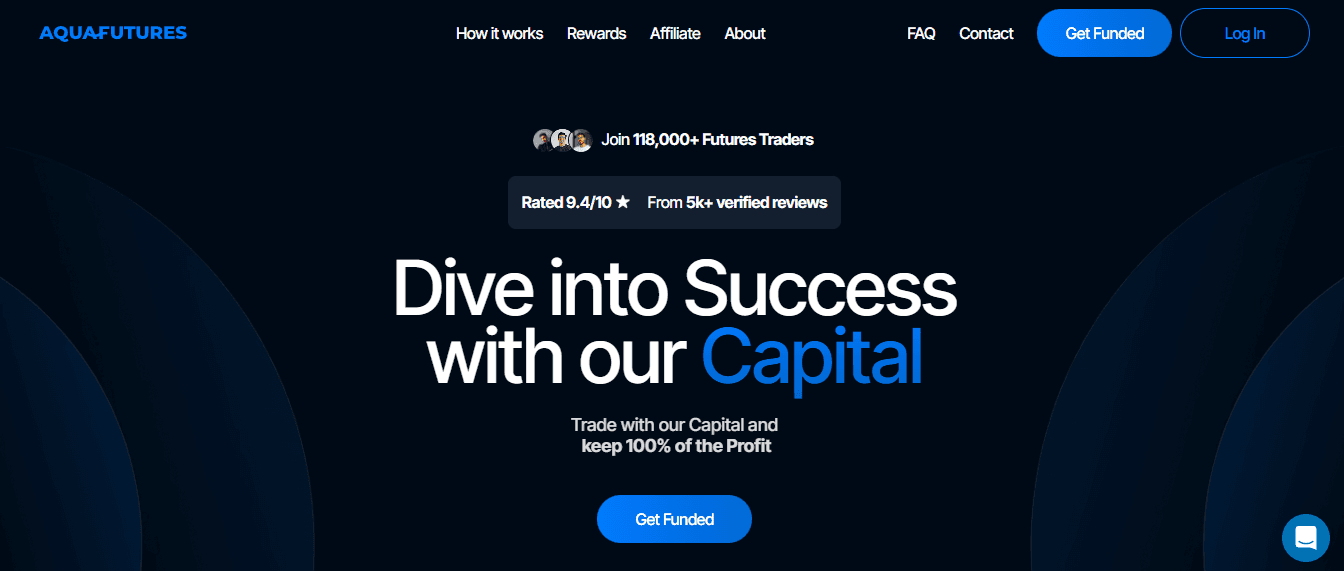
AquaFutures stands out as a forward-thinking proprietary trading firm specializing in futures, offering traders access to up to $450,000 in simulated capital without risking personal funds. It provides flexible entry points, including instant funding options that bypass traditional evaluations and standard hurdles, with achievable targets. This approach suits futures-focused traders seeking quick progression to funded status, reliable payouts, and strong community support, backed by a 9.4/10 user rating from thousands of reviews.
Why Choose It
Traders opt for AquaFutures for its emphasis on speed and trader-friendly terms in the futures space, such as skipping lengthy challenges through instant funding, keeping the full initial profits, and enjoying guaranteed, rapid rewards without personal loss liability. The firm's transparent rules, 24/7 support, no hidden fees, and charitable contributions (supporting ocean cleanup and clean water initiatives) build trust. With over 118,000 traders joined, millions in total rewards paid out, and strong community feedback highlighting affordability and reliability, it delivers a low-barrier path to scaling capital while prioritizing discipline and consistency—making it especially appealing for those hunting cheap or streamlined prop challenges in 2026.
Key Features
- Instant funding is available to skip evaluations entirely, allowing immediate access to simulated accounts from $25,000 to $150,000.
- Affordable entry costs starting as low as $26/month for certain beginner challenge accounts or one-time fees from around $149–$166 for smaller sizes, with limited-time discounts like 60% off using code AQUA.
- Evaluation challenges feature easy profit targets of 6% (Beginner) or 8% (Standard), with no time limits for completion.
- High profit retention: 100% of the first $15,000 in profits kept by the trader, followed by 90% split thereafter.
- Flexible drawdown rules, including End-of-Day or Trailing modes, with maximums typically 3–4%, and some accounts offering no daily loss limits in Pro/Instant setups.
- Fast weekly payouts with a reward guarantee—processed in 24 hours or receive an extra bonus—plus support for multiple withdrawal methods like bank transfer and crypto.
- Unlimited trading periods in challenges, combined with platforms like ProjectX and Volumetrica for realistic futures trading execution.
2. Axe Trader

Axe Trader provides occasional no-cost evaluation opportunities that allow participants to explore proprietary trading without initial fees. This setup is particularly useful for those testing the waters in simulated environments before committing to paid programs, with a focus on skill demonstration in a low-pressure format.
Features
- Three unique capital allocation paths tailored for different experience levels in prop challenges.
- Sophisticated monitoring interface for tracking progress during free trials.
- Flexible timeline with no mandatory active periods in demo evaluations.
- Moderate risk ratios up to 1:20 in practice accounts.
- Multi-phase assessment structure with enhanced ratios in later stages.
- Boosted risk thresholds compared to some peers in simulation modes.
- Opportunities to win funded spots through periodic promotions.
3. FX Blue
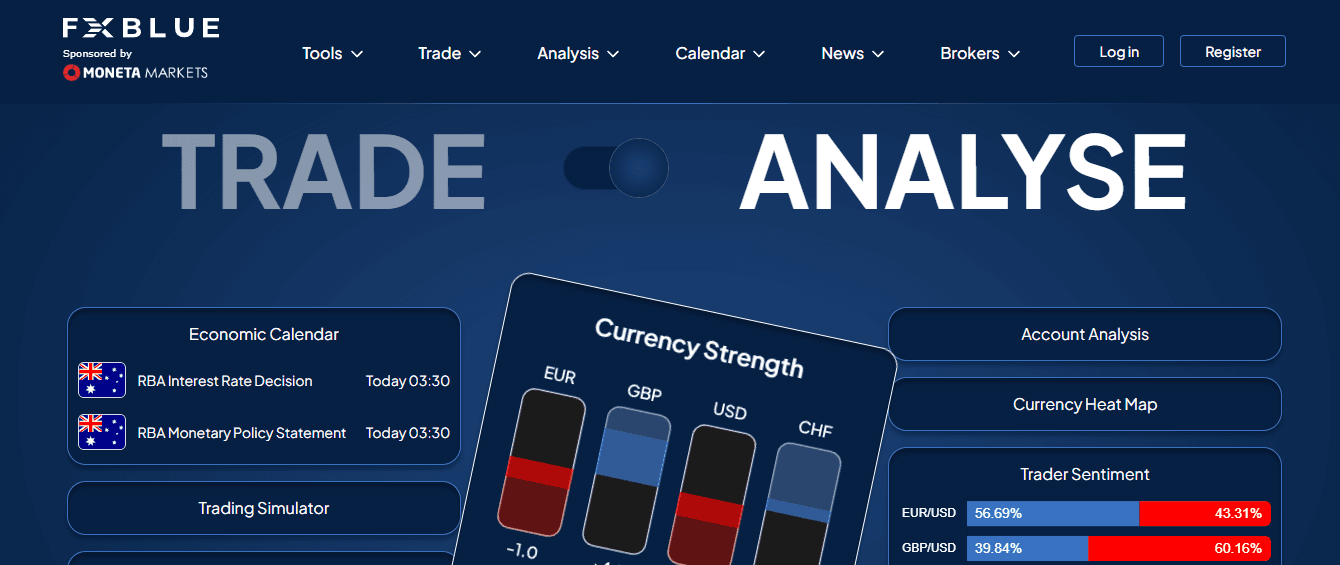
FX Blue provides open-access simulation accounts that allow users to create custom trading tests without broker involvement or downloads. This browser-based tool tracks results in real time, making it a solid choice for honing abilities before entering paid prop evaluations or just for ongoing practice.
Features
- Established reputation spanning more than ten years in demo tools.
- Smooth connection with leading market software for realistic simulations.
- Complimentary suite of over 30 analytical instruments.
- Customizable test durations and goals in free challenges.
- Automatic performance alerts for success or setbacks.
- Mobile-friendly access for on-the-go practice.
- Open-ended accounts are available beyond structured tests.
4. FTMO

FTMO offers complimentary trial profiles that mirror their standard evaluation format, enabling users to familiarize themselves with requirements risk-free. This approach supports skill assessment and platform exploration prior to investing in formal challenges, emphasizing educational value.
Features
- Round-the-clock assistance for trial participants.
- Access to expert guidance from performance specialists.
- Pioneering role in contemporary funded trading models.
- No-cost entry to evaluation-style simulations.
- Competitive reward structures in practice accounts.
- Broad instrument coverage, including various assets.
- Transparent progression paths to funded status.
5. The Funded Trader

The Funded Trader runs regular no-fee contests in which competitors can win cash prizes or direct access to capital. These events offer a competitive, cost-free path to potential funding, appealing to those who thrive in tournament settings.
Features
- Option to retry unsuccessful evaluations at no extra cost.
- Diverse asset classes are available in competitions.
- Unrestricted approaches are allowed during contests.
- Multiple retry mechanisms for failed attempts.
- Broad payout eligibility in winning scenarios.
- English-language support focused on participant needs.
- Periodic events with escalating reward tiers.
6. My Forex Funds

My Forex Funds periodically feature zero-entry promotions through collaborations or announcements, granting access to evaluations without upfront payments. Monitoring their updates can create opportunities to participate in funded trading programs at minimal cost.
Features
- Low-barrier entry to capital starting around $50.
- Specialized acceleration for seasoned participants.
- Incentive structures for consistent performance.
- Scaled fees based on transaction volume.
- Select strategy guidelines to maintain fairness.
- Digital support channels for queries.
- Promotional windows for free access periods.
7. The 5%ers

The 5%ers delivers budget-conscious evaluations with very low starting fees and flexible timelines, making it a strong pick for methodical traders. Their programs prioritize long-term consistency without rigid deadlines, allowing participants to demonstrate discipline across extended periods.
Features
- Entry fees start at around $39 for smaller capital simulations.
- No fixed time restrictions during assessment phases.
- Solid execution quality with reliable spreads.
- Scaling mechanisms to increase account sizes over time.
- Varied program types, including high-stakes options.
- Refund features on certain successful completions.
- Profit shares that improve with performance milestones.
8. Maven Trading

Maven Trading creates a nurturing environment for participants through clear guidelines and community support. Their affordable entry point, combined with a generous reward structure, appeals to those who value simplicity and ongoing trader interaction throughout the process.
Features
- Reward allocation up to 85% of generated gains.
- Transparent and easy-to-follow assessment criteria.
- Community resources for guidance and motivation.
- Straightforward multi-phase progression paths.
- Focus on supportive conditions for skill development.
- Access to various asset categories.
- Modest initial investment for challenge participation.
9. MyFundedFX
MyFundedFX offers cost-effective two-phase assessments that provide exposure to meaningful capital while offering broad strategy freedom. Unlimited durations and permissive rules make this option ideal for traders who prefer unhurried, adaptable approaches to proving capability.
Features
- Low starting fees of around $50 for initial simulations.
- No limits on evaluation timeframe.
- Allowance for diverse trading methodologies.
- Substantial virtual capital upon progression.
- Flexible risk parameters in assessments.
- Community-oriented support features.
- Opportunities for scaled funding growth.
10. Limitless Funding

Limitless Funding offers an entry-level challenge with immediate payout eligibility and strong incentive structures. Its multi-stage format offers flexibility for newcomers while rewarding consistent results through higher shares and a range of instrument options.
Features
- Immediate access to withdrawals from the start of funded trading.
- Reward portions are climbing to 90% based on performance.
- Adaptable assessment stages without strict constraints.
- A variety of tradable assets are available.
- Beginner-oriented design with supportive elements.
- Day-one payout capability post-evaluation.
- Balanced leverage suited to various styles.
11. SurgeTrader

SurgeTrader provides periodic demo-based evaluations and occasional promotional opportunities that allow traders to test their edge in a simulated environment, with potential paths to funded accounts. This appeals to those who prefer a streamlined, one-phase assessment without ongoing subscriptions, though the availability of free entries varies with current offers.
Features
- One-phase evaluation format for quicker progression in demos.
- Reward shares of up to 90%, with optional upgrades, in funded stages.
- Adaptable account sizes starting from smaller simulations.
- Mandatory risk controls, like per-trade stop requirements.
- Single upfront fee structure for standard auditions.
- Limited but focused educational materials during trials.
- Competitive but capped position sizing in practice modes.
12. Topstep

Topstep specializes in futures trading and occasionally extends trial periods or promotional access to its evaluation program, known as the Trading Combine. This allows participants to practice in a structured, rule-based environment with the goal of advancing to funded status, ideal for futures enthusiasts seeking realistic simulation before full commitment.
Features
- Clear, single-focus evaluation emphasizing consistency in futures.
- Generous reward portions for successful funded performance.
- Frequent processing for daily profit access post-evaluation.
- Dedicated futures-only instrument coverage.
- Scalable funding is limited to approximately $150,000.
- Monthly subscription model with trial or promo variations.
- Emphasis on disciplined, habit-building trading rules.
13. Goat Funded Trader

Goat Funded Trader offers some of the market's most budget-friendly entry points with low-fee challenges that include flexible evaluation steps and supportive features. This makes it a top contender for cost-conscious traders looking for substantial virtual capital and early withdrawal options without excessive barriers.
Features
- Extremely low starting fees, often under $50 for smaller accounts.
- Early access to profit withdrawals once funded.
- Broad selection of tradable instruments.
- Multiple evaluation formats, including two- or three-step paths.
- Opportunities for scaling funded amounts significantly.
- Flexible time allowances during assessments.
- Trader-oriented policies with community backing.
Tips on How to Choose a Prop Firm With a Free Challenge

Reputation matters more than profit splits when choosing a free challenge prop firm. You need to verify the company has processed actual payouts to real traders, not just impressive marketing about what they'll do once you pass. Check independent review platforms for withdrawal complaints, search community forums for unresolved disputes, and look for transparency about how long they've operated. A firm offering 90% profit splits means nothing if it invents reasons to deny payouts or disappears after collecting activation fees from hundreds of evaluations.
The challenge structure reveals whether a firm wants to fund you or simply wants you to fail repeatedly. Examine drawdown calculations closely. Some platforms measure from your starting balance, others from your highest equity peak, creating vastly different risk tolerances. A 10% drawdown limit sounds identical across firms until you realize one allows a $1,000 loss on a $10,000 account, while another triggers failure after your equity drops $1,000 from its highest point during the evaluation. That second version makes recovery nearly impossible after a single bad trade.
Platform Compatibility and Execution Quality
Your trading software determines whether your strategy can function during evaluation. Confirm the firm supports your preferred platform before investing weeks into their challenge. If you've spent months developing strategies in NinjaTrader, switching to a proprietary platform with different order types and execution logic forces you to relearn mechanics under evaluation pressure. That's not testing your trading ability. That's testing your adaptability to unfamiliar tools while a countdown clock runs.
Execution speed during volatile periods distinguishes legitimate firms from those that profit primarily from failed attempts. Slippage of three ticks on a futures entry turns a winning trade into a loser before your analysis even matters. Request access to demo accounts before committing to evaluations, and test order fills during high-volume sessions such as economic releases. Firms confident in their infrastructure let you verify execution quality upfront. Those hiding behind marketing language about "institutional-grade technology" without offering proof usually have something to conceal.
Support Responsiveness When Rules Get Murky
Complex evaluation rules create gray areas where interpretation determines whether you've violated terms. You hold a position overnight that gaps through your stop loss at the open, triggering a drawdown breach you couldn't prevent. Does the firm consider this a rule violation or a recognized market risk? Their response reveals whether they view you as a potential partner or a statistic in their failure rate.
Test support before evaluation by asking specific scenario questions about their rules. How do they handle trades opened before news events that move against you? Do they allow hedging strategies or consider them manipulation? If responses take three days or arrive as vague, copy-pasted answers, consider opening a funded account dispute with the same team. Quality firms staff traders who understand the scenarios you're asking about because they've lived them, not customer service representatives reading from scripts.
Scaling Pathways After Initial Funding
Passing the challenge gets you funded. What happens in month six determines whether this becomes a career or a temporary experiment. Examine how firms handle account growth for consistent performers. Some offer automatic scaling where hitting $5,000 in cumulative profits doubles your allocation. Others require you to request reviews, submit performance reports, and wait weeks for decisions about increases. The friction in that process signals how much they actually want you managing larger capital.
Unlimited scaling potential sounds impressive until you read the fine print, which requires you to maintain specific consistency metrics or trade minimum days per month to qualify. These conditions aren't inherently unfair, but they must align with your trading style. Swing traders holding positions for weeks can't meet the daily activity requirements designed for scalpers. Understanding these constraints before you pass prevents discovering six months later that your natural approach disqualifies you from growth opportunities.
Fee Structures Beyond the Free Challenge
Zero-cost entry becomes expensive when you encounter monthly platform fees, data subscription charges, or withdrawal processing costs after you are funded. Request a complete fee schedule covering everything from evaluation through funded trading and payouts. Some firms charge $75 monthly to maintain your funded account, whether you're actively trading or taking a planned break. Others impose a $1,000 minimum withdrawal, requiring you to accumulate profits before you can access earnings.
Refundable evaluation fees create different incentives than truly free challenges. When a firm refunds your $200 entry cost after your first funded payout, they're betting on your success in generating more revenue through profit splits than they'd collect from failed attempts. That alignment of interests matters. Free challenges with backend activation fees profit regardless of your performance, while refundable models only win when you do.
Most traders waste time comparing profit splits between 70% and 80% when the real difference lies in payout frequency and reliability. Weekly withdrawals at 70% generate faster cash flow than monthly payouts at 80%, especially when you're building momentum in early funded months. Funded accounts for futures trading processes payouts within 24 hours, with a $500 penalty for delays, removing the uncertainty about when earnings actually reach your account. Traditional firms that extend payment terms to 30 or 60 days create cash-flow problems that force traders to either slow down or risk overtrading to meet personal financial needs.
Time Limits and Their Hidden Pressure
Evaluation deadlines force rushed decisions when your strategy requires patience. A 14-day challenge with a 5% profit target may seem achievable until you realize your edge depends on specific market conditions that may not materialize within that window. You face a choice: wait for proper setups and risk running out of time, or force trades that don't meet your criteria just to stay active. Neither option tests your actual trading ability.
Unlimited timeframes eliminate artificial urgency, allowing you to demonstrate profitability across various market environments rather than hoping favorable conditions appear within an arbitrary two-week window. This structure particularly benefits position traders whose setups develop over weeks, not days. The tradeoff comes in discipline. Without deadlines that create pressure, some traders procrastinate indefinitely, never committing to serious efforts. Know which type of accountability you need before choosing between timed and unlimited formats.
Asset Coverage and Strategy Restrictions
Specialization in specific markets gives you an edge that generic multi-asset evaluations dilute. If you've spent years mastering crude oil futures, being forced to trade forex pairs or indices during evaluation tests does not demonstrate your adaptability, nor your expertise. Verify the firm offers sufficient depth in your primary markets, including extended trading hours and the contract months you typically trade.
Strategy restrictions eliminate certain edges before you start. Some firms ban scalping, defining it as any trade held for less than two minutes. Others prohibit trading during news releases or limit position sizes to percentages that make your normal risk management impossible. These rules protect firms from strategies they consider too risky, but they also filter out legitimate approaches that work consistently in live markets. Read the prohibited strategies list carefully. If your edge falls into restricted territory, this isn't the right evaluation regardless of how attractive other terms appear. But the real challenge arises after you pass, when the cost of that "free" opportunity becomes clear.
Related Reading
- Prop Firm Swing Trading
- Best Prop Firms for Stocks
- Prop Firms That Use MT5
- No Minimum Trading Days Prop Firm
- Prop Firms With Instant Funding
- One Phase Prop Firm
- Proprietary Trading Firms
- Best Funded Accounts UK
- Best Prop Firm in the World
- Cheapest Forex Funded Account
- Best Prop Firms That Allow EA
- Best UK Prop Firm
- Forex Prop Firms Accepting US Clients
- Best Forex Funded Prop Firms
- Best Funded Account Forex in UAE
Unlock up to 50% off Your First Funded Account for Futures Trading
You passed the evaluation. You've proven your edge works under pressure. Now the question becomes whether you're ready to trade with capital that responds as fast as you do, or whether you'll spend another three months navigating activation fees and payout delays that turn your skill into someone else's revenue stream. Funded accounts for futures trading remove every barrier between your ability and your earnings. No activation fees. No monthly platform charges. No waiting periods before withdrawals. You keep 100% of your first $15,000 in profits, then split earnings after that threshold. The 24-hour payout guarantee carries a $500 penalty if they miss the window, putting real consequences behind speed promises that other firms make without accountability.
Starting at $26 monthly for beginner challenges or one-time fees from $149, you're trading funded within days, not months. Instant funding options skip evaluations entirely for traders who've already proven consistency elsewhere. Get started today and claim up to 50% off your first funded account, with surprise BOGO deals and weekly bonuses that reward action over hesitation.
